


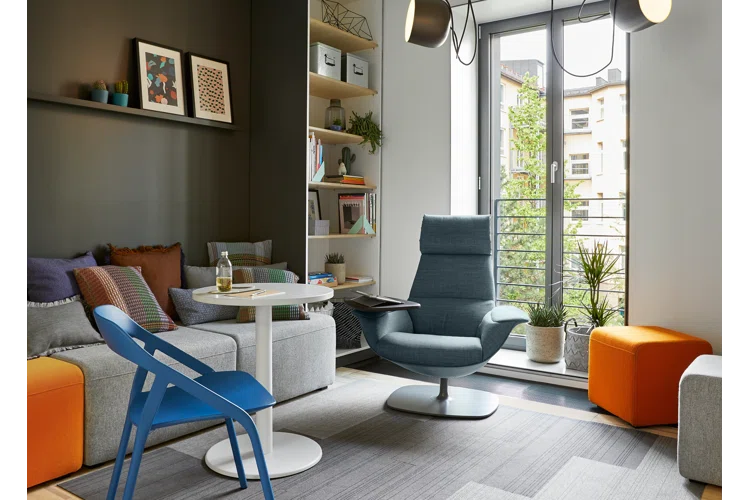

Creating wellness spaces at the workplace allows employees to recharge, refocus, and maintain balance during the workday. These rooms can be designed in different ways depending on employee needs, office culture, and available space.
What Is a Wellness Room at Work?
A wellness room or wellness space is a dedicated, quiet space within the workplace designed to help employees recharge, relax, or attend to personal well-being needs. Unlike break rooms, wellness rooms are intentionally calm, private, and restorative.
These rooms can be used for:
- Stress relief and mental resets
- Meditation or mindfulness practices
- Short rest breaks
- Lactation or nursing needs
- Managing anxiety, migraines, or sensory overload
Why Wellness Rooms Matter in the Workplace
1. Supports Mental Health
Work-related stress and burnout are on the rise. A wellness room at work provides employees with a safe space to pause, breathe, and reset during overwhelming moments. Even a 10–15 minute break in a calm environment can significantly improve focus and emotional balance.
2. Improves Productivity and Performance
Well-rested and mentally supported employees perform better. When people are given the tools to manage stress during the workday, they return to their tasks with renewed energy and clarity.
3. Promotes Inclusivity and Accessibility
Wellness rooms support diverse employee needs, including:
- Nursing mothers
- Neurodivergent employees
- Individuals with chronic health conditions
- Employees observing prayer or mindfulness practices
This inclusivity fosters a more supportive and equitable workplace culture.
4. Reduces Absenteeism and Burnout
Providing a space for recovery can prevent minor stress or discomfort from escalating into sick days or long-term burnout. It shows employees that their well-being is valued, not overlooked.
5. Strengthens Employer Brand
Organizations that invest in wellness initiatives are viewed as caring, modern, and people-focused. This helps attract top talent and improves employee retention.
What Should a Wellness at Workplace Room Include?
A wellness room should be a peaceful, functional space that supports employees’ physical, mental, and emotional well-being. Here’s what a well-designed wellness room should include:
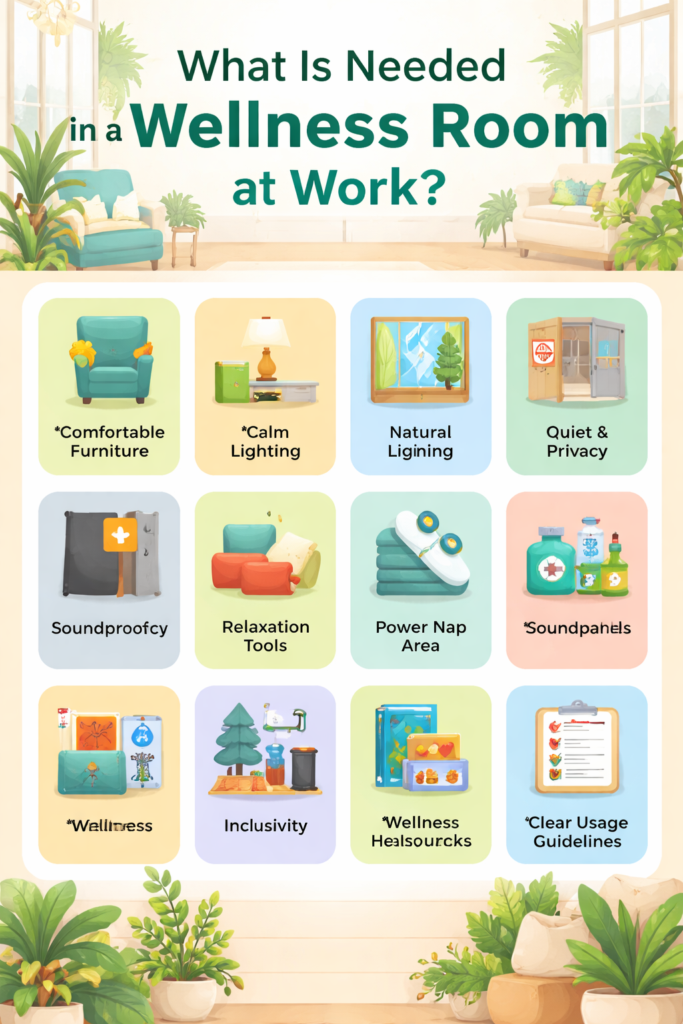
Comfortable Furniture: Comfort is the foundation of an effective wellness room. Ergonomic chairs, recliners, or sofas support proper posture and physical health, while bean bags or floor cushions provide relaxed seating options. Adjustable furniture ensures the space accommodates different body types and comfort preferences, making the room inclusive and user-friendly.
Calm Lighting and Colors: Lighting and color have a strong impact on mood and emotional well-being. Soft, warm, or dimmable lighting helps reduce stress, while neutral or nature-inspired colors such as beige, green, and blue create a peaceful and soothing ambiance. Thoughtful use of calming colors supports relaxation, focus, and mental clarity.
Natural Lighting: Maximizing natural light brings the outdoors inside and supports mental well-being. Large windows, skylights, or shatterproof plexiglass ceiling panels allow abundant sunlight to filter into the room while maintaining safety and comfort. Exposure to daylight can boost energy, focus, and overall mood.
Quiet and Privacy: A wellness room at workplace should feel safe, private, and interruption-free. Soundproofing or noise-reducing panels minimize workplace noise, while white noise or soft background music enhances tranquility. Clear “in use” signage or a booking system ensures employees can enjoy privacy during meditation, rest, or personal time.
Soundproofing: Effective soundproofing is essential for creating a serene environment. Acoustic panels, thick wall construction, or noise-absorbing materials reduce noise disturbances that could disrupt relaxation, focus, or mindfulness activities, making the room feel separate from the rest of the workplace.
Relaxation and Mindfulness Tools: Tools for mindfulness and relaxation support mental and emotional reset. Yoga mats, meditation cushions, guided meditation or breathing audio, stretch bands, and foam rollers allow employees to practice mindfulness, gentle movement, and stress relief.
Power Nap Essentials: Power naps help restore energy and improve productivity. Recliner chairs or nap pods, along with eye masks, light blankets, and timers set for 15–20 minutes, create a comfortable and controlled rest experience without interfering with the workday.
Stretching and Light Movement Area: Providing space for stretching or light exercise helps reduce muscle tension and encourages circulation. Resistance bands, foam rollers, and visual guides for stretches or mobility exercises make it easier for employees to move during the day and prevent physical discomfort from prolonged sitting.
Cleanliness and Hygiene: A wellness room must remain clean and hygienic to ensure safety and comfort. Hand sanitizer, disinfectant wipes, easily cleanable furniture, and a regular cleaning schedule help maintain a welcoming and safe environment for all users.
Inclusivity and Accessibility: A well-designed wellness room supports diverse employee needs. Space for prayer or reflection, a lactation-friendly setup, wheelchair accessibility, and low-sensory options for neurodivergent employees ensure inclusivity and equitable access for everyone.
Wellness Resources: Providing wellness resources encourages ongoing learning and support for well-being. Posters, tip cards, books on mindfulness or stress management, and information about employee assistance programs (EAPs) allow employees to access guidance and tools beyond the room itself.
Healthy Snacks and Hydration (Fridge): A small fridge enhances the room’s functionality by storing healthy snacks and beverages such as fruits, vegetables, yogurt, hummus, natural juices, and kombucha. It can also provide safe storage for breast milk for pumping mothers, promoting inclusivity and supporting nutrition during the workday.
Clear Usage Guidelines: Clear rules help ensure the wellness room is used fairly and respectfully. Guidelines on time limits for naps or sessions, noise levels, phone use, cleanliness, and a booking or sign-in system maintain structure, accessibility, and a positive experience for all employees.
Wellness Space at Workplace – Ideas for Rooms
Meditation & Mindfulness Room: A meditation and mindfulness room provides a quiet space for mental relaxation and emotional balance. Yoga mats, meditation cushions, calming lighting, and guided breathing or meditation audio help employees reduce stress, improve focus, and reset during the workday.
Power Nap Room: A power nap room supports short, restorative breaks that improve alertness and productivity. Recliner chairs or nap pods, eye masks, light blankets, and timers set for 15–20 minutes create a comfortable and controlled environment for rest.
Fitness or Stretching Room: A fitness or stretching room encourages physical movement and helps reduce muscle tension caused by prolonged sitting. Resistance bands, yoga mats, foam rollers, light weights, and stretching guides support flexibility, posture, and overall physical well-being.

Game Zone / Recreation Room: A game zone offers a fun and engaging space for employees to unwind and connect with colleagues. Table tennis, board games, puzzles, and casual video games help relieve stress, boost morale, and promote team bonding.
Library / Knowledge Room: A library or knowledge room creates a calm environment for reading, learning, and reflection. Comfortable seating, books on wellness and personal development, journals, and soft lighting help employees disconnect from screens and restore mental clarity.

Hobby Haven / Creative Room: A creative room allows employees to relax through artistic and hands-on activities. Art supplies, coloring books, craft kits, music tools, and journaling materials support emotional wellness and encourage creativity.
Recharge Lounge: A recharge lounge provides a comfortable space for light relaxation or informal breaks. Cozy seating, indoor plants, healthy snacks, and a hydration or tea station create a welcoming environment for mental refreshment.
Lactation & Care Room: A lactation and care room supports inclusive workplace wellness by offering privacy and comfort. Comfortable seating, privacy screens, power outlets, and a small fridge for milk storage ensure a safe and respectful space for nursing employees.
Reflection / Prayer Room: A reflection or prayer room offers a neutral, quiet space for spiritual practices or personal reflection. Minimal décor, floor mats, privacy partitions, and a peaceful atmosphere support emotional and spiritual well-being.
Outdoor Wellness Space: An outdoor wellness space connects employees with nature and fresh air. Seating areas, walking paths, greenery, and outdoor yoga or meditation zones promote relaxation and mental rejuvenation.
Sensory Relaxation Room: A sensory relaxation room helps employees unwind by gently engaging the senses. Soft textures, calming visuals, subtle aromatherapy, and controlled lighting create a soothing environment that reduces stress and sensory overload, especially for employees who need quiet decompression.
Breathing & Stress-Relief Room: A breathing and stress-relief room focuses on guided relaxation techniques. Breathwork tools, visual breathing guides, calming audio, and comfortable seating help employees regulate stress, manage anxiety, and regain emotional balance during the workday.
Digital Detox Room: A digital detox room encourages employees to disconnect from screens and notifications. Screen-free seating, books, puzzles, and quiet zones promote mental clarity and help reduce eye strain and cognitive fatigue.
Quiet Decompression Room: A decompression room provides a low-stimulation space for employees who need silence and solitude. Minimal décor, soundproofing, soft lighting, and comfortable seating help restore focus and emotional calm.
Wellness Café / Nutrition Corner: A wellness café or nutrition corner supports healthy habits through mindful nourishment. A small fridge, hydration station, herbal teas, and healthy snacks promote energy, hydration, and overall wellness.
Movement & Mobility Studio: A movement and mobility studio focuses on gentle, low-impact physical activity. Open floor space, stretching equipment, balance tools, and guided movement resources help improve flexibility and prevent physical strain.
Massage & Recovery Room: A recovery-focused wellness room supports physical relaxation and muscle relief. Massage chairs, foam rollers, and self-massage tools help reduce tension and support physical recovery after long work hours.
Creative Writing & Journaling Room: A journaling room provides a quiet outlet for self-expression and reflection. Writing desks, notebooks, prompts, and calm lighting encourage emotional release, clarity, and mindfulness.
Focus & Deep Work Room: A deep work room supports concentration and productivity. Noise control, minimalist design, ergonomic desks, and focus-friendly lighting help employees complete tasks requiring high attention.
Wellness Coaching / Check-In Room: A private space for wellness conversations or coaching sessions. Comfortable seating, privacy, and calming décor support confidential discussions around mental health, wellness coaching, or HR check-ins.
A successful wellness space at the workplace offers variety, flexibility, and inclusivity. By providing multiple room options—ranging from relaxation and movement to creativity and focus—organizations empower employees to choose what best supports their employee wellness program.
How to Successfully Implement a Wellness Room
Successfully implementing a wellness room at the workplace requires thoughtful planning, employee involvement, and ongoing support. When done right, a wellness room becomes a valued space that genuinely improves well-being rather than an underused amenity.
Understand Employee Needs: Start by gathering input from employees through surveys, focus groups, or informal feedback. Understanding how employees experience stress and what type of support they value—such as quiet time, movement, or relaxation—helps ensure the wellness room is designed with real needs in mind.
Choose the Right Location: Select a quiet, low-traffic area away from noise and distractions. A wellness room work should feel separate from daily work activity to allow employees to mentally disconnect and relax without interruptions.
Design with Intention: Every element in the wellness room should serve a purpose. Use calming colors, comfortable furniture, soft lighting, and sound control to create a peaceful atmosphere. Incorporating natural light and biophilic elements such as plants can further enhance the room’s restorative quality.
Ensure Privacy and Inclusivity: Design the space to be inclusive and accessible to all employees. Provide privacy through soundproofing, partitions, or booking systems, and consider diverse needs such as lactation support, prayer or reflection space, and low-sensory options.
Set Clear Usage Guidelines: Establish simple and clear rules to ensure fair and respectful use of the room. Define time limits for naps or sessions, noise expectations, phone usage, and cleanliness standards. Clear guidelines help prevent misuse and encourage consistent adoption.
Normalize and Encourage Use: Encourage leaders and managers to openly support and model the use of the wellness room. When leadership normalizes wellness breaks, employees feel more comfortable using the space without guilt or hesitation.
Maintain Cleanliness and Safety: Regular cleaning and maintenance are essential to keeping the wellness room welcoming and safe. Provide hygiene supplies and ensure the space is inspected frequently to maintain high standards.
Evaluate and Improve Over Time: Wellness needs may evolve, so regularly gather feedback to understand how the room is being used. Make improvements based on employee input, usage patterns, and organizational growth to keep the space relevant and effective.
Conclusion
A wellness room is more than just a physical space—it’s a statement. It communicates that employee well-being matters and that taking care of mental and physical health is part of a healthy work culture.
As organizations continue to rethink how work gets done, wellness rooms stand out as a meaningful, practical step toward a happier, healthier, and more productive workforce