





Why Culture Efforts So Often Fall Flat
Culture as a system is the shift most organizations haven’t made, even though many genuinely care about building a better employee experience. Leaders invest time and resources into values statements, engagement campaigns, town halls, and culture initiatives designed to help people feel supported, connected, and motivated at work.
Despite those efforts, a familiar frustration keeps surfacing across leadership teams. Culture initiatives launch with energy but lose momentum, engagement improves briefly before fading, and recognition peaks during campaigns only to disappear once attention shifts elsewhere. Without culture as a system, these efforts remain inconsistent and difficult to sustain.
What employees experience day to day often doesn’t match what the organization promotes. Wellness programs start strong but stall, engagement feels episodic, and culture becomes something leaders talk about more than employees actually feel. This disconnect isn’t the result of poor intentions; it’s the result of treating culture as a feeling rather than designing culture as a system that operates continuously.
When organizations rely on motivation, memory, or one-time initiatives to carry culture forward, progress is fragile. Without culture as a system to reinforce behaviors, support wellbeing, and normalize recognition, even the best culture strategies struggle to stick.
The Misunderstanding at the Heart of Most Culture Strategies
Culture is often described in emotional terms:
- “How it feels to work here”
- “The vibe of the organization”
- “Our shared values”
While those descriptions aren’t wrong, they’re incomplete.
Feelings are outcomes, not inputs. They are the result of what people experience every day—not the cause of it.
When organizations focus only on how they want culture to feel, they overlook the mechanisms that actually create that feeling.
Culture is built through systems:
- What behaviors are encouraged or discouraged
- What gets measured and reinforced
- What support is consistently available
- What leaders pay attention to when things get busy
Without a system, culture relies on good intentions—and intentions don’t scale.
Why Culture Initiatives Don’t Stick
Most culture initiatives fail for the same reasons:
1. They’re Episodic
Culture shows up during campaigns, launches, or annual events—but disappears in daily work.
2. They’re Isolated
Engagement, wellness, and recognition are treated as separate efforts rather than interconnected drivers of behavior.
3. They Rely on Motivation Alone
Employees are expected to opt in, stay engaged, and self-sustain behaviors without structural support.
4. They Aren’t Reinforced Consistently
What leaders say matters is not always what systems reward.
Over time, employees learn to treat culture initiatives as optional—or temporary.
Culture Lives in the Day-to-Day, Not the Deck
Culture is shaped far less by strategy decks than by the everyday moments employees experience at work. It shows up in how workload is managed, how stress is addressed—or quietly ignored—and how recognition is given or withheld when priorities compete.
Over time, these moments accumulate and begin to define what working in the organization actually feels like. They are governed less by stated intentions and more by the systems that guide behavior when no one is watching.
When culture depends on individual leaders remembering to “do the right thing,” experiences vary widely from team to team. When culture is embedded in systems, however, it becomes consistent, repeatable, and far more resilient.
What It Means to Treat Culture as a System
A system is something that operates continuously, even when no one is paying attention.
When culture is system-based:
- Desired behaviors are reinforced automatically
- Support is available before issues escalate
- Engagement is sustained, not event-driven
- Leaders don’t have to choose between performance and wellbeing
This doesn’t remove the human element—it supports it.
Systems don’t replace leadership. They amplify it.
The Three Core Systems That Shape Culture
While culture is complex, most organizational culture is shaped by three interconnected systems:
1. Engagement
How employees connect to their work, their team, and the organization.
2. Wellbeing
How sustainable work is—physically, mentally, emotionally, and socially.
3. Recognition
How effort, behavior, and contribution are acknowledged and reinforced.
When these systems operate independently, culture feels fragmented. When they work together, culture becomes coherent.
Engagement Without Wellbeing Is Unsustainable
Many organizations invest heavily in engagement—surveys, feedback tools, and initiatives designed to boost motivation.
But engagement without wellbeing is fragile.
Employees can be highly engaged and still burn out. They can care deeply about their work while quietly exceeding their capacity. Without systems that support wellbeing, engagement eventually collapses under pressure.
This is why burnout often appears in high-performing teams first.
Wellbeing Without Recognition Feels Invisible
Wellbeing programs often encourage healthier habits, balance, and resilience, but without recognition, those efforts can easily fade into the background. When employees take steps to manage stress, support teammates, or work more sustainably—and those actions go unacknowledged—wellbeing becomes a form of invisible labor.
By acknowledging these behaviors, organizations reinforce that wellbeing is valued alongside performance, not secondary to it.
Recognition Without Engagement Feels Hollow
Recognition has limited impact when it isn’t connected to meaningful work, shared values, or a sense of purpose. Programs built around points, badges, or isolated shoutouts can feel transactional when recognition lacks context or relevance.
To truly strengthen culture, recognition must reinforce behaviors that support engagement and wellbeing. Embedding recognition into everyday systems—rather than treating it as an add-on—ensures it feels authentic, consistent, and motivating.
What Happens When These Systems Don’t Connect
When engagement, wellbeing, and recognition operate in silos:
- Employees receive mixed signals
- Leaders struggle to prioritize
- HR manages programs instead of outcomes
Culture becomes inconsistent. One team thrives while another struggles. One initiative succeeds while another quietly fails.
The organization doesn’t lack culture—it lacks coherence.
Systems Thinking Creates Cultural Consistency
Systems thinking asks a different question.
Instead of:
How do we launch another culture initiative?
It asks:
How do our systems consistently reinforce the culture we want?
This shift moves culture from:
- Reactive → Proactive
- Campaign-driven → Embedded
- Leader-dependent → Organization-wide
Culture becomes something employees experience every day, not something HR promotes periodically.
Why Systems Reduce Burnout—for Everyone
Systems don’t just support employees; they also support leaders and HR teams by removing friction from everyday work. Without clear systems in place, much of the responsibility for culture falls on individual memory and effort.
Without systems:
- Leaders must constantly remember to recognize, support, and check in with their teams
- HR teams are forced to re-launch initiatives again and again to maintain momentum
- As a result, culture work becomes exhausting rather than sustainable
With systems in place, the experience shifts:
- Desired behaviors are built directly into daily workflows
- Recognition occurs more naturally and consistently
- Wellbeing support becomes easier to access when it’s needed most
Over time, this structure reduces cognitive load and helps protect capacity across the organization, making culture support more sustainable for everyone involved.
Measuring Culture Through Systems, Not Sentiment Alone
Culture surveys are valuable—but they’re lagging indicators.
Systems provide leading indicators:
- Participation trends
- Recognition patterns
- Wellbeing risk signals
- Engagement behaviors over time
When culture is system-based, leaders can see what’s happening—not just how people feel after the fact.
This enables earlier intervention and more informed decision-making.
Why Culture Can’t Be Owned by One Team
Culture often sits with HR, People Ops, or a VP of Culture—but culture itself is created everywhere.
Systems distribute ownership:
- Leaders reinforce culture through recognition
- Employees experience culture through wellbeing support
- HR enables culture through structure and insight
When culture depends on one team, it struggles to scale. When it’s embedded in systems, it becomes shared.
The Competitive Advantage of a System-Based Culture
Organizations with system-based cultures:
- Adapt faster
- Retain talent longer
- Experience less burnout
- Build trust more consistently
Culture becomes an asset—not a risk.
In competitive markets, this matters. Employees don’t just compare benefits. They compare experiences.
From Intention to Infrastructure
Most organizations already know what kind of culture they want.
The gap is infrastructure.
Without systems, culture relies on memory, motivation, and manual effort. With systems, culture becomes durable.
This is the difference between hoping culture sticks—and designing it to.
Where Woliba Fits In
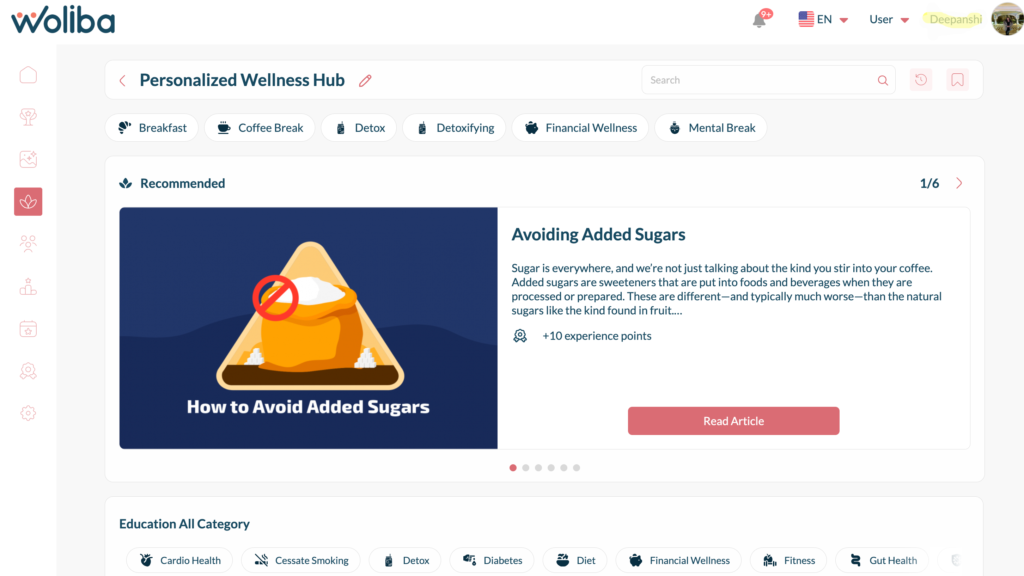
This is where Woliba supports culture as a system—not a campaign.
By bringing engagement, wellbeing, and recognition together into one operating system, Woliba helps organizations:
- Reinforce desired behaviors consistently
- Support preventative wellbeing
- Sustain engagement without constant re-launches
- Give leaders visibility into what’s actually happening
Instead of managing disconnected tools, organizations gain a unified system that makes culture part of everyday work.
If your culture initiatives start strong but struggle to last, the issue may not be commitment—it may be the system behind them.
Visit woliba.io to learn more or book a demo to see how a connected engagement, wellbeing, and recognition system can help culture truly stick.