





Why People Operations Strategy Is Being Rewritten
A modern people operations strategy determines whether organizations scale sustainably or fracture under growth. As work evolves, the expectations placed on people operations strategy have expanded far beyond policies, programs, and administration.
For years, organizations treated people operations as a collection of functions rather than a connected system. Rewards lived in one lane, culture initiatives lived in another, and wellbeing operated on the margins. However, today’s environment exposes the limits of that approach.
As people risk accelerates, people operations strategy must now integrate rewards, culture, and wellbeing into one operating model. Without that integration, even well-funded initiatives struggle to deliver lasting impact.
This shift explains why leaders are rethinking not just what they offer employees, but how those offerings work together.
The Old Model: Programs Without a System
Traditional people operations relied on accumulation rather than cohesion. Over time, organizations added benefits, introduced new tools, and launched initiatives to address specific challenges.
Each addition aimed to solve a discrete problem. However, as programs multiplied, coherence steadily declined.
Employees began to experience fragmented support, while HR teams absorbed growing complexity. Meanwhile, leaders struggled to connect these efforts to meaningful impact.
Without a unifying structure, people operations shifted into a reactive posture instead of functioning as a strategic system.
Why Fragmentation Is No Longer Sustainable
Fragmentation creates hidden costs.
When rewards, culture, and wellbeing operate separately, signals conflict. Employees receive mixed messages about priorities. Managers struggle to reinforce the right behaviors. HR teams chase alignment manually.
Over time, this fragmentation weakens trust and increases risk.
A unified people operations strategy addresses this problem at the system level.
People Operations Is Now a Risk Function
Historically, risk conversations focused on finance and compliance.
Today, people risk demands equal attention.
Burnout, disengagement, attrition, and cultural erosion all carry measurable business consequences. As a result, people operations leaders must manage risk proactively rather than explain it retroactively.
This responsibility elevates the role from support function to strategic infrastructure.
This shift is supported by data. Gallup’s State of the Global Workplace shows that burnout and disengagement are driven primarily by how work is structured—not by individual resilience alone. The same research finds that managers account for up to 70% of the variance in team engagement, underscoring how systems, incentives, and expectations shape outcomes at scale. When people operations strategy fails to align rewards, culture, and wellbeing, risk compounds quietly long before it appears in turnover or performance metrics.
Why Rewards, Culture, and Wellbeing Must Work Together
Rewards, culture, and wellbeing influence behavior every day.
Rewards shape what effort gets reinforced.
Culture shapes how work feels and functions.
Wellbeing shapes sustainability and capacity.
When these elements align, employees experience clarity. When they don’t, confusion takes hold.
A unified approach ensures these levers reinforce one another rather than compete.
Rewards Without Culture Create Transactional Work
Compensation and benefits matter. However, rewards alone do not build commitment.
When rewards operate without cultural reinforcement, employees optimize for outcomes rather than values. Performance may increase temporarily, yet trust and belonging weaken over time.
Rewards need cultural context to guide behavior sustainably.
Culture Without Wellbeing Creates Burnout
Culture initiatives often emphasize performance, collaboration, and growth. However, when wellbeing fails to integrate into those expectations, overextension becomes normalized across teams.
High performers frequently absorb mounting pressure until sustainability breaks. By grounding expectations in human capacity, wellbeing keeps culture realistic rather than aspirational.
Wellbeing Without Rewards Feels Optional
Wellbeing programs lose momentum when they operate outside reward structures. Without visible recognition or reinforcement, employees begin to view wellbeing behaviors as extracurricular rather than essential.
Participation naturally declines over time. When recognition and rewards reinforce wellbeing, those behaviors become part of how work actually gets done.
Systems Thinking Changes the Equation
Leading organizations approach people operations as a system, not a menu.
Instead of launching disconnected initiatives, they design experiences that reinforce one another across the employee lifecycle.
Systems thinking answers questions like:
- What behaviors do we want to see?
- What support makes those behaviors possible?
- What signals reinforce them consistently?
This approach reduces noise while increasing impact.
The People Operations Playbook Starts With Outcomes
Modern people operations strategy begins with outcomes rather than activity.
Instead of asking:
- What programs should we run?
Leaders ask:
- What risks are we trying to reduce?
- What behaviors are we trying to reinforce?
- What outcomes define success?
This shift clarifies priorities across rewards, culture, and wellbeing.
Why Prevention Matters More Than Intervention
Intervention addresses problems after they surface.
Prevention reduces the likelihood they appear at all.
A strong people operations strategy emphasizes early signals, continuous support, and sustainable behaviors. This preventative orientation protects employees and organizations simultaneously.
The Role of Data in Unified People Operations
Unified systems require shared visibility.
Data must flow across rewards, engagement, and wellbeing to reveal patterns. Without integration, insight remains partial and delayed.
When data connects across domains, leaders see:
- Where risk is rising
- Which behaviors correlate with improvement
- How culture operates in practice
Insight enables earlier, smarter decisions.
From Dashboards to Decision Support
Reporting alone does not create value.
Decision support does.
Effective people operations systems translate data into:
- Clear trends
- Prioritized risks
- Actionable recommendations
This translation positions HR as an advisor rather than a reporter.
Personalization Without Complexity
Employees experience work differently.
Roles, workloads, life stages, and stressors vary widely. As a result, one-size-fits-all approaches underperform.
However, personalization does not require manual effort when systems adapt automatically. Configurable journeys deliver relevance while preserving consistency.
Why Managers Are Central to the System
Managers reinforce people operations daily.
They interpret rewards, model culture, and influence wellbeing. Without system-level support, managers rely on intuition alone.
Unified systems equip managers with clarity, guidance, and visibility, reducing inconsistency across teams.
Trust Is the Output of Consistent Systems
Employees trust what they experience repeatedly.
When rewards align with values, wellbeing appears early, and culture feels consistent, trust grows. When experiences conflict, skepticism follows.
Trust emerges from alignment, not messaging.
Scaling Without Losing Humanity
Growth tests people systems.
As organizations scale, informal practices break down. Culture diffuses. Support becomes uneven.
Unified people operations systems preserve humanity by embedding care into workflows rather than relying on proximity.
The Shift From Programs to Platforms
Programs solve isolated problems.
Platforms support ecosystems.
A platform-based people operations strategy connects rewards, culture, and wellbeing through shared data, workflows, and insight.
This integration reduces duplication and strengthens coherence.
Why Operating Systems Win
Operating systems do not dictate behavior.
They enable it.
In people operations, an operating system:
- Aligns incentives
- Reinforces values
- Supports wellbeing
- Surfaces risk early
This infrastructure allows leaders to scale intention into reality.
The Competitive Advantage of Unified People Operations
Organizations with unified people operations:
- Reduce burnout
- Improve retention
- Increase engagement
- Strengthen culture consistency
Over time, these advantages compound.
Talent stays longer. Performance stabilizes. Trust deepens.
Why This Is a Leadership Moment
People operations leaders now shape organizational resilience.
Boards and executives increasingly expect HR to manage people risk with the same rigor as financial risk. Meeting that expectation requires systems, not slogans.
This moment demands a new playbook.
The People Operations Playbook in Practice
A modern people operations strategy:
- Starts with outcomes
- Integrates rewards, culture, and wellbeing
- Uses data for prevention
- Scales personalization responsibly
- Operates through unified systems
This playbook replaces fragmentation with clarity.
Where Woliba Fits In
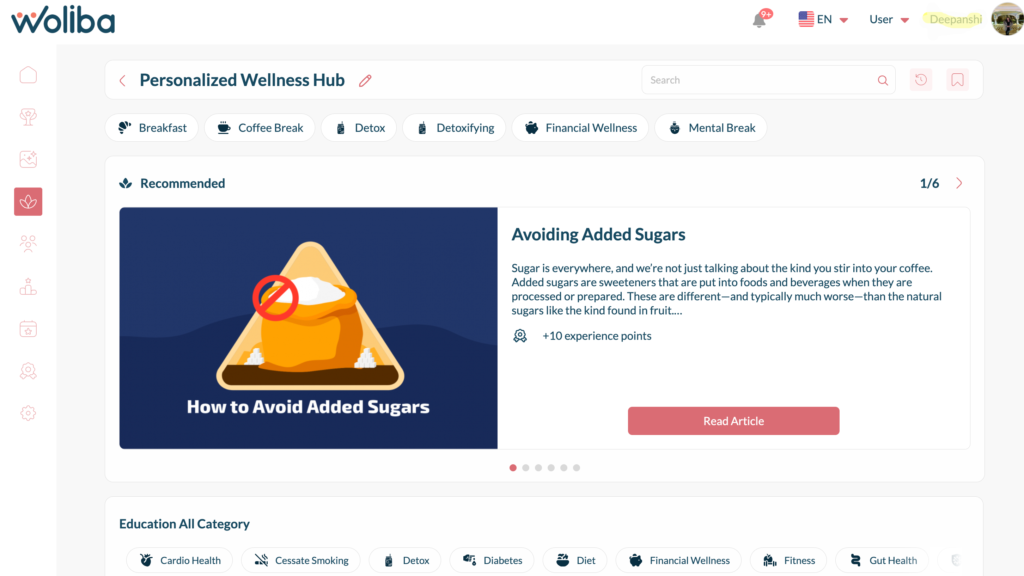
This is where Woliba serves as the operating system for people.
By unifying rewards, engagement, recognition, and wellbeing into one connected platform, Woliba enables organizations to:
- Design a cohesive people operations strategy
- Reinforce desired behaviors consistently
- Monitor risk through integrated data
- Scale personalization without complexity
Rather than managing disconnected programs, leaders gain a single system that supports prevention, performance, and people at scale.
For organizations ready to move beyond fragmented tools and reactive initiatives, a unified approach is no longer optional.
Visit woliba.io to download the full People Operations Playbook or book a demo to see how an operating system for people can turn strategy into sustained impact.