





Why Personalization Has Become the New Standard in Employer Wellness
For many years, workplace wellness programs relied on general challenges, broad content libraries, and standardized behavior-change models. Although these initiatives generated participation, they rarely produced meaningful improvements in health outcomes or employer cost savings. However, as expectations have shifted, personalized wellness journeys for TPAs have become essential for delivering impact.
Today’s employees want wellness experiences that align with their unique needs, preferences, and risk factors. Consequently, employers now expect adaptable wellbeing solutions that evolve over time and guide employees toward sustained behavior change. This shift has created a significant opportunity, as personalized wellness journeys for TPAs provide the individualized support required to influence real health trajectories and reduce preventable claims.
Moreover, because healthier populations consistently drive lower healthcare costs, personalized wellness journeys for TPAs are emerging as the core strategy for demonstrating measurable outcomes. Ultimately, TPAs that adopt personalized wellness journeys for TPAs position themselves as strategic partners capable of improving population health and strengthening employer relationships.
Why Traditional Wellness Programs Failed to Deliver Claims Reduction
Before examining the value of personalization, it is important to understand why traditional wellness programs consistently fell short.
1. One-Size-Fits-All Content Lacked Relevance
Traditional programs assumed entire populations shared similar health risks and motivations. However, employees differ dramatically in their physical, mental, and metabolic needs. When content feels generic or irrelevant, engagement declines and preventive opportunities are lost.
2. Programs Did Not Evolve Over Time
Employee health is dynamic. Needs shift due to aging, stress, work environment, life changes, and physical strain. Yet traditional programs offered static modules that rarely adjusted. Consequently, employees often disengaged once their immediate needs changed.
3. Wellness Dimensions Operated in Silos
Physical, mental, and emotional health are deeply interconnected. Nevertheless, many programs delivered support in isolated categories, preventing employees from receiving holistic guidance. Moreover, siloed content made it difficult for employers and TPAs to identify meaningful trends.
4. Programs Could Not Predict Rising Risk
Most wellness platforms offered retrospective reports instead of forward-looking insights. As a result, employers were unable to intervene early or connect participation with claims outcomes.
Why Personalized Wellness Journeys Are Transforming Population Health
Personalization solves these long-standing issues by creating responsive, data-driven experiences that evolve with each employee.
1. Personalization Increases Relevance — and Relevance Drives Engagement
Employees are far more likely to participate when wellness recommendations align with their actual needs. Personalized journeys adjust:
- goals
- content types
- reminders
- program pathways
- challenge invitations
- learning modules
Because the experience feels tailored, employees remain engaged longer. Moreover, personalization removes the burden of choice, helping employees take meaningful action without feeling overwhelmed.
2. Personalized Journeys Evolve With Changing Needs
One of the greatest strengths of personalized journeys is adaptability. As employee behavior shifts, the system recalibrates what support is needed next. For example:
- If stress signals appear, the journey introduces resilience tools or mindfulness content.
- When movement declines, mobility routines or posture reminders surface.
- If nutrition habits improve, the system gradually adds more advanced recommendations.
Consequently, wellness becomes a continuous, responsive process rather than a temporary initiative.
3. Personalization Is Essential for Preventing Chronic Disease
Chronic conditions develop slowly, often with subtle warning signs detectable only through behavioral and lifestyle data. Personalized journeys leverage these signals to guide employees toward early interventions.
Personalized guidance supports prevention in areas such as:
- metabolic risk and prediabetes
- obesity and GLP-1 reliance
- MSK pain and mobility decline
- hypertension
- sleep deprivation
- stress and burnout
Because chronic disease prevention requires sustained, incremental change, personalized journeys deliver nudges, habits, and programs at the right moment to alter long-term health trajectories.
4. Personalization Enhances Long-Term Behavior Change
Behavior change requires consistency, reinforcement, and gradual skill-building. While traditional programs often delivered short bursts of activity, personalized journeys provide:
- step-based routines
- milestone achievements
- adaptive guidance
- motivational messaging
- recognition moments
- supportive challenges
As a result, employees develop confidence and competency, maintaining healthier habits long after initial participation.
5. Personalization Reduces Preventable Claims by Targeting High-Cost Risks
From a TPA perspective, personalization is not only beneficial — it is strategically essential. It directs interventions toward the conditions that generate the highest employer costs.
MSK Prevention
Personalized mobility routines, stretching sequences, and ergonomic guidance reduce MSK pain, surgeries, and disability claims.
Metabolic and Obesity Prevention
Tailored nutrition nudges, movement paths, hydration targets, and sleep prompts help employees reduce metabolic risk, preventing progression toward costly conditions.
Mental Health Support
Adaptive journeys respond to stress indicators, mood fluctuations, and engagement decline, providing early support that prevents larger crises.
GLP-1 Alternatives and Weight Stability
Personalization supports sustainable weight management, thereby reducing demand for expensive GLP-1 medications.
Therefore, personalized journeys deliver both health improvement and cost reduction — a rare combination in employee benefits.
6. Personalization Strengthens Employer Satisfaction and TPA Retention
Employers want evidence that wellness investments drive outcomes. Personalized journeys provide the data needed to demonstrate:
- reduced rising-risk groups
- improved lifestyle habits
- better MSK function
- more consistent engagement
- decreased preventable claims
- increased preventive care compliance
Moreover, when employees feel supported through tailored wellbeing experiences, employer satisfaction with their TPA increases dramatically.
7. Personalized Journeys Support Whole-Person Wellbeing
Whole-person wellness requires attention across multiple dimensions:
- physical
- emotional
- mental
- social
- environmental
- purpose-driven wellbeing
Because personalized journeys integrate these dimensions into a seamless experience, they address the complex factors that influence health outcomes. This holistic strategy significantly outperforms fragmented wellness models.
How Personalized Wellness Journeys Work Behind the Scenes
Effective personalization requires three core components.
1. Real-Time Data Inputs
Personalization begins with continuous data collection, including:
- activity patterns
- sleep trends
- mood indicators
- MSK-related signals
- engagement behavior
- stress indicators
- preventive care gaps
- environmental or job-related risk factors
2. Intelligent Personalization Algorithms
Next, algorithms analyze the data to identify:
- emerging risks
- engagement preferences
- readiness for change
- behavior patterns
- most effective interventions
- motivational triggers
Consequently, the system predicts what each employee needs most — not just what they should do next.
3. Tailored Interventions Delivered Over Time
Instead of offering all options at once, personalized journeys deliver curated sequences that evolve gradually. This pacing ensures employees avoid burnout and maintain long-term participation.
How Woliba Delivers Personalized Wellness Journeys at Scale
Woliba’s personalization engine empowers TPAs to deliver meaningful prevention and measurable population health improvements.
With Woliba, TPAs gain:
Dynamic Personalization Powered by Behavioral Intelligence
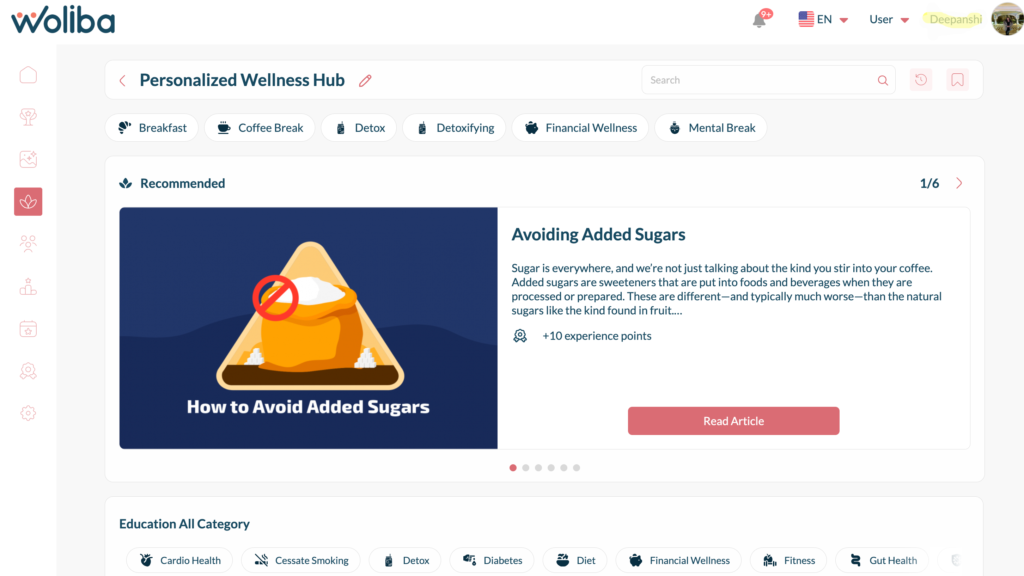
Woliba continuously evaluates behavior trends and lifestyle indicators to adjust wellness journeys in real time. Consequently, wellness becomes proactive rather than reactive.
Whole-Person Content Libraries
Personalized journeys include MSK routines, metabolic support, stress pathways, sleep tools, nutrition guidance, social wellbeing features, and more.
Rising-Risk Identification
When a member’s habits signal increasing health risk, Woliba intervenes early — long before claims surface.
Tailored Challenges and Habit Builders
Employees receive challenges aligned with their interests, risk level, and past engagement patterns.
Predictive Trend Reporting for TPAs
Woliba’s reporting shows how personalized journeys influence population health trends, enabling TPAs to demonstrate strategic value.
Claims-Oriented Outcomes
Because personalization influences daily behavior, Woliba helps reduce risk in the most critical cost areas: MSK, metabolic health, obesity trajectories, and stress.
The Bottom Line: Personalization Is the Future of Preventive Health for TPAs
Personalized wellness journeys represent the next evolution in employer health strategy. Moreover, they give TPAs a powerful tool to improve outcomes, reduce preventable claims, and build long-term employer partnerships.
Ultimately, TPAs that adopt personalization can:
- identify risk earlier
- influence behavior more effectively
- improve population health
- lower preventable claims
- strengthen employer trust
- enhance retention
- differentiate in competitive RFPs
The future of employer health is personalized.
And the future of TPA value depends on delivering personalized journeys that create measurable and lasting impact.