



Too long to read – keytake aways
- An employee wellness program is an employer-sponsored initiative that supports physical, mental, financial, and social health — not just gym perks.
- Companies with strong wellness programs see $3.27 ROI per $1 spent, 27% less absenteeism, and up to 25% lower turnover.
- The most effective programs address 8 pillars of wellbeing: physical, mental, financial, social, occupational, environmental, intellectual, and spiritual.
- Building one requires 7 steps: needs assessment → goal-setting → leadership buy-in → program design → platform selection → launch → measure and improve.
- The budget starts at ~$50 per employee/year for digital-only programs; comprehensive programs run $400–$800 per employee.
- The #1 mistake: building a physical-health-only program and ignoring mental, financial, and social wellness
- Platforms like Woliba help centralize wellness, recognition, and engagement in one place
Every year, U.S. employers lose $1.8 trillion in productivity due to employee health issues. Yet companies with strong employee wellness programs report up to 25% lower turnover, 41% lower absenteeism, and a return of $3.27 for every $1 invested in workforce health.
The difference between those two outcomes? A strategic, well-designed corporate wellness program.Whether you’re building one from scratch, revamping an existing initiative, or looking to justify the investment to leadership, this guide covers everything you need to know — from foundational concepts and program types to a step-by-step implementation roadmap, wellness platform costs and 2026 trends reshaping the space.
What Is an Employee Wellness Program?
An employee wellness program is an employer-sponsored initiative designed to support and improve the physical, mental, financial, and social health of employees. These programs go beyond basic health insurance — they proactively invest in the whole person, creating an environment where employees can perform at their best and feel genuinely supported.
Modern wellness programs are structured, measurable, and tied to business outcomes. They typically include a combination of health education, screenings, fitness incentives, mental health resources, and technology platforms that track progress and reward participation.
Corporate Employee Wellness Program vs. General Wellness Benefits
There’s an important distinction between a corporate employee well-being program and standalone wellness perks. A gym reimbursement or a one-time health fair is a perk. A true corporate wellness program is:
- Fitness challenges and step tracking – things like walking challenges, activity goals, or friendly competitions
- Mental health resources – meditation, mindfulness exercises, or stress management tools
- Nutrition guidance and recipes – practical ways to build better habits outside of work
- Recognition and rewards systems – giving employees something tangible (and visible) for participating
- Social engagement features – feeds, shoutouts, and ways to interact with coworkers
What makes these programs work isn’t just the features—it’s how they come together.
“Easy way to track fitness and earn points at the same time. I like seeing everything in one place.” – User Feedback
When everything is centralized, employees are more likely to actually use it. They don’t have to think about logging into multiple tools or remembering different systems—it just becomes part of their routine.
And importantly, not everyone engages in the same way.
Some employees are motivated by competition and challenges. Others prefer quieter interactions, like reading an article, trying a recipe, or doing a short workout on their own time.
“I actually like the recipe challenges… it’s nice that it’s not all just steps or workouts.” – User Feedback
What is the difference between employee wellness program and employee assistance program?
Many HR teams conflate wellness programs with EAPs. Here’s the difference:
| Key Points | Employee Wellness Program | Employee Assistance Program |
| Focus | Proactive health promotion | Reactive crisis support |
| Scope | Physical, mental, financial, social | Primarily mental health + counseling |
| Participation | Voluntary, incentive-driven | Confidential, need-based |
| Goal | Prevention and performance | Intervention and recovery |
Both are valuable — but a corporate wellness program builds the culture of health that reduces the need for EAP services in the first place.
Why is Employee Wellbeing Programs Important?
Benefits for Employees
When done right, a workforce wellness program delivers meaningful, tangible improvements to employees’ daily lives:
- Reduced stress and burnout — structured mental health resources and workload support help employees manage pressure before it becomes a crisis
- Improved physical health — fitness programs, nutrition guidance, and biometric screenings catch problems early
- Greater financial security — financial wellness components help employees reduce debt, build savings, and reduce financial anxiety
- Stronger workplace connections — group challenges and team activities build social bonds that improve morale and belonging
- Better work-life balance — flexible wellness benefits signal that the organization values employees as whole people
Benefits for Employers
- Lower healthcare costs — Johnson & Johnson’s wellness program saved the company an estimated $250 million in health costs over a decade
- Reduced absenteeism — companies with wellness programs see up to 27% reduction in sick days
- Higher productivity — healthy, engaged employees are 17% more productive than their disengaged peers (Gallup)
- Talent attraction and retention — 87% of employees consider health and wellness offerings when choosing an employer (SHRM)
- Stronger culture — wellness programs are one of the highest-leverage investments in company culture and employee experience
How Does an Employee Wellness Program Improve Company Culture?
Wellness programs naturally bring people together in ways that don’t feel forced. When employees are participating in challenges, recognizing each other, or just interacting on a social feed, it creates more day-to-day connection.
That leads to:
- Stronger connections across teams
- Increased morale
- A greater sense of belonging
“I’ve noticed I’ll comment on posts from people I don’t usually work with… it just makes things feel more connected.” – User feedback
Over time, those small interactions help shift culture from siloed to more connected and engaged.
Who Supports Corporate Wellness Programs?
A successful wellness program isn’t owned by just one group—it’s supported across the organization. When different levels of the company are aligned, participation feels more natural and less like something being pushed from the top down.
HR Leaders
HR teams are usually the driving force behind wellness programs. They design the program, roll it out, and make sure it continues to work over time. That includes tracking engagement, measuring ROI, and making sure everything aligns with company culture. They’re also the ones gathering feedback and adjusting things so the program doesn’t go stale.
Leadership Teams
Leadership plays a bigger role than it might seem. When leaders participate or even just acknowledge the program, it shows that wellness is something the company actually cares about—not just another initiative.
They help set the tone, encourage participation across teams, and make it feel acceptable to take time for things like a walk, a workout, or even a quick mental reset during the day.
Managers
Managers are where a lot of the day-to-day influence happens. They’re closest to employees and can make a big difference in whether people engage or not.
This can be as simple as mentioning a challenge in a team meeting, encouraging participation, or recognizing someone for hitting a goal. Those small moments add up and make the program feel more visible and supported.
Employees
At the end of the day, employees are what make the program work. Their participation, feedback, and interaction are what bring it to life.
They join challenges, share progress, interact with coworkers, and help build that sense of community.
“Fun competition with coworkers and earning rewards… it actually makes me move more.” – User Feedback
When employees are engaged, the program stops feeling like something extra and starts feeling like a natural part of the workday.
What are 12 Pillars of a Workforce Wellness Program?
The most effective workforce wellness programs address wellbeing holistically — not just physical health. Woliba’s approach is built on a 12-pillar wellbeing that covers every dimension of the whole person at work.
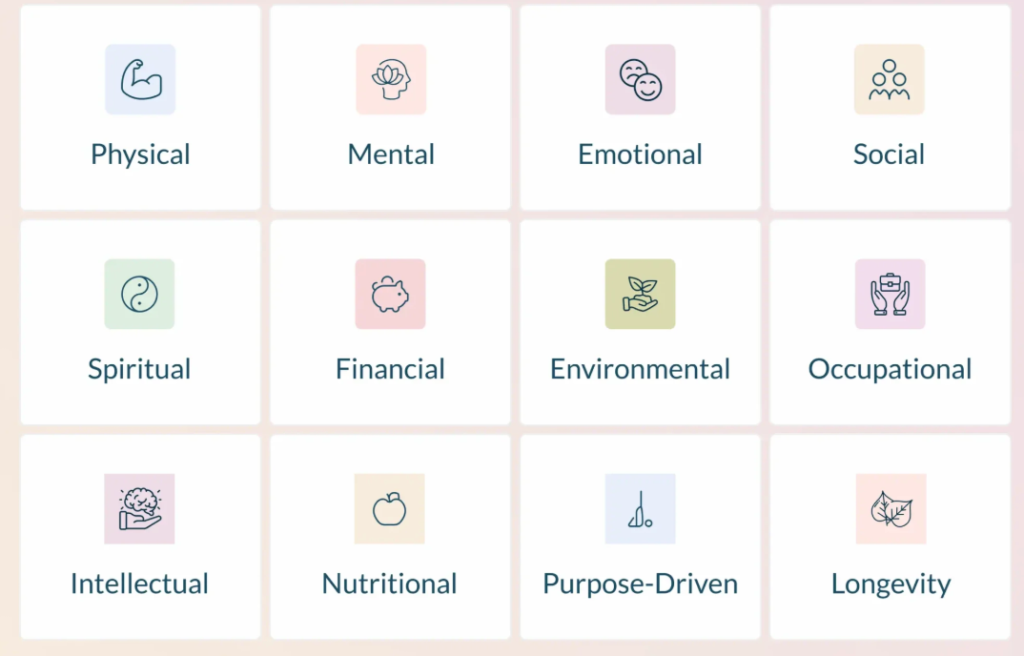
1. Physical Wellbeing
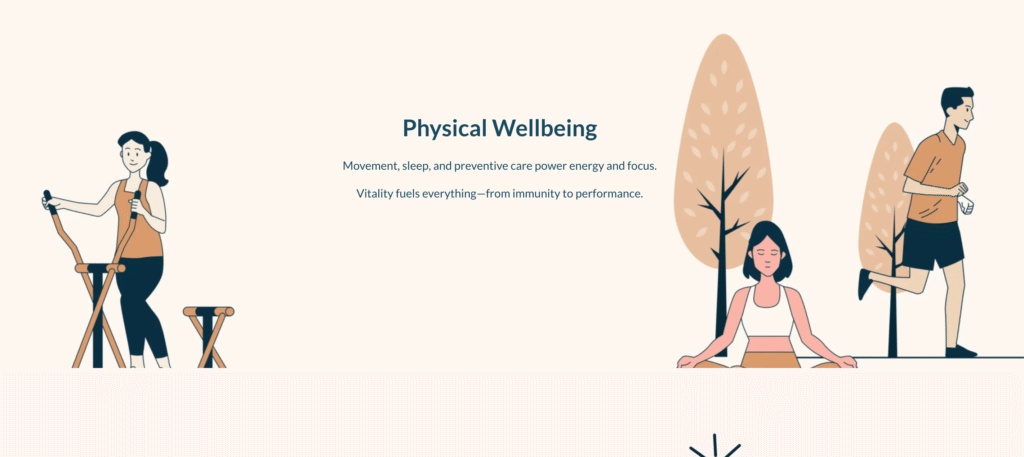
Movement, sleep, and preventive care power energy and focus. Physical wellbeing is the most visible pillar — fitness challenges, step competitions, biometric screenings, on-site gyms, and ergonomics support. It’s often the entry point for wellness programs, but it shouldn’t be the only focus.
2. Mental Wellbeing
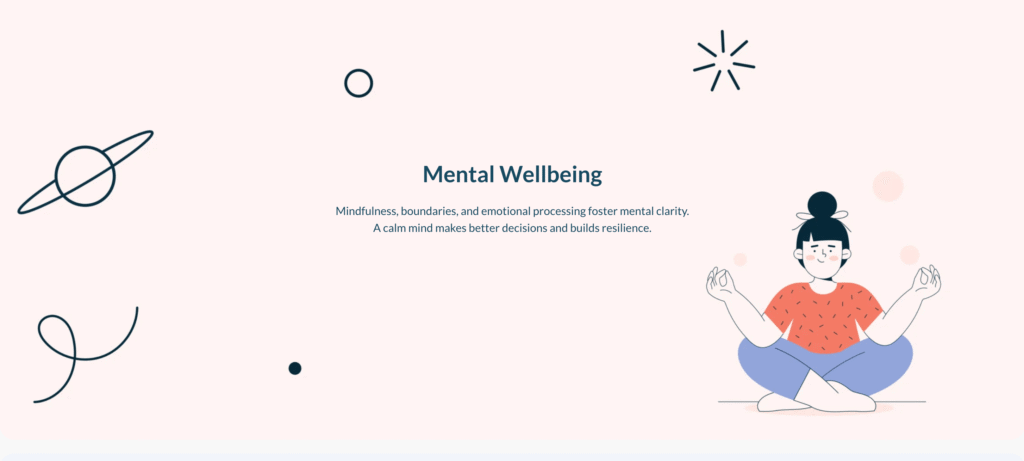
Mindfulness, boundaries, and emotional processing foster mental clarity. Mental health is now the top driver of absenteeism in the U.S. workplace. Programs need robust mental wellness components: access to counseling, stress management resources, mindfulness tools, and destigmatized mental health days.
3. Emotional Wellbeing
Emotional intelligence supports connection, empathy, and stress regulation. Programs that build emotional awareness — through workshops, coaching, and reflective practices — help employees navigate conflict, build stronger relationships, and manage workplace pressure without burning out.
4. Nutritional Wellbeing
Food is fuel. Balanced nutrition enhances both physical and cognitive performance. Nutritional wellness programs — healthy cafeteria options, nutrition challenges, registered dietitian access, and meal planning resources — address one of the most impactful but overlooked health levers in the workplace.
5. Social Wellbeing
Relationships and connection are vital to happiness and long-term health. Loneliness and social isolation at work increase turnover risk and reduce engagement. Social wellness initiatives include team-building activities, mentorship programs, community volunteering, and group wellness challenges that create genuine connection.
6. Intellectual Wellbeing
Ongoing learning sharpens thinking and sustains curiosity. Employees thrive when they’re growing. Intellectual wellness programs include professional development, lunch-and-learn sessions, book clubs, skill-building workshops, and access to educational stipends.
7. Occupational Wellbeing
Purposeful work and career growth create fulfillment. Occupational wellness addresses whether employees feel valued and engaged in their work. This includes career development, recognition programs, manager support, and workload management. Explore what occupational wellbeing really means for your team.
8. Financial Wellbeing
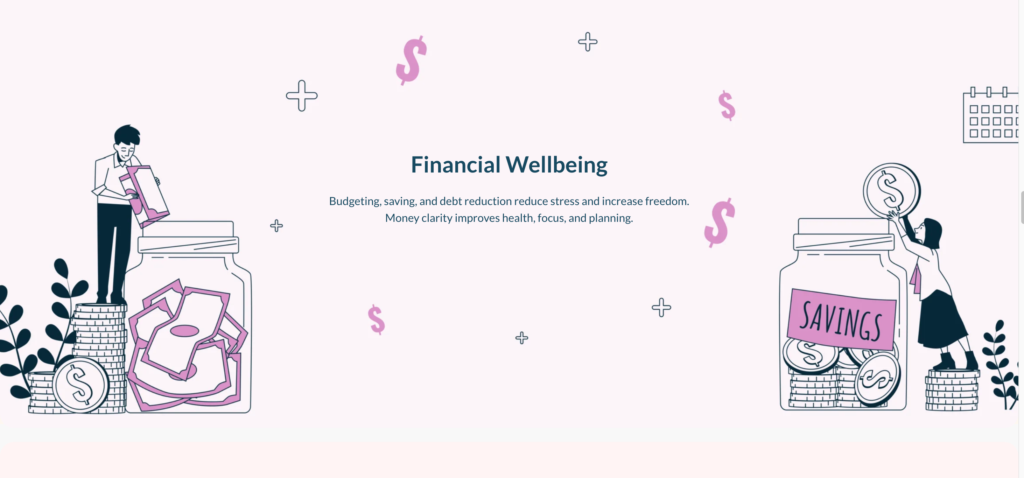
Budgeting, saving, and debt reduction reduce stress and increase freedom. Financial stress costs U.S. employers over $300 billion annually in lost productivity. Financial wellness programs — including budgeting tools, debt management workshops, and retirement planning — directly address a top stressor most programs ignore.
9. Spiritual Wellbeing
Connecting to values, meaning, or higher purpose strengthens inner peace. Spiritual wellness isn’t about religion — it’s about purpose. Programs that help employees connect their work to a larger mission, practice gratitude, and align with personal values support this dimension. Read our deep dive on spiritual wellbeing at work.
10. Environmental Wellbeing
Our physical spaces affect how we feel, behave, and perform. Environmental wellness covers ergonomic workstations, air quality, natural light, clean break rooms, and — for remote workers — support for creating healthy, productive home offices.
11. Purpose & Contribution
Giving back builds fulfillment and a sense of belonging. Programs that connect employees to a cause — volunteer days, charity challenges, social impact initiatives — fulfill this pillar while simultaneously strengthening social bonds and organizational culture.
12. Longevity
Wellbeing isn’t just about living longer — it’s about living better. Longevity-focused programs address the lifestyle behaviors that compound over time: consistent movement, restorative sleep, stress management, preventive health screenings, and nutrition habits that sustain energy and performance for the long haul.
How to Build an Employee Wellness Program – Step by Step
Step 1: Assess Your Workforce Needs
Before designing anything, understand your employees’ actual health challenges and interests. Methods include:
- Health Risk Assessments (HRAs) — structured surveys that identify top health risks across your population.
- Anonymous employee surveys — ask about stress levels, barriers to wellness, and desired program features. Employee surveys are one of the fastest ways to gather actionable data.
- Claims data analysis — if self-insured, review top diagnosis codes driving healthcare costs
- Biometric screening data — aggregate (de-identified) data reveals population-level health trends
The goal is to build a program that addresses real needs — not just what looks good on paper.
Step 2: Set Goals and KPIs
Define what success looks like before you launch. Common wellness program KPIs include:
- Participation rate — target 60%+ for a healthy program; world-class programs hit 80%+
- Engagement rate — active monthly engagement, not just sign-ups
- Health outcome metrics — average BMI change, blood pressure improvements, HRA completion rates
- Absenteeism rate — measure before/after program launch
- Employee satisfaction scores — track changes via quarterly pulse surveys
- Healthcare cost trends — year-over-year change in per-employee health spend
Step 3: Secure Leadership Buy-In
Wellness programs fail without visible executive sponsorship. HR cannot drive participation alone. Steps to secure buy-in:
- Present the financial case: ROI data, cost-of-turnover estimates, productivity impact
- Connect wellness to strategic priorities (talent retention, DEI, culture transformation)
- Ask executives to participate publicly — their visibility dramatically increases enrollment
- Start with a pilot in one department or location to generate proof points
Step 4: Design Your Program
With needs data and goals in hand, design the program structure:
- Choose your pillars — which of the 8 dimensions will you address in year one?
- Select program components — challenges, coaching, screenings, resources, events
- Build an incentive structure — points, rewards, and recognition that drive sustained participation. Explore wellness program incentives that actually move the needle.
- Plan for inclusion — remote employees, shift workers, employees with disabilities, and employees across all fitness levels must be able to participate meaningfully
Step 5: Choose the Right Technology Platform
Manual wellness programs don’t scale. A corporate wellness platform centralizes your program, automates tracking, and gives you the data you need to improve over time. Key features to look for:
- Mobile-first design (most employees engage on their phones)
- Wellness challenge management
- Health content library
- Incentives and rewards management
- Integration with wearables and health apps
- Analytics and reporting dashboard
- Wellness coaching capabilities
Woliba’s all-in-one wellness platform combines all of these into a single solution purpose-built for workforce wellness.
Step 6: Launch and Communicate
A strong launch drives the momentum your program needs. Best practices:
- Multi-channel communication — email, Slack/Teams, posters, manager announcements
- Leadership kick-off — have a C-suite leader kick off the program visibly
- Early wins — start with a high-visibility challenge like a step competition or 30-day wellness challenge to build participation habits fast
- Manager enablement — equip managers to promote and encourage participation within their teams
Step 7: Measure, Iterate, Improve
Wellness programs that run on autopilot lose participation and ROI within 12-18 months. Build a continuous improvement cycle:
- Review KPIs monthly with your wellness committee
- Send quarterly employee feedback surveys
- Refresh challenge themes and content seasonally
- Communicate results back to employees — show them the impact of their participation
- Benchmark against industry standards annually
25 Employee Wellness Program Examples
Here are 25 proven initiatives you can incorporate into your employee wellness program, organized by wellness dimension.
Physical Health Programs
1. Wellness Challenges – Step challenges, walking competitions, and fitness challenges run over 21-30 days are one of the highest-engagement program components. Team-based formats drive social accountability.
2. Biometric Screenings – On-site or mobile health screenings measure blood pressure, cholesterol, glucose, and BMI — catching risk factors employees may not know about. Results feed directly into personalized wellness planning. Learn how biometric screening works in a corporate setting.
3. Corporate Fitness Programs – On-site gyms, gym reimbursements, wellness room, group fitness classes (virtual or in-person), and fitness app subscriptions reduce barriers to physical activity. Corporate fitness programs work best when they offer flexibility for different schedules and fitness levels.
4. Ergonomics Support – Standing desks, ergonomic chairs, monitor arms, and regular ergonomics assessments reduce musculoskeletal injuries — one of the top drivers of workers’ comp claims and lost productivity.
5. Nutrition Programs – Healthy snack options, nutrition challenges, cafeteria menu improvements, and registered dietitian consultations address one of the most impactful but overlooked health levers. Try nutrition challenge ideas to make it engaging.
6. Sleep Programs Poor sleep costs the U.S. economy $411 billion annually (RAND Corporation). Sleep workshops, sleep challenge tracking, and access to sleep hygiene resources help employees perform at their best. A sleep challenge is a surprisingly popular wellness event.
Mental Health Programs
7. Mental Health Days Formally sanctioned mental health days — separate from sick leave — signal that mental health is taken as seriously as physical health. Pair with a destigmatization campaign.
8. Mindfulness and Meditation Guided meditation sessions, mindfulness apps, and quiet rooms help employees manage stress. Meditation at work reduces cortisol levels and improves focus within weeks of consistent practice.
9. Stress Management Workshops Facilitated workshops on stress reduction, resilience, and cognitive reframing give employees practical tools they can use immediately.
10. Mental Health Challenges A structured mental health challenge — with daily prompts around gratitude, journaling, breathing exercises, and social connection — normalizes mental health practices across the organization.
11. Employee Assistance Program (EAP) Integration While EAPs are reactive, integrating them into your broader wellness ecosystem ensures employees know how to access counseling, financial advice, and legal support when needed.
Financial Wellness Programs
12. Financial Literacy Workshops Budgeting basics, debt management, investment fundamentals, and home-buying seminars address financial anxiety before it affects performance.
13. Emergency Savings Programs Employer-matched emergency savings accounts or automatic payroll contributions to savings funds help employees build financial resilience.
14. Student Loan Repayment Assistance For younger workforces, student loan repayment benefits are one of the most valued and differentiated offerings in talent attraction.
15. Retirement Planning Support Beyond standard 401(k) enrollment, proactive retirement planning workshops and one-on-one financial advisor access drive long-term financial security.
Social and Community Programs
16. Team Wellness Challenges Department vs. department step challenges, charity fundraising walks, and group fitness goals build camaraderie while advancing health. Wellness challenges for diverse workforces require thoughtful design to include everyone.
17. Volunteer Programs Community service days, charity challenges, and social impact initiatives fulfill social wellness and purpose — both powerful drivers of engagement and retention.
18. Wellness Committees and Champions – Peer wellness champions embedded across departments dramatically increase program visibility and participation. They humanize the program and make it feel locally relevant.
19. Social Clubs and Interest Groups Running clubs, book clubs, cooking groups, and hobby leagues build the informal social connections that reduce loneliness and strengthen culture.
Work-Life Balance Programs
20. Flexible Work Arrangements – Flexible start/end times, compressed workweeks, and remote or hybrid options are among the highest-value wellness benefits employees report — and cost nothing to implement.
21. Paid Time Off Policies – Generous PTO, mental health days, and mandatory minimum vacation policies (with manager modeling) prevent burnout and improve recovery. Learn the signs of employee burnout before they escalate.
22. Digital Detox Initiatives – No-meeting days, after-hours communication norms, and digital detox challenges help employees recover from the always-on culture that drives chronic stress.
23. Caregiver Support Programs – Backup childcare, elder care resources, and flexible leave policies for caregiving responsibilities reduce a massive but often invisible source of employee stress.
Preventive and Occupational Health
24. Health Risk Assessments – Annual HRAs give employees personalized health insights and give employers population-level data to design targeted interventions. They’re typically the highest-ROI component of any corporate wellness program.
25. Wellness Coaching – One-on-one wellness coaching provides personalized support for employees working toward specific health goals — whether weight management, smoking cessation, or chronic disease management. Coaching is the highest-touch and highest-impact component in any workforce wellness program.
How to Make Workplace Wellness Programs Impactful
For a wellness program to actually work, it has to go beyond just existing. A lot of companies launch programs with good intentions, but if employees don’t engage with them regularly, they tend to fade into the background pretty quickly.
The programs that stick are the ones that feel easy, relevant, and worth coming back to.
Make It Engaging
Engagement is everything. If the program feels repetitive or like a chore, participation will drop off fast.
Adding elements like challenges, leaderboards, and rewards gives people a reason to come back. It creates a sense of progress and even a little friendly competition, which can go a long way.
Make It Inclusive
Not everyone is motivated by the same things. Some people love step challenges, others don’t care about them at all.
The most effective programs offer more than just one type of activity—things like workouts, recipes, articles, mental health resources, and even small daily actions. That way, employees can participate in a way that fits their lifestyle.
“With other platforms it felt like everything was step-based and kind of boring… this has more variety so more people actually participate.” – User Feedback
Make It Easy to Use
If something feels complicated or takes too long to figure out, people won’t use it. It’s that simple.
Wellness programs need to be intuitive and easy to access—whether that’s through mobile apps or a centralized platform. The less friction there is, the more likely employees are to engage consistently.
Make It Social
People are more likely to stick with something when they feel connected to others. Social features like feeds, comments, and recognition help turn wellness into a shared experience instead of a solo activity.
Even small interactions—liking a post, commenting on a coworker’s progress, or giving a shoutout—can make the program feel more alive and meaningful.
When these elements come together, wellness stops feeling like “one more thing to do” and starts becoming something employees actually enjoy being part of.
What Can HR Leaders Do to Implement a Successful Employee Wellness Program?
Launching a wellness program is one thing—getting people to actually use it is another. The difference usually comes down to how it’s introduced, how easy it is to engage with, and whether it feels relevant to employees’ day-to-day lives.
Here are a few ways HR leaders can set their programs up for success:
1. Focus on Engagement First
Before anything else, the program has to be engaging. If it feels like just another requirement, people won’t stick with it.
That means making participation feel rewarding—whether that’s through points, incentives, or even just recognition. The goal is to give employees a reason to come back regularly.
2. Offer Variety
Not everyone is motivated by the same things, so the program shouldn’t be one-dimensional.
Including a mix of fitness, financial, mental health, and social features helps reach more people. Some employees might join for challenges, while others might engage more with content like articles, recipes, or meditation.
3. Use Gamification
Adding elements like leaderboards, challenges, and goals makes the experience more interactive and keeps people motivated over time.
“The challenges and leaderboard definitely help… it keeps me accountable.” – User Feedback
That sense of progress and friendly competition can be a big driver of consistent participation.
4. Recognize Employees
Recognition goes a long way. Celebrating achievements—whether big or small—helps reinforce positive behavior and makes employees feel seen.
This can be as simple as shoutouts, posts, or highlighting milestones within the platform.
5. Make It Easy to Access
If the program is hard to navigate or not easily accessible, people won’t use it.
Having a mobile-friendly, centralized platform like Woliba makes a big difference. Employees can check in, log activity, and engage with content without it feeling like extra effort.
6. Listen to Feedback
No program is perfect from the start. The most successful ones evolve based on what employees actually want and use.
Regular feedback helps HR teams understand what’s working, what’s not, and where adjustments can make the biggest impact.
When HR leaders focus on these areas, wellness programs become less about rollout and more about ongoing engagement—something that grows and improves over time instead of fading out after launch.
How Much Does a Corporate Wellness Program Cost?
Corporate wellness program costs vary widely based on program scope, company size, and platform choice. One of the most important things to look for when evaluating platforms is how you’re billed — many vendors charge per total employee headcount whether or not employees actually participate. That means you pay for people who never log in.
Woliba takes a different approach: you pay for active enrolled users only, not your entire workforce. With a minimum platform fee of just $100/month, it’s accessible for growing teams and scales efficiently as participation increases — so your per-user cost reflects real value delivered.
| Program Scope | What’s Included | Best For |
| Starter | Ready-to-go challenges, core engagement tools | Teams getting started with wellness |
| Growth | Personalization, social features, deeper connection tools | Companies building a wellness culture |
| Performance | Data-driven insights, automation, advanced reporting | HR teams optimizing program outcomes |
| Enterprise | AI-powered recommendations, expert coaching, full suite | Large or complex organizations |
Optional add-ons — including wellness coaching, recognition and rewards, engagement surveys, live expert sessions, and HRIS/SSO integration — let you build the exact program your workforce needs without paying for features you don’t use.
The average U.S. employer spends approximately $300 per employee per year on wellness programs across all vendors, but ROI benchmarks consistently show $3.27 returned for every $1 invested — making it one of the highest-return line items in a People Ops budget.
For a customized estimate based on your team size, visit Woliba’s pricing page.
Budget-Friendly Wellness Program Ideas
Budget is not a barrier to launching an impactful corporate employee wellness program. High-value, low-cost options include:
- Free wellness challenges via a platform like Woliba — step challenges, nutrition challenges, mindfulness challenges require minimal budget
- Lunch-and-learn webinars on stress management, nutrition, or financial wellness
- Walking meetings — replace some seated meetings with walking equivalents
- Manager-led wellness check-ins — brief, informal conversations about workload and stress
- Wellness Wednesday themes — weekly email, Slack post, or challenge prompt keeps wellness top of mind with zero cost
How to Measure the Success of Your Workforce Wellness Program
Measuring wellness program success requires both leading indicators (participation, engagement) and lagging indicators (health outcomes, cost savings). See key matrix to track:
| Participation Metrics |
|
| Health Outcome Metrics |
|
| Business Impact Metrics |
|
| Engagement and Culture Metrics |
|
ROI Calculation Formula
A simple wellness ROI calculation:
ROI = (Program Benefits – Program Costs) / Program Costs × 100
Program benefits include: reduced absenteeism costs + reduced healthcare claims + productivity gains + lower turnover costs.
Program costs include: platform fees + incentive spend + administration time + vendor fees. For a more detailed walkthrough, see calculating the ROI of wellness program.
Common Mistakes to Avoid
Even well-intentioned corporate wellness programs fail when they fall into these traps:
1. One-Size-Fits-All Design – A step challenge doesn’t work for employees with mobility limitations. Financial workshops don’t resonate with highly-compensated executives. Segment your program and offer meaningful choice across all health dimensions.
2. Launching Without a Communication Plan – The best wellness program fails if employees don’t know it exists or don’t understand how to participate. Invest as much in launch communications as in program design.
3. No Leadership Participation – Executives who don’t visibly participate send an unspoken message that wellness is an HR initiative, not a company priority. Secure executive sponsorship before launch.
4. Focusing Only on Physical Health Programs that ignore mental health, financial stress, and social connection miss the top drivers of absenteeism and turnover in today’s workforce.
5. Ignoring Remote and Hybrid Employees Programs built around on-site amenities exclude the growing majority of remote workers. Every program element should have a digital or remote-accessible equivalent.
6. Neglecting Incentive Design Poorly structured incentives either drive gaming behavior (people doing the minimum to earn rewards) or fail to motivate at all. Well-designed rewards and incentive management is a science — not an afterthought.
7. Measuring Only Participation, Not Outcomes High enrollment numbers are a vanity metric if health outcomes and business impact aren’t improving. Track the metrics that matter.
8. Running It Without Technology Spreadsheets and manual tracking don’t scale. Without a technology platform, you can’t personalize, measure, or continuously improve your program.
Strategies to Improve Wellness Program Adoption
Even the most well-designed wellness program won’t make an impact if employees don’t actively use it. Adoption is often the biggest hurdle, and it usually comes down to how visible, accessible, and engaging the program feels from the start.
Here are a few strategies that can make a meaningful difference:
Leadership Participation
When leadership is involved, it signals that the program actually matters. Employees are much more likely to participate if they see leaders joining challenges, posting updates, or recognizing others. It helps shift wellness from “optional” to something that’s part of the culture.
Clear Communication
If employees don’t understand how the program works or what’s in it for them, they won’t engage. Keep communication simple, consistent, and ongoing—not just at launch. Regular reminders, updates, and highlights help keep the program top of mind.
Consistent Challenges
One-time initiatives tend to lose momentum quickly. Ongoing challenges—whether weekly or monthly—give employees a reason to keep coming back. Rotating themes or formats can also help prevent things from feeling repetitive.
Recognition and Rewards
People are more likely to stay engaged when their efforts are acknowledged. This can be through points, incentives, or even simple shoutouts. Recognition adds a social layer that makes participation feel more rewarding and visible.
Easy Onboarding
First impressions matter. If getting started feels complicated, people may drop off before they even begin. A smooth onboarding experience—clear instructions, simple setup, and easy navigation—helps remove that initial barrier and encourages early participation.
When these elements are in place, adoption tends to happen more naturally. The program becomes less about pushing participation and more about creating an experience employees actually want to be part of.
Employee Wellness Program Trends for 2026
The workforce wellness landscape is evolving rapidly. Here’s what forward-thinking HR and People Ops teams are prioritizing in 2026:
1. AI-Personalized Wellness Journeys
Generic programs are giving way to AI-driven personalization — tailoring content, challenges, and coaching recommendations to individual health profiles, goals, and engagement patterns.
2. Mental Health as Infrastructure
Mental health is no longer a perk. Leading employers are embedding mental health support directly into the workday — normalizing therapy, offering on-demand mental health apps, and training managers as mental health first responders.
3. Financial Wellness Expansion
With economic uncertainty continuing, financial wellness has moved from “nice to have” to “table stakes.” Programs are expanding beyond retirement planning to address emergency savings, debt, and everyday financial stress.
4. Holistic Wellbeing Platforms
Fragmented point solutions (one app for fitness, another for mental health, another for rewards) are being replaced by integrated platforms that give employees — and HR — a unified experience.
5. Manager Enablement as a Wellness Lever
The research is clear: your manager is the single biggest determinant of your wellbeing at work. Organizations are investing in manager training as a core wellness strategy. See the role of leadership in employee wellbeing.
6. Workforce Analytics Integration
Wellness data is being integrated with broader HR analytics to surface connections between employee health, engagement, and business performance — enabling more strategic People Ops decisions.
7. Inclusive and Culturally Competent Programming
Diversity, equity, and inclusion principles are being applied to wellness design — ensuring programs reflect and serve the diverse health needs, cultural backgrounds, and life circumstances of modern workforces.
Stats About Employee Wellness
Employee wellness programs aren’t just a trend—they’re backed by data that shows real impact across engagement, productivity, and overall workplace satisfaction.
- 80% of employees say wellness programs improve morale
When employees feel supported in their well-being, it shows up in how they engage with their work and coworkers. - Companies can see up to a 3:1 return on wellness investments
From reduced healthcare costs to increased productivity, wellness programs often deliver measurable financial value over time. - Engaged employees are 21% more productive
When employees are more engaged—physically, mentally, and socially—they tend to be more focused and effective in their roles.
These numbers reinforce what many organizations are already experiencing firsthand: investing in employee wellness isn’t just good for employees—it’s good for the business as a whole.
Build a Workforce Wellness Program That Actually Works
An employee wellness program isn’t a line item — it’s a strategic investment in the people who drive your business forward. The organizations winning the talent war in 2025 aren’t just offering better salaries; they’re building cultures where employees genuinely thrive.
Woliba’s employee wellness platform gives HR and People Ops teams everything they need to launch, manage, and scale a corporate wellness program that delivers measurable results — from wellness challenges and health content to coaching, incentives, and analytics, all in one place.
Ready to see what a modern workforce wellness program looks like? Explore Woliba’s wellness platform and discover how leading companies are transforming employee health and engagement.