


Employees are burning out faster than ever. Healthcare costs keep climbing. And getting people to actually show up — not just physically, but mentally — feels harder than it used to.
A well-designed employee wellness program addresses all of this. Not with posters or one-off perks, but with a structured system that makes healthy habits easier and gives you real data to prove it’s working.
Below are 15 clear benefits of employee wellness — specifically, of running a proper employee wellness program — explained, with the research behind each one. We’ve also included honest context where the research is debated, because you deserve accurate information, not just impressive-sounding numbers.
1. Lower Healthcare Costs
This is usually the number that gets leadership’s attention first.
A well-known 2010 study published in the journal Health Affairs (by researchers Baicker, Cutler, and Song at Harvard) found that medical costs fell by about $3.27 for every $1 spent on wellness programs, with absenteeism costs dropping by another $2.73.
It’s worth being upfront: this figure has been debated over the years. Some researchers, including one of the study’s own original authors, later said it may be too early to say wellness programs definitely save money — partly because many of the original studies compared people who chose to join a wellness program to people who didn’t, rather than using a more rigorous side-by-side comparison. Healthier, more motivated people tend to join wellness programs in the first place, which can make the results look better than they really are.
Even with that honest caveat, more recent data still points in a positive direction: 91% of companies that actively track their wellness program’s return on investment report a positive outcome. The exact multiplier may vary, but the overall pattern — healthier employees cost less to insure — holds up.
The logic itself is simple, even without a perfect statistic behind it: prevention is cheaper than treatment. When employees have access to health screenings, fitness ideas, and nutrition guidance, they tend to develop fewer chronic conditions — and file fewer expensive insurance claims down the line.
A real example: Gilsbar, an insurance company using Woliba, saw a 406% lift in engagement and a 90% challenge participation rate within their very first program year — the kind of early traction that tends to show up in healthcare cost trends over time.
2. Fewer Sick Days
Unplanned absences are expensive. Industry estimates put the direct cost of an unplanned sick day at well over a thousand dollars per employee per year — and that’s before factoring in the cost of coworkers covering the gap or projects slipping behind schedule.
Companies with structured wellness programs consistently report noticeably fewer sick days than those without one. This makes sense: employees who exercise regularly, eat better, and manage stress well simply get sick less often. And when they do get sick, they tend to recover faster.
There’s a less obvious reason too. Employees who feel genuinely supported are less likely to use a “sick day” as a stand-in for a much-needed mental health break — because that need is already being met through the wellness program itself, instead of being hidden behind a fake stomach bug.
3. Better Employee Engagement and Retention
Gallup, which has studied workplace engagement for decades, found that companies with highly engaged employees are 23% more profitable than companies with disengaged teams. Highly engaged teams also see roughly 78% lower absenteeism and significantly lower turnover.
The tricky part for most companies isn’t believing engagement matters — it’s figuring out what actually moves it. Wellness programs are one of the few levers with consistent evidence behind them.
When a company genuinely invests in an employee’s health, that employee benefits. They feel valued as a whole person, not just as a job title. That feeling shows up directly in loyalty, effort, and the kind of retention that a salary bump alone usually can’t buy.
4. Mental Health Support That Actually Reaches People
The World Health Organization estimates that depression and anxiety alone cost the global economy roughly $1 trillion a year in lost productivity. In the U.S., mental health conditions account for tens of millions of lost workdays annually.
Most workplaces still quietly treat mental health as a personal, private problem. A well-designed wellness program makes it a shared, systemic one instead — by building accessible, stigma-free resources employees can use privately, on their own schedule, without needing to explain themselves to a manager.
Mindfulness tools, structured stress management resources, and real mental health support shift company culture from silence to something closer to genuine support. That shift alone tends to change outcomes — not just fewer sick days, but stronger day-to-day focus and collaboration.
5. Higher Productivity
Wellness programs tackle two separate productivity problems.
The first is absenteeism — people not showing up at all. The second, quieter problem is presenteeism — people physically at their desk, but not really there. Industry research consistently finds presenteeism costs employers far more than absenteeism, simply because it’s so much more common and harder to spot.
Employees dealing with chronic stress, poor sleep, or physical discomfort can’t focus well, no matter how many hours they’re clocking in. Wellness programs that address sleep, movement, and stress directly tend to see measurable productivity gains among participants compared to non-participants — often described as the equivalent of adding several extra people to a team’s output, without actually growing headcount.
6. Less Employee Burnout
Recent Gallup research shows a large share of employees experience significant daily stress — and burnout isn’t just a personal struggle, it’s an expensive organizational problem. Burned-out employees are considerably more likely to call in sick and significantly more likely to leave within the next year.
Companies with structured wellness programs report meaningfully lower rates of employee burnout than those without one.
Addressing employee burnout before it escalates takes more than a single “wellness day” once a year. It requires consistent systems — regular recovery time, a genuinely healthy norm around work-life balance, and tools that help employees manage stress on an ongoing basis, not just during a crisis.
7. A Stronger Company Culture
Culture is notoriously hard to build on purpose. Most deliberate attempts feel forced — a mandatory trust fall, a stiff “culture committee” meeting. Wellness programs are one of the few approaches that build culture almost as a side effect, rather than as the stated goal.
When a team takes on a shared challenge — a step competition, a sleep-focused week, a financial wellness month — they connect over something real. They cheer each other on. They build relationships across departments that don’t usually happen through an org chart or a mandatory team lunch.
Pair wellness with a genuine culture of recognition — where healthy habits and participation get celebrated publicly — and you start reinforcing real values, not just short-term behaviors.
Companies with strong wellness-driven cultures tend to see meaningfully lower voluntary turnover and higher rates of employees referring friends to open roles — both signs that people genuinely want to be there, not just tolerate being there.
8. A Real Recruitment Advantage
Most job seekers today weigh wellness offerings when comparing job offers — and for workers under 40, that consideration matters even more.
A company that visibly invests in employee health sends a signal before anyone even applies: we see you as a whole person, not just a role to fill. That signal travels through Glassdoor reviews, word-of-mouth referrals, and LinkedIn posts in a way that a polished job description simply can’t replicate.
In industries where wellness programs are still rare — restaurants, logistics, retail — even a modest, well-run program can create real, noticeable differentiation at a relatively low cost.
9. Prevention of Chronic Disease
Chronic diseases account for the vast majority of U.S. healthcare spending — and most of them are preventable. The risk factors behind them (poor diet, inactivity, chronic stress, poor sleep) are exactly what a good wellness program is designed to address.
Tools like biometric screenings help identify at-risk employees before symptoms even appear. Early intervention changes individual health outcomes and drives down overall claims costs across the company.
A single avoided hospitalization can offset years of program spending. That’s the long-term financial argument for preventive wellness — and it’s part of why programs that have been running for several years tend to consistently outperform brand-new ones.
10. Financial Wellness: The Most Overlooked Pillar
Recent research from PwC found that a majority of financially stressed employees say money worries have made them noticeably less productive at work. Financial stress raises cortisol, disrupts sleep, and creates a kind of constant background mental load that makes it genuinely hard to focus on much else.
Yet most wellness programs stop entirely at physical health. Adding financial wellness resources — budgeting tools, debt management support, retirement planning access — rounds the program out and addresses a stressor that touches more employees than almost any other.
Financially secure employees also tend to stay longer. They’re less tempted by a marginally higher salary elsewhere when they already feel genuinely stable where they are.
11. Support for Remote and Hybrid Teams
Remote employees consistently report higher rates of loneliness and more difficulty fully disconnecting after work compared to in-office staff. Traditional wellness programs built around on-site perks — a gym in the office, a free breakfast bar — miss this entire group of employees by default.
A digital-first approach — activity challenges, async participation, mobile-accessible resources — makes sure remote and hybrid employees get the same quality of support as people working from a physical office.
For many companies, this is also the practical argument for moving from a scattered “program” to an actual platform. A shared spreadsheet can’t realistically run a company-wide challenge across five time zones. But a proper platform can.
12. Better Data for HR Decisions
One of the less obvious benefits of a structured wellness program is the visibility it creates. Participation rates, engagement trends by department, early signs of collective stress — this is information HR teams simply don’t get from an annual survey alone.
Which teams are quietly disengaging? Which initiatives actually resonate with different groups? Where are the early warning signs before they turn into a resignation letter? Good wellness data can surface these patterns early — and give you real evidence when making the case for continued investment.
💡 Tip: Look for a corporate wellness apps that integrates participation data with your existing HR systems. When wellness metrics sit next to performance and retention data, the connections between them become much easier to see and act on.
13. Occupational Wellness and Fewer Workplace Injuries
Occupational wellness — the dimension tied directly to the physical work environment — often delivers the fastest, most measurable return of any wellness initiative.
Ergonomic injuries, repetitive strain, and musculoskeletal issues remain among the leading causes of workers’ compensation claims. Programs that address movement throughout the workday, proper workstation setup, and physical recovery meaningfully reduce injury rates and the costs that come with them.
For desk-based teams, the picture looks different but matters just as much — back pain, eye strain, and the effects of long stretches of sitting all have a real, direct impact on both performance and long-term health.
14. Social Wellbeing and Genuine Belonging
Research from BetterUp found that employees with a strong sense of belonging are significantly more likely to perform at their peak — and take far fewer sick days than employees who feel isolated.
Social wellbeing creates the conditions for that sense of belonging in a way that forced, mandatory team-building rarely manages to. When people voluntarily join a shared challenge, they’re connecting over something that actually feels meaningful. The relationships that form tend to be more genuine — and longer-lasting — than ones built purely on sitting near each other or reporting to the same manager.
This matters even more for teams still rebuilding the social connections disrupted by remote work and years of organizational change.
15. Long-Term Organizational Resilience
This last benefit is harder to fit into a quarterly report, but it may be the most important one of all.
Organizations that invest consistently in employee health build workforces that can absorb disruption — and recover from it faster. After major disruptions like the COVID-19 pandemic, companies with established wellness programs tended to recover productivity noticeably faster than companies without one. The underlying reason makes intuitive sense: a workforce with healthy habits, real mental health support, and a genuine culture of care is simply more resilient when things go sideways.
Programs that feel like a cost in year one tend to look like essential infrastructure by year three. That compounding effect is often what separates companies that merely survive disruption from ones that actually grow through it.
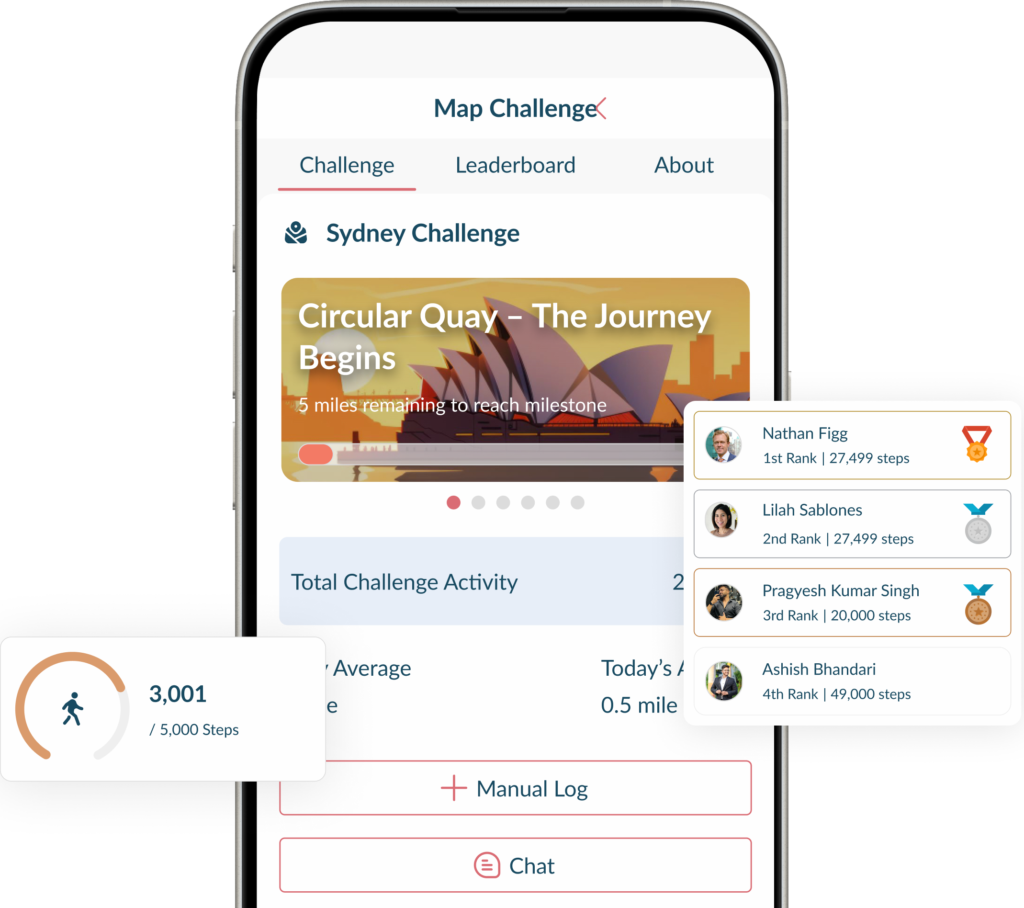
You’ve seen the research. See it work for your team.
Woliba starts from just $2/mo/employee.
How Much Does an Employee Wellness Program Cost?
The honest answer: it depends entirely on what you build — but you don’t need a large budget to get started.
- Free or low-cost options — flexible scheduling, genuine recognition practices, and simple step challenges cost little to nothing and still move participation and morale in the right direction.
- Mid-range programs — a dedicated wellness platform, gym stipends, or an Employee Assistance Program typically run a modest, predictable amount per employee each month.
- Full-scale programs — biometric screenings, dedicated wellness staff, or a comprehensive all-in-one platform cost more upfront, but tend to come with the strongest, most measurable long-term ROI.
Most companies don’t start at the full-scale end. They begin small, prove it works with one pilot team, and expand the budget once participation and results are clear. Given everything above, the real financial risk usually isn’t spending too much on wellness — it’s waiting too long to start at all.
Conclusion
Wellness programs aren’t a perk. They’re a business decision.
The overall pattern holds up across industries, company sizes, and program types: organizations that invest in employee health tend to spend less on healthcare, lose fewer days to absenteeism, retain people longer, and build cultures that attract better talent. Not every individual statistic in this space is bulletproof — and we’ve tried to be honest about that rather than oversell it — but the direction of the evidence is consistent and hard to ignore.
The biggest mistake most companies make isn’t choosing the “wrong” program. It’s waiting too long to start, or starting with something so passive that employees barely notice it exists.
Start with one goal. Pick a single outcome you want to move — absenteeism, engagement, healthcare claims. Build around that. Add more dimensions as participation grows. The compounding effect tends to show up faster than most HR leaders expect.
Your employees are already dealing with stress, burnout, and health challenges — with or without a program in place. The only real question is whether your organization is actively helping them through it, or leaving them to figure it out entirely on their own.