


Picture this. Your team just got back from a corporate wellness retreat. People are smiling. They feel rested. They talked to coworkers they barely knew before. Everyone says, “We should do this more often.”
Now picture the same team six weeks later. The inbox is full again. Meetings are back to back. Stress is creeping in. The retreat feels like a nice memory, and nothing more.
This happens at a lot of companies. And it’s a shame, because well-planned corporate wellness retreats can do much more than give people a nice day out. They can lower stress, bring teams closer, and help you keep your best people.
The secret is in two things: how you plan the retreat, and what you do after it ends.
What Is a Corporate Wellness Retreat?
A corporate wellness retreat is a planned event where a company brings employees together to focus on their health and social wellbeing. That includes the body, the mind, and the bonds between people.
It can be short or long. It can be in a fancy resort, a local park, or even online. What makes it a wellness retreat is the focus. The main goal is to help people feel better, not to finish a work project.
Wellness retreat vs. regular company offsite
People often mix these up. Here’s the difference:
| Regular offsite | Wellness retreat | |
|---|---|---|
| Main goal | Plan strategy, solve work problems | Help people rest, recharge, and connect |
| Typical activities | Meetings, presentations, workshops | Yoga, hikes, mindfulness, cooking, team games |
| How people feel after | Often tired, with a long to-do list | Calmer, more connected, more energized |
| What success looks like | Decisions made, plans agreed | Lower stress, stronger bonds, better habits |
You can mix the two. Many companies add wellness sessions to a regular offsite. Just be careful. If the day is 90% meetings and 10% yoga, people won’t feel like they had a break.
Who are corporate wellness retreats for?
Almost any team can benefit. They work especially well for:
- Teams under a lot of pressure, like after a big launch, a busy season, or a tough year
- Remote and hybrid teams who rarely see each other in person
- New or growing teams who need to build trust quickly
- Leadership teams who need to model healthy habits for everyone else
Want retreat-level wellbeing all year long?
Woliba gives your team challenges, recognition, and pulse surveys in one easy platform. Try it free and see the difference.
Why Corporate Wellness Retreats Matter More Than Ever
Work is wearing people down. The numbers make this clear.
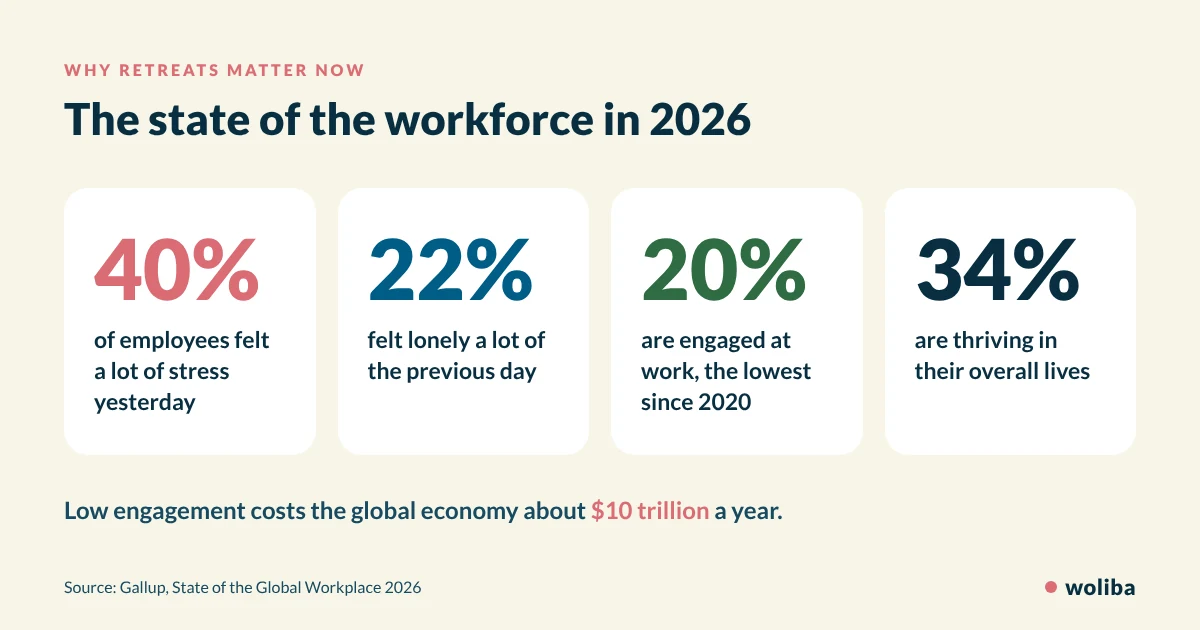
Gallup’s State of the Global Workplace 2026 report found that:
- 40% of employees worldwide felt a lot of stress during the previous day.
- 22% felt lonely a lot of the previous day.
- Only 20% of employees are engaged at work. That is the lowest level since 2020.
- Only 34% of employees are thriving in their overall lives.
Low engagement isn’t just a feelings problem. Gallup estimates it costs the global economy around $10 trillion in lost productivity. (Learn more about why employee engagement matters.)
Then there’s turnover. When a stressed, disconnected employee quits, replacing them can cost 50% to 200% of their yearly salary. That includes hiring, training, and the time it takes a new person to get up to speed.
A wellness retreat won’t fix all of this on its own. But it is one of the fastest ways to show your people that you care, give them a real break, and start building healthier habits as a team.
7 Benefits of Corporate Wellness Retreats
A good retreat helps your people and your business at the same time. Here’s what you can expect.
1. Less stress and a real reset
Most people never truly switch off from work. Even on weekends, they check email. A retreat removes daily pressures for a short time. That break gives the mind and body a chance to recover.
2. Lower risk of burnout
Burnout doesn’t happen overnight. It builds slowly from stress that never gets a release. A retreat catches people before they reach that point. It also teaches simple tools, like breathing exercises or better sleep habits, that they can use every day.
3. Stronger team bonds
People open up when they’re away from desks and screens. They share meals, laugh during games, and help each other on a hike. These moments build trust. And teams that trust each other work better together.
4. Less loneliness, especially for remote teams
Remote and hybrid workers often feel cut off. A retreat gives them face time with coworkers they usually only see on video calls. Those real-life connections make online work feel more human afterward.
5. Higher engagement
When a company invests in people’s wellbeing, employees notice. They feel valued. People who feel valued care more about their work and their team.
6. Better retention
People are less likely to leave a company that looks after them. With replacement costs so high, even keeping one or two people from quitting can pay for a retreat.
7. A healthier company culture
When leaders join in, a retreat sends a strong message: “Wellbeing matters here.” That message, repeated over time, shapes how the whole company works.
One important note: most of these benefits fade if nothing happens after the retreat. That’s why we’ll cover a full 90-day follow-up plan later in this guide.
8 Corporate Wellness Retreat Ideas
There’s no single “right” retreat. The best one fits your team’s needs, size, and budget. Here’s a quick overview of these corporate retreat ideas, followed by details on each.
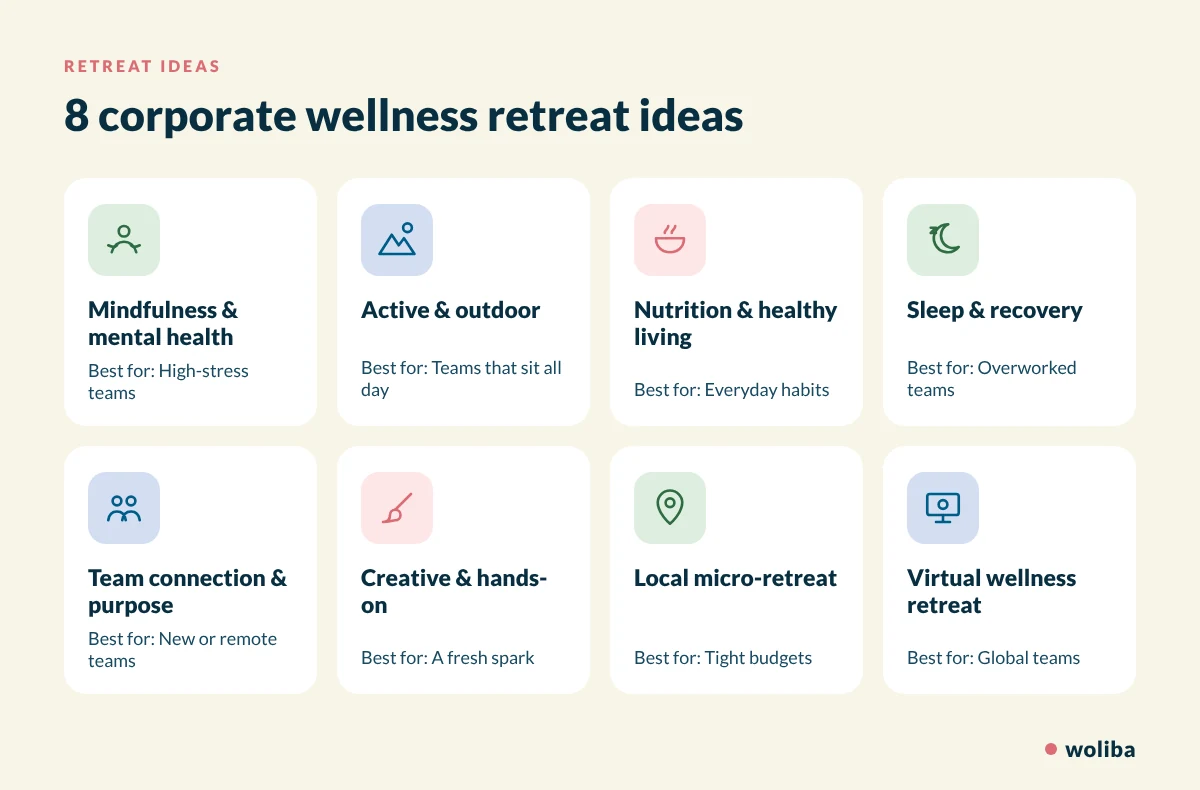
| Retreat type | Best for | Budget level |
|---|---|---|
| Mindfulness & mental health | High-stress teams | Low to medium |
| Active & outdoor | Teams that sit all day | Low to medium |
| Nutrition & healthy living | Building everyday habits | Low to medium |
| Sleep & recovery | Overworked teams, leaders | Medium to high |
| Team connection & purpose | New or remote teams | Low to medium |
| Creative & hands-on | Teams that need a fresh spark | Low to medium |
| Local micro-retreat | Tight budgets, busy teams | Low |
| Virtual wellness retreat | Remote and global teams | Low |
1. Mindfulness and mental health retreat
This type helps people slow down and handle stress better.
Activities to try: guided meditation, breathing exercises, a stress-management workshop with a coach, journaling sessions, or a “phones off” digital detox afternoon.
Tip: Keep sessions short (30 to 45 minutes). Many people are new to meditation and may feel awkward at first. For everyday ideas, see our guide on how to practice mindfulness at work.
2. Active and outdoor retreat
This is great for office teams who spend most of the day sitting.
Activities to try: group hikes, yoga in a park, kayaking, bike rides, a beginner-friendly fun run, or outdoor team games.
Tip: Always offer an easy option. A gentle nature walk next to a tough hike lets everyone join without feeling left out. Need more ideas? Try these physical team building activities.
3. Nutrition and healthy-living retreat
This type teaches simple habits people can take home and use every day.
Activities to try: a group cooking class, a talk from a nutrition expert, a healthy snack-making session, a farmers’ market visit, or a recipe swap.
Tip: Focus on easy, realistic meals. Nobody wants a lecture about what they “shouldn’t” eat.
4. Sleep and recovery retreat
Many employees are simply tired. This retreat focuses on rest.
Activities to try: a sleep-science talk, spa treatments, gentle stretching, sound baths, and lots of free time to relax.
Tip: Don’t overschedule. Downtime is the point here.
5. Team connection and purpose retreat
This type focuses on bonding and shared values.
Activities to try: volunteering together, a “what we stand for” workshop, storytelling circles, team challenges, and a shared dinner.
Tip: Mix people from different teams in groups. That builds connections across the whole company.
6. Creative and hands-on retreat
Creative activities help people relax and think in new ways.
Activities to try: pottery, painting, music jams, gardening, or a team art project.
Tip: Make it clear that skill doesn’t matter. The goal is fun, not perfect results.
7. Local micro-retreat
You don’t need a big budget or a long trip. A half day nearby can still make a real difference.
Activities to try: morning yoga at a local studio, a picnic lunch in a park, a short wellness workshop, and a relaxed team activity.
Tip: Hold it during work hours. Asking people to give up their weekend for “wellness” sends the wrong message.
8. Virtual wellness retreat
This is perfect for remote or global teams who can’t easily meet in person.
Activities to try: live online yoga or mindfulness classes, a virtual cooking class with ingredient kits sent to homes, and team wellness challenges people join from anywhere.
Tip: Spread sessions across a week instead of packing them into one long day of video calls. A platform like Woliba makes it easy to run wellness challenges, track participation, and keep everyone connected across time zones.
Sample Corporate Wellness Retreat Agendas
Not sure how to fill the time? Copy and adjust one of these.
Half-day local retreat (about 4 hours)
| Time | Activity |
|---|---|
| 9:00 AM | Welcome, healthy breakfast, and a fun icebreaker |
| 9:30 AM | Gentle yoga or stretching (45 min) |
| 10:30 AM | Stress-management workshop (60 min) |
| 11:30 AM | Team walk or outdoor game (30 min) |
| 12:00 PM | Healthy lunch together |
| 12:45 PM | Quick reflection: “One habit I’ll try this month” |
One-day retreat (about 8 hours)
| Time | Activity |
|---|---|
| 8:30 AM | Arrival, breakfast, and welcome talk from a leader |
| 9:15 AM | Morning movement: yoga or a guided walk |
| 10:15 AM | Workshop: building better sleep and energy habits |
| 11:30 AM | Small-group team challenge |
| 12:30 PM | Lunch (with a short talk from a nutrition expert) |
| 1:45 PM | Free choice: mindfulness session, nature walk, or rest |
| 3:00 PM | Creative activity or cooking class |
| 4:15 PM | Group reflection and personal goal-setting |
| 5:00 PM | Close and launch of the post-retreat wellness challenge |
Two-day overnight retreat
Day 1
| Time | Activity |
|---|---|
| Morning | Travel, check-in, welcome lunch |
| Afternoon | Outdoor activity (hike, kayak, or garden walk), then free time |
| Evening | Group dinner and a relaxed social activity, like a bonfire or trivia |
Day 2
| Time | Activity |
|---|---|
| Early morning | Optional sunrise yoga or meditation |
| Morning | Healthy breakfast, then a wellbeing workshop (stress, sleep, or resilience) |
| Midday | Team purpose session: “What helps us do our best work?” |
| Afternoon | Lunch, personal goal-setting, and a challenge kickoff before heading home |
Tip for every agenda: leave at least 20% of the time unscheduled. People need room to rest and chat. A packed schedule can feel like just another workday.
How Much Does a Corporate Wellness Retreat Cost?
The short answer: anywhere from under $100 to more than $5,000 per person. Corporate retreat cost depends mostly on how long the retreat is and whether people need to travel and stay overnight.
According to RetreatsAndVenues, the average corporate retreat costs $3,000 to $4,000 per person, including flights and hotels. But a local day retreat costs far less.
Typical cost ranges by retreat length (USD, per person)
| Retreat length | Typical cost per person | What’s usually included |
|---|---|---|
| Local half-day or day retreat (Europe benchmark) | About €75–150 | Venue, food, activities |
| 1-day retreat | $200–800 | Venue, facilitator, food |
| 3-day retreat (2–3 nights) | $1,500–4,500 | Travel, hotel, meals, 1–2 big activities |
| 5-day retreat | $2,500–6,500 | Travel, hotel, meals, workshops |
| 7-day retreat | $3,500–9,000 | Travel, hotel, meals, many activities |
For example, RetreatsAndVenues reports a weeklong Bali wellness retreat for a 12-person executive team costing about $5,600 per person.
Where the money goes
For overnight retreats, RetreatsAndVenues says budgets usually split roughly like this:
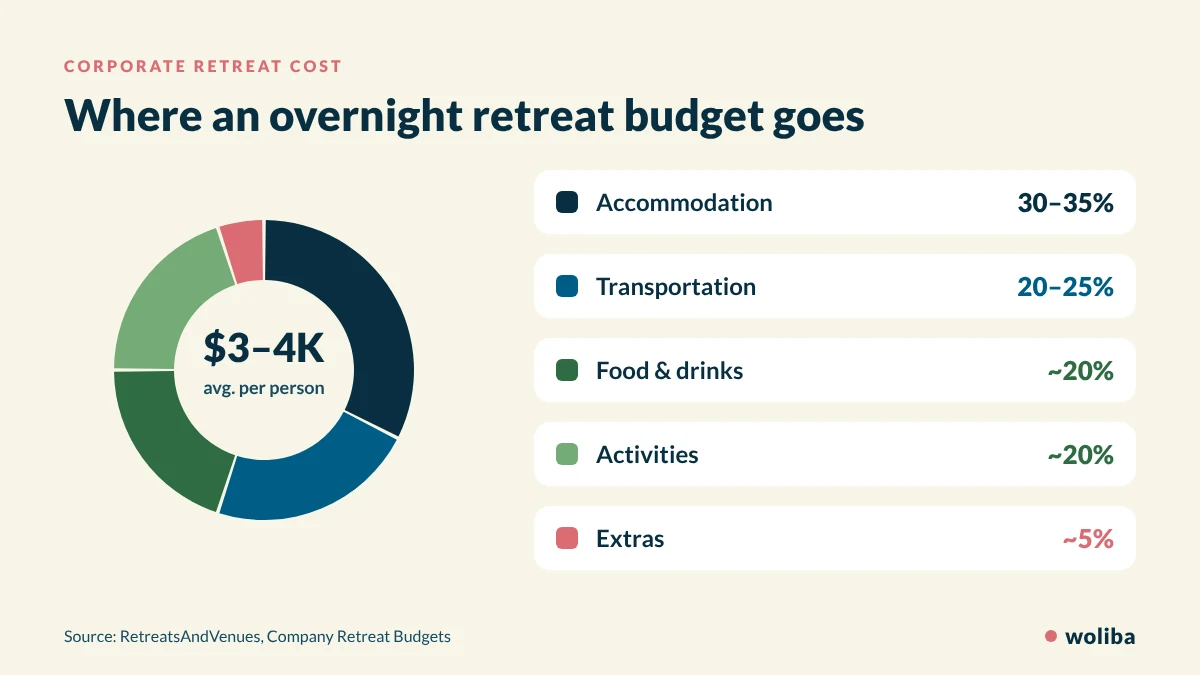
- Accommodation: about 30–35%
- Transportation: about 20–25%
- Food and drinks: about 20%
- Activities: about 20%
- Extras (gifts, tips, backup fund): about 5%
6 easy ways to save money
- Go off-season. Booking in quieter months can save 15–30%.
- Stay local. Skipping flights cuts one of your biggest costs.
- Be flexible with dates. Venues often give better prices for midweek or quiet dates.
- Use in-house talent. A coworker who teaches yoga or loves cooking can lead a session.
- Choose all-in-one venues. Places that bundle rooms, meals, and meeting space are easier to budget.
- Keep a 10% buffer for surprise costs like service fees and equipment rentals.
A smart way to think about cost
A retreat is a one-time spend. A wellness program works all year round. Many companies get the most value by pairing one yearly retreat with an always-on wellness platform. The retreat creates the spark. The platform keeps it going.
Get more from your retreat budget
Pair one yearly retreat with an always-on wellness platform. Woliba keeps the spark going, so every dollar works harder.
How to Plan a Corporate Wellness Retreat: 8 Simple Steps
Follow these steps to plan a retreat people will actually enjoy and remember.
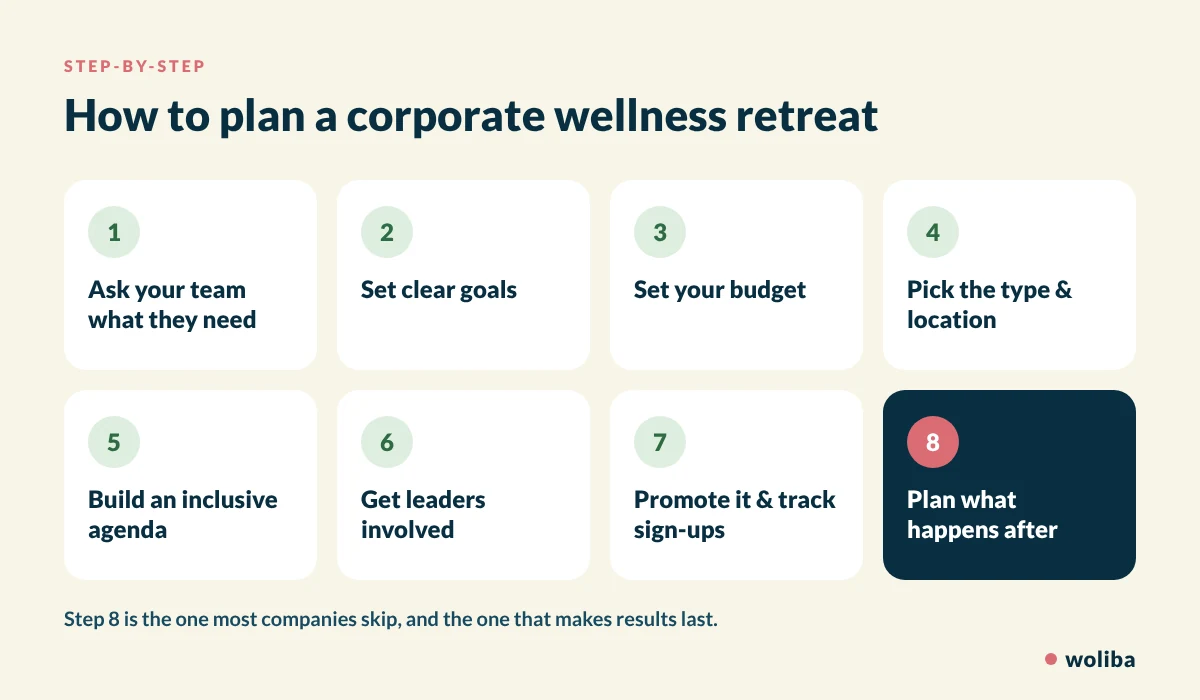
Step 1: Ask your team what they need
Don’t guess. Send a short survey before you plan anything. Ask questions like:
- How stressed have you felt in the last month? (scale of 1 to 10)
- What would help you feel better at work?
- Which activities would you enjoy? (yoga, hiking, cooking, art, etc.)
- Do you have any food, health, or accessibility needs?
- Would you prefer a local day event or an overnight trip?
With Woliba, you can send a quick pulse survey and see the results in one dashboard.
Step 2: Set clear goals
Decide what success looks like before you book anything. Good goals are specific. For example:
- “Lower average stress scores by 10% within three months”
- “Get 70% of employees to join the post-retreat wellness challenge”
- “Help our new remote team members feel more connected”
Step 3: Set your budget
Use the cost ranges above as a guide. Decide early whether this will be a local day event or an overnight trip. That one choice affects your budget more than anything else.
Step 4: Pick the type of retreat and the location
Match the retreat to your survey results and goals. A stressed team may need a mindfulness or recovery retreat. A new remote team may need a connection-focused retreat.
Step 5: Build an inclusive agenda
Plan for everyone, not just the fittest or most outgoing people.
- Offer easy and harder versions of physical activities
- Cater to different diets
- Check that venues are accessible
- Make activities optional, and never pressure anyone to share personal things
- Leave plenty of free time
Step 6: Get leaders involved
When leaders join in (and actually put their phones away), employees feel safe to relax. If leaders skip it or keep working, people will think wellness isn’t really a priority.
Step 7: Promote it and track sign-ups
Share the plan early. Explain why you’re doing it and what people can expect. Make signing up easy. Woliba’s events tools let you send invites, collect RSVPs, and share reminders, all in one place.
Step 8: Plan what happens after
This is the step most companies skip. Before the retreat even starts, decide how you’ll keep the benefits going. (See the 90-day plan below.)
7 Corporate Wellness Retreat Mistakes to Avoid
Even well-meant retreats can miss the mark. Watch out for these:
- Planning without asking employees. What leaders think people want is often different from what they actually want. Always survey first.
- Packing the schedule too tight. Back-to-back sessions leave people more tired than before. Keep free time in the plan.
- Sneaking work into it. If half the retreat is strategy meetings, it’s not a wellness retreat. Keep work talk to a minimum.
- Making activities feel forced. Not everyone wants to do yoga or share their feelings in a group. Offer choices and make things optional.
- Ignoring different needs. Forgetting about diets, mobility, religious practices, or caregiving duties can leave people out.
- Holding it on weekends. Asking people to give up personal time for “wellness” feels like a contradiction.
- Having no follow-up plan. This is the biggest mistake of all. Without follow-up, the benefits fade within weeks.
After the Retreat: A 90-Day Plan to Make the Results Last
Most retreats feel great while they’re happening. Then everyone goes back to their inbox, and good habits slowly fade.
The fix is simple: treat the retreat as the start, not the finish. Here’s a simple 90-day plan you can follow.
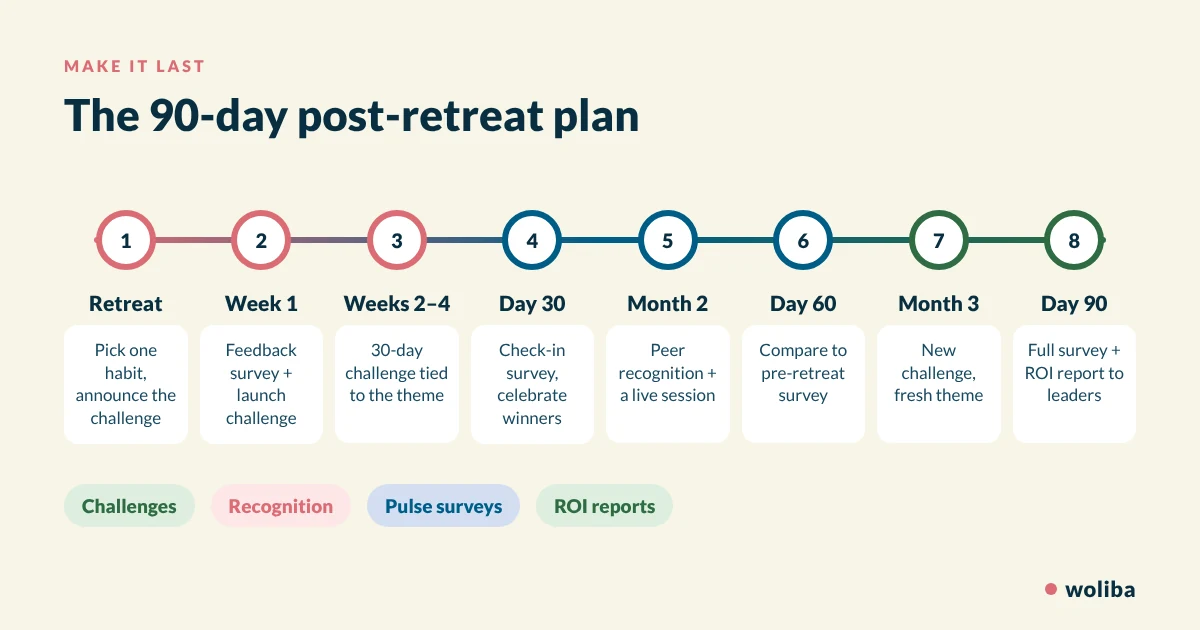
| When | What to do | How Woliba helps |
|---|---|---|
| Last day of the retreat | Ask everyone to pick one habit to work on. Announce a team challenge that starts next week. | Set up the challenge in advance so it’s ready to launch. |
| Week 1 | Send a short “how was it?” survey. Share photos and thank everyone. Launch the challenge. | Pulse surveys and challenge launch in one platform. |
| Weeks 2–4 | Run a 30-day challenge tied to the retreat theme (steps, mindful minutes, water, sleep). | Challenges with leaderboards, wearable syncing, and reminders. |
| Day 30 | Send a check-in survey on stress and energy. Celebrate challenge winners. | Survey results and recognition shout-outs. |
| Month 2 | Keep connections strong. Encourage peer recognition. Hold one short live session, like an online yoga class. | Peer recognition and events tools. |
| Day 60 | Check in again. Compare results to your pre-retreat survey. | Trend reports by team and location. |
| Month 3 | Launch a new challenge with a fresh theme to keep things interesting. | A library of ready-made wellness challenges. |
| Day 90 | Run a full follow-up survey. Share the results with leaders. Start planning the next retreat. | ROI reports and executive dashboards. |
Why this works
- Challenges keep the theme alive. If the retreat was about walking, a step challenge keeps people moving. If it was about calm, a daily mindfulness challenge keeps that going.
- Recognition keeps teams connected. Thanking and celebrating each other through employee recognition keeps the bonds built at the retreat strong.
- Check-ins show you what’s working. Short surveys at 30, 60, and 90 days tell you if the benefits are lasting.
- One platform shows the full picture. When workplace challenges, recognition, surveys, and events live in one place, you don’t have to chase data across different tools.
This is exactly what Woliba was built for. And customers see real results. Gilsbar reached 90% challenge participation and over 17,000 completed activities. Richardson Industries reached 83% platform participation, with average activities per user rising from 46 to 69.
Launch your post-retreat challenge in minutes
Ready-made wellness challenges, leaderboards, wearable syncing, and check-in surveys, all in one place. No credit card needed to start.
How to Measure the ROI of Your Corporate Wellness Retreat
Sooner or later, a leader will ask: “Was it worth the money?” Be ready with real numbers, not just happy photos.
What to measure
| Metric | How to measure it | When to check |
|---|---|---|
| Attendance | Sign-ups vs. total employees | Right after the retreat |
| Satisfaction | “How valuable was this?” survey (1–10) | Week 1 |
| Stress levels | Same stress questions as your pre-retreat survey | Days 30, 60, and 90 |
| Engagement | Engagement survey score | Before, and at day 90 |
| Follow-up participation | % of people joining post-retreat challenges | Monthly |
| Unplanned absence | Sick days compared with the same months last year | Quarterly |
| Retention | Number of people who leave, compared with before | Every 6–12 months |
A simple way to show the value
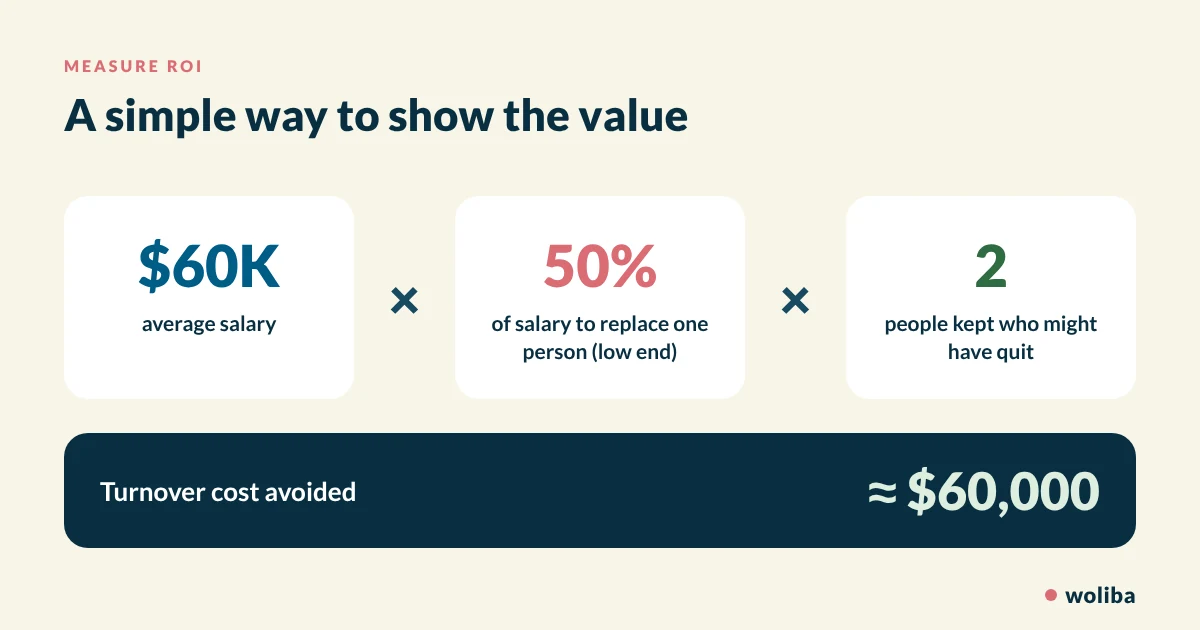
Use turnover to make the case. Say your average salary is $60,000. If replacing one person costs even 50% of their salary, each exit costs about $30,000. If your retreat and follow-up program help keep just two people who might have quit, that’s about $60,000 saved. For many teams, that alone covers the cost of the retreat.
Make reporting easy
Pulling this data from five different tools takes weeks. Woliba puts it all in one place and turns it into simple reports in dollars, such as turnover avoided and absence reduced. Woliba clients document an average of $280,000 in avoided turnover costs in their first-year ROI report.
That makes it easy to walk into a leadership meeting and show exactly what your retreat and wellness program delivered.
Corporate Wellness Retreat Planning Checklist
Use this checklist to stay on track.
6–8 weeks before
- ☐ Send a needs survey to employees
- ☐ Set 2–3 clear goals
- ☐ Agree on a budget (with a 10% buffer)
- ☐ Choose the retreat type and format
- ☐ Get leadership to commit to attending
4–6 weeks before
- ☐ Book the venue and any experts or facilitators
- ☐ Plan the agenda (with at least 20% free time)
- ☐ Check accessibility, diets, and other needs
- ☐ Send invites and open sign-ups
1–2 weeks before
- ☐ Confirm numbers with the venue and vendors
- ☐ Share the final agenda and what to bring
- ☐ Set up your post-retreat challenge so it’s ready to launch
During the retreat
- ☐ Ask everyone to pick one habit to work on
- ☐ Take photos (with permission)
- ☐ Announce the follow-up challenge
After the retreat
- ☐ Send a feedback survey in week 1
- ☐ Launch the 30-day challenge
- ☐ Run check-in surveys at days 30, 60, and 90
- ☐ Share the results with leadership
Make Your Next Retreat the Start of Something Bigger
A great retreat lasts a few days. A great wellness culture lasts all year.
Woliba helps you do both. Use it to survey your team before the retreat, organize the event, keep people engaged with challenges and recognition afterward, and prove the results to leadership with clear ROI reports. All in one platform.