


When most people hear the word wellness, they immediately think of exercise, eating vegetables, or going for a doctor’s checkup. While physical health is important, it is only one piece of a much bigger puzzle.
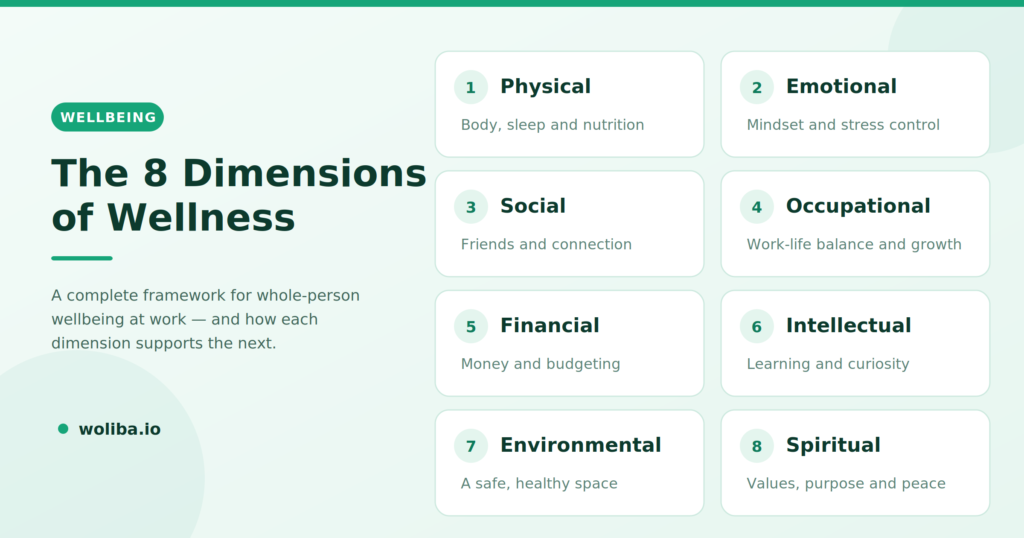
True well-being is about your whole life, your stress levels, your relationships, your career, your finances, and even your living environment. This framework is known as the 8 Dimensions of Wellness (or the 8 Pillars of Wellness).
Developed by health experts like Dr. Peggy Swarbrick, this model shows that all areas of your life are connected. If one area is out of balance, it affects everything else.
Here is a simple breakdown of the 8 dimensions, why they matter, and easy ways to improve each one.
The 8 Dimensions of Wellness Explained
1. Emotional Wellness
What it is: Understanding your feelings, managing everyday stress, and staying resilient when life gets tough.
- Key Signs: Feeling aware of your emotions, knowing how to calm down when stressed, and asking for help when you need it.
- Simple Actions:
- Take a 5-minute breather during busy days.
- Practice talking to yourself with kindness instead of negative self-talk.
- Journal your thoughts or speak with a counselor.
2. Physical Wellness
What it is: Taking care of your body so you have enough energy to get through your daily routine.
- Key Signs: Getting regular sleep, moving your body daily, and eating foods that fuel you.
- Simple Actions:
- Drink a glass of water first thing in the morning.
- Walk for 15 to 20 minutes every day.
- Aim for 7 to 8 hours of quality sleep each night.
3. Social Wellness
What it is: Building healthy relationships, feeling connected to others, and creating a strong support network.
- Key Signs: Having people you can trust, feeling heard, and maintaining clear boundaries.
- Simple Actions:
- Call or text a friend just to check in.
- Join a local club, sports group, or community team.
- Practice active listening without looking at your phone.
4. Occupational Wellness
What it is: Finding personal satisfaction and purpose in your career or daily work.
- Key Signs: Feeling motivated at work, having a good work-life balance, and feeling valued for your efforts.
- Simple Actions:
- Set clear boundaries (like turning off work emails after hours).
- Learn a new skill that makes your job easier or more interesting.
- Take micro-breaks throughout the workday to avoid burnout.
5. Financial Wellness
What it is: Managing your money effectively so you can cover your current needs, support overall employee financial wellness, and plan for the future without constant anxiety.
- Key Signs: Knowing where your money goes, keeping an emergency fund, and having clear financial goals.
- Simple Actions:
- Track your monthly income and spending for 30 days.
- Set up an automatic transfer to save a small amount each paycheck.
- Focus on paying down high-interest debt step-by-step.
Have a look at the Financial Wellness Tools.
6. Environmental Wellness
What it is: Living and working in clean, safe, and pleasant surroundings that support your mental peace.
- Key Signs: Feeling comfortable in your living space, having access to green spaces, and keeping your workspace organized.
- Simple Actions:
- Declutter your desk or bedroom.
- Spend at least 15 minutes outdoors in fresh air every day.
- Add indoor plants or open windows for better airflow.
7. Intellectual Wellness
What it is: Keeping your mind active, curious, and open to learning new ideas, skills, and perspectives.
- Key Signs: Enjoying problem-solving, exploring creative hobbies, and seeking new information.
- Simple Actions:
- Read 10 pages of a book every day.
- Listen to an educational podcast during your commute.
- Try a new hobby, like drawing, cooking a new recipe, or learning a language.
Read more about 7 wellness activities.
8. Spiritual Wellness
What it is: Finding a sense of meaning, purpose, and direction in life, whether through faith, core values, or personal reflection.
- Key Signs: Living in alignment with your personal principles, feeling a sense of peace, and acting with empathy.
- Simple Actions:
- Spend quiet time meditating or reflecting each morning.
- Write down three things you are grateful for every day.
- Volunteer or help someone out without expecting anything in return.
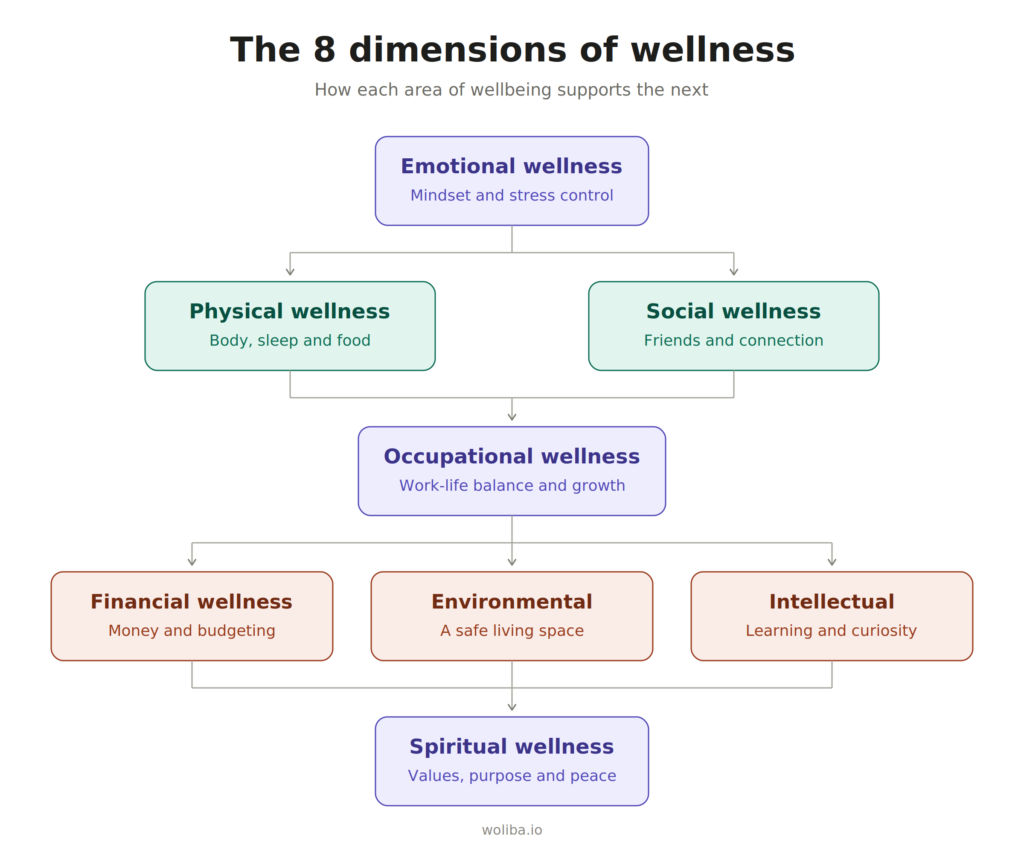
How the 8 Dimensions Connect (The Domino Effect)
These 8 pillars do not exist in isolation. When one pillar is struggling, it creates a domino effect across the others.
Example: Imagine you are experiencing high financial stress (Financial). That stress keeps you up at night and causes poor sleep (Physical). Because you are exhausted, you get irritable at work (Occupational) and snap at your family (Social).
The good news works the same way: improving just one dimension elevates the rest. Walking daily (Physical) lowers your stress (Emotional), which helps you focus better at work (Occupational).
How to Audit Your Own Wellness Balance
You do not need to score a 10 out of 10 in every dimension all the time. Balance changes as life changes.
Use this simple 3-step exercise to check in with yourself:
| Dimension | How Do You Feel Right Now? (Scale 1-5) |
| Emotional | ⭐ ⭐ ⭐ ⭐ ⭐ |
| Physical | ⭐ ⭐ ⭐ ⭐ ⭐ |
| Social | ⭐ ⭐ ⭐ ⭐ ⭐ |
| Occupational | ⭐ ⭐ ⭐ ⭐ ⭐ |
| Financial | ⭐ ⭐ ⭐ ⭐ ⭐ |
| Environmental | ⭐ ⭐ ⭐ ⭐ ⭐ |
| Intellectual | ⭐ ⭐ ⭐ ⭐ ⭐ |
| Spiritual | ⭐ ⭐ ⭐ ⭐ ⭐ |
- Score Yourself: Give each dimension a score from 1 (Needs Help) to 5 (Feeling Great).
- Find Your Gaps: Identify the 1 or 2 areas with the lowest scores.
- Pick One Small Habit: Focus on changing one tiny habit in your lowest-scoring area this week.
Final Thoughts
Wellness is not a race, and it isn’t about perfection. It is about making small, conscious choices every day to take care of your body, mind, and spirit. By focusing on all 8 dimensions of wellness, you build a sustainable foundation for a healthier, happier life.