


MoveSpring built its name on step challenges app. But two acquisitions later — and with wellbeing budgets under real scrutiny — a lot of HR teams are asking whether an activity app is still the right centre of their program.
If you are reading this, you probably already know the MoveSpring pitch: connect a wearable, run a step challenge, watch a leaderboard fill up. It works. Employees like it. For a long time that was enough.
What changed is the question HR leaders are being asked. It is no longer “did people join the challenge?” It is “what did this do for retention, healthcare spend and culture — and can you show me?” That is a harder question for an activity-tracking tool to answer, and it is the single biggest reason teams start searching for a MoveSpring alternative.
This guide compares ten platforms on the criteria that actually decide a renewal: scope of wellbeing coverage, pricing transparency, admin burden, reporting depth, and how painful the migration is.
Why HR teams are looking for MoveSpring alternatives
Three shifts are driving most of these searches.
1. MoveSpring is now part of a much larger company
Reward Gateway acquired MoveSpring in March 2022, and the product is now listed as “MoveSpring by Reward Gateway.” Reward Gateway itself has since been acquired by Edenred in a deal valued at roughly £1.15 billion.
Neither acquisition is a mark against the product. But two ownership changes in four years reasonably raises questions about roadmap priority, pricing structure and account continuity — especially for a smaller product sitting inside a much larger benefits portfolio. Buyers evaluating a multi-year contract are right to ask where MoveSpring sits on the parent company’s priority list.
2. Steps are the ceiling, not the floor
MoveSpring’s core is activity: wearable integrations, templated and custom virtual challenges, a monthly step goal tracker, on-demand content, and social chat. It does this well. The limitation is structural — a movement platform can only address the physical dimension of wellbeing.
Meanwhile the problems HR is being asked to solve have moved. Burnout, financial stress, isolation on hybrid teams, and preventive health gaps do not respond to a step count. Teams running a serious program end up buying a second and third tool to cover mental wellbeing, employee financial wellness and recognition — and the cost advantage of a cheap challenge app disappears fast.
3. Pricing is quote-only
MoveSpring does not publish pricing. Third-party transaction data from Vendr puts real contracts roughly between $2,200 and $16,500 per year, averaging around $7,300 — a spread wide enough that two similar companies could pay very different amounts for the same product.
| Where MoveSpring is strong | Where teams outgrow it |
|---|---|
| Genuinely easy to launch — setup takes minutes | Scope stops at physical activity |
| Broad wearable support (Fitbit, Apple Watch, Garmin, Polar, Withings) | Reporting depth is limited for exec-level reporting |
| Multiple challenge modes keep competition varied | No recognition, surveys or rewards layer |
| Strong social and community features | Quote-only pricing with a wide contract range |
| High employee adoption for step programs | Roadmap now set inside a much larger parent company |
A fair note: MoveSpring’s G2 profile currently holds too few reviews to produce a meaningful star rating, so this comparison is based on documented capabilities and publicly reported pricing rather than review scores.
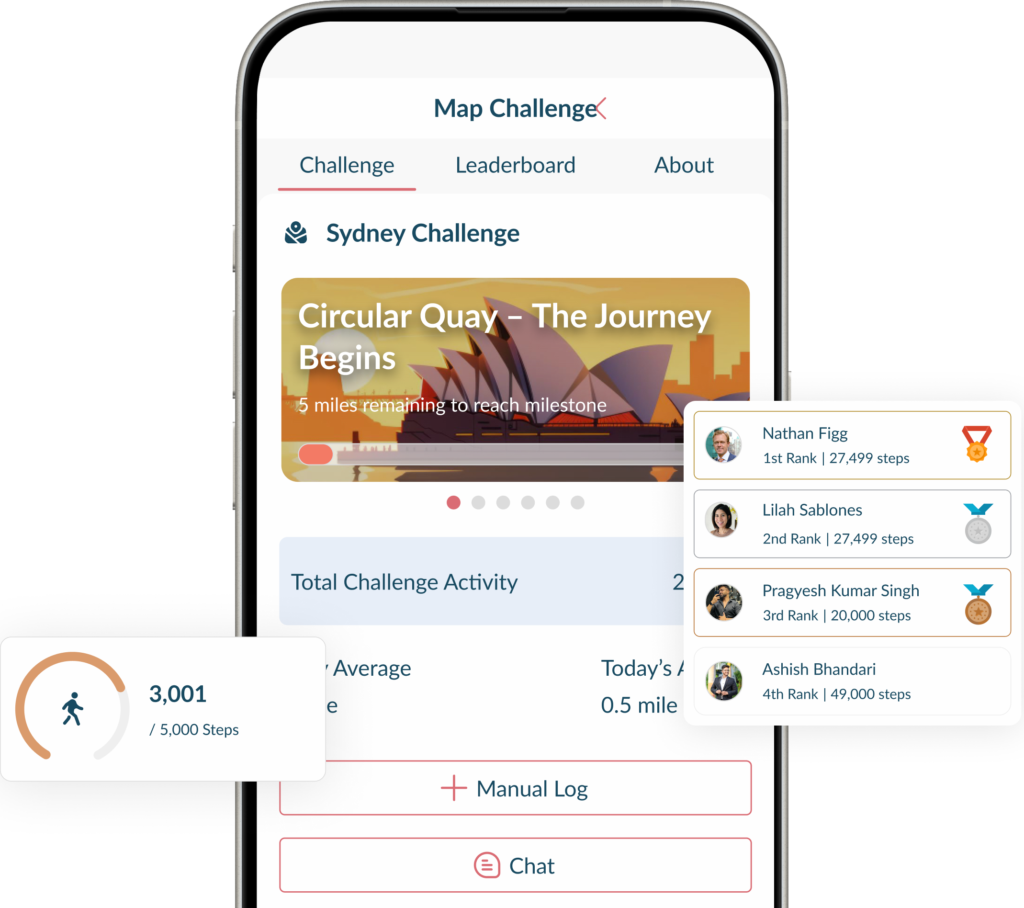
Run 120+ pre built wellness challenge with woliba
MoveSpring alternatives compared at a glance
| Platform | Best for | Wellbeing scope | Pricing | Free trial |
|---|---|---|---|---|
| 1. Woliba | Replacing 3–4 tools with one platform | All 12 pillars + engagement | $2 / active user / mo | 21 days, no card |
| 2. Wellable | Content-led wellness programs | Physical, mental, financial | ~$3–$8 PEPM (est.) | No |
| 3. Vantage Fit | Lowest-cost challenge programs | Physical, nutrition | From $1 / user / mo | Demo-led |
| 4. YuMuuv | Lightweight challenges, fast setup | Physical, habits | Quote (per participant) | Demo-led |
| 5. Personify Health | Enterprise health plan integration | Broad + navigation | Custom / enterprise | No |
| 6. WellRight | Highly customisable challenge libraries | Multi-dimension | Custom | No |
| 7. Wellhub | Subsidised gym and studio access | Fitness access | Custom, tiered | Varies |
| 8. Walkingspree | Step-first programs with device support | Physical | Custom | No |
| 9. IncentFit | Reimbursement and incentive tracking | Physical + incentives | ~$3–$5 PEPM + budget | No |
| 10. Terryberry | Recognition-first programs with wellness added | Recognition + physical | Custom | No |
Pricing reflects published rates and credible third-party estimates as of 2026. Most vendors in this category do not publish rates — always confirm directly.
The 10 best MoveSpring alternatives
1. Woliba
Best for: HR teams that want to replace a step app, a recognition tool and a survey tool with one system.
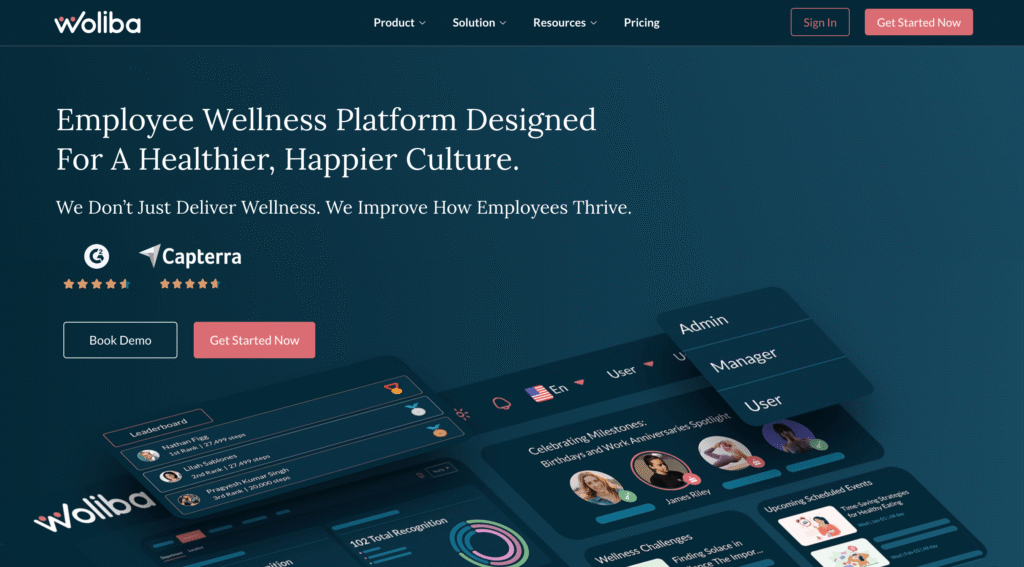
Woliba is the closest thing on this list to a like-for-like upgrade rather than a lateral move. You keep everything MoveSpring gave you — wearable syncing, team and individual challenges, leaderboards, a social feed — and gain the layers that a step platform structurally cannot offer.
The difference is architectural. Woliba is built as work-life infrastructure: engagement tools on one side, holistic wellbeing on the other, with a single data layer underneath. That means employee recognition programs, pulse surveys, rewards, coaching and preventive health nudges all report into the same dashboard as your step challenge — so participation, sentiment and outcomes finally sit on one screen.
What you get beyond challenges
- 12 Pillars of Wellbeing — physical, mental, emotional, social, spiritual, financial, environmental, occupational, intellectual, nutritional, purpose-driven and longevity, rather than activity alone
- Woliba Intelligence™ — AI that personalises journeys, recommends challenges, flags engagement risk and surfaces burnout patterns before they show up in turnover
- Recognition, rewards and surveys built in, not bought separately
- Health Hub — biometric tracking, HRA/WBA tools and preventive nudges for screenings, dental and flu shots
- Coaching programs across mental health, metabolic health, weight management and leadership
- Under one hour a month of admin time to run the whole program
Pricing: $2 per active user per month — published, flat, no add-on tiers
That last point matters more than it sounds. You pay for people who actually use the platform, not for every seat in the HRIS. On a 500-person company where 300 employees engage, that is a materially different number from a per-seat contract — and you can calculate it before you ever speak to sales.
E-J Electric is the useful case here because it started where most MoveSpring customers are: running step challenges for a mixed field-and-office workforce. Participation nearly tripled, employees logged over 50 million steps, and the team scaled from 3 annual campaigns to 25 — without adding headcount.
Alpine Intel saw challenge participation move from 17% to 59% while cutting roughly eight hours of admin per week.
| Strengths | Consider |
|---|---|
| Published flat pricing — no quote required | Broader than teams who genuinely only want a step counter |
| Consolidates 3–4 point solutions | No physical gym network — pair with a gym benefit if that is your priority |
| 4.6/5 on G2 across 163 reviews | Full value comes from using the engagement side, not just challenges |
| 21-day free trial, no credit card | |
| Purpose-built for 50–5,000 employee companies |
Run 120+ pre built wellness challenge with woliba
2. Wellable
Best for: Programs built around wellness content and education.
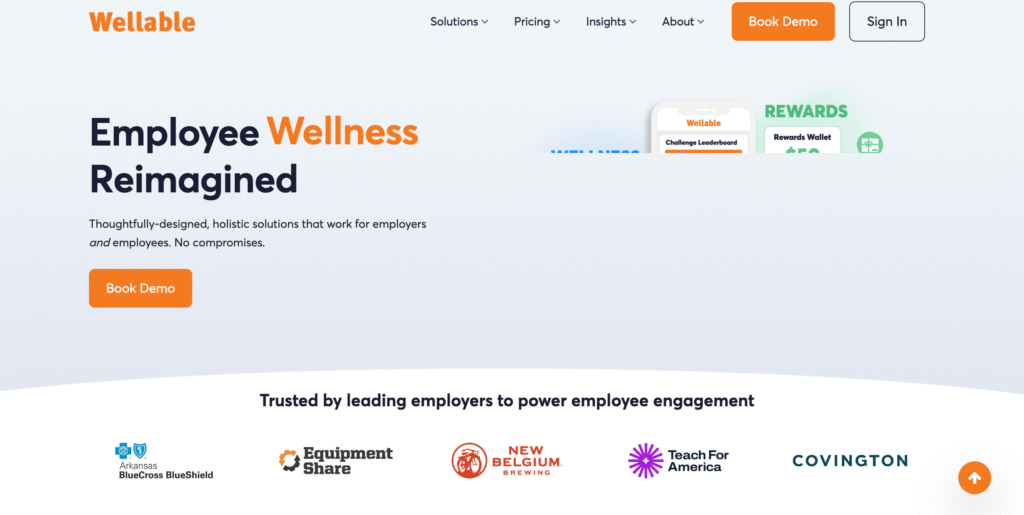
Wellable takes a content-first approach — challenges sit alongside an on-demand library of fitness classes, wellness articles and health assessments, with managed services and biometric screening coordination available. If your program is genuinely education-led and employees will use the library, it earns its price.
Pricing: estimated $3–$8 PEPM · custom quote · coaching and analytics often priced as add-ons
| Strengths | Consider |
|---|---|
| Deep content library | No published pricing or free trial |
| Managed service option | Add-ons push real cost above the base rate |
| Established mid-market and enterprise base | Content value depends entirely on adoption |
Related reading: Wellable alternatives · Which is better: Wellable vs. YuMuuv
3. Vantage Fit
Best for: Cost-sensitive teams that only need challenges.
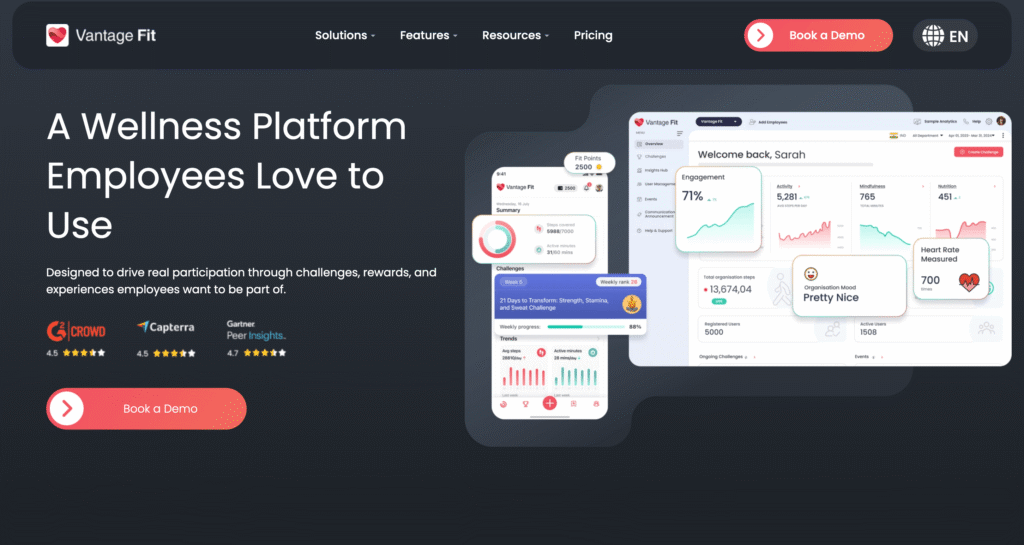
Vantage Fit publishes a rate of $1 per user per month with no minimum — rare in this category and genuinely useful if budget is the binding constraint. It covers step tracking, multiple challenge formats, leaderboards, nutrition tracking and a rewards point system.
Pricing: from $1 / user / month, no minimum
| Strengths | Consider |
|---|---|
| Transparent, very low entry price | Thin on mental health and preventive care |
| Strong gamification and challenge variety | Reporting is participation-level, not outcome-level |
| Wide international coverage | Enterprise tiers cost considerably more than the headline rate |
Related reading: VantageFit alternatives
4. YuMuuv
Best for: Small teams that want a challenge live this week.
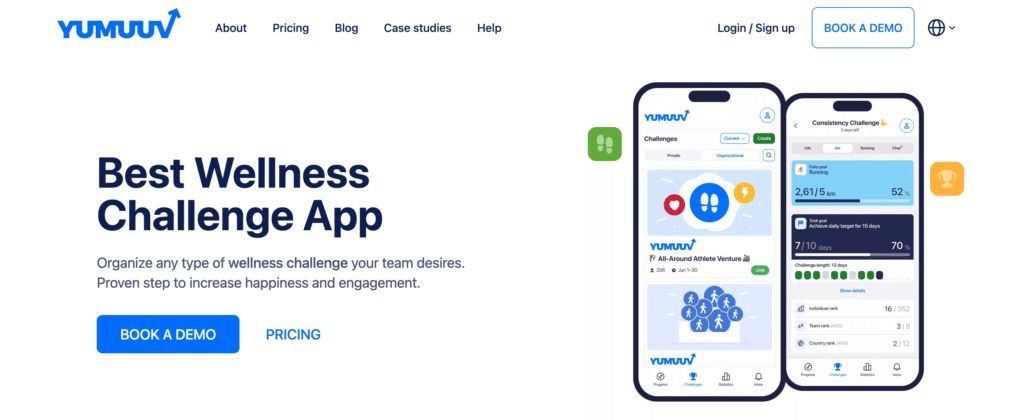
YuMuuv is deliberately narrow and fast. Pricing is calculated on registered participants rather than total headcount, so you are not paying for employees who never opt in, and setup is quick. It supports a wide range of languages, which helps distributed teams.
Pricing: quote-based, calculated per registered participant and challenge duration
| Strengths | Consider |
|---|---|
| Pay only for active participants | Challenge mechanics only — no HRA, coaching or recognition |
| Very fast to launch | Most teams add a second tool within a year |
| Strong multilingual support | No published pricing |
5. Personify Health
Best for: Large enterprises tying wellbeing to a US health plan.
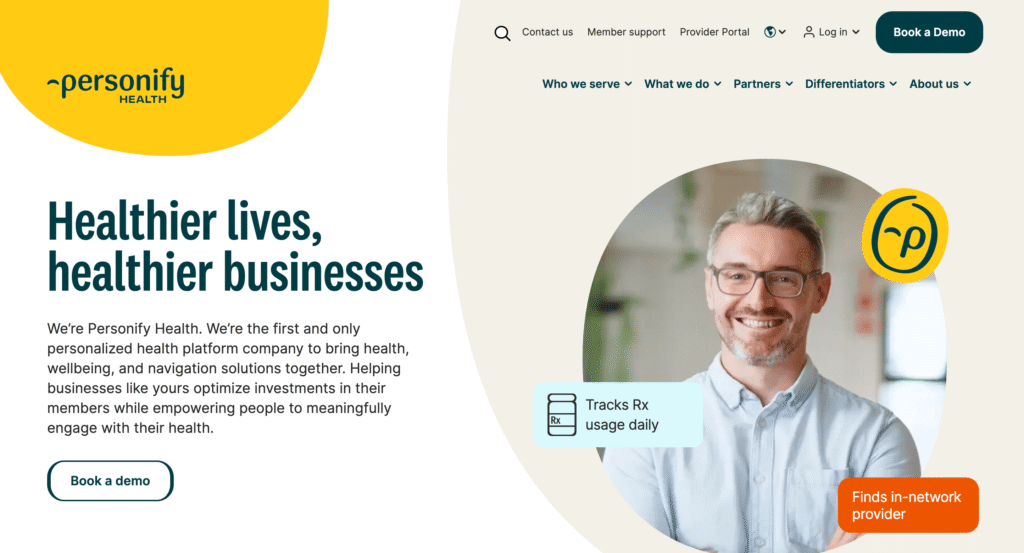
Formed from the merger of Virgin Pulse and HealthComp, Personify Health sits at the enterprise end — combining wellbeing programming with benefits navigation, care management and claims-linked analytics. If you are a self-insured employer trying to move medical spend, it operates at that level.
Pricing: custom enterprise contracts
| Strengths | Consider |
|---|---|
| Deep health plan and claims integration | Heavy implementation and long sales cycle |
| Clinical and care navigation capability | Overbuilt for most companies under 5,000 employees |
| Built for very large populations | High cost floor |
6. WellRight
Best for: Teams that want to build challenges from scratch.

WellRight’s differentiator is customisation — a large challenge library spanning multiple wellbeing dimensions, with the ability to build and configure programs in detail. That flexibility is real, and it is also the trade-off: more configuration means more admin time.
Pricing: custom
| Strengths | Consider |
|---|---|
| Extensive, customisable challenge library | Configuration-heavy for lean HR teams |
| Covers dimensions beyond physical activity | Interface feels dated to some buyers |
| Established in the US mid-market | No published pricing or trial |
7. Wellhub
Best for: Companies whose employees want gym access above all.
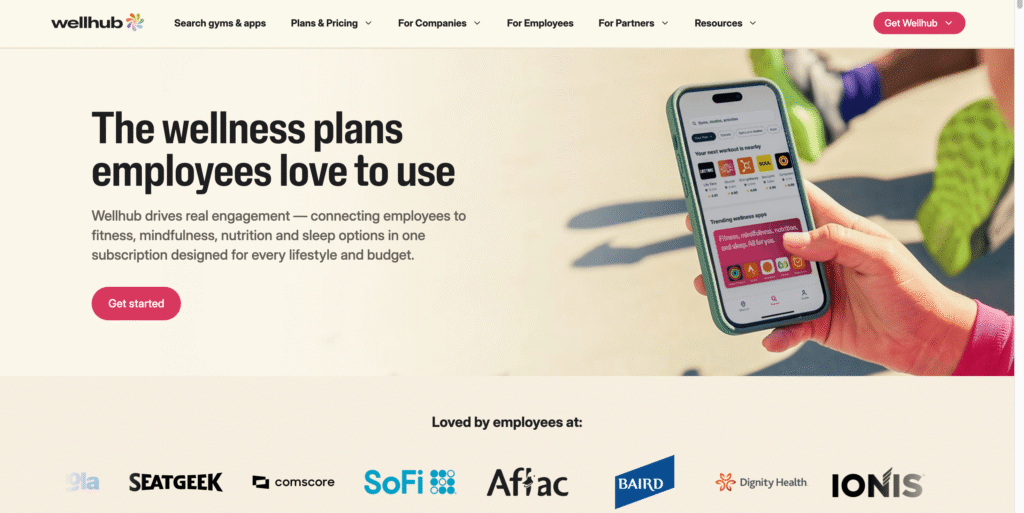
Formerly Gympass, Wellhub is a different category rather than a direct swap — it is a subsidised access network to gyms, studios and fitness apps across many countries. If your employees have told you they want a gym benefit, nothing else on this list replaces it. If you need program data and challenge mechanics, it will not replace MoveSpring either.
Pricing: custom, tiered by employee plan level
| Strengths | Consider |
|---|---|
| Large global gym and studio network | Not a wellness program platform |
| Tangible, visible benefit employees value | No challenges, surveys or recognition |
| Strong for in-office and urban workforces | Value drops sharply for remote or rural teams |
Related reading: Wellhub alternative
8. Walkingspree
Best for: Step-first programs in organisations with lower digital maturity.
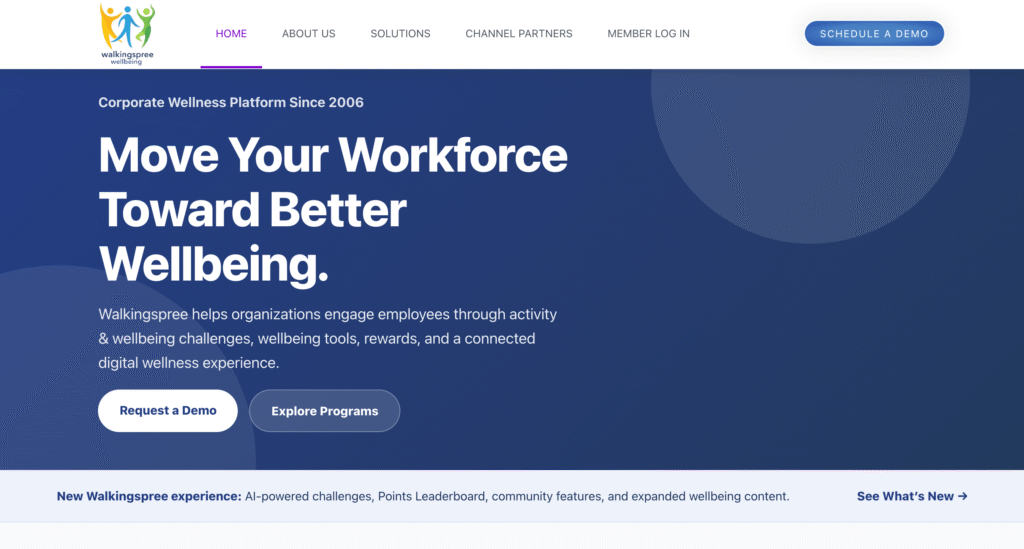
Walkingspree is one of the longest-running step challenge providers in the US, with strong device support and hands-on program management. It is the closest philosophical match to MoveSpring on this list — which is either exactly what you want or exactly the problem you are trying to solve.
Pricing: custom
| Strengths | Consider |
|---|---|
| Long track record with step programs | Narrow scope — activity only |
| Good support for non-smartphone populations | Same structural ceiling as MoveSpring |
| Hands-on program management | Limited engagement and recognition features |
9. IncentFit
Best for: Programs built around incentives and reimbursements.
IncentFit is organised around rewarding verified healthy behaviour — gym reimbursements, activity incentives, preventive care completion — with auditable tracking. If your program is fundamentally an incentive scheme that needs defensible records, this is the specialist.
Pricing: approximately $3–$5 per employee / month, plus your reimbursement budget
| Strengths | Consider |
|---|---|
| Strong incentive and reimbursement engine | Reimbursement budget sits on top of platform cost |
| Auditable behaviour verification | Receipt verification adds admin friction |
| Flexible reward structures | Lighter on content and community |
Run 120+ pre built wellness challenge with woliba
10. Terryberry
Best for: Recognition-led programs adding a wellness component.
Terryberry comes at the problem from the opposite direction — a long-established recognition and service awards provider that has added wellness challenges alongside. If recognition is already your anchor program and wellness is the bolt-on, the sequencing works in your favour.
Pricing: custom
| Strengths | Consider |
|---|---|
| Mature recognition and awards capability | Wellness is secondary to recognition |
| Physical award fulfilment | Lighter challenge mechanics than specialists |
| Long operating history | No published pricing |
How to choose the right MoveSpring alternative
Most evaluations go wrong the same way: teams compare feature lists instead of comparing what the program has to achieve. Six questions sort it out quickly.
- What is the program actually being measured on? If leadership wants retention or healthcare cost impact, an activity tool cannot get you there — you need assessment data, sentiment data and engagement data in the same place.
- How many tools are you really paying for? Add up the step app, the recognition tool, the survey tool and the content subscription. Compare that total, not the challenge platform in isolation. This is where ROI of employee wellness program calculations usually change the answer.
- How much admin time do you have? Be honest about the hours available. A configurable platform with nobody to configure it produces a worse program than a simpler one that runs itself.
- Can you see the price without a sales call? Quote-only pricing is not automatically bad, but published pricing lets you build a business case this week instead of next month.
- Will it reach your whole workforce? Field staff, frontline shifts and employees without company devices are where step programs quietly fail. Check offline and non-smartphone options before signing.
- Can you test it with real employees first? A demo shows you the product. A trial shows you whether your people will use it. Only some vendors on this list allow the second.
Switching from MoveSpring: what to plan for
Migration is the part nobody puts in the sales deck, and it is where most switches lose momentum. Four things to get right:
Export your historical data first
Request participation history, challenge results and any assessment data before your contract lapses. Once access ends, recovering it is difficult — and you will want the baseline to prove improvement later.
Time the switch between challenges
Never migrate mid-challenge. Employees lose progress, and the frustration attaches to the new platform rather than the transition. Finish the cycle, then move.
Warn people about wearable re-syncing
Every employee will need to reconnect their device. This is a five-minute task that becomes a support problem if it arrives unannounced. Send instructions a week ahead and again on launch day.
Lead with what is new, not what is changing
“We’re switching platforms” invites resistance. “You can now earn recognition, book coaching and track more than steps” does not. Frame the move around what employees gain.
The bottom line
MoveSpring is a good step challenge platform. If steps are genuinely all your program needs, staying put is a defensible decision.
But most HR teams did not set out to run a step challenge. They set out to build a workplace where people are supported — and then discovered that a movement app only reaches one dimension of that. If you are managing three vendors to cover what should be one program, or you cannot answer leadership’s questions with the data you have, the platform is no longer the right shape for the job.
Woliba is the strongest alternative for that situation because it does not ask you to give anything up. You keep the challenges, the wearables and the leaderboards your employees already like — and you gain employee engagement tools, recognition, coaching, preventive health and reporting that connects it all, at published pricing, in under an hour of admin a month.