

Most teams do not leave BurnAlong because the content is bad. The content is genuinely good, and unusually inclusive — prenatal, chronic condition, senior health, financial literacy, adaptive fitness. Very few platforms cover that range.
They leave because a year in, they realise they bought a library when what they needed was a program. Content sits there waiting to be consumed. A program reaches out, prompts, rewards, measures and reports. The gap between those two things is where wellness budgets quietly die at renewal.
This guide covers what BurnAlong is, what users actually say about it, and ten alternatives compared on the things that decide whether a program survives its second year.
What is BurnAlong?
BurnAlong is a digital health and wellbeing platform that gives employees access to live and on-demand wellness classes across a wide range of categories, with social features that let people take classes alongside colleagues, friends or family members.
It was founded in 2016 and built around a specific insight: the co-founders watched relatives struggle with health conditions and noticed that standard fitness videos featuring young, extremely fit instructors did not motivate them. Relatable instructors and social support did. That origin explains why BurnAlong’s catalogue looks different from a typical corporate fitness app — it deliberately serves people who are not already gym-goers.
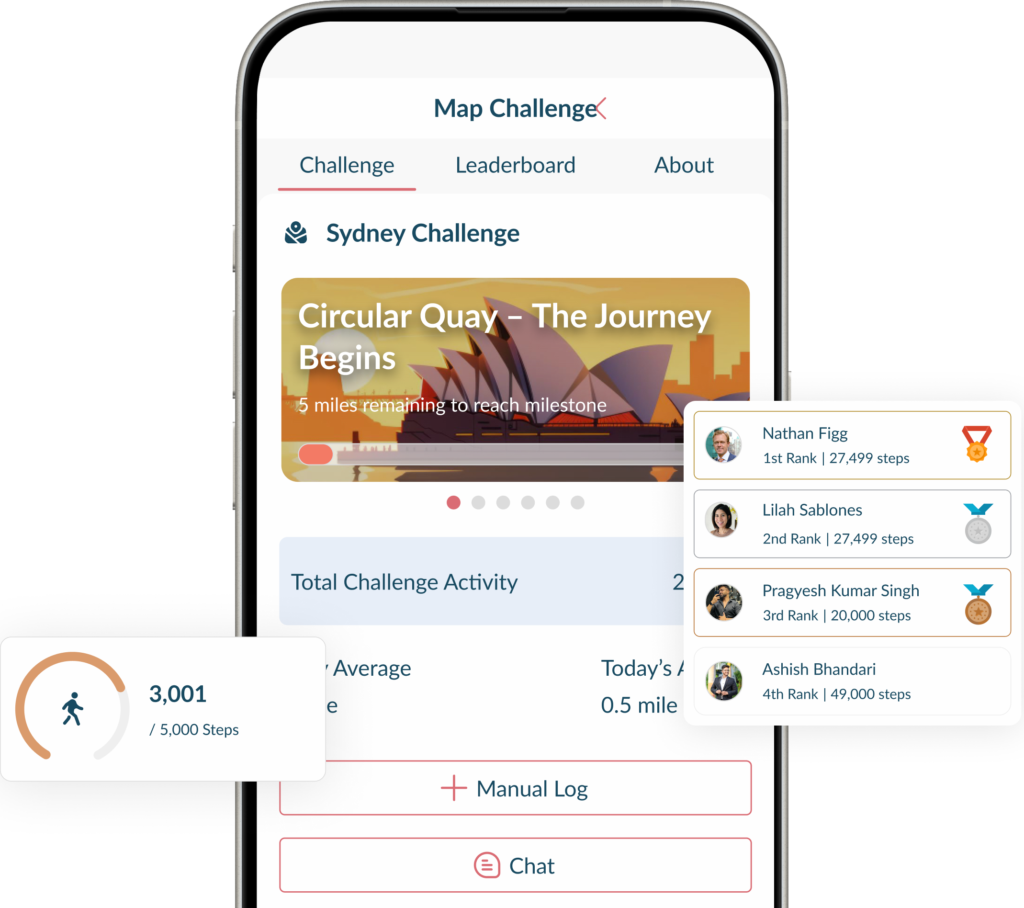
Run 120+ pre built wellness challenge with woliba
What BurnAlong includes
- A large class library spanning fitness, mental health, sleep, nutrition, stress management, chronic condition support, prenatal care, senior health and financial literacy
- Live and on-demand formats, including private group classes where participants can see and hear one another
- Family accounts — additional accounts included with each employee licence
- Machine-learning recommendations that suggest classes based on stated goals
- Burnalong+, an add-on tier providing access to a national network of physical fitness locations
- Wellness challenges and communities layered on top of the content
BurnAlong alternatives compared at a glance
| Platform | Best for | Core strength | Pricing | Free trial |
|---|---|---|---|---|
| 1. Woliba | Replacing content + challenges + recognition with one platform | Full program infrastructure | $2 / active user / mo | 21 days, no card |
| 2. Wellable | Managed, content-led programs | Content + services | ~$3–$8 PEPM (est.) | No |
| 3. Grokker | Direct video library swap | Production-quality video | Custom | No |
| 4. Wellbeats | Structured fitness class programming | Studio-quality classes | Custom | No |
| 5. Personify Health | Enterprise health plan integration | Claims-linked analytics | Custom / enterprise | No |
| 6. Wellhub | Physical gym and studio access | Global gym network | Custom, tiered | Varies |
| 7. WellRight | Highly customisable challenge libraries | Challenge configurability | Custom | No |
| 8. Vantage Fit | Lowest-cost challenge programs | Published low pricing | From $1 / user / mo | Demo-led |
| 9. Headspace for Work | Mental health as the anchor program | Clinical mental health depth | Custom | Consumer trial |
| 10. Wellness360 | Smaller teams wanting pillar-based structure | Eight-pillar framework | Custom | Demo-led |
BurnAlong reviews: what users actually say
BurnAlong reviews skew positive, but the sample sizes are small — on Capterra it holds a 4.5 out of 5 rating from around a dozen reviews. That is a thin evidence base for a purchase decision, so it is worth reading the substance rather than the score.
What reviewers consistently praise
Reviewers repeatedly highlight the sheer breadth of options — meal planning, yoga, meditation, finance and parenting all appearing in one place, with several saying they struggle to think of a need the catalogue does not cover.
Recurring theme — Capterra & Software Advice
Ease of use comes up often. So does implementation: one reviewer described the rollout from first contact through staff launch as smooth, with an engaged vendor team. Employees who already had wellness habits reported that the content reinforced what they were doing rather than duplicating it. The family-sharing feature is a genuine differentiator that shows up in praise more than any single content category.
What reviewers criticise
Four themes recur, and each maps to a real evaluation risk:
| Reported issue | Why it matters for your program |
|---|---|
| Device syncing limited to a narrow set of wearables — reviewers specifically cite Fitbit and Apple Watch, with Samsung users unable to sync steps | Directly undermines team step challenges; a meaningful share of your workforce is excluded from participating |
| Search does not reliably surface relevant classes | In a library this large, weak search is the difference between content that gets used and content that gets paid for |
| Inconsistent production quality — some videos described as looking homemade | Quality variance affects first impressions during launch, when adoption is decided |
| Slow turnaround on requested feature enhancements; limited notification and invitation tooling | Admins end up working around the platform rather than with it |
Notice what is missing from both columns. Almost nothing in BurnAlong reviews concerns recognition, engagement surveys, rewards management or executive reporting — because the platform is not primarily built to do those things. That absence is the real reason teams start looking at alternatives.
Run 120+ pre built wellness challenge with woliba
Why HR teams look for BurnAlong alternatives
1. A content library is not a program
Content platforms have a structural engagement problem: they are passive. An employee has to decide to open the app, browse, choose and commit. Programs work the other way round — challenges create a reason to show up, recognition creates a reason to come back, and nudges reach people who would never browse a catalogue.
This is why content-first platforms often show strong early adoption and a steep drop-off by month four. If your quarterly reports show declining active users despite a growing library, the library is not the problem.
2. Limited wearable support caps your challenge programs
Reviewer reports of narrow device syncing matter more than they first appear. If a meaningful slice of your workforce uses Android devices or wearables outside the supported list, they cannot fully participate in step-based competition. That excludes people from the exact activity most likely to pull in employees who ignore content — a real constraint if step challenge at work programs are part of your plan.
3. You still need three other tools
Recognition, engagement surveys, rewards administration and health assessments generally sit outside BurnAlong’s scope. Most teams running a full program buy them separately — and once you total four vendors, four contracts and four sets of login credentials, the per-employee maths changes considerably.
4. Reporting answers the wrong question
Content platforms report classes watched and minutes streamed. Leadership asks about retention, absenteeism and healthcare spend. Bridging that gap manually, every quarter, is one of the most common reasons a wellness lead starts an RFP.
5. Ownership sits two levels away
Being part of Tivity Health brings scale. It also means BurnAlong’s roadmap now competes for investment inside a private-equity-owned portfolio built primarily around senior fitness. That is not a criticism of the product — but it is a fair question to raise before signing a multi-year agreement.
Run 120+ pre built wellness challenge with woliba
The 10 best BurnAlong alternatives and Competitors
1. Woliba
Best for: Teams that liked BurnAlong’s breadth but need it wrapped in an actual program.
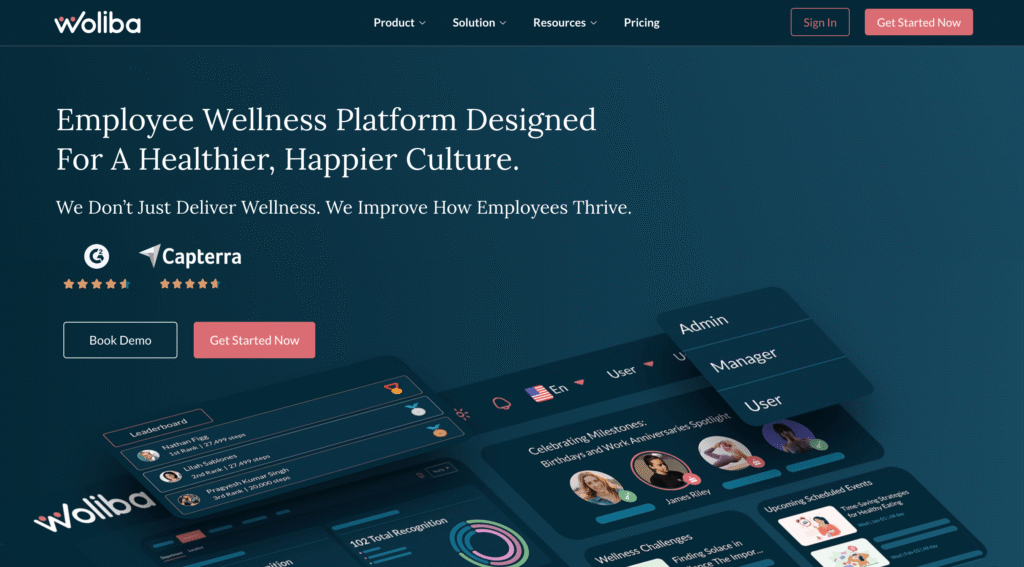
Woliba is the strongest BurnAlong alternative because it addresses the specific thing BurnAlong is missing — not more content, but the infrastructure that makes content get used.
The Wellness Hub covers on-demand articles, videos, recipes and learning modules across all twelve dimensions of wellbeing, so you do not lose the holistic range that made BurnAlong appealing. What sits around it is the difference: challenges that give people a reason to engage, employee recognition programs that reinforce participation, pulse surveys that tell you how people actually feel, and a reporting layer that connects all of it.
What Woliba adds that BurnAlong does not
- 12 Pillars of Wellbeing — physical, mental, emotional, social, spiritual, financial, environmental, occupational, intellectual, nutritional, purpose-driven and longevity, each with programming attached rather than content alone
- Recognition, rewards and pulse surveys built in — the three tools most BurnAlong customers buy separately
- Woliba Intelligence™ — AI that personalises journeys, recommends challenges, detects engagement risk and flags burnout patterns before they reach turnover
- Health Hub — HRA/WBA tools, biometric tracking and preventive nudges for screenings, dental and flu shots
- Habit challenges across sleep, hydration, fibre, fasting, movement and stress reduction
- Coaching programs spanning mental health, metabolic health, weight management and leadership
- Unified reporting — participation, sentiment, recognition and wellbeing data on one dashboard
Pricing: $2 per active user per month — published, flat, no add-on tiers
You pay for employees who actually engage, not every seat in the HRIS — and you can model the cost before speaking to anyone. For a platform replacing three or four separate contracts, that is usually the moment the business case writes itself.
Gilsbar is the instructive case for anyone leaving a content platform. Social feed posts went from 46 to 438 — a nearly tenfold increase in people actively talking to each other about wellbeing.
That is the behaviour a content library cannot manufacture, because watching a video is solitary and a program is not.
Alpine Intel saw a similar pattern: participation tripled from 17% to 59% while the admin team recovered roughly eight hours a week.
| Strengths | Consider |
|---|---|
| Content plus the program infrastructure around it | Class catalogue is smaller than BurnAlong’s headline count |
| Published flat pricing — no quote required | No live instructor-led group video classes |
| Replaces 3–4 point solutions | No physical gym network — pair with a gym benefit if that is the priority |
| 4.6 / 5 on G2 across 163 reviews | |
| 21-day free trial, no credit card | |
| Runs in under an hour of admin a month |
Worth being straight about the trade-off: if your program genuinely lives or dies on live instructor-led classes and a very large on-demand catalogue, BurnAlong does that specific thing well. Woliba wins when the catalogue is one component of a program rather than the whole thing.
Run 120+ pre built wellness challenge with woliba
2. Wellable
Best for: Content-led programs that want managed services attached.
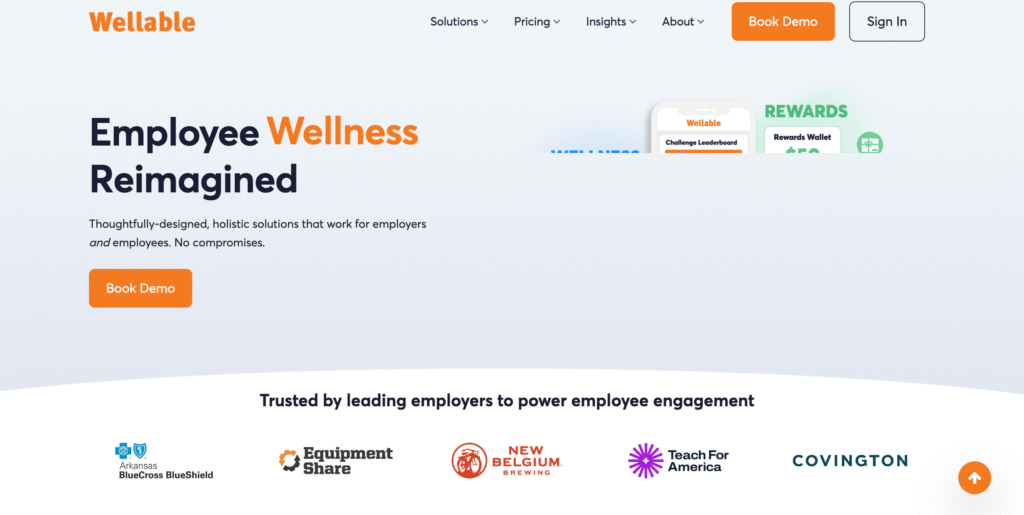
Wellable is the closest philosophical match to BurnAlong among the major platforms — challenges alongside an on-demand library, health assessments, and biometric screening coordination, with managed service options for teams that want the vendor to run things. If the reason you are leaving BurnAlong is support rather than scope, this is the natural comparison.
Pricing: estimated $3–$8 PEPM · custom quote · coaching and advanced analytics typically priced as add-ons
| Strengths | Consider |
|---|---|
| Strong content library and programming | No published pricing and no free trial |
| Managed service option with dedicated CSM | Add-ons push real cost above the base rate |
| Established mid-market and enterprise base | Same passive-content risk as BurnAlong |
Related reading: Wellable alternatives · Which is better: Wellable vs. YuMuuv
3. Grokker
Best for: A like-for-like video library swap with higher production values.
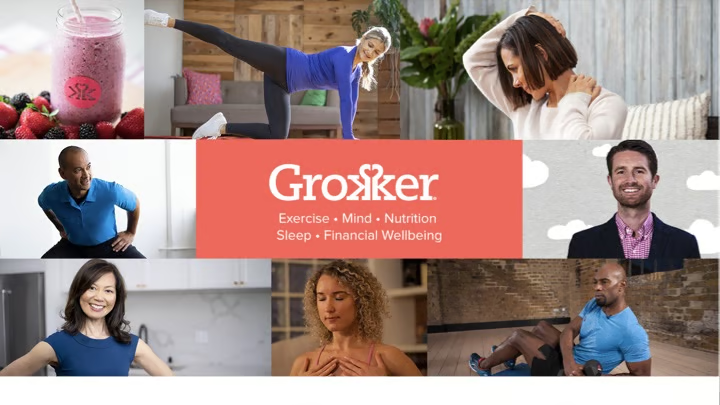
Grokker is the most direct content competitor on this list — an on-demand wellbeing video library spanning fitness, yoga, mental health, nutrition and sleep, with notably consistent production quality. If the specific complaint driving your search is that some BurnAlong videos feel homemade, Grokker addresses exactly that.
Pricing: custom
| Strengths | Consider |
|---|---|
| High, consistent production quality | Same category, same structural limits — still a library |
| Well-organised content taxonomy | Lighter on challenges and recognition |
| Straightforward employee experience | Narrower inclusive and chronic-condition programming than BurnAlong |
4. Wellbeats
Best for: Structured, studio-quality fitness class programming.
Wellbeats, now part of LifeSpeak, offers professionally produced fitness and wellbeing classes organised into structured programs with fitness assessments that route employees to appropriate content. The programming structure is more prescriptive than BurnAlong’s browse-and-choose model, which suits populations that want to be told what to do next.
Pricing: custom
| Strengths | Consider |
|---|---|
| Studio-grade class production | Fitness-weighted rather than fully holistic |
| Guided program pathways, not just a catalogue | Minimal recognition or engagement tooling |
| Fitness assessments to personalise routing | Also sits inside a larger parent company |
5. Personify Health
Best for: Large enterprises linking wellbeing to a US health plan.
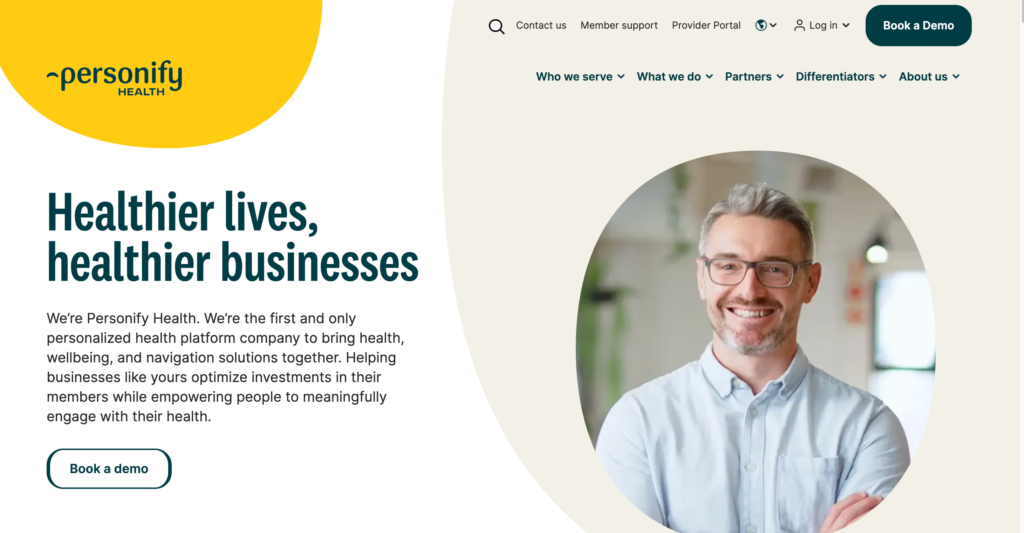
Formed from the merger of Virgin Pulse and HealthComp, Personify Health combines wellbeing programming with benefits navigation, care management and claims-linked analytics. For a self-insured employer trying to demonstrate medical cost impact, it operates at a level content platforms cannot reach.
Pricing: custom enterprise contracts
| Strengths | Consider |
|---|---|
| Deep claims and health plan integration | Long implementation and sales cycle |
| Clinical and care navigation capability | Overbuilt for most companies under 5,000 employees |
| Built for very large populations | High cost floor |
6. Wellhub
Best for: Companies whose employees want physical gym access.
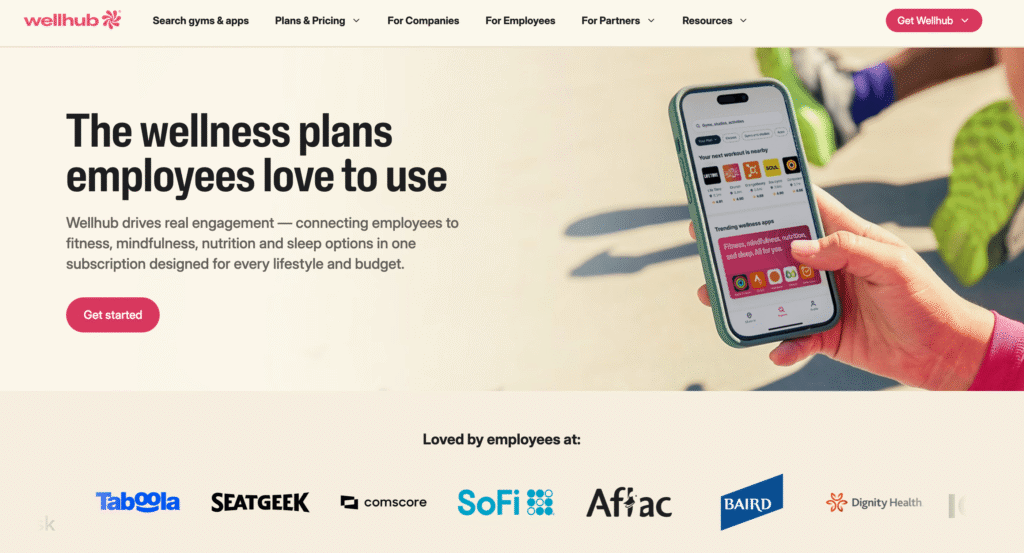
Formerly Gympass, Wellhub provides subsidised access to gyms, studios and fitness apps across many countries. It overlaps with BurnAlong’s Burnalong+ tier but at far greater scale. If in-person access is what employees keep asking for, nothing else here substitutes for it — and equally, it will not give you program data or engagement mechanics.
Pricing: custom, tiered by employee plan level
| Strengths | Consider |
|---|---|
| Large global gym and studio network | An access network, not a wellness program platform |
| Tangible benefit employees visibly value | No surveys, recognition or program reporting |
| Strong for urban and in-office workforces | Value drops sharply for remote or rural teams |
Related reading: Wellhub alternative
Run 120+ pre built wellness challenge with woliba
7. WellRight
Best for: Teams that want to build challenges from the ground up.

WellRight’s strength is configurability — a large multi-dimension challenge library with detailed control over how programs are built and run. If BurnAlong felt too fixed and you have the admin capacity to design your own program, this is the trade in the opposite direction.
Pricing: custom
| Strengths | Consider |
|---|---|
| Extensive, customisable challenge library | Configuration-heavy for lean HR teams |
| Covers dimensions beyond physical activity | Interface feels dated to some buyers |
| Established in the US mid-market | Content library is thinner than BurnAlong’s |
8. Vantage Fit
Best for: Budget-constrained teams that want challenges over content.
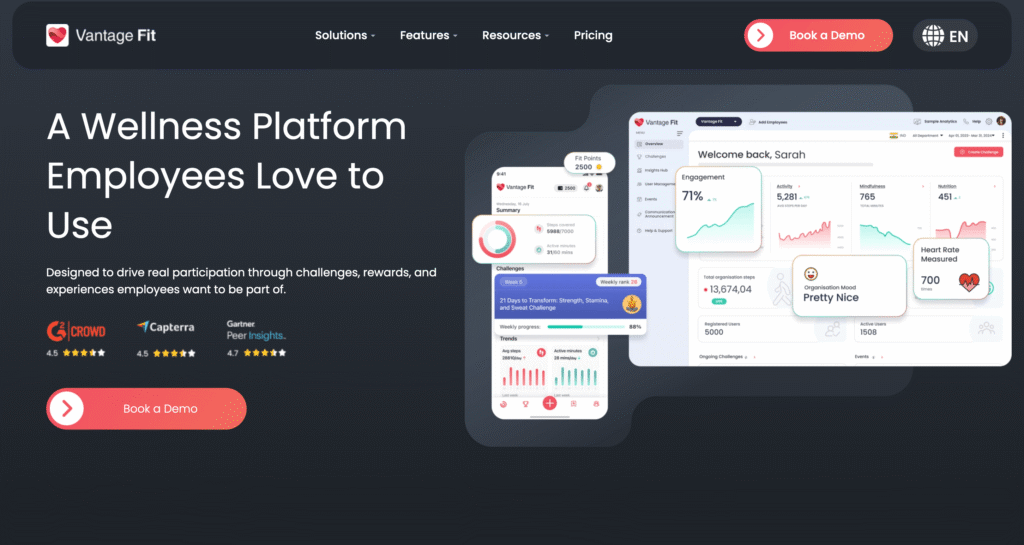
Vantage Fit publishes a rate of $1 per user per month with no minimum — genuinely rare in this category. It is the inverse of BurnAlong: strong on challenges, gamification, leaderboards and rewards points, light on content depth. For teams that concluded the library was not the thing driving engagement, that inversion is the point.
Pricing: from $1 / user / month, no minimum
| Strengths | Consider |
|---|---|
| Transparent, very low entry price | Content library far smaller than BurnAlong’s |
| Strong gamification and challenge variety | Thin on chronic condition and inclusive programming |
| Wide international coverage | Reporting is participation-level, not outcome-level |
Related reading: VantageFit alternatives
9. Headspace for Work
Best for: Programs where mental health is the anchor, not a category.
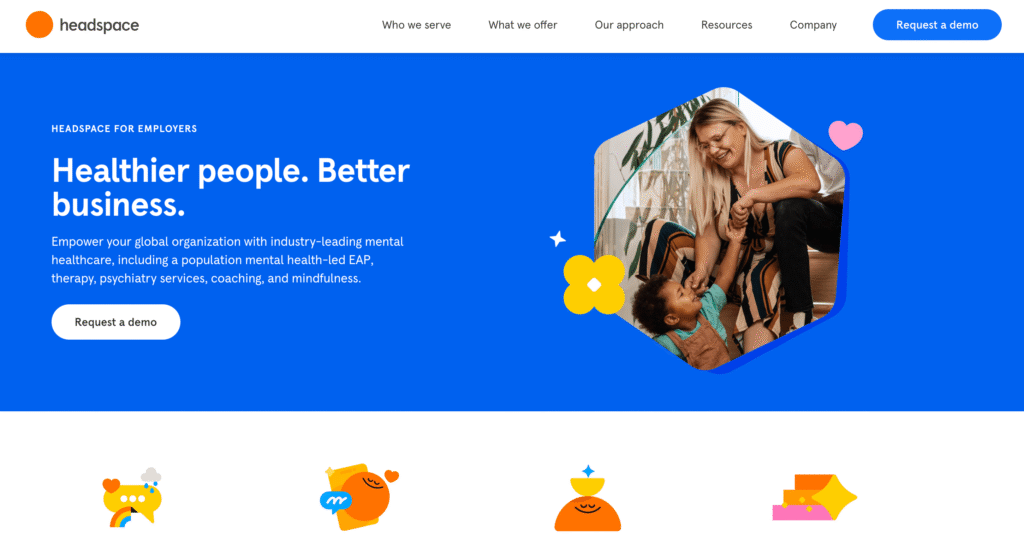
If the BurnAlong categories your employees actually used were meditation, sleep and stress, a mental health specialist will serve them better than a generalist library. Headspace for Work offers clinically informed mindfulness content with coaching and therapy pathways available — depth in one dimension rather than breadth across many.
Pricing: custom for employers
| Strengths | Consider |
|---|---|
| Strong brand recognition drives adoption | Single-dimension — no physical, financial or nutritional coverage |
| Clinical depth in mental health | No challenges, recognition or surveys |
| Coaching and therapy escalation paths | Usually a complement, not a full replacement |
Related reading: Mental wellbeing · World Mental Health Day
10. Wellness360
Best for: Smaller teams wanting a pillar-based framework without enterprise overhead.
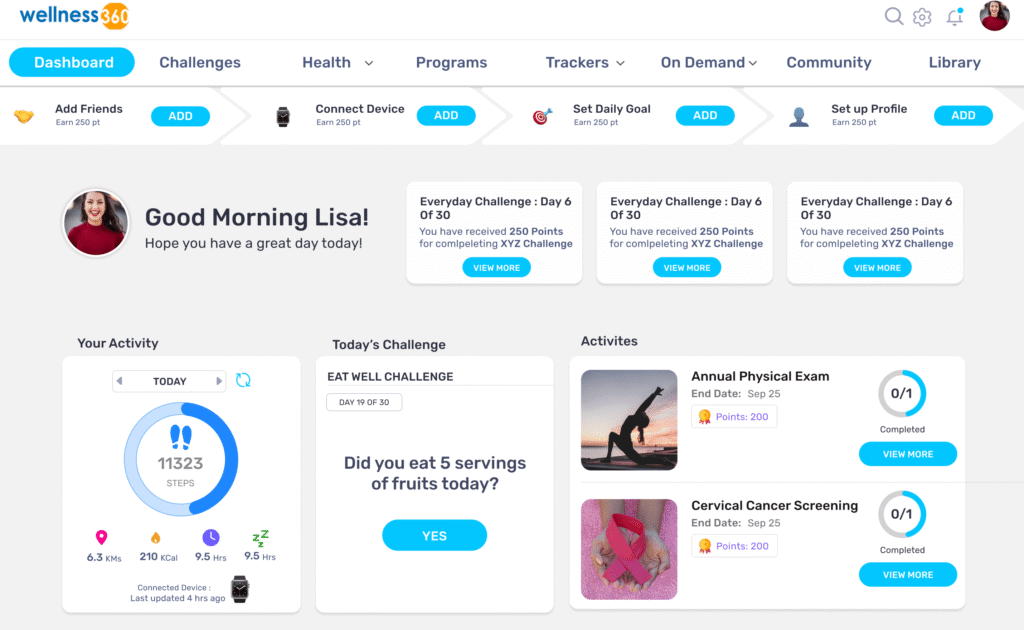
Wellness360 organises everything around nine dimensions of wellness, with a dashboard showing which pillars employees engage with and where the gaps are. That framing is useful for teams that need to demonstrate structured coverage — particularly when reporting to insurers.
Pricing: custom
| Strengths | Consider |
|---|---|
| Clear pillar-based structure and gap reporting | Smaller content library than BurnAlong |
| Accessible for smaller organisations | Less brand recognition with employees |
| Covers challenges, content and incentives | No published pricing |
How to choose the right BurnAlong alternative
Before comparing feature lists, work out which of these six things your program is actually failing at. The answer usually points straight at the platform.
- Was the problem content, or engagement with content?If you have 40,000 classes and 12% monthly active users, buying a bigger library will not help. You need challenges, nudges and recognition — the mechanics that create a reason to open the app.
- How many vendors are you paying?Total the content platform, recognition tool, survey tool and rewards administration. Compare that number, not the content platform alone. This is where ROI of employee wellness program maths usually reverses the decision.
- Which wearables does your workforce actually use?Ask for the complete supported-device list in writing. Android and Samsung coverage is where challenge participation quietly breaks.
- What does leadership ask you for?If the question is retention or healthcare cost, you need assessment, sentiment and engagement data in one system. Classes-watched will never answer it.
- How much admin time genuinely exists?A highly configurable platform with no one to configure it produces a worse program than a simpler one that runs itself.
- Can you test it with real employees before signing?A demo shows you the product. A trial shows you whether your people will use it — and only a handful of vendors in this category allow the second.
Switching from BurnAlong: what to plan for
Content platform migrations have a specific failure mode — employees experience the change as something being taken away. Four things to handle:
Find out what people were actually watching
Pull usage data by category before your contract ends. If 70% of consumption was sleep and meditation, you now know what the replacement must cover — and what you were paying for and nobody used.
Warn family account holders early
BurnAlong’s family accounts mean spouses and children may be active users. Losing access without notice generates complaints that have nothing to do with the workplace program. Give at least four weeks.
Export assessment and challenge history
Request participation records and any health assessment data before access ends. You will want the baseline to prove improvement later, and recovering it afterwards is rarely possible.
Launch with an event, not an email
Content platforms are replaced quietly and die quietly. Open the new platform with a live challenge that has a prize and a deadline. Participation in week one predicts participation in month six more reliably than any feature comparison.
Run 120+ pre built wellness challenge with woliba
The bottom line
BurnAlong solved a real problem. Wellness content used to be aimed almost exclusively at people who were already fit, and BurnAlong deliberately built for everyone else — new parents, people managing chronic conditions, employees who would never set foot in a gym. That inclusivity is genuine and it is worth protecting in whatever you choose next.
What it does not solve is the harder problem: getting people to engage, keeping them engaged, and proving to leadership that any of it worked. A library waits to be visited. A program goes and finds people.
Woliba is the strongest alternative because it does not force a choice between the two. You keep holistic content across all twelve pillars, and you gain the challenges, employee engagement tools, recognition, coaching, preventive health and unified reporting that turn a catalogue into a program — at published pricing, in under an hour of admin a month.