


Most companies invest thousands of dollars in employee wellness programs — yet forget to put the right people in charge of actually running them. That’s where a wellness committee becomes the game-changer. A well-structured wellness committee transforms isolated perks into a cohesive, culture-driven strategy that employees actually engage with.
In this guide, we break down everything you need to know about building and running an effective workplace wellness committee — from defining its purpose and roles to choosing the right activities and measuring real impact.
What Is a Wellness Committee?
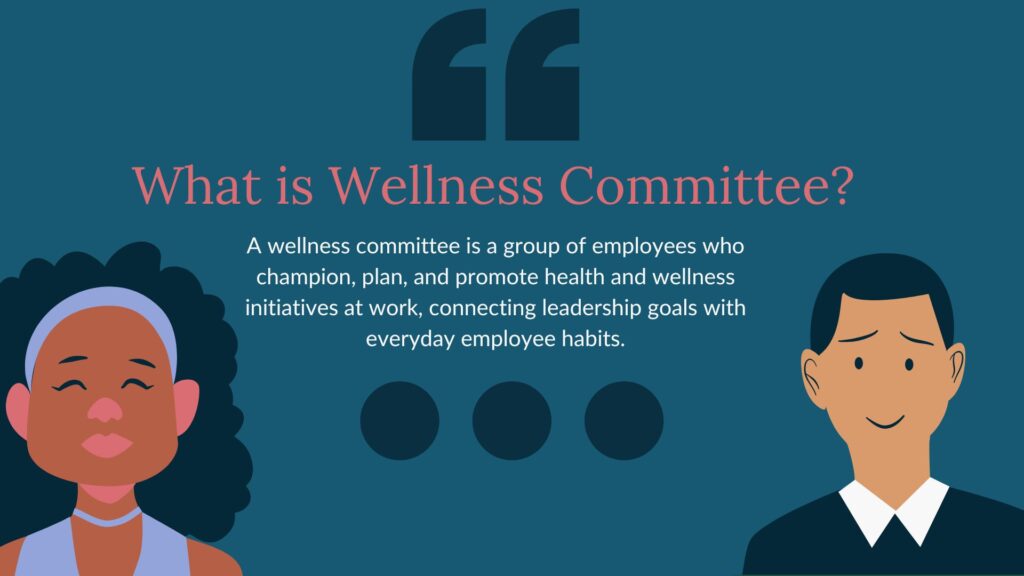
A wellness committee is a dedicated group of employees — often volunteers from different departments — who plan, coordinate, and promote health and wellness initiatives within their organization. Think of them as internal wellness champions: people who bridge the gap between leadership’s wellness goals and the day-to-day habits of employees on the ground.

Unlike a top-down wellness mandate, a committee-driven approach makes wellness feel grassroots and community-led. Employees are more likely to participate in initiatives when their peers — not just HR — are advocating for them.
This guide focuses primarily on the employee wellness committee in corporate and organizational settings.
Why Your Organization Needs a Wellness Committee
A wellness committee is not just a “nice to have.” It’s a strategic asset that drives measurable results across your workforce. Here’s why it matters:
- Increases employee engagement: Employees who feel their employer cares about their well-being are 69% more likely to stay with the company (Gallup). Committees make that care visible and tangible.
- Drives program participation: Peer-to-peer promotion dramatically outperforms top-down communication. When employees hear about a fitness challenge or meditation workshop from a trusted colleague, they’re far more likely to join.
- Reduces healthcare costs: Organizations with strong wellness programs report a 25–30% reduction in medical and absenteeism costs (SHRM). Committees help ensure those programs are well-utilized.
- Builds a culture of health: A sustained wellness committee turns one-off events into an ongoing cultural commitment — making well-being part of the company’s identity, not just a quarterly initiative.
- Surfaces employee needs: Committee members act as feedback channels, helping leadership understand what employees actually want from their wellness programs.
Wellness Committee Roles and Responsibilities
A high-functioning wellness committee operates like a small team with clear ownership. Here are the core roles every committee should define:

Committee Chair or Co-Chairs
The chair leads the committee, facilitates meetings, and serves as the primary liaison with HR and senior leadership. They set the agenda, keep members accountable, and ensure the committee’s activities align with organizational wellness goals. Co-chairs are often appointed to distribute workload and ensure continuity.
Communications Lead
This member is responsible for promoting wellness initiatives company-wide — through email newsletters, Slack/Teams announcements, intranet posts, or flyers. Strong communication is what transforms a great wellness event from underattended to oversubscribed.
Events and Activities Coordinator
This role plans and executes wellness events — from lunch-and-learn sessions and step challenges to meditation breaks and mental health awareness campaigns. They manage logistics, vendor coordination, and follow-up.
Data and Metrics Lead
They track participation rates, survey results, and health outcomes to evaluate what’s working. This data is essential for justifying the wellness budget and improving future programming.
Department Representatives
Including representatives from different departments or locations ensures that wellness initiatives are inclusive, relevant, and reach all corners of the organization — not just employees in corporate headquarters.

Wellness Committee Goals and Objectives
Every wellness committee needs a clear mission statement and measurable goals. Without them, efforts become scattered and difficult to evaluate. A strong wellness committee mission statement might look like this:
“Our wellness committee is committed to fostering a supportive, healthy workplace by promoting physical, mental, and emotional well-being for every employee — empowering our team to thrive both at work and beyond.”
From that mission, goals and objectives should be SMART — Specific, Measurable, Achievable, Relevant, and Time-bound. Examples include:
- Increase wellness program participation by 30% within the first year
- Launch at least one mental health initiative per quarter
- Reduce employee-reported stress levels by 20% within 12 months (measured via annual survey)
- Achieve a 70% employee satisfaction score on wellness programming
- Establish a wellness committee charter and operating guidelines within 60 days of launch
How to Start a Wellness Committee: A Step-by-Step Guide
Ready to establish a wellness committee at your organization? Follow these steps to build one with a strong foundation.
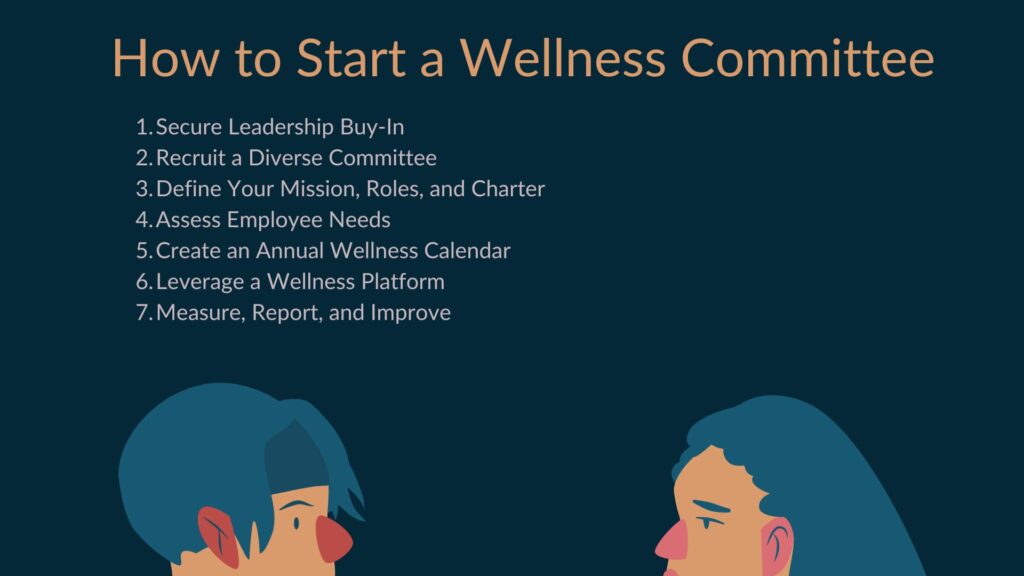
Step 1: Secure Leadership Buy-In
Before recruiting members, you need executive and HR support. Present the business case: higher retention, reduced absenteeism, lower healthcare costs, and improved productivity. Leadership backing gives the committee budget, visibility, and organizational credibility.
Step 2: Recruit a Diverse Committee
Aim for 6–12 members who represent different departments, roles, locations, and demographics. Diversity is key — a committee composed only of fitness enthusiasts will miss the needs of employees dealing with mental health challenges or chronic illness. Recruit through internal announcements, manager referrals, and open applications.
Step 3: Define Your Mission, Roles, and Charter
In your first meeting, establish: a wellness committee mission statement, role assignments, meeting cadence (monthly or bi-monthly is typical), a charter or operating guidelines document, and core goals for your first year. Having wellness committee guidelines in writing sets expectations and prevents confusion as membership evolves.
Step 4: Assess Employee Needs
Run a company-wide wellness survey before planning any programming. Ask employees what aspects of well-being they most want support with — physical fitness, stress management, financial wellness, nutrition, mental health, or something else entirely. This data ensures your committee invests time and budget in things employees actually want.
Step 5: Create an Annual Wellness Calendar
Use survey insights to plan a year of wellness activities. A well-rounded calendar should address physical, mental, social, and financial well-being — not just physical health. Align events with awareness months (e.g., Mental Health Awareness Month in May, Heart Health Month in February) to amplify relevance.
Step 6: Leverage a Wellness Platform
Starting a wellness program manually is difficult at scale. A platform like Woliba gives your committee the infrastructure to run wellness challenges, track participation, send communications, and measure outcomes — all in one place. This dramatically reduces the administrative burden on volunteer committee members.
Step 7: Measure, Report, and Improve
After each initiative, gather data: participation rates, employee feedback, and health outcomes (when available). Present quarterly reports to leadership. Continuously refine your programming based on what resonates with employees.
Wellness Committee Ideas for Work: 20 Activities to Get You Started
Looking for wellness committee ideas that actually engage employees? Here are 20 proven activities organized by category:
Physical Wellness
- Company-wide step challenge with leaderboards and prizes
- Subsidized gym memberships or on-site fitness classes
- Lunchtime walking groups or standing desk initiatives
- Annual wellness fair with health screenings
- Ergonomics workshops to prevent workplace injuries
Mental and Emotional Wellness
- Mindfulness or meditation sessions (live or on-demand)
- Stress management webinars with licensed therapists
- Mental health days and manager training on psychological safety
- Access to Employee Assistance Programs (EAPs)
- Burnout prevention workshops for high-demand teams
Social and Community Wellness
- Volunteer days and community service opportunities
- Team wellness challenges (nutrition, sleep, hydration)
- Peer recognition programs that celebrate healthy habits
- Wellness-themed social events (cooking classes, yoga retreats)
Financial and Intellectual Wellness
- Financial literacy workshops (budgeting, retirement planning)
- Lunch-and-learn sessions on professional development topics
- Book clubs focused on health, leadership, or personal growth
- Student loan repayment education and benefits awareness sessions
Wellness Committee Guidelines and Best Practices
To keep your committee operating effectively over time, follow these core wellness committee guidelines:
- Meet consistently: Monthly or bi-monthly meetings keep momentum going. Document agendas and minutes to ensure accountability.
- Rotate membership: Prevent burnout and bring fresh perspectives by rotating members annually. Keep a 50/50 blend of returning and new members.
- Stay inclusive: Ensure programming addresses employees across all physical abilities, work schedules, and locations — including remote and hybrid workers.
- Communicate proactively: Don’t assume employees will find wellness resources on their own. Use multiple channels (email, Slack, intranet, manager announcements) to promote every initiative.
- Budget intentionally: Advocate for a dedicated wellness budget. Even $50–$100 per employee per year can fund meaningful programming when spent strategically.
- Tie wellness to business outcomes: Connect your committee’s work to metrics leadership cares about — turnover, absenteeism, productivity — to maintain executive support.
Wellness Committee Names: Ideas to Make Your Committee Stand Out
The name of your wellness committee sets the tone for your culture. A creative, positive name signals that wellness is fun, inclusive, and employee-driven — not just a corporate checkbox. Here are some inspiring wellness committee names to consider:
- The Thrive Team
- WellWorks
- The Vitality Squad
- The Balance Collective
- The WELL Crew (Wellness, Energy, Longevity, Lifestyle)
- Healthy Horizons
- The Wellness Warriors
- Project Flourish
- The Feel Good Committee
- Mindful Movers
Choose a name that reflects your organization’s culture — something that resonates with your employees and signals that wellness is approachable and fun.
How Woliba Supports Your Wellness Committee
Running a wellness committee is rewarding — but it’s also a lot of work, especially when your members are volunteers with day jobs. Woliba’s employee wellness platform is purpose-built to take the operational burden off your committee so they can focus on what matters: connecting with employees and driving meaningful well-being outcomes.
With Woliba, your wellness committee can:
- Launch and manage wellness challenges with automated tracking and gamification
- Distribute wellness content including workout videos, mindfulness sessions, and nutrition guides
- Send targeted communications and push notifications to boost participation
- Access real-time dashboards and analytics to measure engagement and ROI
- Offer personalized wellness journeys for employees at every stage of their health
Whether you’re just getting started or looking to take your existing wellness committee to the next level, Woliba gives your team the tools to build a thriving, data-driven wellness culture.
Final Thoughts: Your Wellness Committee Is Your Culture in Action
A wellness committee is more than a planning team — it’s a signal to every employee that their health matters. When you invest in building a well-structured committee with clear goals, diverse representation, and the right tools, you create something far more powerful than a wellness program: you build a workplace culture where people genuinely want to show up.
Whether you’re establishing your first wellness committee or revamping an existing one, the impact starts with intention. Define your mission, equip your team, and back it with a platform designed to help you succeed.