


What is Wellness Corner?
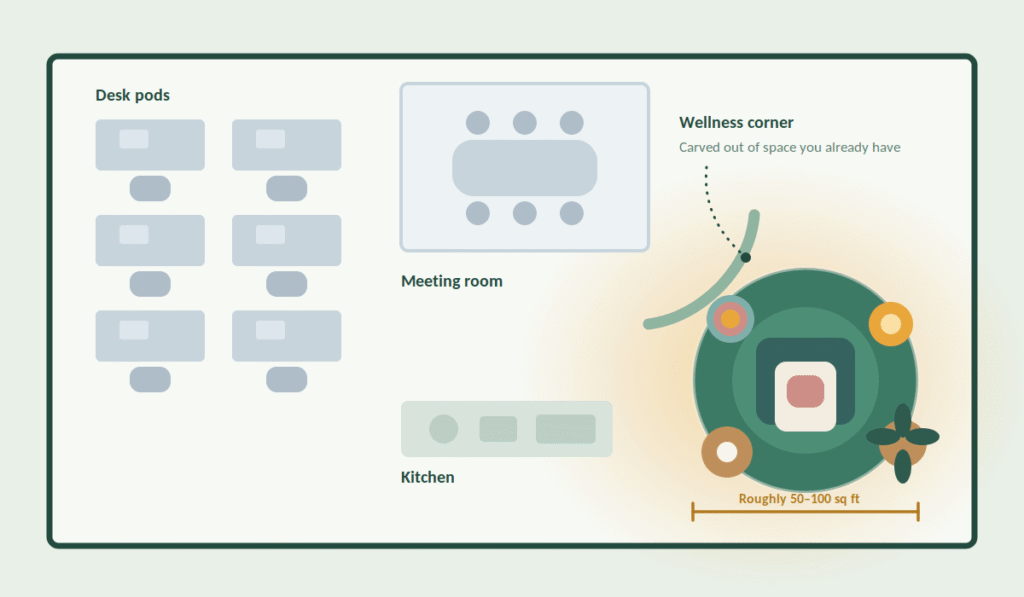
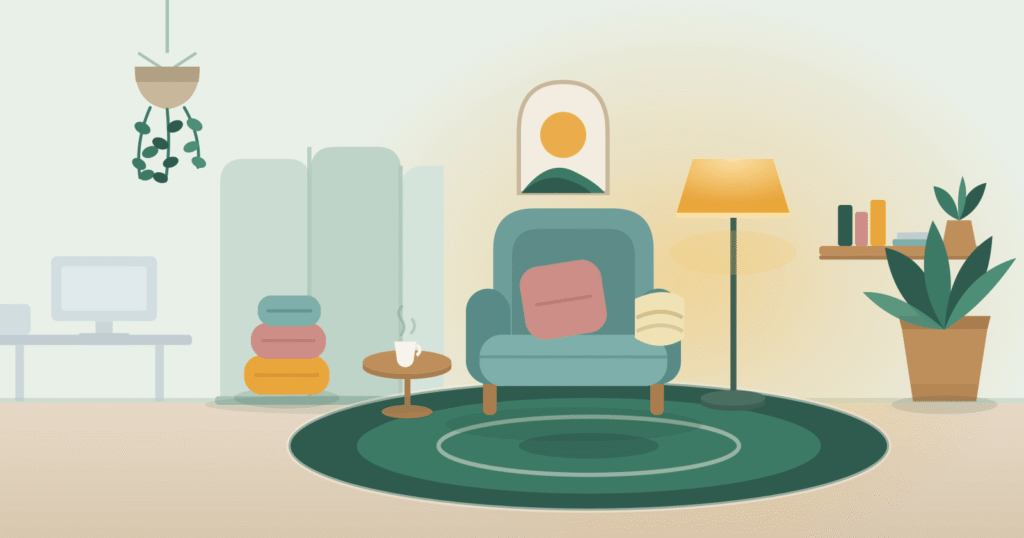
A wellness corner is a small, intentionally designed area within an existing workspace where employees can step away from their desks and reset. Unlike a full wellness room, a corner requires no dedicated square footage, no construction, and no capital request. It can be carved out of the end of a breakroom, an unused nook beside a window, a quiet stretch of hallway, or the corner of an open-plan floor that no one has claimed.
That accessibility is the point. A wellness corner lowers the barrier between an employee noticing they need a break and actually taking one. When the space is visible, close, and clearly available, employees use it — often for five or ten minutes at a time, several times a week. Short recovery breaks throughout the day help regulate stress, restore attention, and prevent the slow accumulation of fatigue that turns into burnout by Thursday afternoon.
A wellness corner also functions as a signal. Employees read the physical environment as a statement of what an organization values, and a well-maintained corner communicates that rest is permitted rather than merely tolerated. For organizations with limited budget, limited real estate, or a hybrid footprint where a dedicated room would sit empty most days, a wellness corner delivers much of the benefit of a wellness room at a fraction of the cost and commitment.
Why a wellness corner matters at work
People need short breaks to reset, but most don’t take them. Not because they can’t — because nothing in the office says it’s allowed. Stepping away from your desk with nowhere to go looks like slacking off.
A corner fixes that. It’s a designated place, so using it stops being a judgment call.
It also costs almost nothing. No construction, no dedicated room, no capital request. You’re furnishing a spot you already have.
And it can solve a legal requirement at the same time. Nursing employees are entitled to a private space that isn’t a bathroom — partitions and a chair are enough to qualify.
Finally, if you’re asking people to commute in, the office has to offer something home doesn’t. A corner is a small, visible reason to be there.
What Is Needed In A Wellness Corner At Work?
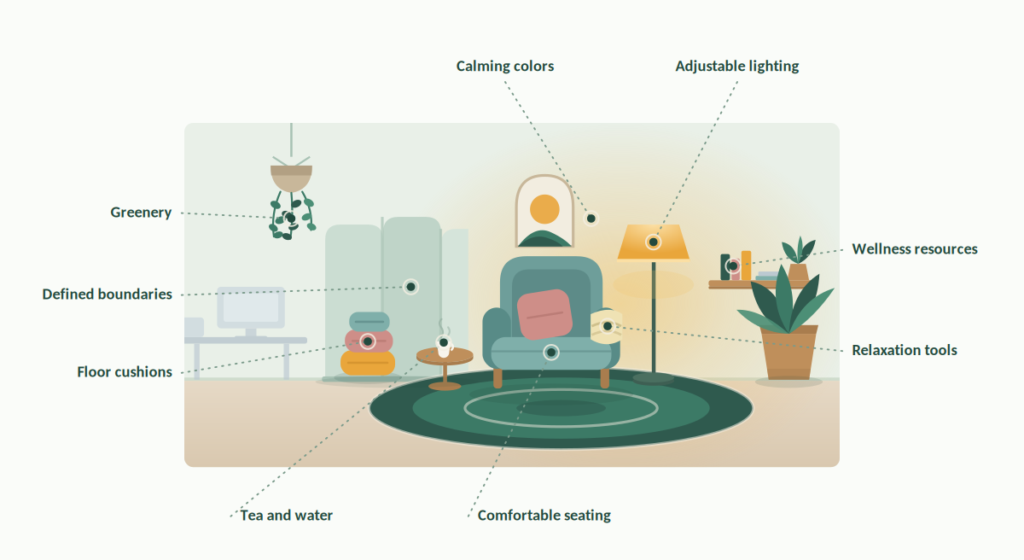
Because a wellness corner shares space with the rest of the office, the essentials focus on separation, comfort, and clarity of purpose.
- Defined Boundaries: Mark the corner as distinct from the surrounding workspace using a rug, a change in flooring, a bookcase, a folding screen, or a cluster of tall planters. Visual separation is what turns a corner into a destination rather than an overflow area.
- Comfortable Seating: Provide seating that differs from standard desk chairs — a lounge chair, a floor cushion, a padded bench, or a small sofa. The change in posture is part of what makes the break restorative.
- Adjustable Lighting: Add a floor lamp or table lamp with a warm bulb and, where possible, a dimmer. Overhead fluorescent lighting undercuts the atmosphere no matter how well the rest of the corner is furnished.
- Natural Light: Position the corner near a window when one is available. Daylight exposure supports mood, alertness, and healthy circadian rhythm.
- Calming Colors: Use blues, greens, warm neutrals, or soft earth tones in the rug, cushions, and wall art to visually separate the corner from the brand colors used elsewhere in the office.
- Sound Buffering: Soften the acoustics with a thick rug, upholstered seating, fabric wall panels, or a small white noise machine. A basket of clean headphones or a set of earplugs gives employees control over what they hear.
- Greenery: Introduce low-maintenance plants such as pothos, snake plants, or ZZ plants. Plants improve the visual quality of the space and require little upkeep in exchange.
- Relaxation Tools: Stock a small tray or basket with stress balls, a hand massager, an eye mask, a soft blanket, essential oil rollers, or a set of mindfulness cards.
- Storage: Add a low shelf, cabinet, or set of labeled bins so the corner stays tidy and does not gradually collect stray office supplies and abandoned coffee cups.
- Hydration And Healthy Snacks: Place a water dispenser, a kettle with a selection of herbal teas, or a bowl of fruit and nuts within reach.
- Information Resources: Display short-form wellness content employees can absorb in a few minutes — a rotating set of cards on breathing techniques, a shelf of books on stress management, or a QR code linking to on-demand content in your corporate wellness apps.
- Clear Use Guidelines: Post a short, friendly sign explaining what the corner is for, how long a typical visit runs, and whether phone calls and meetings are permitted. Ambiguity is the fastest way for a wellness corner to become an unofficial meeting room.
How To Design A Wellness Corner
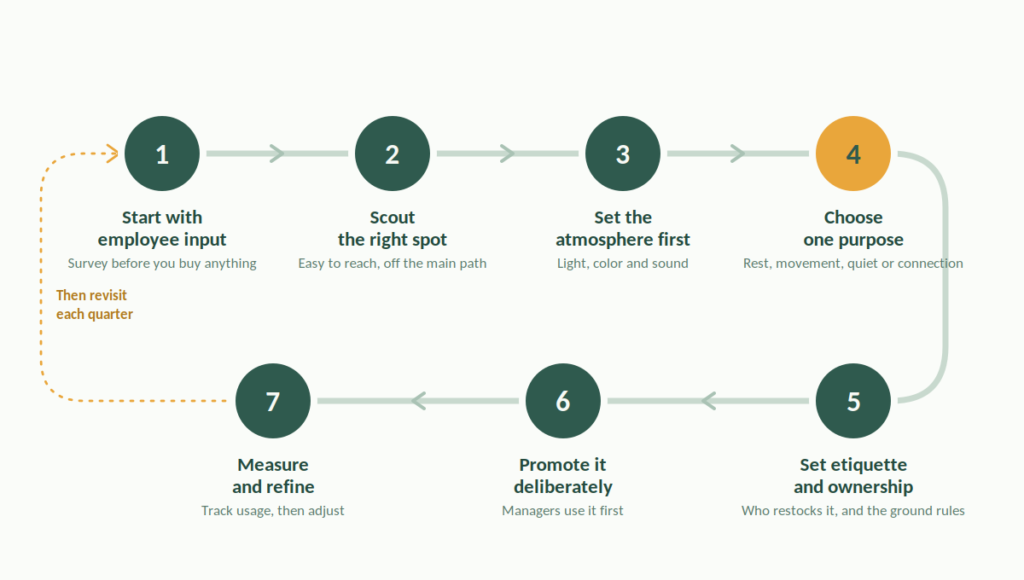
Designing a wellness corner is less about square footage than about sequence. Work through the following steps in order to avoid building a beautiful space that no one uses.
Start With Employee Input: Survey employees before purchasing a single cushion. Ask what they currently do when they need a break, what stops them from taking one, and which of several concepts they would actually use. A five-question pulse survey will tell you whether your workforce wants silence, movement, caffeine, or company — four answers that lead to four very different corners. Involving employees in the decision also builds early ownership of the space, which drives adoption once it opens.
Scout The Right Spot: Walk the floor and look for locations that are easy to reach but out of the main traffic flow. Proximity to a window is ideal; proximity to the printer, the kitchen sink, or the sales team’s phone bank is not. Aim for a footprint of roughly 50 to 100 square feet, enough for two or three people without inviting a standing meeting.
Set The Atmosphere Before The Furniture: Address lighting, color, and sound first, since these determine whether the corner feels genuinely different from the rest of the office. Swap or shade the overhead lighting, lay down a rug, add soft surfaces, and only then choose seating and accessories.
Choose A Purpose: A wellness corner works best when it does one thing well. Select a primary concept based on your survey results, then furnish accordingly.
- Mindfulness Corner: Outfit the space with a floor cushion or low armchair, a small side table, and a set of guided meditation prompts. Encourage employees to use short focused-breathing or body-scan practices between meetings. Regular mindfulness practice helps reduce stress, sharpen concentration, and improve emotional regulation across the workday.
- Movement Corner: Equip the corner with a yoga mat, a foam roller, resistance bands, and a laminated card of desk-friendly stretches. Invite employees to break up long periods of sitting with five minutes of movement. Consistent stretching improves circulation, lowers the risk of musculoskeletal strain, and restores energy more reliably than a third cup of coffee.
- Recharge Retreat: Furnish the space for genuine rest with a recliner or chaise, a soft blanket, an eye mask, and dimmable light. Encourage short 15- to 20-minute rest breaks rather than open-ended napping. A rested workforce makes better decisions, catches more errors, and handles pressure with more composure.
- Nourishment Nook: Center the corner on a small table, a kettle, a curated tea and coffee selection, and a bowl of fresh fruit or nuts. Position it away from desks so employees eat and drink without a screen in front of them, turning a snack break into an actual pause.
- Knowledge Corner: Add a comfortable chair, strong task lighting, and a curated shelf of books and magazines spanning personal development, wellness, and fiction. Reading for even ten minutes offers a clean mental break from work tasks and supports a culture of continuous learning.
- Connection Corner: Arrange two or three chairs around a low table with a few board games, a puzzle, or a set of conversation cards. Encourage employees to use the space for informal, non-work conversation. Peer connection is one of the strongest protective factors against workplace loneliness and disengagement.
- Digital Detox Corner: Place a small basket at the edge of the space for phones and laptops, and keep the corner stocked with analog activities — puzzles, sketchpads, a crossword book. Stepping away from screens reduces eye strain and mental fatigue, particularly for employees who spend the full day in back-to-back video calls.
Establish Etiquette And Ownership: Decide in advance whether the corner is bookable or first-come, whether calls are allowed, and how long a typical visit lasts. Assign one person or team responsibility for restocking supplies, watering plants, and keeping the space presentable. Corners fail from neglect far more often than from poor design.
Promote The Space Deliberately: Announce the corner in a company-wide message, walk teams past it during onboarding, and have managers model its use. Employees take their cues from leadership, and a corner that managers visibly avoid will be read as a trap rather than a benefit.
Measure Usage And Refine: Track adoption with whatever mechanism fits the space — a simple check-in sheet, a QR code scan, a booking log, or a quarterly pulse question. Review the data alongside employee feedback and adjust the concept, the supplies, or the location accordingly. A wellness corner that changes in response to how employees actually use it will outlast one designed perfectly on paper.
Conclusion
A wellness corner gives organizations a practical way to build recovery into the workday without dedicating a room or waiting on a construction budget. By defining a small area, setting the right atmosphere, and committing to a single clear purpose, employers create a space employees can reach in under a minute and leave feeling meaningfully reset.
The corners that succeed are the ones treated as living programs rather than one-time installations. Gather feedback regularly, watch how the space is used, and refine the concept as needs shift across teams and seasons. That ongoing attention is what turns a well-furnished corner into a durable signal that employee well-being is part of how the organization operates, not an initiative that ran for a quarter.