
Holistic wellness is an approach to health that focuses on the whole person, not just one part of their health. It recognizes that physical, mental, emotional, social, financial, and other aspects of wellbeing are deeply connected, and that a challenge in one area often affects the others.
For example, financial stress can disrupt sleep, poor sleep can affect mood and focus, and low mood can reduce physical activity and social connection. Holistic wellness addresses these connections together rather than treating each one in isolation.
In the workplace, holistic wellness has shifted corporate wellness programs beyond traditional step challenges and fitness incentives. Today’s programs support employees across every dimension of their wellbeing, at work and in life.
The Eight Dimensions of Holistic Wellness
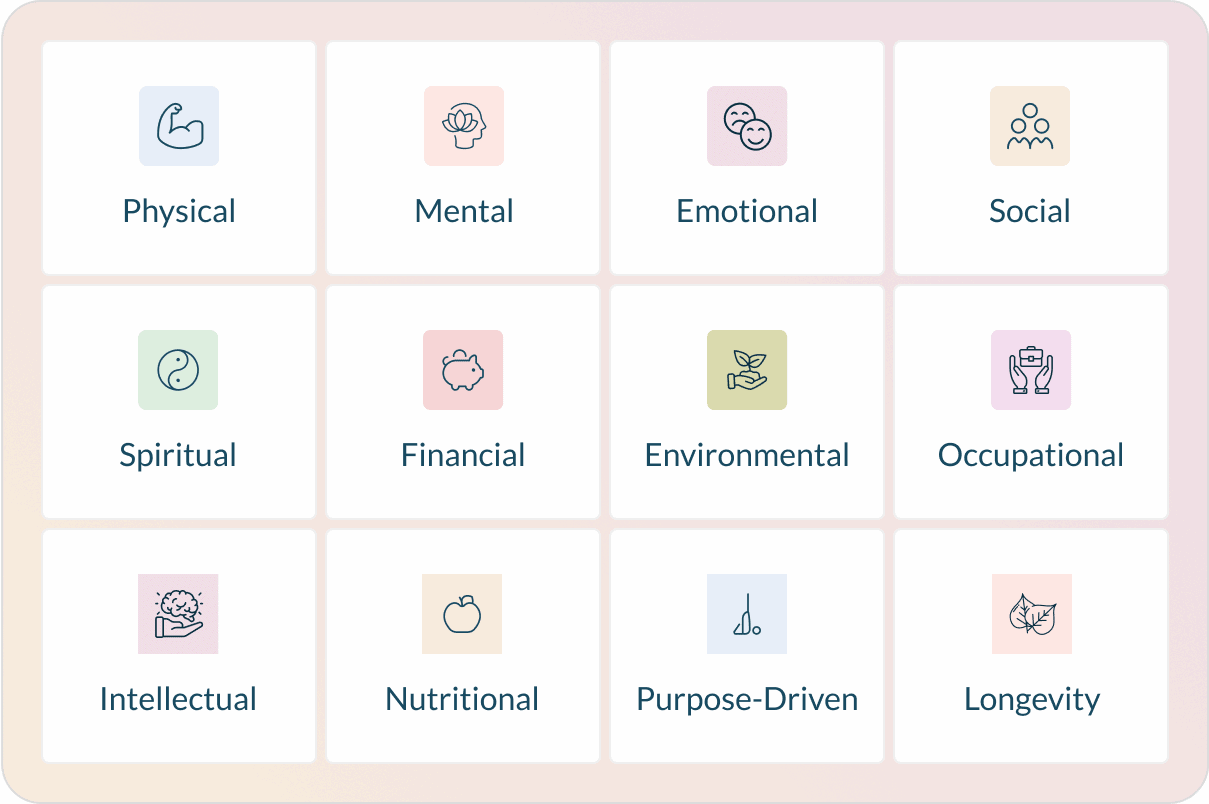
A widely used framework from the U.S. Substance Abuse and Mental Health Services Administration (SAMHSA) describes wellness across eight interconnected dimensions:
- Physical: Exercise, nutrition, sleep, and preventive healthcare
- Emotional: Managing stress, building resilience, and coping with life’s challenges
- Social: Developing a sense of connection, belonging, and supportive relationships
- Financial: Feeling secure and in control of current and future finances
- Occupational: Finding satisfaction, purpose, and growth in one’s work
- Intellectual: Engaging in learning, creativity, and new skills
- Spiritual: Having a sense of purpose, meaning, and personal values
- Environmental: Being in safe, healthy, and supportive surroundings
Why Holistic Wellness Matters to Organizations
Employees don’t leave their personal lives at the door. Stress, health, relationships, and finances all show up at work. Organizations that take a holistic approach to wellness often see:
- Higher engagement, as employees feel supported as whole people
- Reduced burnout by addressing stress at its root
- Improved productivity and focus, with fewer distractions from unresolved personal challenges
- Lower absenteeism and fewer health-related disruptions
- Stronger retention, since employees value employers who care about their overall wellbeing
- Better program participation, because holistic programs offer something relevant to everyone, not just fitness enthusiasts
- A healthier culture, where wellbeing is part of everyday work life
- Potential reductions in healthcare costs over time through prevention
Holistic Wellness vs. Traditional Corporate Wellness
Traditional corporate wellness programs have often focused mainly on physical health, such as step challenges, gym discounts, weight-loss competitions, and biometric screenings. While valuable, this narrow focus can miss what employees struggle with most, and it often attracts only employees who are already active.
Holistic wellness programs take a broader view. They include physical health alongside mental and emotional support, financial education, social connection, personal growth, and a sense of purpose. This makes them more inclusive, more relevant to diverse employee needs, and more effective at improving overall wellbeing.
Signs Your Organization Needs a More Holistic Approach
- Wellness program participation is low or limited to the same group of employees
- Employees report high stress or burnout despite existing wellness offerings
- Programs focus mostly on fitness and physical health
- Financial, emotional, or social wellbeing aren’t addressed
- Remote, hybrid, or deskless employees have limited access to resources
- Wellness feels like a one-off campaign rather than part of the culture
How Organizations Can Support Holistic Wellness
- Address multiple dimensions. Offer resources across physical, mental, financial, and social wellbeing.
- Personalize the experience. Let employees focus on the areas of wellbeing that matter most to them.
- Make it accessible. Provide mobile-friendly, on-demand resources for office, remote, hybrid, and deskless employees.
- Build connection. Team challenges, events, and social activities support social wellbeing and belonging.
- Offer education and coaching. Live and on-demand sessions help employees build lasting habits.
- Recognize and reward progress. Celebrate healthy habits and milestones to keep motivation high.
- Listen to employees. Use pulse surveys to understand changing needs and shape programs accordingly.
- Lead by example. When leaders prioritize their own wellbeing, employees feel permission to do the same.
- Embed wellness into culture. Make wellbeing part of everyday work, not a separate program.
How Woliba Helps
Woliba was built for holistic wellbeing. It brings physical health, mental resilience, sleep, nutrition, financial wellbeing, and social connection together in one engaging platform. With wellness challenges, live and on-demand coaching, educational resources, recognition, and rewards, HR teams can support employees across every dimension of wellbeing and build a culture where people truly thrive, at work and beyond.