


Every company says its people matter. Proving it is a different job entirely.
Employee wellness is how that proof shows up — in the small daily habits, the flexibility people are given, and the support that’s there when things get hard. It’s not one big gesture. It’s dozens of small ones, done consistently.
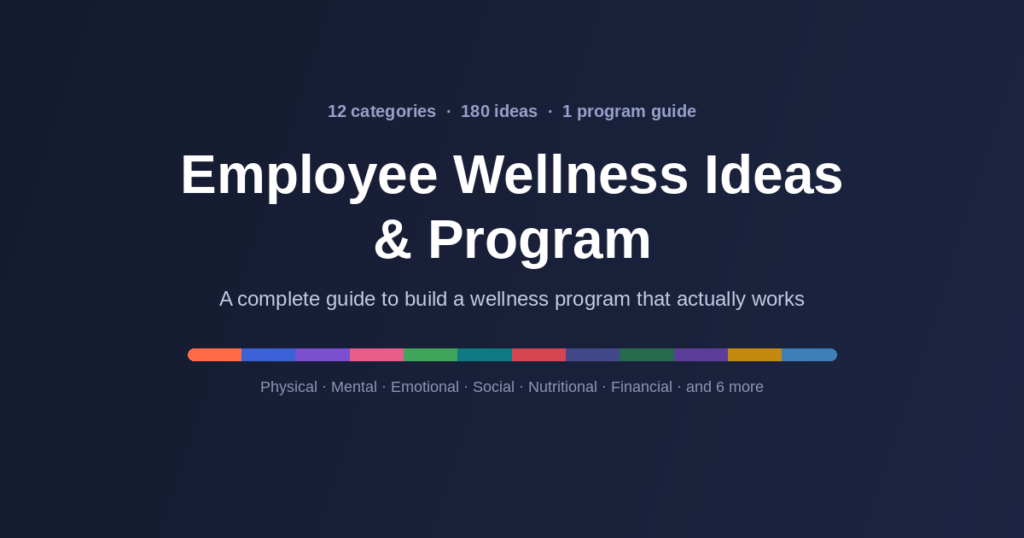
This guide gives you two things:
- 180 practical employee wellness ideas across 12 categories — simple enough to start this week.
- A clear way to turn those ideas into a structured wellness program — something with a goal, a budget, and a way to know if it’s working.
Whether you need a quick idea for next week or a full strategy for next year, you’ll find it below.
Ideas vs. Programs: What’s the Difference?
These two terms get used interchangeably, but they’re not quite the same thing.
Wellness ideas are individual activities you can try immediately — a step challenge, a no-meeting hour, a healthier snack option. No planning required.
A wellness program is what happens when you take several ideas, connect them to a specific goal, give them a budget, and run them consistently—with a way to check whether they’re actually working.
Think of it like this: ideas are ingredients, a program is the recipe that turns them into something that lasts.
You don’t need to choose one over the other. Most companies start with a handful of ideas, see what employees respond to, then build those into a proper program. That’s exactly the order this guide follows — ideas first, program-building second.
1. Physical Wellness Ideas
Long hours at a desk quietly damage health more than people realize. These ideas help employees move without disrupting the workday.
- Walking meetings
Free— Swap sit-down 1:1s for a walk outside when the conversation doesn’t need a screen or notes. - Step-count challenges
Low-cost— Track daily steps in a shared spreadsheet or app like Strava, with a small prize for the month’s top three. - Standing desks
Investment— Offer height-adjustable desks so employees can alternate between sitting and standing. - Guided stretch breaks
Free— Play a 5-minute stretch video mid-morning and mid-afternoon in a shared space or via Slack reminder. - Stair-use challenge
Free— Post a simple monthly goal (e.g., “climb 500 flights as a team”) tracked on a whiteboard near the stairwell. - On-site or virtual yoga sessions
Low-cost— Book a instructor for a weekly 30-minute session, in person or over Zoom. - Bike-to-work incentive
Low-cost— Offer a small monthly stipend or gift card for employees who commute by bike at least twice a week. - Desk exercise guide
Free— Share a one-page PDF of simple stretches employees can do without leaving their chair. - Fitness app subsidy
Low-cost— Cover part of the monthly cost for apps like Peloton or Apple Fitness+. - Team fitness challenges
Low-cost— Run a 30-day plank or squat challenge as one of your go-to employee fitness challenge ideas, tracked in a shared doc with badges for milestones. - Wearable tracker program
Investment— Provide devices like Fitbits and reward employees who hit step milestones each quarter. - Lunchtime walking group
Free— Start an optional, casual walking group that meets at the same time each day. - Small on-site fitness area
Investment— Set aside a room with basic equipment — a few mats, resistance bands, a pull-up bar. - Walk-and-talk phone calls
Free— Encourage employees to walk during calls that don’t require a screen. - Quarterly sports day
Low-cost— Organize a friendly match (badminton, football, cricket) with snacks and a small trophy for winners.
2. Mental Wellness Ideas
Mental wellness is about catching stress before it becomes burnout.
- No-meeting blocks
Free— Reserve two hours daily, company-wide, with zero scheduled meetings for focused work. - Mental health days
Free— Offer these separately from sick leave, with no requirement to explain why. - Guided meditation sessions
Low-cost— Run a 10-minute session weekly using an app like Headspace or Calm, live or recorded. - Stress management workshops
Low-cost— Bring in a facilitator once a quarter to teach practical coping techniques. - A quiet room
Investment— Set aside a small space with dim lighting and no phones allowed, for anyone needing a few minutes alone. - Employee Assistance Program (EAP) access
Investment— Provide confidential counseling sessions through a third-party employee assistance program provider. - Digital detox reminders
Free— Send a gentle Slack nudge at day’s end suggesting employees log off and step away from screens. - Genuine manager check-ins
Free— Add one standing question to every 1:1: “How are you doing, really?” — not just work status. - Workload review sessions
Free— Hold a monthly check where managers and employees flag early signs of overload together. - 2-minute breathing exercises
Free— Start high-stress meetings with a brief guided breath, led by whoever’s running the meeting. - Manager mental health training
Low-cost— Run a half-day session teaching managers how to spot burnout and respond supportively. - Time management workshops
Low-cost— Teach practical prioritization frameworks (like time-blocking) in a lunch-and-learn format. - Anonymous pulse surveys
Free— Send a 3-question survey monthly via Google Forms to track stress levels over time. - Flexible start times
Free— Let employees choose their own start window (e.g., 7–10 AM) based on when they focus best. - Monday reset session
Free— Open the week with a 10-minute mindfulness moment instead of diving straight into tasks.
3. Emotional Wellness Ideas
Emotional wellness is about feeling safe enough to be honest at work — including on the hard days.
- Normalize talking about stress
Free— Have leadership openly share their own wellness challenges in team meetings, not just wins. - Weekly gratitude round
Free— End Friday meetings with everyone sharing one thing they’re grateful for that week. - Guided journaling prompts
Free— Send one reflective question every Monday via email — participation entirely optional. - Peer support circles
Low-cost— Form small, optional groups of 4–5 employees who meet monthly to talk through wellness challenge ideas for employees. - Emotional intelligence training
Low-cost— Run a workshop on active listening and non-judgmental communication. - Creative outlet sessions
Low-cost— Offer a monthly art, music, or writing hour as a low-pressure way to decompress. - Effort-based recognition
Free— Publicly acknowledge attempts and progress, not just finished results. - Protected lunch breaks
Free— Actively discourage scheduling meetings during the lunch hour, company-wide. - Manager empathy training
Low-cost— Teach managers to listen fully before jumping to solve a problem. - A no-agenda reflection space
Investment— A quiet corner with comfortable seating and zero expectation to “do” anything there. - Anonymous feedback channel
Free— Set up a suggestion box (physical or a form) where concerns can be raised without attribution. - Story-sharing sessions
Free— Once a quarter, invite volunteers to share a personal or professional turning point with the team. - Celebrate small wins publicly
Free— Use a shared Slack channel to highlight progress, not just big milestones. - EAP or counseling access
Investment— Offer confidential, professional support for anyone navigating a hard stretch. - End-of-day wind-down prompt
Free— Send a simple daily reminder: “What’s one thing you’re leaving at work today?”
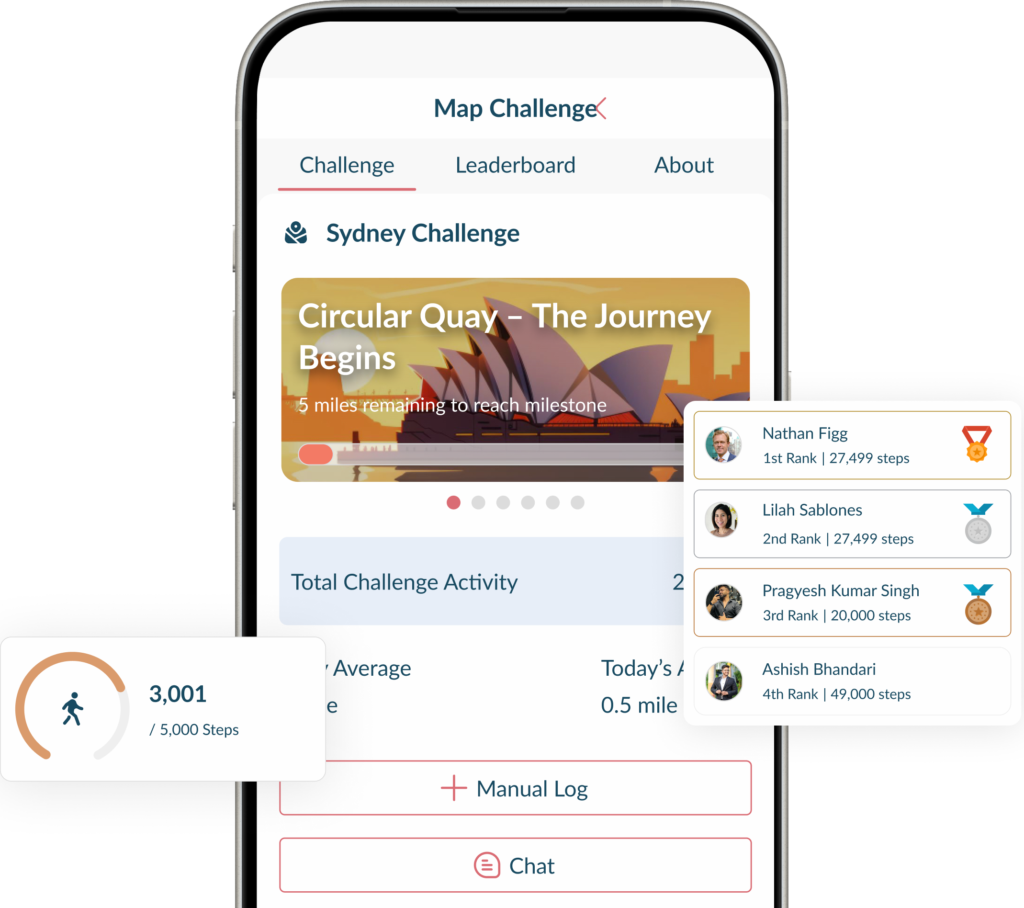
Best CoreHeatlh Alternatives – Woliba
Woliba starts from just $2/mo/employee.
4. Social Wellness Ideas
Feeling connected to coworkers reduces isolation and makes collaboration genuinely easier.
- Random virtual coffee chats
Free— Use a tool like Donut in Slack to randomly pair employees for a 15-minute casual chat. - New-hire buddy program
Free— Pair every new employee with a peer mentor for their first 90 days. - Monthly team lunches
Low-cost— Cover the cost of a shared meal once a month, in-office exercises, or delivered for remote teams. - Peer recognition tool
Low-cost— Set up a channel or platform where coworkers can publicly thank each other. - Employee-led interest clubs
Free— Support informal groups — a book club, a gaming group — with a small budget for supplies. - Group volunteering day
Low-cost— Organize a quarterly team volunteering event with a local charity. - Cross-department project days
Free— Occasionally pair people from different teams on a small shared task or hackathon. - Milestone shoutouts
Free— Post birthdays and work anniversaries in a shared channel with a brief personal note. - Office trivia or game hour
Free— Run a casual monthly trivia session — low stakes, high fun. - Structured mentorship program
Low-cost— Pair junior and senior employees for a 6-month mentoring relationship with light check-ins. - Annual team offsite
Investment— Plan one day away from the office focused purely on connection, not deliverables. - Internal community board
Free— Create a dedicated Slack channel for non-work sharing — recipes, pets, weekend plans. - Cultural celebration days
Low-cost— Mark different cultural or religious holidays with small, optional recognition and shared food. - Combined fitness + social challenge
Free— Run a team step challenge that only counts if people log steps in pairs or groups. - Open office hours with leadership
Free— Offer a recurring, informal slot where anyone can drop in and chat with a senior leader.
5. Nutritional Wellness Ideas
Small, simple food and drink changes noticeably affect focus and energy through the day.
- Healthier snack swap
Low-cost— Replace chips and candy in the break room with fruit, nuts, and yogurt. - Hydration reminders
Free— Send a friendly midday nudge to refill water bottles; provide a water cooler if you don’t have one. - Short nutrition talks
Low-cost— Host a 20-minute session with a dietitian once a quarter on practical, no-jargon eating tips. - Healthy breakfast on meeting days
Low-cost— Offer fruit or oatmeal cups for early-morning meetings so people aren’t running on empty. - Clear labeling in shared spaces
Free— Mark healthier options in the office fridge or cafeteria so choices are easier to make. - Weekly food themes
Free— Try something light and recurring, like “Fruit Fridays,” to keep healthy habits visible without pressure. - Monthly healthy potluck
Free— Use a sign-up sheet so employees can share a favorite nutritious dish and build connection at the same time. - Cut sugary drinks from meetings
Free— Swap standard soda for sparkling water or unsweetened iced tea at internal meetings. - Quick cooking demo
Low-cost— Bring in a chef or nutritionist for a 30-minute demo of a fast, healthy recipe. - Nutrition resource hub
Free— Share a simple doc with meal-prep ideas and basic nutrition guides — no pressure to follow strictly. - Herbal tea and low-sugar options
Low-cost— Stock the break room with a wider variety of drink options beyond coffee and soda. - Team cooking challenge
Low-cost— Split into small groups for a friendly “healthiest dish” contest judged by the office. - Meal-prep workshop
Low-cost— Teach a simple, repeatable meal-prep routine employees can use at home. - Seasonal habit challenge
Free— Run a 2-week challenge around one habit, like “add one vegetable to lunch,” tracked casually. - Subsidized healthy lunch delivery
Investment— Partner with a local healthy-meal service and cover part of the weekly cost.
6. Financial Wellness Ideas
Money stress follows people to work and quietly affects focus. These ideas ease that pressure.
- Financial literacy workshop
Low-cost— Cover budgeting, saving, and debt basics in a lunch-and-learn format. - One-on-one financial coaching
Investment— Offer a limited number of free sessions with a certified financial advisor each quarter. - Retirement planning session
Low-cost— Walk employees through how to actually use their 401(k) or pension benefits. - Emergency savings challenge
Free— Encourage a simple “save $20 a week” goal, tracked voluntarily and privately. - Student loan guidance
Investment— Offer access to a benefits advisor who specializes in loan repayment options. - Free budgeting templates
Free— Share a simple, editable spreadsheet template employees can use immediately. - Tax season workshop
Low-cost— Host a short session each spring simplifying common tax questions. - Clear benefits walkthrough
Free— Run a session making sure employees fully understand and actually use what’s already offered. - Savings challenge with small prizes
Low-cost— A friendly, opt-in challenge with a modest reward for consistent participation. - Investment basics webinar
Low-cost— A no-jargon introduction to investing, run by an outside expert. - Debt management resources
Low-cost— Share vetted, free resources for employees managing credit card or loan stress. - Monthly financial tip newsletter
Free— A short, digestible email with one practical money tip. - Participation incentives
Low-cost— Offer a small reward for completing an optional financial wellness module. - Access to planning tools
Low-cost— Subsidize access to a budgeting app like YNAB for interested employees. - Confidential financial support line
Investment— Provide access to a hotline for employees facing serious financial strain.
7. Preventive Health Ideas
Catching health issues early keeps people healthier and reduces long-term costs for everyone.
- Annual health checkup
Investment— Offer a subsidized or on-site yearly screening. - Flu shot clinic
Low-cost— Bring a nurse on-site each fall for convenient, free vaccinations. - Blood pressure and glucose screening
Low-cost— Host a quarterly pop-up screening with a local health provider. - Eye checkup camp
Low-cost— Especially useful for screen-heavy roles — arrange a discounted on-site option twice a year. - Ergonomic desk assessments
Low-cost— Offer a 15-minute evaluation to help employees set up healthier workstations. - Basic first aid training
Low-cost— Certify a few employees per floor or team in first aid and CPR. - Short health awareness talks
Free— A brief monthly session on one preventable health topic. - Local clinic partnership
Low-cost— Negotiate discounted rates with a nearby clinic for employees and their families. - Chronic condition support resources
Investment— Share vetted resources for employees managing ongoing conditions. - Insurance helpline reminder
Free— Make sure employees know exactly how to use the nurse line included in their plan. - Screen break reminders
Free— A simple app or calendar nudge every 60–90 minutes to look away from the screen. - Seasonal health tips
Free— Share timely reminders — flu season, heat safety — through your regular newsletter. - Cancer/heart screening drive
Investment— Partner with a local provider to offer discounted preventive screenings once a year. - Open wellness consultations
Low-cost— Offer a no-pressure way for employees to ask basic health questions confidentially. - Health-focused feedback survey
Free— Ask what preventive support employees actually want before planning next year’s budget.
8. Occupational Wellness Ideas
People feel better at work when they can see a future in it.
- Career path conversations
Free— Build a standing 6-month check-in focused purely on growth, separate from performance reviews. - Skill development workshops
Low-cost— Offer ongoing learning sessions, not just onboarding. - Growth-focused mentorship
Free— Connect employees with a mentor outside their direct team for broader perspective. - Annual learning budget
Investment— Give each employee a set amount to spend on courses, certifications, or conferences. - Job rotation opportunities
Low-cost— Let interested employees try a different role or project for a short stint. - Frequent, honest feedback
Free— Move beyond annual reviews with quick, regular feedback conversations. - Internal mobility program
Free— Make moving roles within the company a clear, supported option. - Leadership development track
Investment— Prepare high performers for future roles with a structured program. - Flexible work arrangements
Free— Support hybrid or remote setups that fit people’s actual lives. - Purpose-linked goal setting
Free— Help employees connect their day-to-day work to the bigger picture. - Involve employees in decisions
Free— Ask for input on changes that will affect their day-to-day work. - Recognize professional milestones
Free— Celebrate certifications and promotions the same way you’d celebrate a big sale. - Workload planning sessions
Free— Regularly check whether someone’s plate is realistically sized. - Standalone career check-ins
Free— Separate from performance talk — purely about long-term goals and interests. - Cross-training opportunities
Low-cost— Let employees learn adjacent skills to build versatility and reduce monotony.
9. Environmental Wellness Ideas
The physical workspace affects mood and focus more than most people realize.
- Declutter shared spaces
Free— Set a simple standard for tidy, distraction-free common areas. - Better lighting
Low-cost— Swap harsh overhead lighting for warmer, adjustable options where possible. - Add indoor plants
Low-cost— A few plants per floor genuinely improve air quality and mood. - Ergonomic furniture
Investment— Invest in adjustable chairs and desks to reduce physical strain. - Designated quiet zones
Low-cost— Mark specific low-noise areas for focused work. - Comfortable temperature control
Investment— Address recurring too-hot/too-cold complaints — it matters more than people admit. - Maximize natural light
Low-cost— Rearrange desks or add reflective surfaces to bring in more daylight where possible. - Basic recycling program
Free— Set up clearly labeled bins and communicate what goes where. - Clean, accessible drinking water
Low-cost— Make sure filtered water is genuinely easy to access on every floor. - A dedicated rest area
Investment— One space with comfortable seating, away from desks, for short breaks. - Flexible seating options
Low-cost— Offer a mix of desks, lounge seating, and quiet nooks so people can choose what suits them. - Clear safety signage
Free— Make emergency exits, first-aid kits, and safety info easy to find at a glance. - Noise-reduction measures
Investment— Add sound-absorbing panels in open-plan areas. - Simple energy-saving habits
Free— Encourage turning off unused equipment and lights — small, visible sustainability effort. - Workspace feedback survey
Free— Ask employees directly what’s working and what isn’t about the physical space.
10. Spiritual Wellness Ideas
This isn’t about religion — it’s about helping people find meaning and a sense of balance.
- Purpose-focused discussions
Free— Occasionally connect daily tasks back to the bigger “why” behind the work. - Quiet reflection space
Investment— A space to sit and reset, with no expectation attached. - Values alignment session
Free— Help new hires understand and connect with the company’s actual values, not just the poster on the wall. - Guided breathing practice
Free— A simple, optional calming technique offered before high-stress periods. - Small acts of kindness initiative
Free— Organize occasional, low-key gestures — like a surprise coffee for a colleague. - Structured volunteer time
Low-cost— Offer a few paid hours per month for employees to contribute to a cause they care about. - A brief moment of silence
Free— Start particularly heavy meetings with 30 seconds of quiet before diving in. - Time outside during the day
Free— Actively encourage stepping outside, even briefly, as part of a healthy routine. - Occasional inspirational talks
Low-cost— Bring in a speaker once or twice a year to talk about growth and meaning. - Personal, values-aligned goal setting
Free— Help employees set goals that feel personally meaningful, not just performance-driven. - Simple gratitude practice
Free— A recurring, optional prompt to note one thing that felt meaningful that week. - Mindful start/end-of-day ritual
Free— A small, consistent habit that signals “work begins” and “work ends.” - Optional journaling time
Free— Offer a quiet 10 minutes for reflection, entirely opt-in. - A meaning-focused reflection survey
Free— Occasionally ask what gives people a sense of purpose at work. - Storytelling on impact
Free— Share real examples of how the team’s work has mattered to a customer or community.
11. Recognition & Motivation Ideas
Feeling seen is one of the simplest, most effective wellness tools there is.
- Public appreciation in meetings
Free— Make it a habit to name good work out loud in front of the team. - Peer-to-peer recognition tool
Low-cost— Use a shared channel or simple platform so coworkers can thank each other. - Quarterly recognition awards
Low-cost— Recognize consistent effort and performance with a small, meaningful gesture. - In-the-moment “spot” recognition
Free— Acknowledge small wins as they happen, not just at review time. - Personal thank-you notes
Free— Encourage managers to write short, genuine notes — handwritten if possible. - A shared recognition board
Low-cost— A physical or digital space where appreciation is visible to everyone. - Work anniversary recognition
Free— Mark tenure milestones consistently, even with something small. - Birthday acknowledgment
Free— A simple, personal touch that costs nothing but consistency. - Leadership shoutouts
Free— Recognition from senior leaders in a town hall carries extra weight — use it deliberately. - Team-based recognition
Free— Celebrate collective wins, not just individual ones. - Values-linked recognition
Free— Tie praise explicitly to specific company values when it applies. - Small tangible rewards
Low-cost— A gift card or voucher adds a tangible element without needing a big budget. - Internal success story sharing
Free— Highlight wins in a newsletter or shared channel to build visibility and pride. - Share external praise internally
Free— When a client compliments someone’s work, make sure the team hears about it too. - Ask how people want to be recognized
Free— Some people love public praise, others prefer a quiet note — find out and respect it.
12. Rest & Flexibility Ideas
Burnout often isn’t about workload alone — it’s about never getting a real break from it.
- Genuine flexible hours
Free— Let employees shift their schedule around personal commitments, not just start time. - A birthday off
Free— Give employees the day off on their birthday, no questions asked. - Protected break times
Free— Actively discourage scheduling over lunch or standard break periods. - A true “no work” lounge
Investment— One space in the office where work talk is genuinely off-limits. - Sabbaticals for long tenure
Investment— Offer extended time off for employees who hit major milestones, like 5 years. - Encourage a walk when frustrated
Free— Normalize stepping away from a tense moment instead of pushing through it. - Flexible PTO categories
Free— Let employees use their time off flexibly across sick, personal, and vacation days. - Summer half-days
Free— Offer shortened Fridays during slower summer months if business allows. - Encourage regular micro-breaks
Free— Suggest a short 5-minute break every 90 minutes rather than pushing through for hours. - A genuinely relaxed dress code
Free— Remove unnecessary formality so people are comfortable, not performing professionalism. - Remote workdays
Free— Offer one or two days a week of remote flexibility for roles that allow it. - Recharge days beyond PTO
Low-cost— A few extra, no-explanation-needed days off per year, separate from vacation. - Respecting after-hours boundaries
Free— Set a clear norm: no expectation to respond to messages outside work hours. - Flexible meeting-free Fridays
Free— Keep at least one day a week largely meeting-free for deep, uninterrupted work. - Paid parental leave
Investment— Offer meaningful paid leave for new parents, beyond the legal minimum.
From Ideas to a Real Program
Having 180 ideas is only useful if you can actually turn a few of them into something that sticks. Here’s a simple way to do that.
- Start with a survey, not a guess. Before choosing anything, ask employees what they actually want. A short, anonymous survey — even five questions — tells you far more than assuming what will land.
- Pick one category to pilot. Don’t try to launch all twelve at once. Choose the category your engagement survey points to most clearly, and start there.
- Set a real budget tier. Decide upfront whether this is a free-only initiative, a low-cost effort, or something with real investment behind it. This keeps expectations realistic from day one.
- Run a small pilot first. Try the idea with one team or department for 4–6 weeks before rolling it out company-wide.
- Track participation, not just interest. People signing up isn’t the same as people actually engaging. Check who’s really taking part, and ask why others aren’t.
- Get visible support from managers. A wellness idea survives or dies based on whether managers actually model it. If leadership doesn’t participate, don’t expect employees to either.
- Set a 90-day check-in. Before expanding, take a real look: is this working? What needs to change?
- Treat it as ongoing, not a one-time event. The best wellness programs get revisited and refreshed every year — needs change, and your program should too.
Matching Ideas to Your Team Type
| Setup | Categories that work best |
|---|---|
| Remote | Mental, Emotional, Financial, Spiritual, virtual Social ideas |
| Hybrid | A mix across all categories — flexibility is the priority |
| On-site | Physical, Environmental, Preventive Health, in-person Social ideas |
Conclusion
You don’t need to try all 180 of these at once. Pick a handful that genuinely fit your team, your budget, and your culture — and start there. The goal isn’t a long checklist to get through. It’s building a workplace where people feel consistently supported, one deliberate effort at a time.