

The workplace has changed. Remote work, economic pressure, and the lasting impact of the pandemic have all taken a toll on employee health — physical and mental alike. For businesses, this translates directly into cost. Unwell employees are less productive, take more sick days, and leave faster.
Yet most organizations are still treating workforce wellness program as an afterthought. Here’s what the data says about where things stand today:
- 68% of employees say their company does not do enough to support their mental health. (Mind Share Partners)
- 60% of employees have never spoken to anyone at work about their mental health. (SHRM)
- Only 46% of employees believe their organization genuinely cares about their wellbeing. (Gallup)
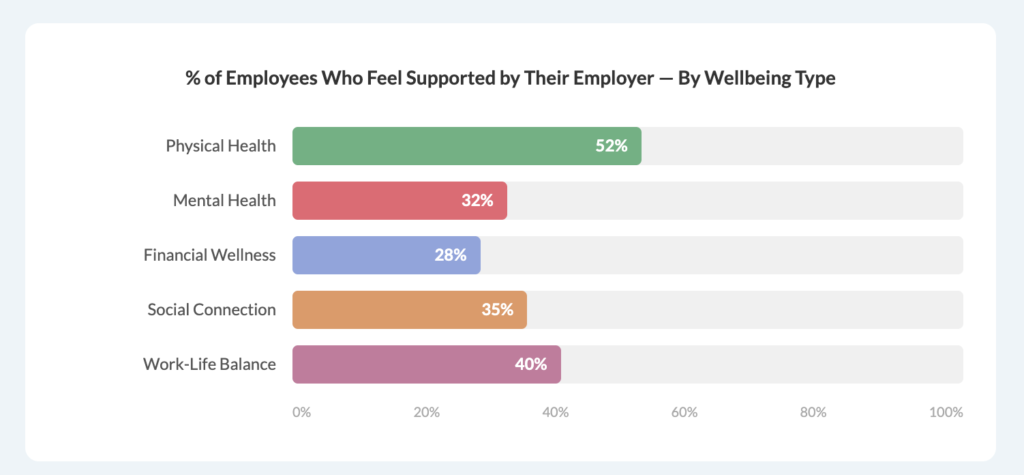
The opportunity is enormous. Most employees feel unsupported — and companies that step in are building a real competitive advantage in culture, retention, and performance.
How Widespread Is Burnout in Today’s Workforce?
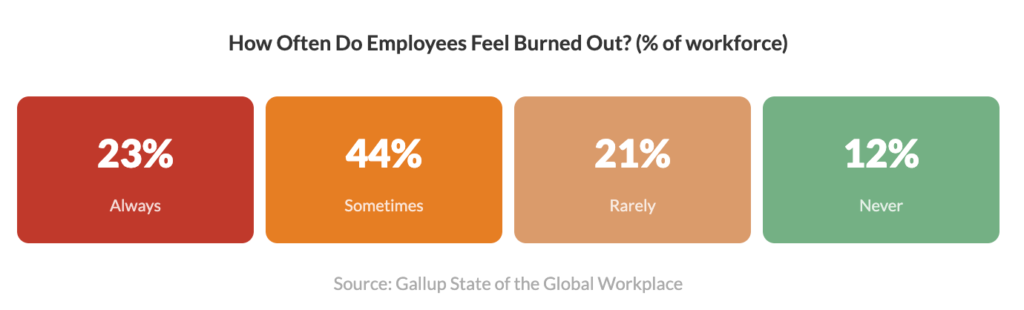
Burnout has gone from a buzzword to a business crisis. A landmark study by Deloitte found that 77% of professionals say they’ve experienced burnout at their current job — and more than half say it’s happened more than once.
- 67% of all workers believe burnout has worsened since the pandemic. (Indeed)
- Burnout is the #1 reason employees leave their jobs — cited by 40% of those who quit. (Kronos/UKG)
- Burned-out employees are 2.6x more likely to be actively job hunting. (Gallup)
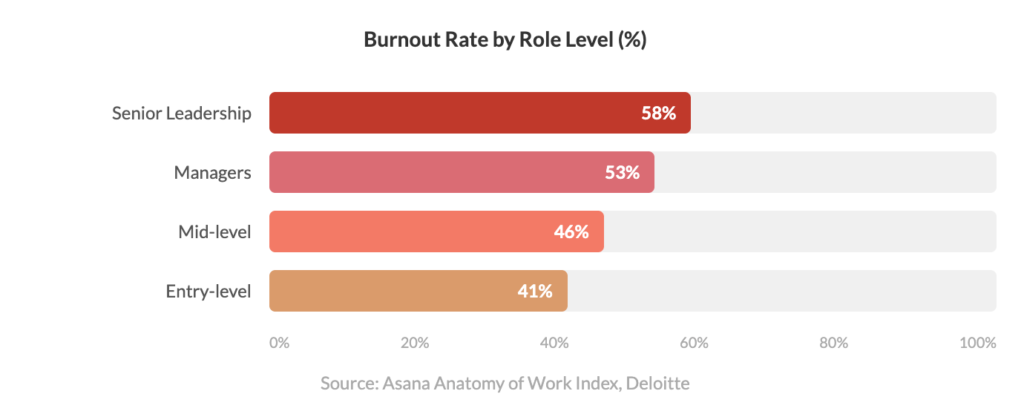
- 53% of managers report feeling burned out vs. 41% of individual contributors. (Asana)
“Burnout isn’t just a personal problem. It’s an organizational one. When your best people are running on empty, the effects ripple across performance, culture, and customer experience.”
What Does Poor Mental Health Cost Employers?
Mental health challenges are one of the biggest hidden costs in any organization — and most companies are underestimating the impact significantly.
- The WHO estimates depression and anxiety cost the global economy $1 trillion per year in lost productivity.
- In the U.S., mental health conditions cost employers $500 billion annually. (NAMI)
- Employees with poor mental health take 4x more sick days. (Mind)
- Presenteeism — being at work but not fully productive — costs U.S. employers $150 billion per year. (HBR)
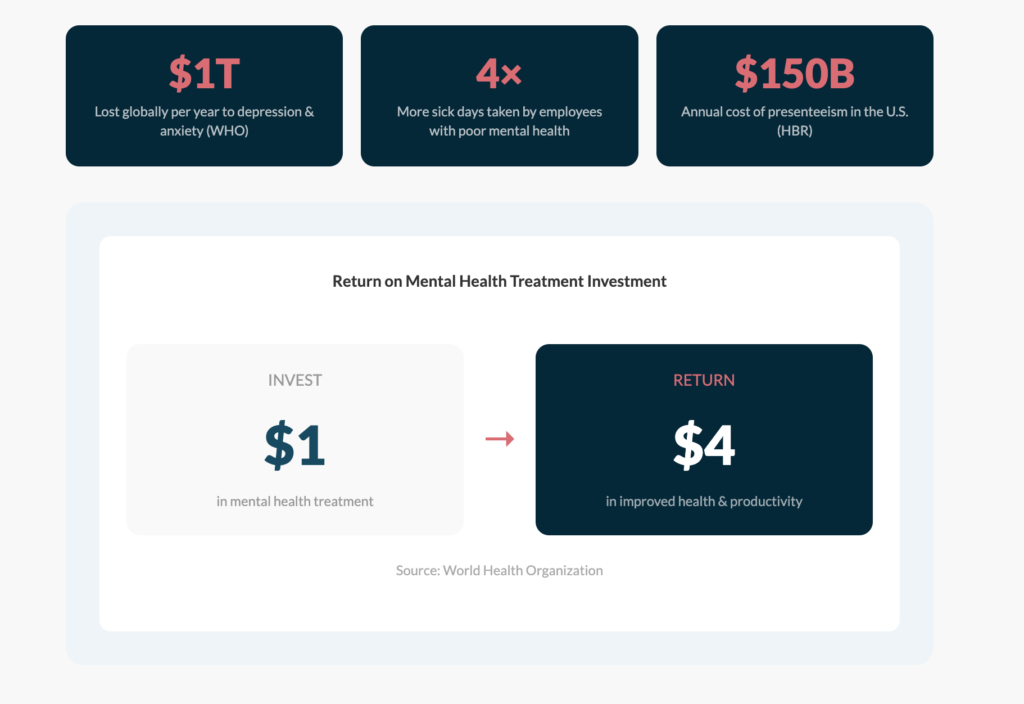
The bottom line? Not investing in employee wellbeing is far more expensive than investing in it.
Do Wellness Programs Actually Work — What Does the ROI Look Like?
This is the question every CFO asks. And the data is compelling. A Harvard Business Review study found that for every $1 companies spend on wellness, they save $3.27 in healthcare costs and $2.73 in absenteeism costs — a total return of roughly $6.
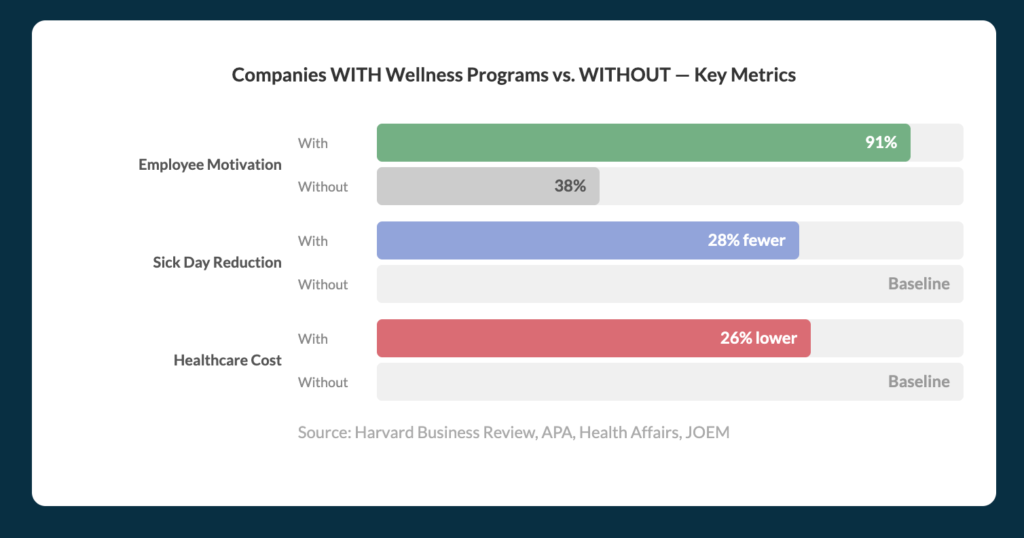
- Companies with wellness programs report 28% reduction in sick days. (Health Affairs)
- 26% lower healthcare costs per employee at organizations with structured wellness. (JOEM)
- Up to 30% reduction in workers’ comp and disability claims. (HERO)
- Johnson & Johnson’s program saved $250M in healthcare costs over a decade — a $2.71 return per $1 spent. (HBR)
- 91% of employees at wellness-forward companies feel motivated to do their best work, vs. 38% without one. (APA)
How Does Wellness Affect Employee Retention and Recruitment?
Retention is one of the biggest pain points for HR leaders right now. Wellness programs are becoming a critical lever in solving it — because employees are watching how companies treat their people.
- Companies with strong wellness programs have 25% lower employee turnover. (Aflac)
- 87% of employees consider health and wellness benefits when choosing an employer. (SHRM)
- 1 in 3 employees has left or considered leaving a job due to poor wellness benefits. (Glassdoor)
- Wellness programs increase the likelihood of employees staying by 33%. (MetLife)
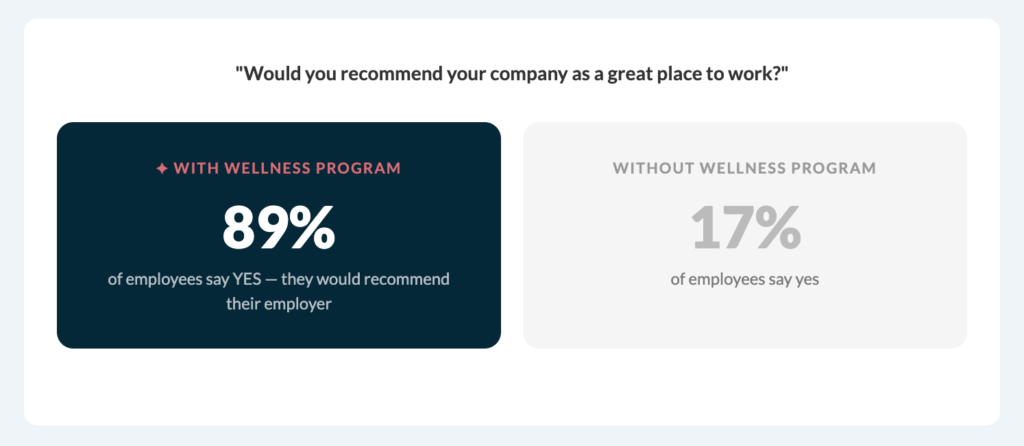
In today’s talent market, your wellness program is part of your employer brand. Candidates are paying attention — and so are the people already on your team.
What Do Employees Actually Want From Wellness Programs?
Here’s where many programs go wrong: companies offer what they think employees want, not what employees actually want. The gap is significant.
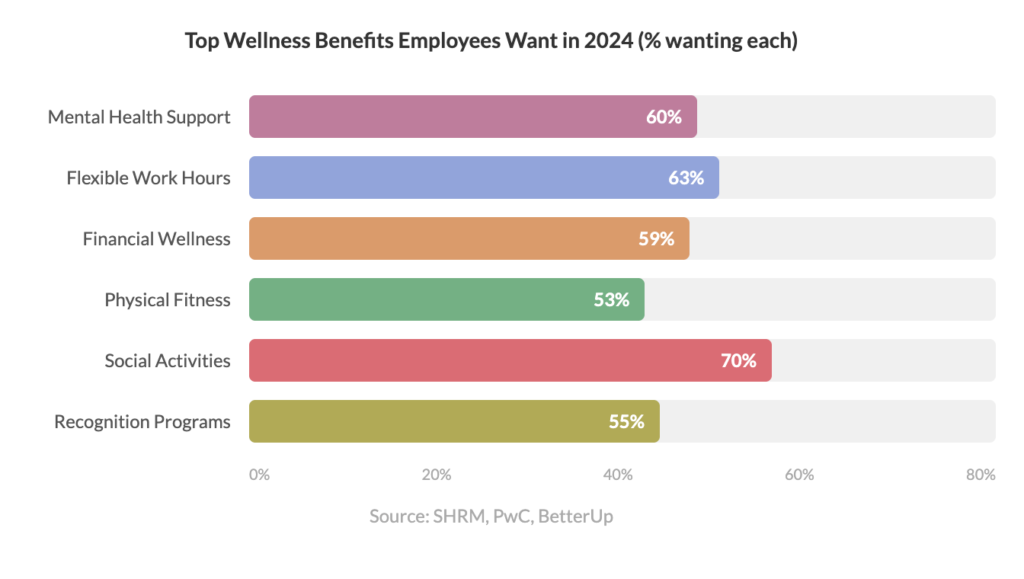
- Social connection is the most important factor in workplace happiness — cited by 70% of employees. (BetterUp)
- Mental health support is the #1 benefit employees want — cited by 60% of employees. (SHRM)
- Flexibility is valued over salary by 63% of millennials. (PwC)
- Financial wellness programs are wanted by 59% but offered by only 28% of employers. (PwC)
Which Wellness Program Features Drive the Most Engagement?
Not all wellness activities are equal. Some drive real engagement; others collect digital dust. Here’s what the research shows actually works.
- Challenges and team competitions increase participation by up to 40%.
- Programs with incentives see 3x higher participation than those without.
- Programs with mobile access show 73% higher engagement than desktop-only. (Woliba)
- Team-based activities drive 60% higher completion rates for wellness challenges.
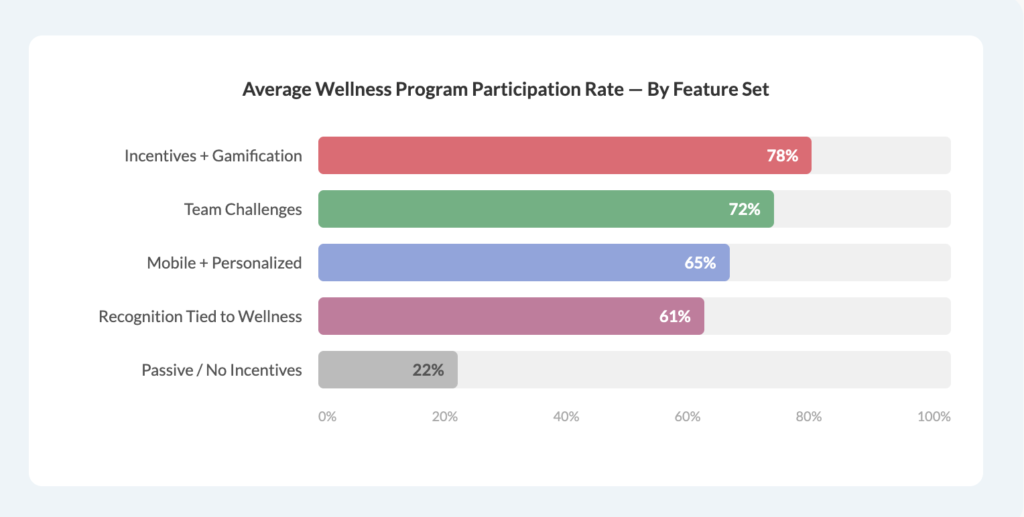
Wellness only works if people actually show up for it. Social, mobile, gamified, and incentive-driven programs consistently outperform passive ones.
How Does Wellness Impact Productivity?
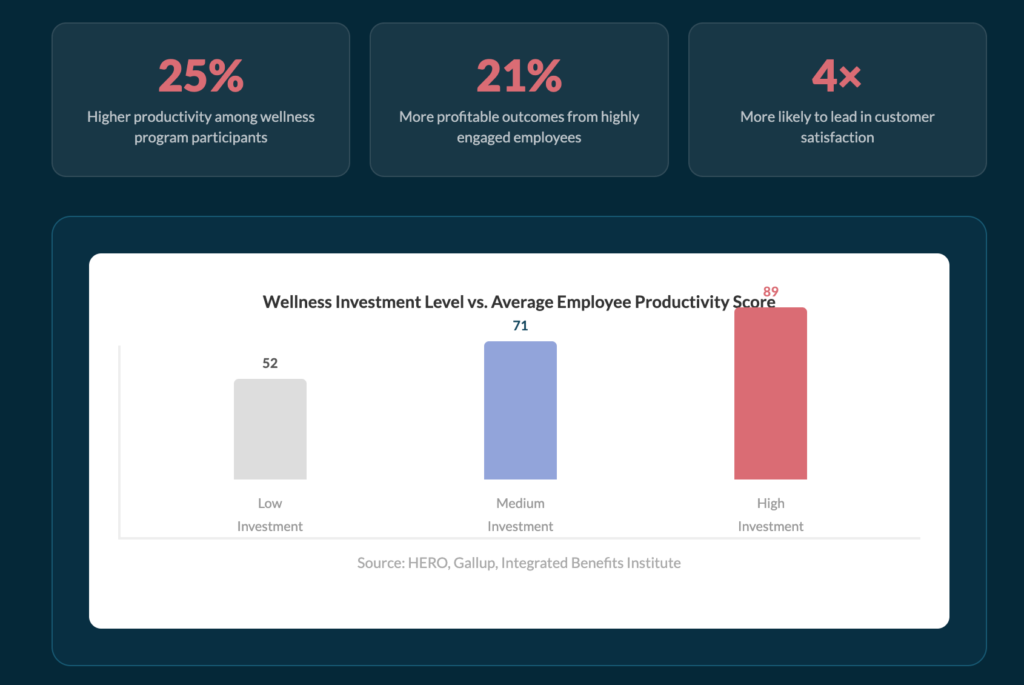
Healthy employees don’t just feel better — they perform better. The productivity gains from wellness programs are one of the most underreported benefits in HR literature.
- Participants in wellness programs are 25% more productive than non-participants.
- Highly engaged employees are 21% more profitable for their organizations. (Gallup)
- Poor employee health costs U.S. employers $575–600 billion annually in lost productivity. (IBI)
- Employees who exercise regularly have 15% fewer lost workdays and perform at a 12% higher level. (JOEM)
- Organizations that prioritize wellbeing are 4x more likely to be rated highly for customer satisfaction. (Gallup)
What Role Does Recognition Play in Employee Wellbeing?
Recognition is often treated separately from wellness — but the research shows they’re deeply connected. When employees feel valued, their wellbeing improves across every measurable dimension. Even simple gestures matter — a well-crafted 4th of July message to employees is exactly the kind of touchpoint that signals genuine appreciation and supports wellbeing at the same time.
- Employees who feel recognized are 45% less likely to leave within two years. (Gallup)
- 79% of employees who quit say lack of appreciation was a primary reason. (Achievers)
- Regular recognition leads to 56% better health and wellbeing scores. (O.C. Tanner)
- Workers recognized regularly are 2.7x more engaged — and highly engaged employees have 41% lower absenteeism. (Gallup)
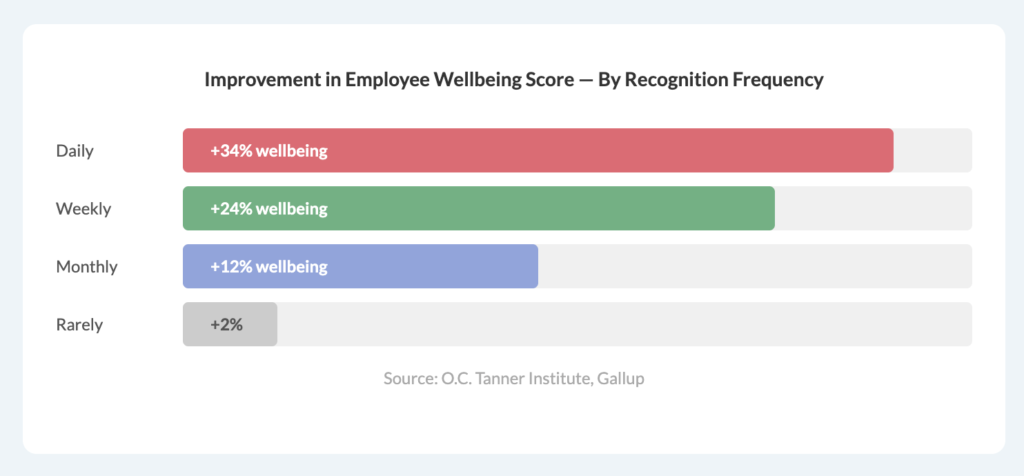
“Recognition is wellness. When people feel seen and valued, they show up differently — for their work, their teams, and themselves.”
Are Small and Mid-Sized Businesses Investing in Wellness?
Large corporations get most of the wellness headlines — but SMBs are where the real gap (and the real opportunity) exists. Most small businesses know wellness matters, but very few have taken meaningful action.
- Only 30% of small businesses with fewer than 50 employees offer any formal wellness program. (Kaiser Family Foundation)
- 70% of SMB employees say they would stay longer if wellness programs were offered. (Aflac)
- 63% of small business owners say employee health directly impacts their bottom line — but only 1 in 3 have taken action. (NFIB)
- SMBs with wellness programs report 19% lower healthcare premiums on average. (SHRM)
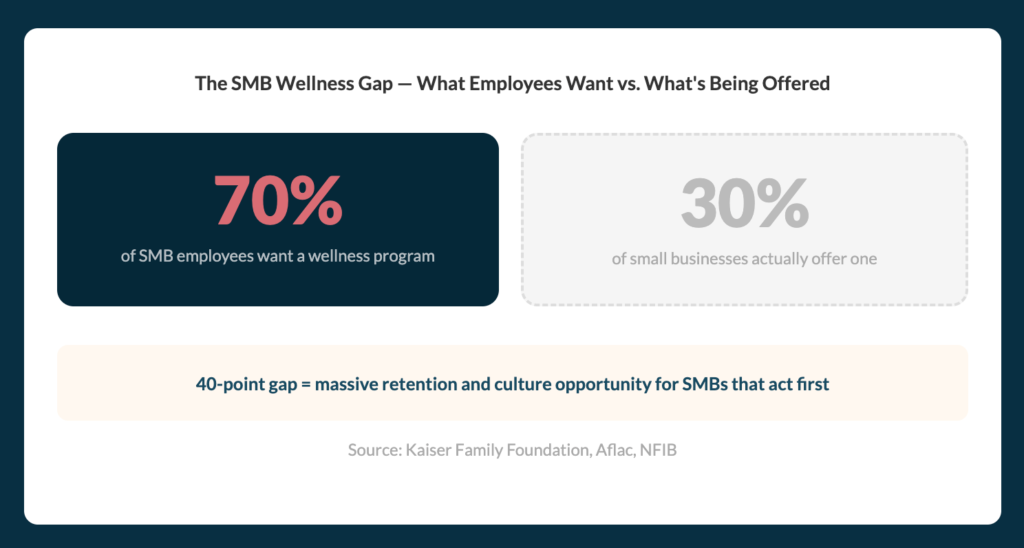
The barrier isn’t budget — it’s having the right platform. SMBs that act on wellness early gain a serious advantage in retention, culture, and cost management that compounds every year.
Ready to Build a Wellness Program That Actually Works?
To get started, every organization should:
✓ Audit your current wellness offerings against what your employees actually want
✓ Build a holistic program covering mental, physical, financial, and social wellbeing
✓ Tie recognition into your wellness strategy — appreciation drives wellbeing
✓ Use a mobile-first, gamified platform to maximize participation and engagement
✓ Track results with analytics so you can show ROI and improve over time
Woliba is a complete employee wellness, engagement, and recognition platform built specifically for small and mid-sized businesses. One platform. Real results.
Sources: World Health Organization (WHO) · Gallup State of the Global Workplace · Deloitte Global Millennial Survey · Harvard Business Review · SHRM · American Psychological Association · Mercer · PwC · O.C. Tanner Institute · Health Enhancement Research Organization (HERO) · Aflac Workforce Report · Indeed · BetterUp · Kaiser Family Foundation · Mind Share Partners · Integrated Benefits Institute · Asana Anatomy of Work Index · NAMI · Achievers