


Key Takeaways
- Prizes drive participation. Employees offered incentives are significantly more likely to complete wellness challenge milestones than those without rewards.
- Reward effort, not just winners. Milestone-based rewards, raffles, and team prizes keep average participants engaged — not just your office marathoners.
- Match the prize to the challenge. A hydration challenge deserves a premium water bottle; a mindfulness challenge deserves a Calm subscription.
- Non-monetary prizes are underrated. Extra PTO, a late-start pass, or a premium parking spot often motivate more than gift cards — and cost almost nothing.
- Variety wins. Offer a mix of fitness gear, experiences, tech, and privilege-based rewards so every personality type finds something worth working toward.
You’ve planned the perfect wellness challenge. The theme is fun, the tracking is set up, and the launch email is ready to go. But here’s the question that decides whether 15% of your team participates or 75% does: what’s in it for them?
Prizes aren’t just a nice bonus at the end of a challenge — they’re often the deciding factor in whether employees sign up in the first place, and whether they stay engaged past week two (when motivation typically dips). Automating reward distribution through an employee wellness platform makes delivering these incentives seamless while keeping tracking completely hands-off for HR.
The good news? Great wellness challenge prizes don’t have to blow your budget. A $10 reward chosen thoughtfully can outperform a $200 gadget nobody asked for.
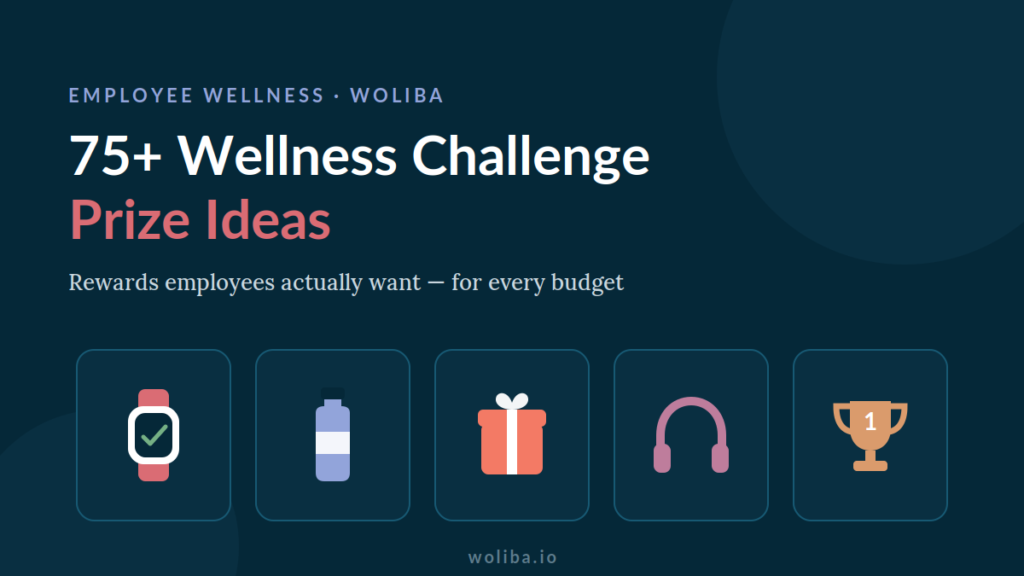
In this guide, we’ve rounded up 75+ wellness challenge prize ideas organized by budget and category, plus practical tips on how to structure rewards so everyone stays motivated — not just the fitness enthusiasts who were going to win anyway.
Why Prizes Matter in Wellness Challenges
Let’s be honest — most employees don’t join a step challenge purely out of love for walking. They join because it’s fun, because their team is doing it, and because there’s something to win.
Research backs this up. Studies published in the Journal of Occupational and Environmental Medicine have found that employees offered financial or non-financial incentives are more likely to hit wellness program milestones than those without any rewards. Incentives essentially bridge the gap between “I should probably do this” and “I’m actually doing this.”
Here’s what well-chosen prizes do for your challenge:
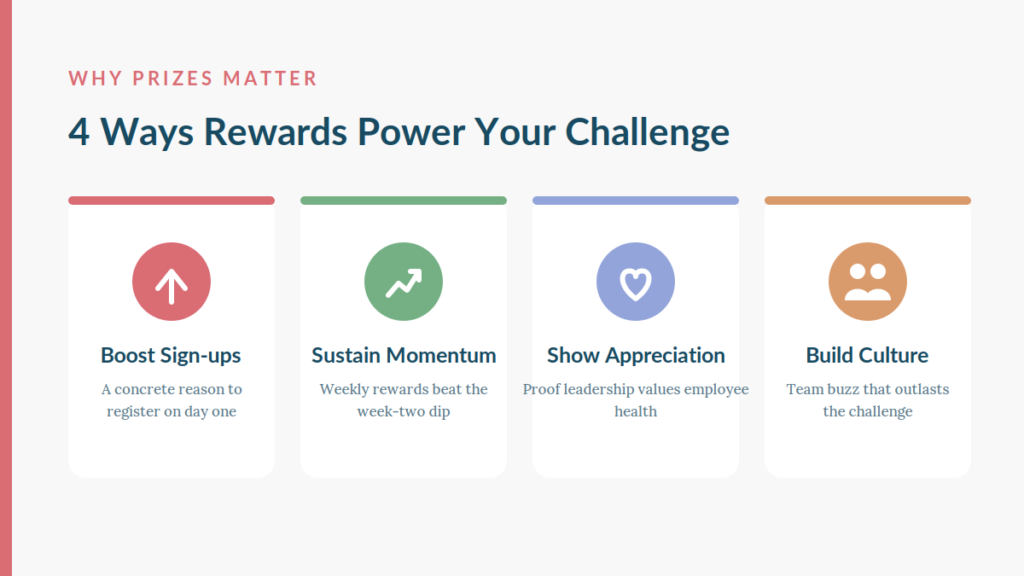
- Boost sign-ups: A visible, exciting prize gives employees a concrete reason to register on day one.
- Sustain momentum: Weekly mini-prizes and milestone rewards combat the mid-challenge dropout dip.
- Show appreciation: Rewards signal that leadership genuinely values employee health — not just productivity.
- Build culture: Team-based prizes create camaraderie, friendly competition, and water-cooler buzz that outlasts the challenge itself.
Prizes are also one of the easiest levers to pull when you’re trying to prove the ROI of employee wellness initiatives. Higher participation means better data, better outcomes, and a stronger case when budget season rolls around.
How to Choose the Right Wellness Challenge Prizes
Before we get to the big list, a quick framework. The best prize for your team depends on three things:
1. Your challenge type. Match the reward to the behavior. Step challenges pair naturally with fitness trackers and walking gear. Nutrition challenges pair with meal kits and cooking classes. Mindfulness challenges pair with meditation app subscriptions and spa experiences.
2. Your budget per participant. Decide early whether you’re doing one grand prize, tiered rewards, or small prizes for everyone who completes the challenge. A common structure: one grand prize ($100–$300), 3–5 runner-up prizes ($25–$50), and completion swag for all finishers (under $15).
3. Your team’s actual preferences. This one gets skipped constantly. A quick pulse survey — “Which of these 5 prizes would motivate you most?” — takes two minutes and saves you from buying 40 branded stress balls nobody wants.
If you’re still designing the challenge itself, our guide on workplace wellness challenges walks through formats, durations, and themes that consistently get high participation.
Now, the prizes. We’ve organized 75+ ideas by category and budget so you can mix and match.
Budget-Friendly Prize Ideas (Under $25)
Small prizes work brilliantly as weekly rewards, raffle entries, or completion gifts for every finisher. Don’t underestimate them — frequency of rewards often matters more than size.
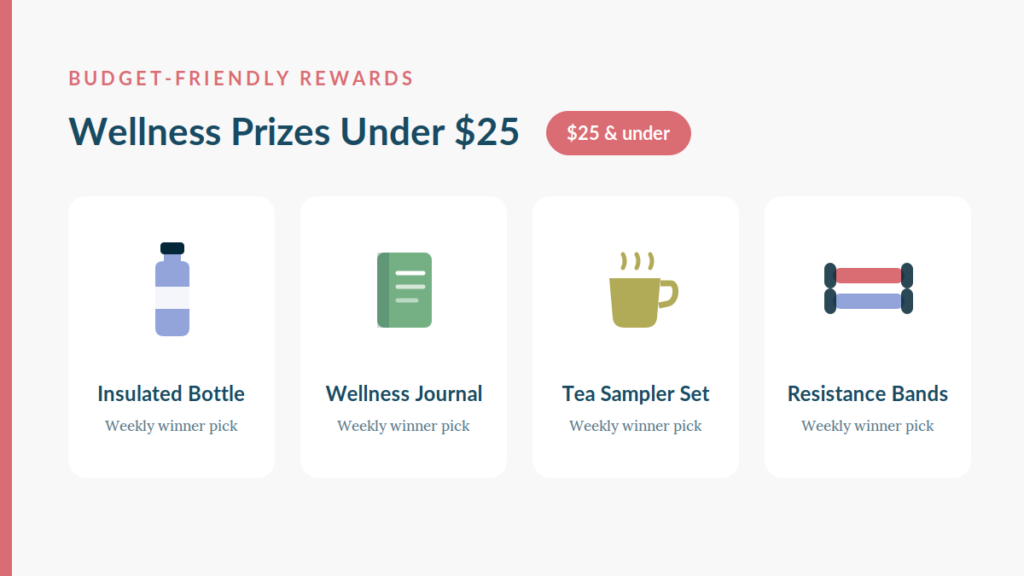
- Insulated water bottles (Hydro Flask-style or quality alternatives)
- Gratitude or goal-setting journals
- Resistance band sets
- Specialty tea or coffee sampler sets
- Aromatherapy essential oil diffusers
- Healthy snack boxes (many are HSA/FSA-eligible in the US)
- Blue-light-blocking glasses
- Desk plants or succulents
- Jump ropes
- Sleep masks and lavender pillow sprays
- Mini desk humidifiers
- $10–$15 coffee shop gift cards
- Reusable lunch containers or bento boxes
- Branded challenge finisher swag — quality t-shirts, socks, or tote bags (make them genuinely nice, not conference-booth quality)
- Scratch-off lottery tickets for weekly winners (a fun, low-cost surprise)
Pro tip: Pool several small items into a “wellness kit” — a water bottle, journal, tea, and snack box together feel far more premium than any single item alone.
Mid-Range Prize Ideas ($25–$75)
This is the sweet spot for runner-up prizes, monthly challenge winners, or team milestone rewards.
- Yoga mats (premium, non-slip versions)
- Foam rollers for muscle recovery
- Bluetooth earbuds for workout playlists
- Fitness class passes — barre, spin, pilates, or boxing at a local studio
- Meal delivery vouchers (HelloFresh, Daily Harvest, or local equivalents)
- One-month subscriptions to Calm or Headspace
- Adjustable dumbbells or kettlebells
- Weighted blankets
- Sunrise alarm clocks
- Massage balls and trigger-point recovery kits
- Cookbooks focused on healthy meal prep
- Standing desk converters (entry-level)
- Smart water bottles that track hydration
- Local farmers market gift certificates
- Acupressure mats
Mid-range prizes also work well as choice-based rewards: give winners a curated menu of 3–4 options at the same price point and let them pick. Autonomy makes the same dollar amount feel more personal.
This is also where prize strategy connects to your broader employee wellness program — the rewards you offer signal which healthy behaviors your company genuinely wants to encourage, so choose prizes that reinforce the habits your program is built around.
Premium & Grand Prize Ideas ($75–$300+)
Your grand prize is your marketing hook. It’s what goes in the launch email subject line and on the announcement poster — so make it aspirational.
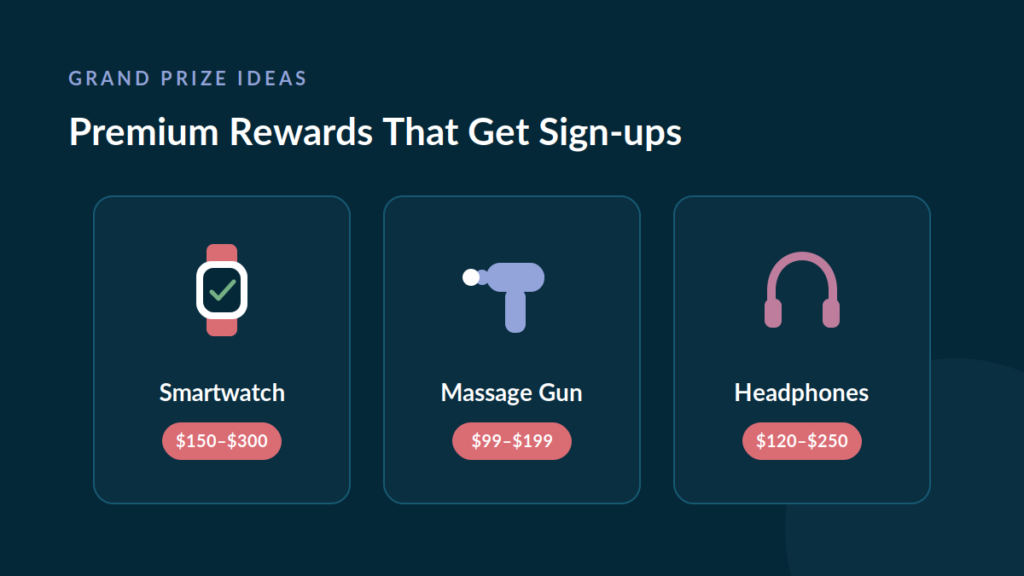
- Fitness trackers and smartwatches — Fitbit, Garmin, or Apple Watch
- Oura Ring — the sleep-and-recovery wearable everyone’s curious about
- Percussion massage guns (Hyperice Hypervolt Go or Theragun Mini)
- Noise-cancelling headphones
- Annual subscriptions to fitness apps (Peloton App, Aaptiv, Alo Moves)
- Spa day vouchers — massage, facial, or full package at a local spa
- High-quality running shoes or a sneaker-store gift card
- Compact walking pad treadmills for home offices
- Indoor cycling bike (entry-level)
- Annual gym or studio membership
- Premium activewear gift cards (Lululemon, Nike, or local athletic brands)
- Air purifiers for home
- Espresso machines or premium blenders (Nutribullet/Vitamix-style)
- Weekend wellness retreat or hotel staycation voucher
- Ergonomic office chairs
A note on grand prizes: one big prize motivates your top 10% — but can demoralize everyone else by week two if they feel out of the running. Pair your grand prize with raffle-based rewards (every milestone hit = one raffle entry) so everyone has a shot at something big, regardless of where they rank on the leaderboard.
Experience-Based Prize Ideas
Experiences consistently outperform physical goods in how long the positive feeling lasts — and they make great stories, which fuels next challenge’s participation.
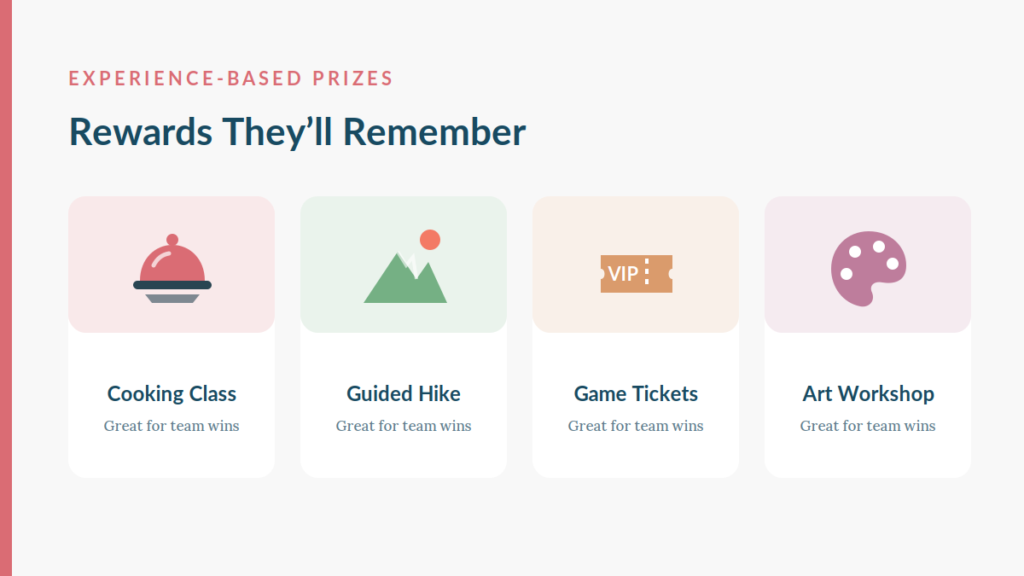
- Cooking or healthy meal-prep classes
- Guided hiking or kayaking day trips
- Rock climbing gym day passes
- Dance class packages (salsa, hip-hop, Zumba)
- Golf lessons or driving range credits
- Meditation or sound bath workshop sessions
- Tickets to a local sports game
- Escape room experience for the winning team
- Ski or snowboard day passes (seasonal)
- Pottery, painting, or art class vouchers
Experience prizes work especially well for team-based challenges — the winning team gets a shared experience, which doubles as a team-building event. Two budgets, one spend.
Non-Monetary & Privilege-Based Prizes (Nearly Free)
Here’s the category that surprises most HR teams: some of the most motivating prizes cost the company almost nothing.
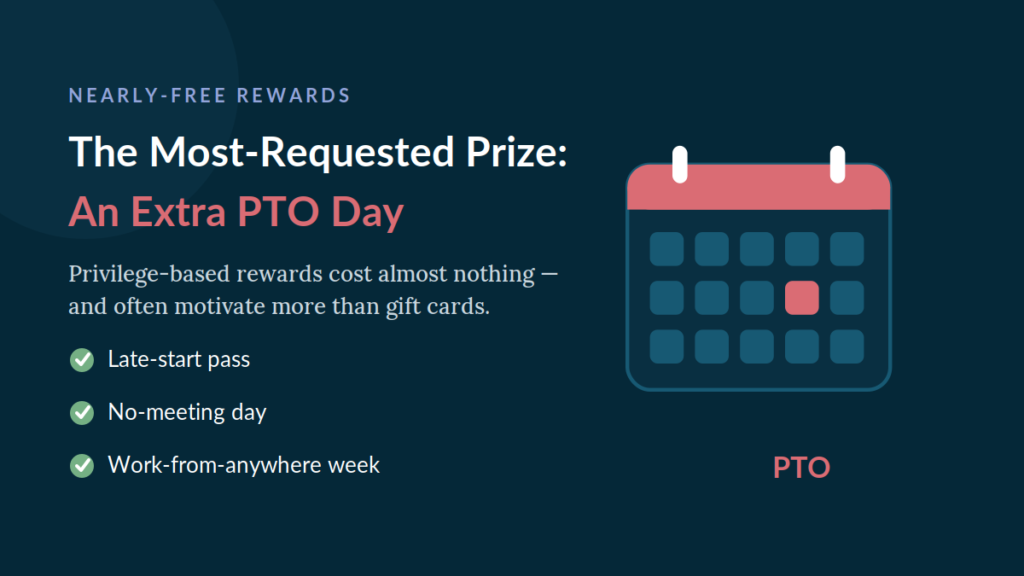
- An extra PTO day — consistently the most-requested prize in employee surveys
- “Late start” or “early leave” passes
- Premium parking spot for a month
- Work-from-anywhere week
- Lunch with the CEO or leadership team (yes, some employees genuinely want this)
- “No-meeting day” pass
- Casual dress week for the winning team
- Public recognition — a shout-out in the all-hands, newsletter feature, or a rotating trophy
- First pick of holiday time-off slots
- A catered team lunch for the winning department
These privilege-based rewards are gold for lean budgets, and they’re inherently fair across global teams where shipping physical prizes gets complicated.
If a large chunk of your workforce is distributed, our list of wellness activities for remote workers pairs perfectly with these digital-friendly rewards.
Team-Based Prize Ideas
If your challenge is structured around teams (and for participation rates, it usually should be), reward the group:
- Team trophy or plaque — a rotating one builds tradition across quarterly challenges
- Catered healthy breakfast or lunch for the winning team
- Team outing budget — let them choose bowling, mini-golf, or a nice dinner
- Charity donation in the team’s name — let winners pick the cause
- Team swag upgrade — matching hoodies or water bottles with a winning-team badge
- An afternoon off, together
Charity donations deserve a special mention. For mission-driven teams, “we won and our prize helped someone else” is a powerful motivator — and it reinforces the community dimension of wellbeing.
(Wellness isn’t just physical; if you’re building challenges around all dimensions of wellness, donation-based rewards slot beautifully into social and purpose-driven challenges.)
Wellness Subscription & Digital Prize Ideas
Perfect for hybrid and global teams — no shipping, instant delivery, and inherently wellness-aligned:
- Meditation app subscriptions (Calm, Headspace, Insight Timer premium)
- Audiobook or e-book credits (Audible, Kindle)
- Online fitness platform memberships (Peloton App, obé, Alo Moves)
- Sleep-tracking app premium plans
- Nutrition coaching app subscriptions
- Language-learning app subscriptions (Duolingo Super — mental wellness counts!)
- Online course credits (MasterClass, Skillshare, Udemy)
How to Structure Prizes So Everyone Stays Motivated
Here’s where most wellness challenges quietly fail: they reward only the winner. By week two, the leaderboard’s top three are locked in, and everyone else mentally checks out.
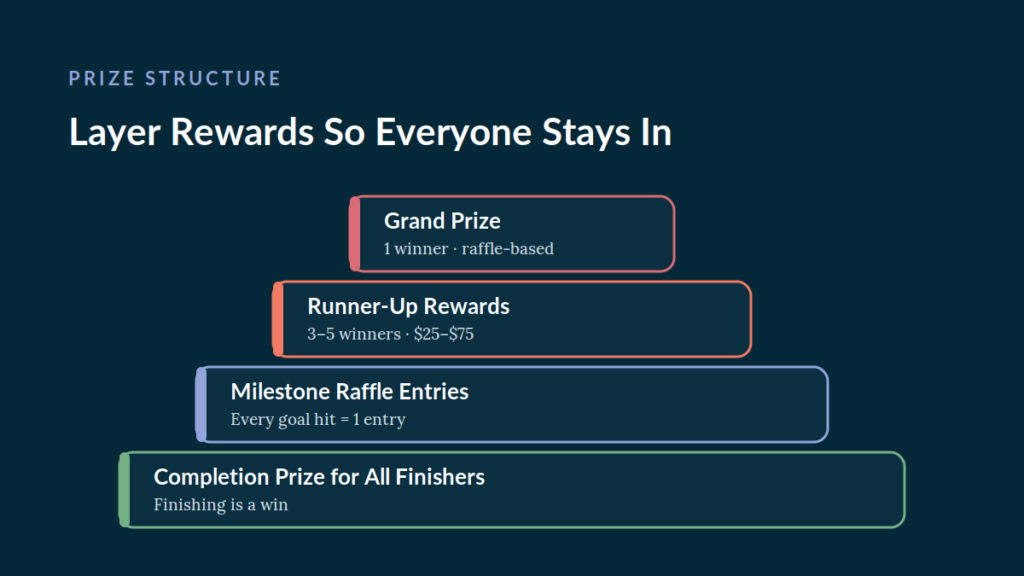
Fix it with a layered reward structure:
1. Milestone rewards (everyone can earn): Hit 50,000 steps this week? You get a raffle entry or a small prize. This rewards consistency, not ranking.
2. Raffle-based grand prizes: Every milestone earns an entry. The person in 47th place has a real chance at the smartwatch — so they keep logging.
3. Most-improved awards: Reward the biggest change, not the biggest number. This levels the field between your triathletes and your desk-bound beginners.
4. Team rewards: Average team performance (not totals) prevents one superstar from carrying — or one absentee from sinking — the group.
5. Completion prizes: Everyone who finishes gets something small. Finishing itself becomes a win.
6. Mystery prizes: Announce that something is awarded at a surprise checkpoint. Novelty is a genuinely underrated engagement tool.
This structure is much easier to run on dedicated employee wellness platforms that automate milestone tracking, raffle entries, and leaderboards — versus chasing spreadsheet updates every Friday afternoon.
Prize Mistakes to Avoid
A few well-intentioned prize choices that backfire:
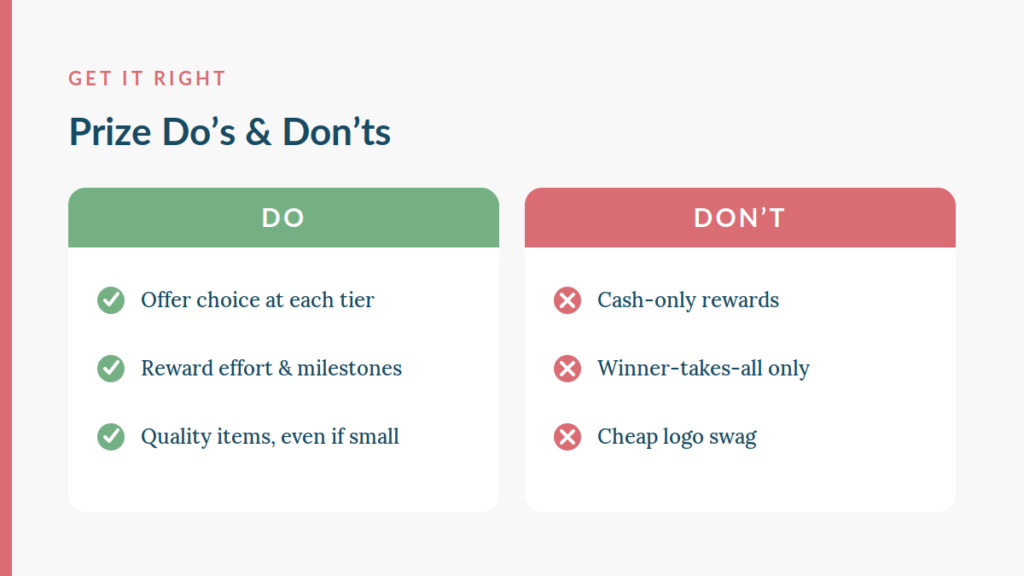
- Cash-only rewards. Cash disappears into bills and groceries — it creates zero story, zero memory, and zero buzz. If you go monetary, prepaid Visa/Mastercard gift cards at least feel like a “bonus” rather than payroll.
- One-size-fits-all prizes. The marathon runner and the meditation enthusiast are motivated by different things. Offer choice wherever possible.
- Prizes that feel like a health lecture. A bathroom scale as a prize? Please don’t. Rewards should feel like a treat, not a judgment.
- Cheap branded swag. A flimsy logo t-shirt communicates “we spent $3 on you.” Quality over logo, always.
- Winner-takes-all structures. As covered above — this demotivates 90% of participants by the halfway mark.
- Ignoring remote employees. If half your prizes only work in-office (parking spots, catered lunches), your distributed team notices.
Making Prizes Part of a Bigger Wellness Strategy
One-off challenges with great prizes create a spike of engagement. But the companies seeing real results — lower healthcare costs, better retention, stronger culture — treat challenges as one recurring piece of a larger system: quarterly challenges, ongoing recognition, health content, and leadership buy-in working together.
If you’re building toward that, start with a clear corporate wellness strategy that defines what behaviors you want to encourage year-round, then design your challenge calendar and prize budget to support it. Prizes become far easier to justify (and budget for) when they ladder up to measurable goals like participation rates, engagement scores, and health outcomes.
A practical way to do this: map each quarter’s challenge to a different wellness pillar.
- Q1 might focus on physical activity (Map challenge, fitness gear prizes),
- Q2 on nutrition (healthy eating challenge, meal kit rewards),
- Q3 on mental wellbeing (mindfulness streaks, meditation subscriptions), and
- Q4 on financial or social wellness.
This rotation keeps challenges fresh, gives every employee a quarter where the theme plays to their strengths, and lets you reuse your prize budget in a predictable annual rhythm rather than scrambling for approvals each time.
And if you’re earlier in the journey — running your very first challenge — our guide on how to start a corporate wellness program covers the foundations: getting leadership buy-in, choosing your first initiatives, and setting a realistic budget that includes rewards from day one.
Run Smarter Wellness Challenges with Woliba
Great prizes get employees in the door. But keeping challenges fair, trackable, and fun at scale — that’s where the right platform makes the difference.
Woliba lets you launch step challenges, hydration challenges, mindfulness streaks, and team competitions in minutes, with automated leaderboards, milestone tracking, and built-in recognition — so your prize structure runs itself instead of living in a spreadsheet.