Step challenges are one of the highest-participation activities in corporate wellness — and for good reason. They’re simple, inclusive, and surprisingly effective at building camaraderie across teams. But running one manually? Spreadsheets, endless DMs, and someone inevitably gaming the numbers is not the experience your employees deserve.
That’s where a dedicated employee wellness platform comes in. Whether you’re organizing a 30-day company-wide walking challenge, a department-level competition, or a year-round fitness initiative, leveraging an intuitive platform turns a good idea into an automated, engaging program people actually look forward to.
In this guide, we’ve rounded up the 15 best apps for step challenge at work — covering free group options, corporate-grade platforms, and everything in between. We’ll walk you through the key features to look for, compare them side by side, and help you find the best fit for your company.
Key Takeaways
The best step challenge apps automate tracking, display leaderboards, and connect with wearables like Fitbit, Apple Watch, and Garmin.
Corporate step challenge apps go beyond counting steps — they layer in rewards, team competitions, and admin reporting.
Free group step challenge apps exist, but they’re best for small, informal teams — not company-wide programs.
The top platforms integrate step challenges into a broader employee wellness program, driving participation and measurable ROI.
Woliba stands out as the only platform that combines step challenges, activity tracking, recognition, surveys, and burnout prediction in one place.
Quick Look: Best Step Challenge Apps Compared
Not sure where to start? Here’s a side-by-side snapshot of all 15 apps, covering the essentials HR teams and wellness managers care about most.
#
App
Best For
Team Challenges
Wearable Sync
Rewards
Pricing
1
Woliba
End-to-end corporate wellness
Yes
Yes
Yes
$2/mo/per user
2
Virgin Pulse
Enterprise health
Yes
Yes
Yes
Custom
3
Stridekick
Step challenges only
Yes
Yes
Limited
Free–$5/user
4
MoveSpring
Step + activity tracking
Yes
Yes
Points
Custom
5
Pacer for Teams
Small teams, budget-friendly
Yes
Yes
No
Free–$3/user
6
Vitality
Insurance-linked rewards
Yes
Yes
Yes
Custom
7
Hinge Health
MSK + movement programs
No
Yes
No
Custom
8
HealthyWage
Financial incentive walking
Yes
Partial
Cash prizes
Custom
9
Walkingspree
Walking-focused corporate
Yes
Yes
Points
Custom
10
Vantage Fit
Global distributed teams
Yes
Yes
Yes
$2–$3/user
11
Pact
Accountability via stakes
Limited
Yes
Cash back
Free (stakes-based)
12
Charity Miles
Cause-based motivation
Limited
Partial
Charity donation
Free–Custom
13
Gympass (Wellhub)
Fitness network + tracking
Yes
Yes
Points
Custom
14
Fitbit Premium (Teams)
Wearable-native teams
Yes
Fitbit-only
No
$9.99/user/mo
Detailed Guide: 15 Best Step Challenge Apps
Here’s a closer look at each app — what it does well, where it falls short, and who it’s built for.
Woliba
“The only step challenge app that’s also a full employee wellness platform.”
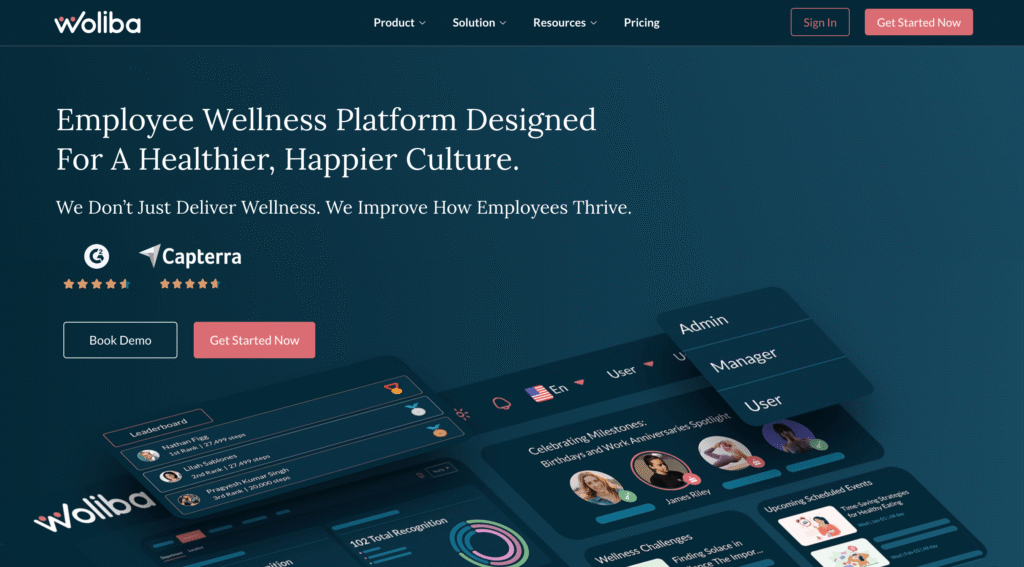
Woliba is more than a step challenge app — it’s a complete employee wellness program that includes step and activity challenges, wellness resources, recognition, rewards, engagement surveys, coaching, and predictive burnout AI. For HR teams that want one platform instead of five point solutions, Woliba is the clear front-runner.
Step challenges in Woliba are fully customizable: set team sizes, challenge duration, step goals, and leaderboard rules. Employees sync Fitbit, Apple Health, Garmin, or Google Fit, and managers get a real-time admin dashboard showing participation rates, engagement trends, and departmental breakdowns. Points earned in a challenge automatically flow into Woliba’s recognition and rewards engine — so every step ties back to something tangible.
Unlike apps that only count steps, Woliba lets you layer in nutrition, mental health, hydration, and sleep tracking in the same challenge — turning a basic step challenge at work into a holistic 30-day wellness sprint. NOM-035 compliance support and multi-language availability make it a strong fit for global and Mexico-based teams too.
✓ Pros
All-in-one wellness platform (not just steps)
Active-user-only billing keeps costs down
Real-time admin dashboard and participation reports
Predictive burnout AI and engagement surveys built-in
NOM-035 compliance for Mexico-based companies
Connects with Fitbit, Apple Health, Garmin, Google Fit
✗ Cons
Not ideal for solo/individual use (built for teams)
Pricing is custom — no self-serve free tier
Wellable
“A solid mid-market wellness platform with good step challenge features.”
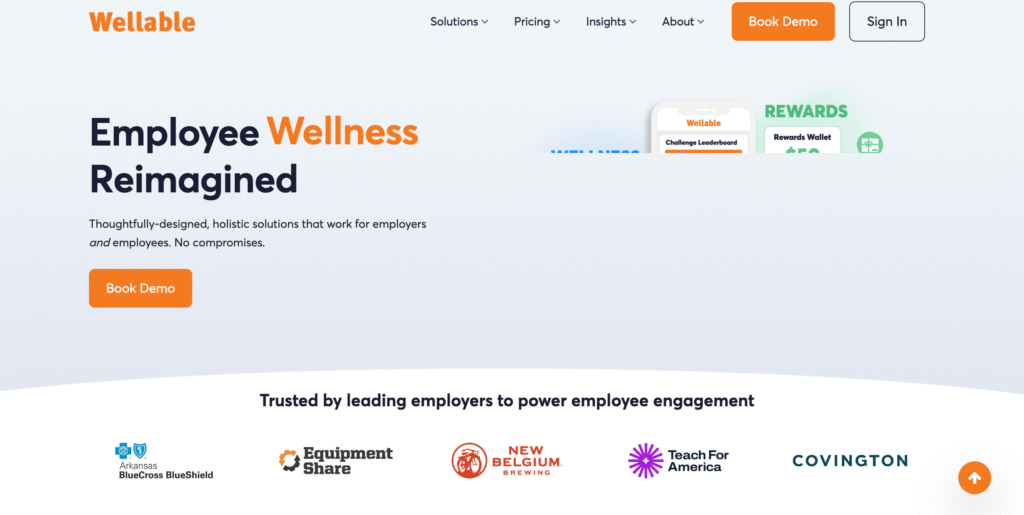
Wellable is a well-known corporate step challenge app that covers fitness challenges, wellness content, and rewards. It supports team-based and individual step challenges with leaderboards and wearable sync. Their content library is strong, and the UI is clean and intuitive for employees.
One key difference from Woliba: Wellable charges per enrolled user, not per active user. For companies with uneven adoption, this can drive costs up significantly. Wellable also lacks built-in predictive analytics and burnout detection, which HR leaders increasingly prioritize.
✓ Pros
Clean, user-friendly interface
Strong wellness content library
Team and individual step challenges
Solid wearable integrations
✗ Cons
Billed per enrolled user (not active), costs add up
Virgin Pulse is one of the oldest names in corporate wellness and remains a strong choice for large enterprises. Step challenges are a foundational feature, supported by rich social feeds, team leaderboards, and wearable sync across dozens of devices. Their biometric screening and health coaching integrations are industry-leading.
The trade-off is complexity and cost. Virgin Pulse is built for large HR teams with dedicated wellness budgets. SMBs and mid-sized companies often find the implementation timeline long and the pricing out of reach.
✓ Pros
Deep enterprise wellness capabilities
Strong step challenge and biometric features
Large device and wearable ecosystem
✗ Cons
Complex, lengthy implementation
High cost — not suited for SMBs
UI can feel dated
Stridekick
“The step challenge specialist — focused, fun, and easy to deploy.”
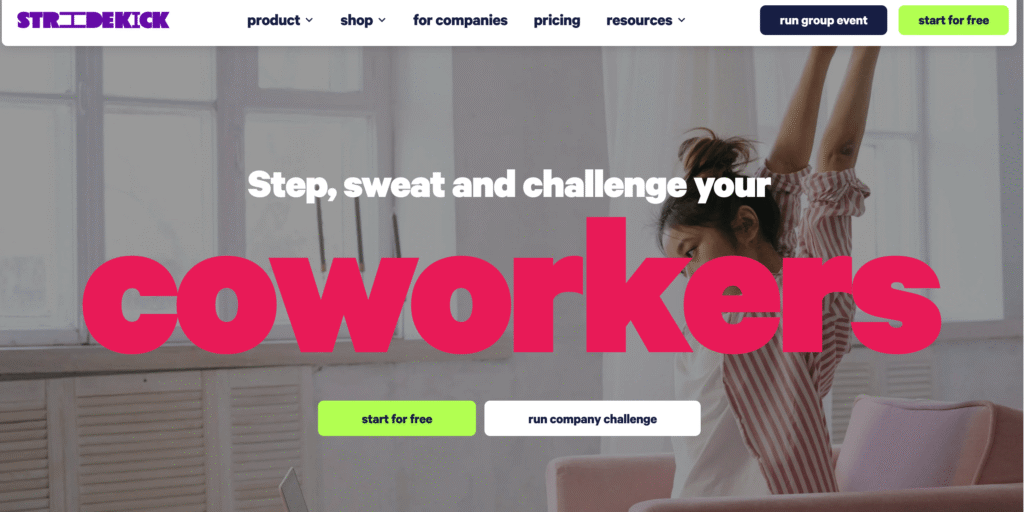
Stridekick is purpose-built for step and activity challenges — nothing more, nothing less. You can launch a group step challenge in minutes, invite teammates via email or link, and watch the leaderboard fill up. It supports both individual and team formats and syncs with Apple Health, Fitbit, and Google Fit.
For companies wanting a lightweight, fun group step challenge app without the overhead of a full wellness platform, Stridekick is a strong choice. The free tier supports basic team challenges; paid plans unlock custom branding and analytics.
✓ Pros
Super easy to set up and launch
Free tier available for groups
Engaging UI with active leaderboards
No setup fee or long contracts
✗ Cons
Step-only — no broader wellness features
Limited rewards and recognition capabilities
No admin reporting for HR teams
MoveSpring
“Flexible step and activity challenges with strong HR admin tools.”
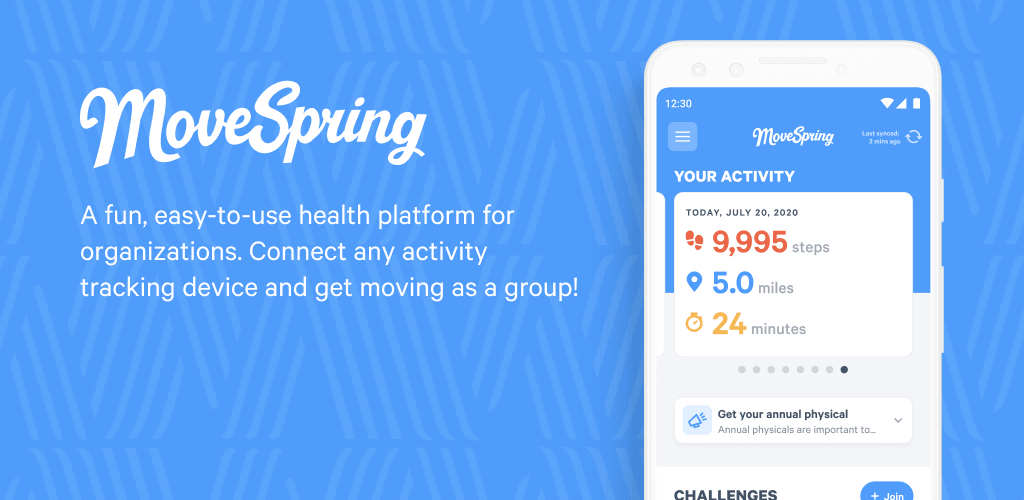
MoveSpring sits in a sweet spot between a simple pedometer app and a full wellness platform. It supports steps, active minutes, and custom activity challenges, with a points system that can be configured to reward specific behaviors. The admin dashboard is one of the better ones in this category, with real-time charts and participation funnels.
MoveSpring is a great option for teams running the step challenge at work as a standalone initiative. It lacks the depth of a full wellness suite but is more configurable than most step-only apps.
✓ Pros
Flexible challenge types (steps, active minutes, custom)
Good HR admin dashboard
Solid wearable integrations
✗ Cons
No recognition or survey features
Pricing not transparent — custom quotes only
Pacer for Teams
“The best free group step challenge app for small, budget-conscious teams.”
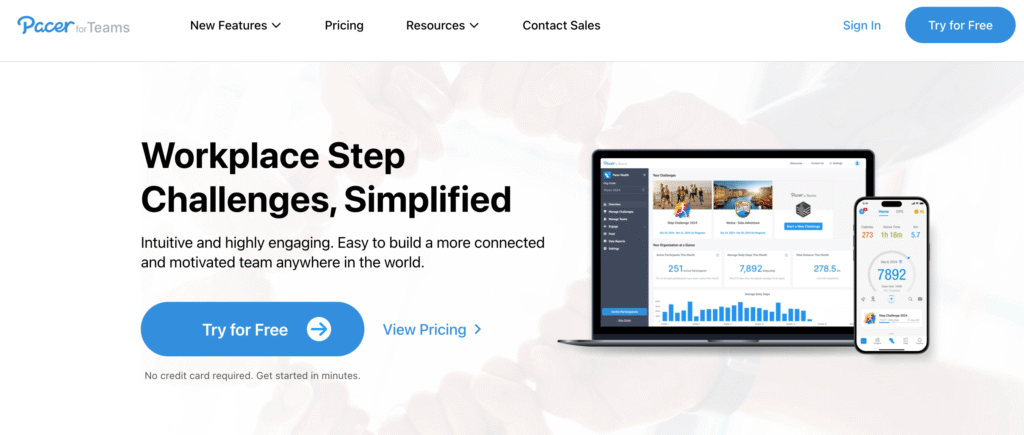
Pacer started as a consumer step-tracking app and has evolved into a credible group challenge tool for small teams. The free tier supports group step challenges with leaderboards and team chat — making it one of the best group step challenge apps free options available today.
For HR teams at early-stage companies or those running a one-time challenge on a shoestring budget, Pacer for Teams is hard to beat. Just don’t expect rewards, recognition, or executive reporting — this is a walking app, not a wellness platform.
✓ Pros
Genuinely free group challenge tier
Easy to get non-tech-savvy employees on board
Built-in social and team chat features
✗ Cons
No rewards, recognition, or HR reporting
Not scalable beyond ~100 users
Limited integrations with corporate HRIS
Vitality
“Insurance-integrated wellness with meaningful financial step rewards.”
Vitality is unique in the corporate wellness space: it ties step challenges to actual insurance premiums and health benefits. Employees who hit step goals can earn premium discounts, Amazon vouchers, or Vitality points redeemable across a partner network. The incentive structure is powerful and drives sustained participation.
The catch: Vitality works best when bundled with an insurance product. Standalone deployments are possible but less compelling. It’s best suited for large enterprises with self-funded health plans.
✓ Pros
Financial incentives drive sustained engagement
Insurance premium discounts tied to steps
Strong partner rewards network
✗ Cons
Best value only with insurance bundling
Complex setup; not SMB-friendly
Hinge Health
“Movement-focused care — great for MSK, less so for step challenges.”
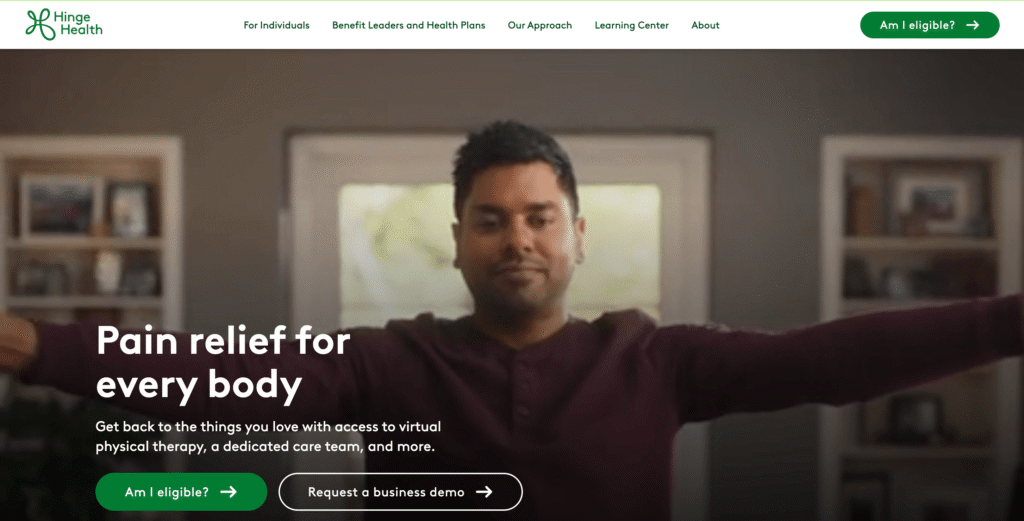
Hinge Health is primarily a musculoskeletal (MSK) care platform, not a step challenge app per se. It uses motion capture, exercise therapy, and coach-led programs to address back, joint, and muscle pain. Daily movement tracking is a core feature, but team challenges and leaderboards are not Hinge Health’s strength.
Include Hinge Health if your workforce has a high incidence of physical injuries or pain-related absenteeism. For a fun, gamified step challenge program, look elsewhere.
✓ Pros
Clinical-grade MSK movement support
Reduces injury-related absenteeism
✗ Cons
Not a step challenge app in the traditional sense
No team competitions or leaderboards
Very high cost
HealthyWage
“Cash prizes make this step challenge app uniquely motivating.”
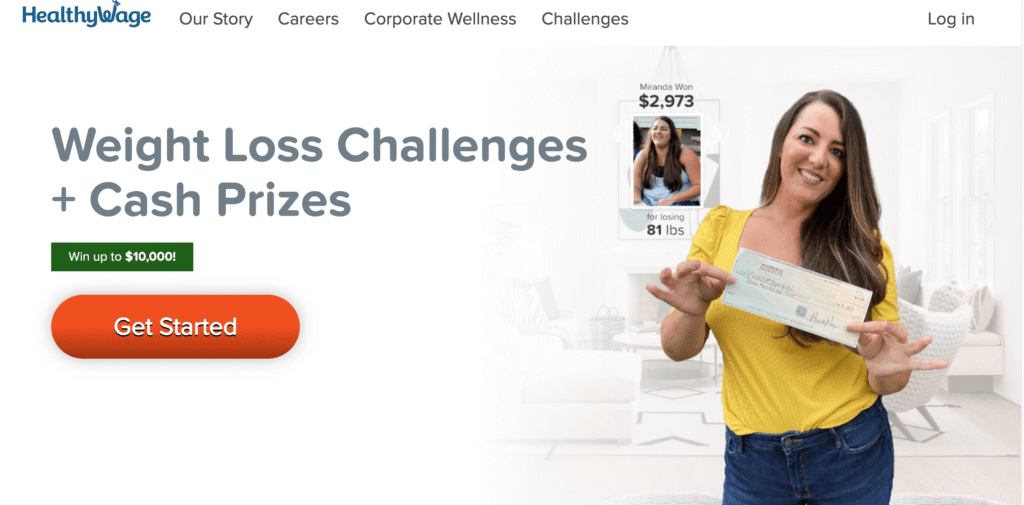
HealthyWage uses financial stakes to drive participation — employees bet on their own wellness goals, and winners share a prize pool. For step challenges, this creates a level of accountability few apps can match. Corporate plans let HR teams sponsor challenges and set company-funded prize pools.
The financial incentive model works best for short, high-energy campaigns (30–90 days) rather than always-on wellness programs. It’s a great option for companies looking to shake up engagement or launch a wellness initiative with a bang.
✓ Pros
Cash prizes drive very high participation
Great for campaign-based wellness pushes
Simple, self-explanatory for employees
✗ Cons
Not an always-on wellness platform
Limited tracking and admin features
Walkingspree
“A walking-focused corporate challenge platform with virtual routes.”
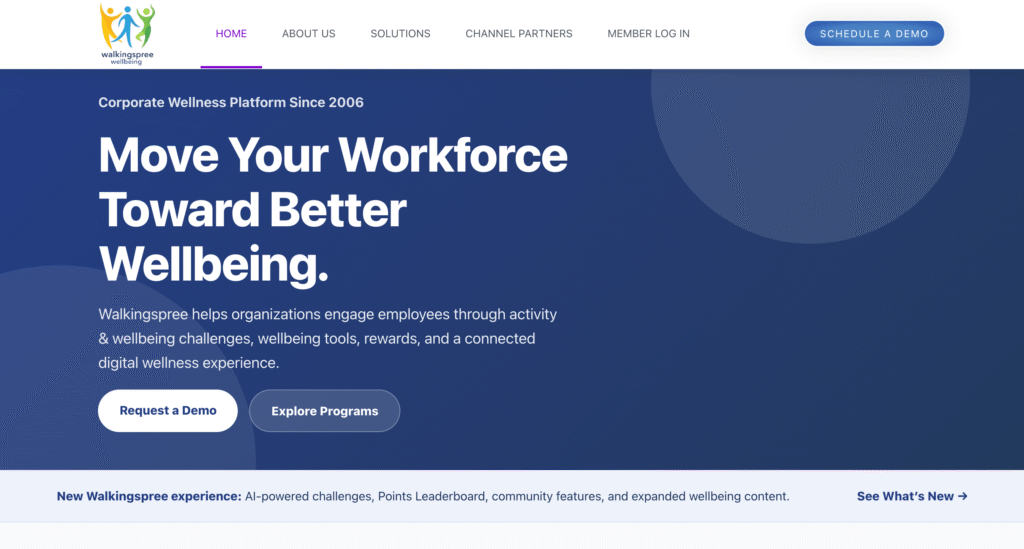
Walkingspree is one of the few platforms that focuses exclusively on walking as a wellness behavior — no gym workouts, no nutrition tracking, just steps. Their virtual route feature is a standout: teams “walk” virtual maps of famous trails or cities, unlocking images and facts as they hit milestones. It’s a creative way to make a corporate step challenge app feel like an adventure.
Admin controls are solid, and the platform handles large headcounts well. The trade-off is that it’s walking-only — no recognition engine, no broader wellness suite.
✓ Pros
Virtual route map feature is highly engaging
Handles large enterprise headcounts
Strong walking/step analytics
✗ Cons
Walking-only — narrow scope
No recognition or rewards engine
Vantage Fit
“Affordable corporate wellness platform with a good step challenge module.”
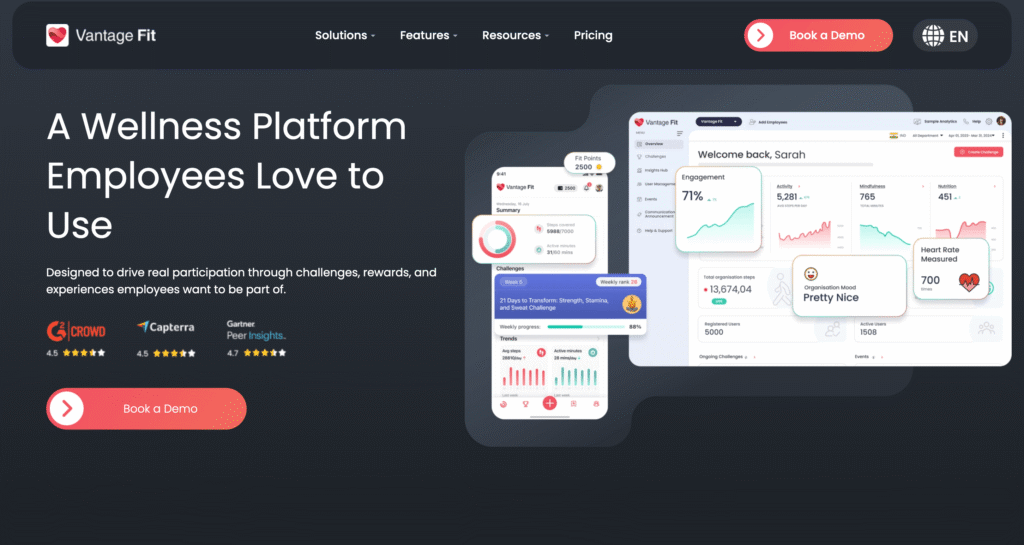
Vantage Fit is the wellness arm of Vantage Circle, a recognition and rewards platform. It offers step challenges, activity tracking, nutrition logs, and a rewards engine — all at a price point that’s competitive for smaller organizations. The platform’s global reach (multi-language, multi-currency) makes it a viable option for internationally distributed teams.
Compared to Woliba, Vantage Fit’s burnout prediction and engagement analytics are less mature, and the UX can feel cluttered. But for the price, it covers a lot of ground.
“Accountability through skin in the game — literally.”
Pact is a consumer app that uses financial commitment to drive behavior — users stake money on their step goals, and those who miss out pay those who succeed. It’s surprisingly effective for personal accountability, and small teams sometimes use it informally for group challenges.
Pact is not a corporate step challenge app in any formal sense — there’s no admin panel, no HR reporting, and no employer-side configuration. It’s listed here because it does appear in “free group step challenge app” searches and is worth knowing about, even if it’s outgrown for anything at scale.
✓ Pros
Strong personal accountability mechanism
Free to use (stakes-based monetization)
✗ Cons
No employer/HR features
Not suitable for formal corporate programs
Charity Miles
“Turn your team’s steps into charitable donations.”
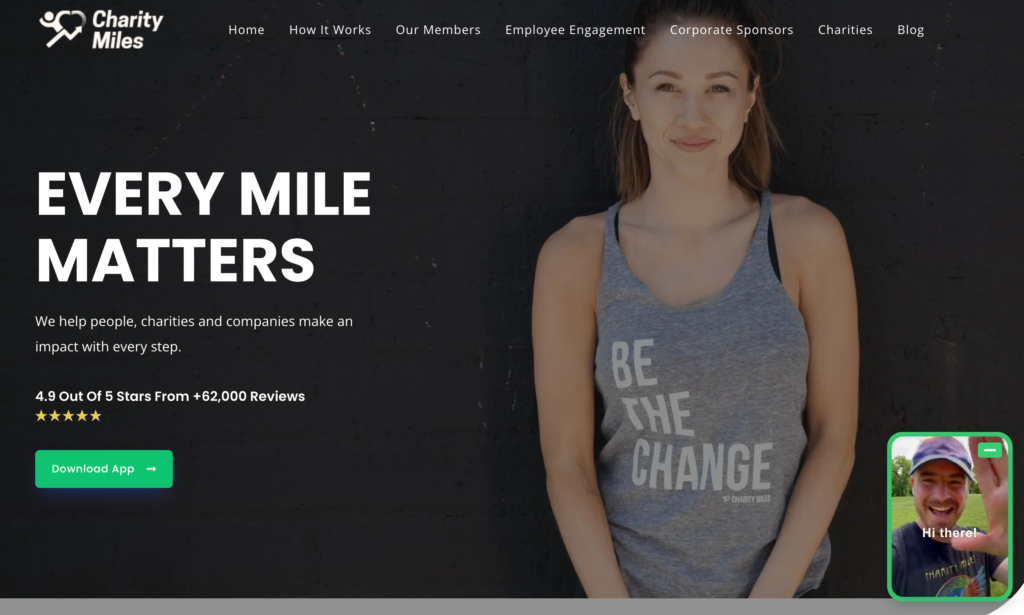
Charity Miles converts walking, running, and cycling activity into donations for a selection of partner charities. For CSR-conscious companies, this is a compelling overlay on a standard step challenge — employees walk, the company donates. It’s a powerful story to tell both internally and externally.
The corporate version includes team leaderboards, custom branding, and a dedicated charity partner. It’s not a full wellness platform, but as a cause-driven challenge layer it’s excellent — and often increases participation among employees who aren’t otherwise motivated by leaderboards alone.
✓ Pros
Unique CSR and purpose-driven angle
Increases participation among non-competitive employees
Great PR and culture-building tool
✗ Cons
Not a complete wellness platform
Limited wearable integrations
Charity selection can feel limiting
Gympass (Wellhub)
“A fitness network with a step challenge layer.”
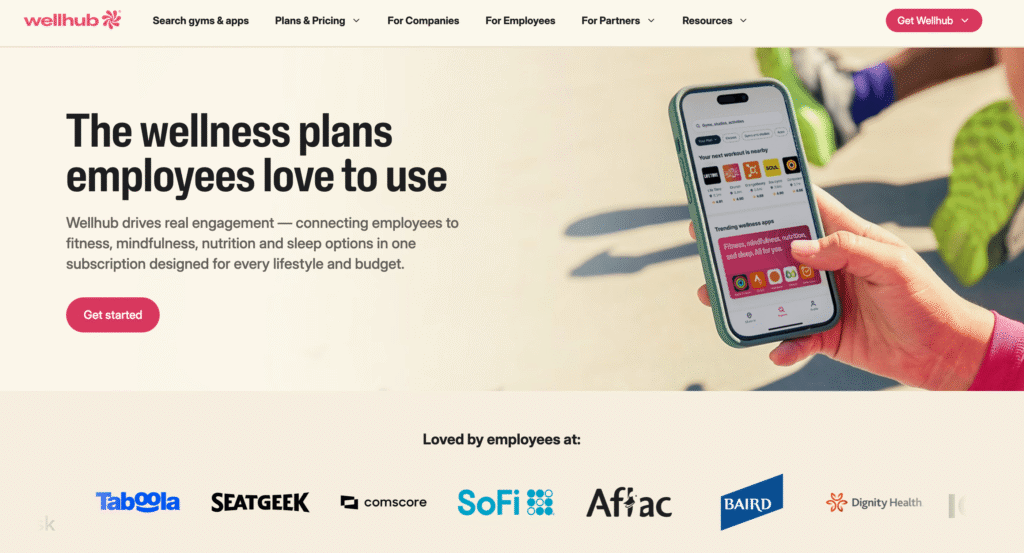
Gympass (now rebranded as Wellhub) gives employees access to a global network of gyms, studios, and wellness apps — with activity tracking and step challenges layered on top. The breadth of fitness access is unmatched, and the step challenge feature feeds into a points system redeemable across the network.
For companies that want to combine physical activity access with virtual challenges, Gympass is compelling. However, the step challenge feature is secondary to the gym-access value proposition, and the admin tools for standalone step challenge programs are not as mature.
✓ Pros
Widest gym and fitness studio network
Step challenges integrate with broader fitness rewards
Strong employee benefit perception
✗ Cons
Step challenge is secondary — not core feature
High cost, especially at scale
Fitbit Premium (Group Challenges)
“Native Fitbit group challenges — great if your team already wears Fitbit.”
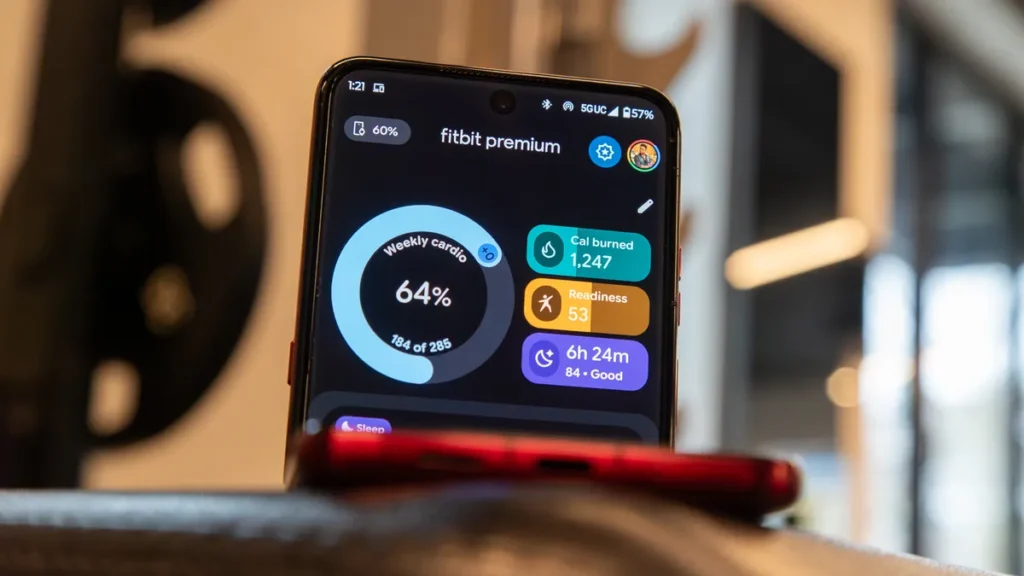
Fitbit has long had group step challenge features baked into its device ecosystem — “Workweek Hustle” and “Weekend Warrior” challenges are well-known among Fitbit users. Fitbit Premium extends this with longer challenges and richer analytics. For companies that have issued Fitbit devices as a benefit, this is a natural add-on.
The limitation is obvious: it only works for Fitbit device owners. If even a portion of your team uses Apple Watch, Garmin, or no wearable, Fitbit Premium challenges won’t achieve full-company participation. It’s also not a corporate wellness platform — there are no HR admin controls, rewards, or recognition tools.
✓ Pros
Seamless for existing Fitbit users
No extra app to download if employees have Fitbit
Familiar, proven challenge formats
✗ Cons
Fitbit device required — excludes other wearable users
No corporate HR features or admin dashboard
No rewards or recognition integration
Why Your Company Needs a Step Challenge App
You don’t need a wellness budget the size of a Fortune 500 company to run an effective step challenge. But you do need the right tool — and here’s why the app you choose matters more than most HR teams realize.
1. Manual Challenges Don’t Scale
Tracking steps via a shared Google Sheet might work for 10 people for one week. Beyond that, it becomes a full-time job for whoever manages it — and the data is always stale, often incorrect, and never analyzed. A dedicated app automates every part of this.
2. Leaderboards Create Friendly Competition
The social layer is what makes step challenges stick. When employees can see how they rank against colleagues — and cheer each other on — the average step count climbs dramatically. Apps with real-time leaderboards and social feeds drive sustained engagement far better than email updates.
3. Integration With Wearables Removes Friction
Asking employees to manually log steps is a non-starter. The best company step challenge apps pull data automatically from Fitbit, Apple Watch, Garmin, and Strava — so participation requires zero extra effort after the initial setup.
4. Step Challenges Are a Gateway to Broader Wellness
A well-run step challenge often becomes the entry point into a company’s broader wellness program. Employees who engage with a step challenge are more likely to explore other wellness resources, use mental health benefits, and participate in future programs. Think of steps as the onboarding ramp for workplace wellness.
5. HR Gets Data They Can Actually Use
Beyond the leaderboard, corporate step challenge apps give HR teams visibility into which departments are engaged, which are falling behind, and whether wellness initiatives are actually moving the needle on absenteeism and productivity metrics.
What to Look For in a Step Challenge App
Not all step challenge apps are created equal. Before you commit to a platform, here are the eight features that separate good tools from great ones.
⌚ Wearable & App Integration
Supports Fitbit, Apple Health, Garmin, Google Fit, and Strava so every employee can participate regardless of device.
🏆 Team & Individual Challenges
Offers both team-based and individual formats — and lets you mix them so everyone finds their competitive sweet spot.
📊 Admin Dashboard & Reporting
HR managers need real-time participation data, department-level breakdowns, and exportable reports for leadership.
🎁 Rewards & Incentives
Points, gift cards, or recognition tied to step milestones significantly boost sustained participation rates.
🌍 Multi-Language Support
Critical for global teams. An app that only works in English excludes large portions of a diverse workforce.
🔗 HRIS Integration
Connecting to your existing HR stack (Workday, BambooHR, Darwinbox) simplifies enrollment and ensures data accuracy.
📱 Mobile-First UX
Step challenge apps live and die by mobile usability. If the app is clunky on a phone, participation will suffer.
🔒 Data Privacy & Compliance
Health data is sensitive. Look for HIPAA compliance, SOC 2 certification, and clear data handling policies — especially for US, EU, or Mexico-based teams.
“The best step challenge apps don’t just count steps — they create moments of connection, recognition, and shared achievement that stick long after the challenge ends.”
When evaluating a corporate step challenge app, also consider whether you want a standalone solution or a platform that integrates step challenges into a broader wellness program. Standalone apps are easier to deploy but create data silos. Integrated platforms take more setup but deliver compounding value over time — especially once you layer in recognition, engagement surveys, and health resources.
Conclusion: Which Step Challenge App Is Right for Your Team?
If you made it this far, you now have a clear picture of the landscape. Let’s bring it home with a simple framework:
For small teams on a budget — Woliba, Pacer for Teams or Stridekick are your best free and low-cost options. Easy to set up, good enough for a one-time challenge, and zero IT overhead.
For mid-market companies wanting a dedicated step challenge tool — Woliba, MoveSpring or Walkingspree offer strong challenge mechanics and admin reporting without the complexity of a full wellness suite.
For companies that want step challenges as part of a broader wellness strategy — Woliba is the standout. It’s the only platform on this list that combines step and activity challenges with recognition, rewards, engagement surveys, health resources, and predictive burnout analytics in a single, beautifully designed product. And unlike competitors that bill per enrolled user, Woliba charges only for active users — so your costs reflect real engagement, not just headcount.
Whether you’re launching your first step challenge at work or scaling a company-wide wellness initiative, the right app removes friction, boosts participation, and gives your HR team the data to keep improving. The question isn’t whether to run a step challenge — it’s which tool will help you run one that people actually remember.
Frequently Asked Questions
What is a step challenge app?+
A step challenge app is a digital tool that tracks employees’ daily steps, organizes team-based walking competitions, and displays leaderboards — all to encourage movement and improve workplace wellness. Most apps sync with popular wearables like Fitbit, Apple Watch, and Garmin.
How do I run a step challenge at work?+
Start by defining your goal (participation rate, average step count, or departmental winner), choosing a challenge format (individual vs. team), selecting an app, and setting a duration (typically 4–8 weeks). Communication and in-challenge nudges make a huge difference in final participation numbers.
What is the best company step challenge app+
The best company step challenge app depends on your team size and goals. For small teams running a one-time challenge, Stridekick or Pacer work well. For companies wanting step challenges as part of a broader wellness strategy — with recognition, rewards, and HR reporting — Woliba is the top choice. It tracks active users only, keeping costs tied to real engagement.
What should I look for in a corporate step challenge app?+
A good corporate step challenge app should support wearable sync (Fitbit, Apple Watch, Garmin), team and individual challenge formats, a real-time admin dashboard, and a rewards or incentives engine. For enterprise teams, also look for HRIS integration, multi-language support, and data privacy compliance. Platforms like Woliba bundle all of this into one solution instead of requiring multiple tools.
Nathan Figg is a co-founder of Woliba and a health and performance coach with 12+ years of experience in HR and People Operations. He has supported global workforce strategies across a wide range of industries and specializes in behavior change, employee wellbeing, and leadership development.
Get full access to Woliba free for 21 days — challenges, recognition, rewards, and wellness analytics your team will actually use. No credit card Required