

Introduction
Mental wellness is now the part of the employee wellness program that HR leaders get asked about most. Burnout, anxiety and disconnection show up in sick days, missed deadlines and quiet resignations, and a gym discount does not fix them. A good mental wellness app gives every employee private, on-demand support, from guided meditation to therapy to a simple daily check-in, without waiting for an appointment.
The hard part is choosing one. Some apps are built for individual consumers, some are full clinical care networks, and some combine mental wellness in workplace with challenges, recognition and rewards in one platform.
This guide compares 15 mental wellness apps for employers. For each one you get what it does, its key features, published pricing where it exists, and who it suits best. We also cover how to choose an app, what it should cost, and wellness challenge ideas that keep employees using it after launch week.
What is a mental wellness app?
A mental wellness app is software that helps people manage stress, sleep, mood and emotional resilience from their phone or laptop. When an employer offers one, it becomes part of the employee wellness program, paid for by the company and free to the employee.
Mental wellness apps for employers usually fall into three groups:
- Self-guided apps: meditation, sleep stories, breathing exercises and CBT-based courses (for example Headspace, Calm, Sanvello).
- Clinical care platforms: coaching, licensed therapy and psychiatry, often with an EAP replacement model (for example Lyra Health, Spring Health, Modern Health).
- All-in-one wellbeing platforms: mental wellness resources combined with wellness challenges, recognition, rewards and engagement tools, so mental health support sits inside the employee’s daily routine (for example Woliba).
Most companies start with one group and add another as their program matures. The right mix depends on your headcount, budget and how much clinical support you already get through health insurance or an EAP.
Mental wellness apps compared at a glance
| App | Type | Wellness challenges | Therapy or coaching | Starting price |
|---|---|---|---|---|
| Woliba | All-in-one wellbeing platform | Yes | Expert-led sessions | From $2/employee/month |
| Headspace | Self-guided + clinical | No | Yes | Custom quote |
| Calm | Self-guided | No | Calm Health only | Self-serve for 5–300 seats |
| Lyra Health | Clinical care | No | Yes | Custom quote |
| Spring Health | Clinical care | No | Yes | Custom quote |
| Modern Health | Clinical care | No | Yes | Custom quote |
| Talkspace | Online therapy | No | Yes | Custom quote |
| BetterUp | Coaching | No | Coaching | Custom quote |
| Unmind | Self-guided + clinical | No | Yes | Custom quote |
| Wysa | AI-guided | No | Coaching add-on | Custom quote |
| Sanvello | Self-guided CBT | No | Yes | Custom quote |
| Headversity | Resilience training | No | No | Custom quote |
| Grokker | Video library | Yes | No | Custom quote |
| Vantage Fit | Fitness-led wellness | Yes | No | $500/month for 500 users |
| Wellable | Challenge-led wellness | Yes | No | On request |
Why mental wellness belongs in your employee wellness program
Poor mental health is one of the largest hidden costs a company carries. The numbers behind it are hard to ignore:
- An estimated 12 billion workdays are lost every year to depression and anxiety, costing the global economy nearly US$1 trillion (WHO and ILO).
- 15% of working-age adults were estimated to have a mental disorder in 2019 (WHO).
- 77% of US workers reported work-related stress, and 57% reported negative effects such as emotional exhaustion and a desire to quit (APA Work in America 2023, via BenefitNews).
- Nine in ten US employees want their employer to value their emotional and psychological wellbeing (APA 2023, via WORKTECH Academy).
A mental wellness app is the most scalable way to respond. It reaches remote, hybrid and frontline staff equally, it is available at 2 a.m. when stress peaks, and it lets employees get help privately, which lowers the stigma that keeps many people from using an EAP.
How to choose a mental wellness app for your team
Use these six questions to shortlist vendors before you book demos:
- What level of support do employees need? Self-guided content covers everyday stress. Coaching and therapy cover moderate to severe needs. Many teams need both.
- Will people actually use it? Utilisation is the metric that matters. Look for wellness challenges, reminders, social features and rewards that bring employees back weekly, not once.
- Does it cover more than one dimension of wellness? Sleep, movement, nutrition, finances and social connection all affect mental health. A platform that covers several saves you from managing five vendors.
- Is it private and compliant? Check HIPAA, GDPR or SOC 2 status, and confirm HR only sees aggregated, anonymised data.
- Can HR measure impact? You need participation dashboards, pulse surveys and reporting you can take to leadership.
- Is the pricing transparent? Per-employee-per-month (PEPM) pricing is the norm. Ask whether therapy sessions, coaching and rewards cost extra.
The 15 best mental wellness apps for employees
1. Woliba: best all-in-one mental wellness app for employee wellness programs
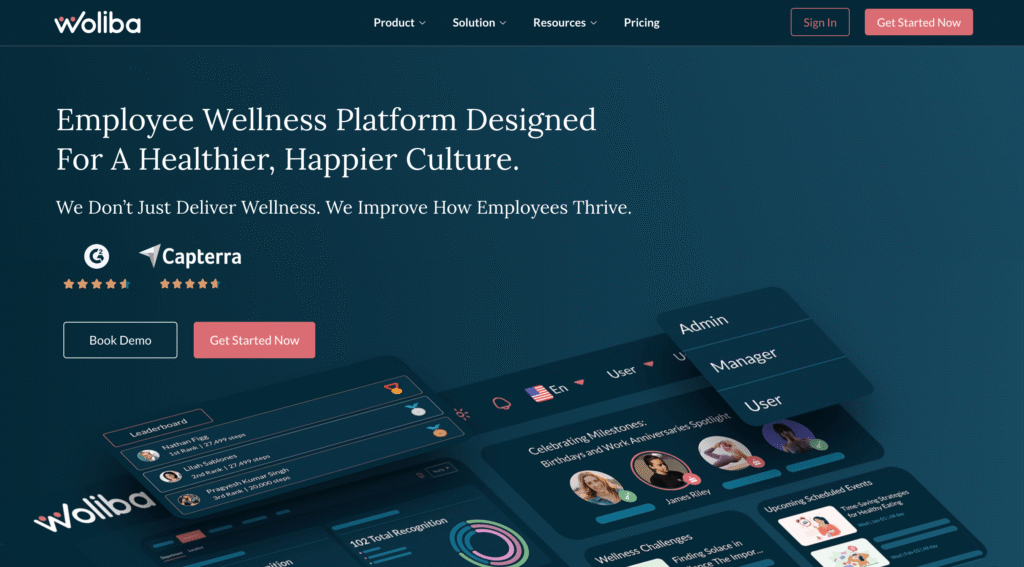
Woliba is an AI-powered employee wellbeing, engagement and recognition platform. Instead of treating mental wellness as a separate tool, it builds mental health support into the same app employees already use for wellness challenges, recognition and rewards. That means employees see stress, sleep and resilience content every time they log a step or thank a colleague, which keeps utilisation high long after launch.
Woliba covers physical health, mental resilience, sleep, nutrition, financial wellbeing and culture in one platform. It is built for HR and People Ops teams at companies with 50 to 5,000 employees who want one platform instead of five vendors.
Woliba key features
| Feature | What it gives your team |
|---|---|
| Mental wellbeing programs | Structured, habit-based programs on stress, resilience, sleep and mindfulness that employees follow at their own pace |
| Downloadable mental wellness resources | A library of articles, guides, recipes and worksheets employees can read in-app or download for later |
| Live and on-demand expert sessions | Coaching events and webinars with wellbeing experts on topics like stress management and burnout |
| Wellness challenges | Step challenges, activity challenges and team challenges that build connection, a proven buffer against loneliness and stress |
| Recognition and rewards | Peer-to-peer and manager recognition with points employees redeem for rewards |
| Engagement and pulse surveys | Quick check-ins that show HR how employees are feeling before burnout turns into turnover |
| HR analytics dashboard | Real-time participation and engagement data to prove program impact to leadership |
| Woliba For Good | Ties wellness challenges to charitable donations for a sense of purpose |
Woliba pros and cons
| Pros | Cons |
|---|---|
| Mental wellness, physical wellness, recognition and engagement in one platform, so you replace several tools | Does not run its own network of licensed therapists; pair it with your EAP or health plan for clinical care |
| Wellness challenges and rewards keep employees coming back to mental wellness content weekly | The breadth of features means admins make a few setup choices at launch (Woliba’s team helps configure programs) |
| Transparent entry price from $2 per employee per month | Built for teams; not designed as a personal consumer meditation app |
| Works for remote, hybrid and in-office teams on web and mobile | |
| 21-day free trial, so HR can test it with real employees before committing |
Pricing: from $2 per employee per month, with a 21-day free trial.
Best for: HR leaders who want mental wellness, wellness challenges and recognition to work together in one employee wellness program.
2. Headspace: best for meditation plus clinical care
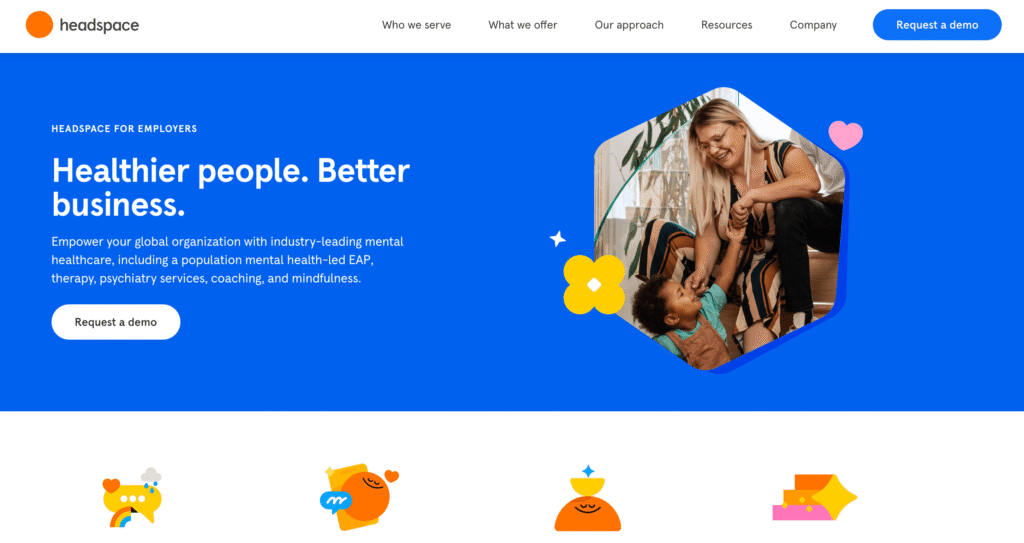
Headspace is one of the best-known mental wellness apps, with guided meditation, sleep content and mindfulness courses. Since merging with Ginger, its employer offering adds text-based coaching, therapy and psychiatry.
- Key features: guided meditations, sleep sounds, focus music, 1:1 mental health coaching, therapy and psychiatry
- Pricing: custom quote for employers; individual plans are sold separately on the app stores
- Best for: companies that want a familiar consumer brand with a clinical care path behind it
3. Calm: best for sleep and stress support
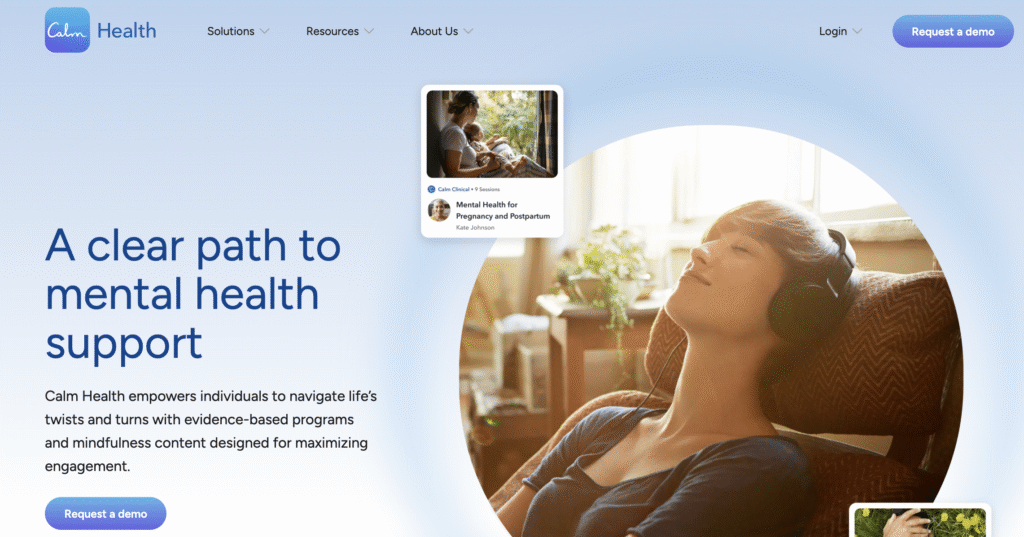
Calm is known for Sleep Stories, daily meditations and breathwork. Calm for Organizations gives small teams self-serve access, while Calm Health is a separate clinically validated program for larger employers.
- Key features: 300+ Sleep Stories, Daily Calm meditation, mindful movement videos, team analytics dashboard
- Pricing: self-serve for groups of 5 to 300, with bigger discounts for larger groups; billed annually upfront. Calm Health is quote-only
- Best for: small and mid-size teams that want a quick, low-admin mental wellness benefit
4. Lyra Health: best EAP replacement for large enterprises
Lyra Health provides a network of therapists, coaches and psychiatric care with fast access to appointments. Many large employers use it to replace a traditional EAP.
- Key features: care navigation, video therapy, mental health coaching, medication management, self-guided digital lessons
- Pricing: custom quote
- Best for: enterprises that need clinical depth and global coverage
5. Spring Health: best for personalised clinical care plans
Spring Health uses a short assessment to match each employee with the right level of care, from self-guided exercises to therapy and psychiatry. Care navigators guide employees through the process.
- Key features: personalised care plans, dedicated care navigators, therapy, psychiatry, EAP services, manager consultations
- Pricing: custom quote
- Best for: mid-size and large employers focused on measurable clinical outcomes
6. Modern Health: best for tiered mental health support
Modern Health offers a stepped model: self-guided content for everyday stress, certified coaches for moderate needs, and licensed therapists when clinical care is required. Group sessions help employees learn together.
- Key features: 1:1 coaching, therapy, live group sessions, meditation library, multilingual support
- Pricing: custom quote
- Best for: global companies that want one program across many countries
7. Talkspace: best for flexible online therapy
Talkspace connects employees with licensed therapists by text, audio or video messaging. Talkspace for Business packages this as an employee benefit.
- Key features: asynchronous messaging therapy, live video sessions, psychiatry, self-guided workshops
- Pricing: custom quote for employers
- Best for: teams whose employees prefer messaging a therapist over booking appointments
8. BetterUp: best for coaching-led wellbeing
BetterUp pairs employees with professional coaches who work on wellbeing, resilience and performance. It is often positioned as a leadership development tool with a mental wellness benefit.
- Key features: 1:1 coaching, group coaching, wellbeing assessments, AI coaching tools, people analytics
- Pricing: custom quote
- Best for: companies investing in managers and leaders
9. Unmind: best for measuring workforce mental health
Unmind is a UK-founded workplace mental health platform with self-guided courses and tools to measure wellbeing across the organisation.
- Key features: wellbeing check-ins, self-guided series, talk therapy, manager training, anonymised organisational insights
- Pricing: custom quote
- Best for: HR teams that want data on how workforce mental health changes over time
10. Wysa: best AI-guided mental wellness app
Wysa uses an AI chatbot built on CBT techniques to help employees work through stress and anxiety at any hour, with human coaches available as an upgrade.
- Key features: AI conversational support, CBT and mindfulness exercises, human coaching, anonymous use
- Pricing: custom quote for employers
- Best for: employees who are hesitant to talk to a person first
11. Sanvello: best for CBT tools and mood tracking
Sanvello offers clinically informed tools for stress, anxiety and depression, including mood tracking, coping tools and guided journeys. It is often available through health plans.
- Key features: daily mood tracking, CBT-based guided journeys, coping tools, peer community, coaching and therapy options
- Pricing: custom quote for employers; check whether your health plan already includes it
- Best for: companies that want evidence-based self-care tools at low cost
12. Headversity: best for proactive resilience training
Founded by a psychiatrist, Headversity focuses on building resilience skills before employees reach a crisis point.
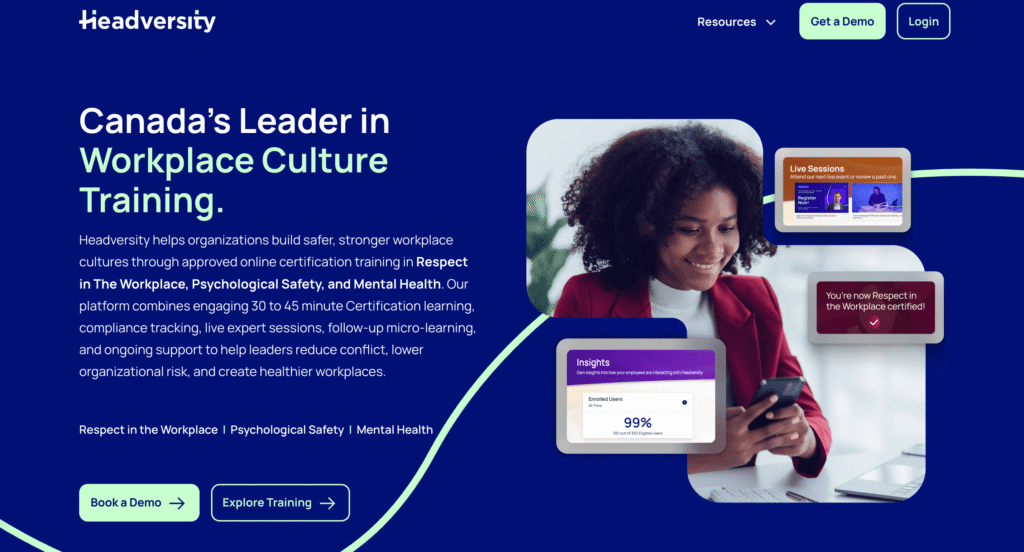
- Key features: short resilience training modules, personalised skill building, frontline-friendly design, organisational analytics
- Pricing: custom quote
- Best for: frontline and high-stress industries such as healthcare, energy and public safety
13. Grokker: best video library for whole-person wellness
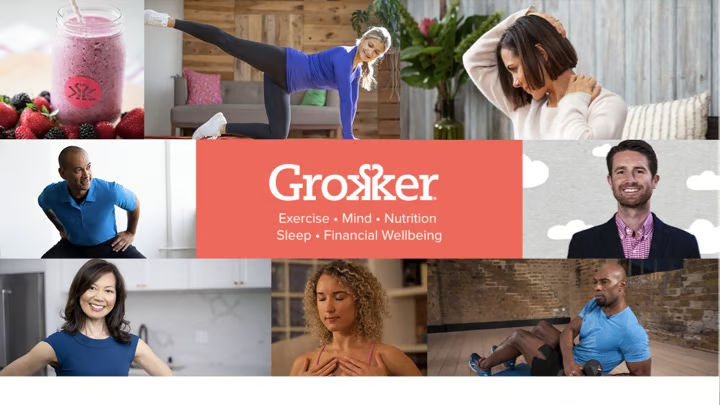
Grokker offers a library of more than 4,000 videos across fitness, mental health and nutrition.
- Key features: on-demand video programs, wellness challenges, live sessions, rewards integrations
- Pricing: custom quote
- Best for: employers that want a large content library employees can browse
14. Vantage Fit: best for fitness-led wellness with mental health content
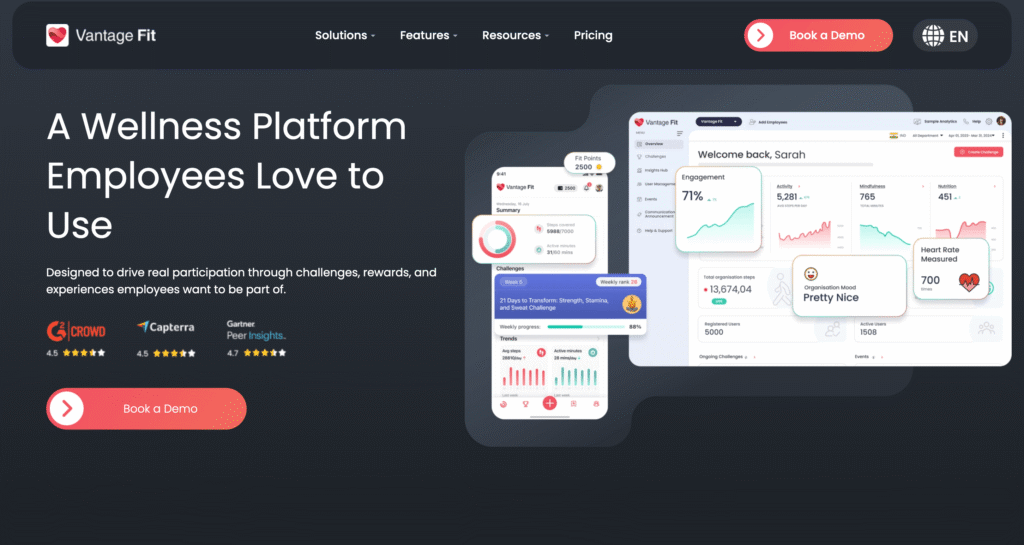
Vantage Fit is a corporate wellness app focused on activity tracking and challenges, with meditation and mental health content added to the experience.
- Key features: step tracking, activity challenges, meditation, health assessments, rewards
- Pricing: entry plan listed at $500 per month for 500 users
- Best for: companies where physical activity is the main entry point to wellness
15. Wellable: best for holistic wellness challenges
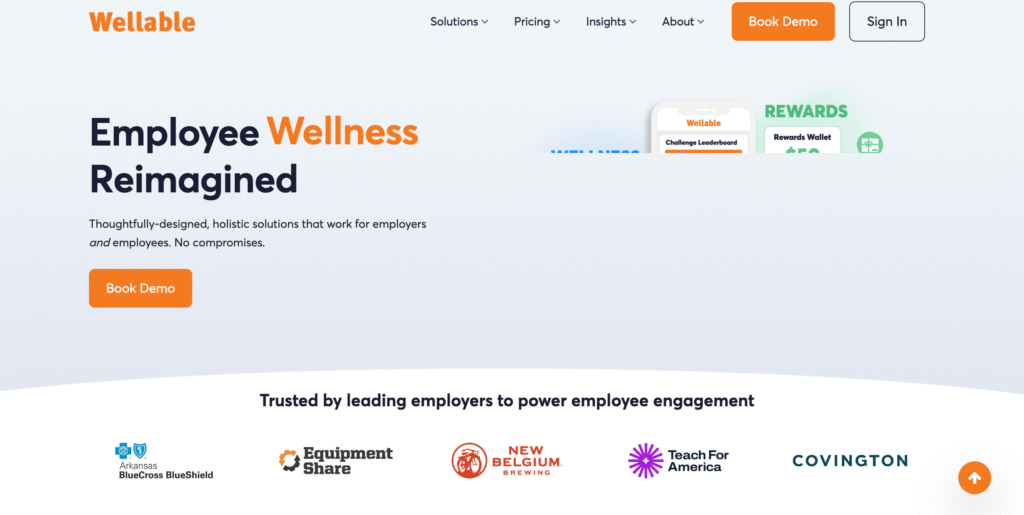
Wellable combines wellness challenges, rewards and on-demand content across physical and mental health topics, including mindfulness and sleep.
- Key features: app and device integrations, holistic wellness challenges, rewards and recognition, health assessments
- Pricing: published plans on G2; full pricing on request
- Best for: HR teams that want a challenge-driven program with mental wellness modules
FAQs
What is a mental wellness app?
A mental wellness app is a digital tool that helps people manage stress, sleep, mood and resilience through guided content, self-care exercises, coaching or therapy. Employers offer them as part of an employee wellness program so every employee has private, on-demand support.
What are the top 10 mental wellness apps for employees?
The top 10 mental wellness apps for employers are Woliba, Headspace, Calm, Lyra Health, Spring Health, Modern Health, Talkspace, BetterUp, Unmind and Wysa. Woliba leads for companies that want mental wellness, wellness challenges and recognition in one platform.
How much should a mental wellness app cost?
Most employer mental wellness apps are priced per employee per month (PEPM). All-in-one wellbeing platforms such as Woliba start from around $2 PEPM. Self-guided apps typically cost a few dollars per seat per month, while clinical care platforms with therapy and psychiatry are quoted individually and usually cost significantly more. Always ask whether therapy sessions, coaching and rewards are included or billed separately.
Are mental wellness apps effective for employees?
They are most effective when employees actually use them. Pair the app with manager support, regular wellness challenges and clear communication so mental wellness becomes part of the weekly routine, not a forgotten benefit.
What features should a mental wellness app for employers have?
Look for mental wellbeing programs, downloadable mental wellness resources, expert sessions, engagement features like wellness challenges and rewards, strong privacy controls and an HR analytics dashboard.
Can a mental wellness app replace an EAP?
Clinical platforms like Lyra Health and Spring Health are designed to replace or upgrade an EAP. Engagement-focused platforms like Woliba work best alongside your EAP, driving daily wellbeing habits while the EAP covers clinical needs.
How do I increase employee participation in a mental wellness app?
Launch with a wellness challenge such as a step challenge or mindful minutes challenge, reward participation with points, get leaders to join publicly and share short updates in team channels every week.
Conclusion
The best mental wellness app is the one your employees open every week. Clinical platforms such as Lyra Health and Spring Health are strong choices for therapy access, and self-guided apps such as Headspace and Calm work well for everyday stress. If you want mental wellness, wellness challenges, recognition and rewards working together in one employee wellness program, Woliba is built for that.
Make mental wellness part of every workday
Give your team mental wellbeing programs, wellness challenges and recognition in one app. Try Woliba free for 21 days.
Start your free trial