

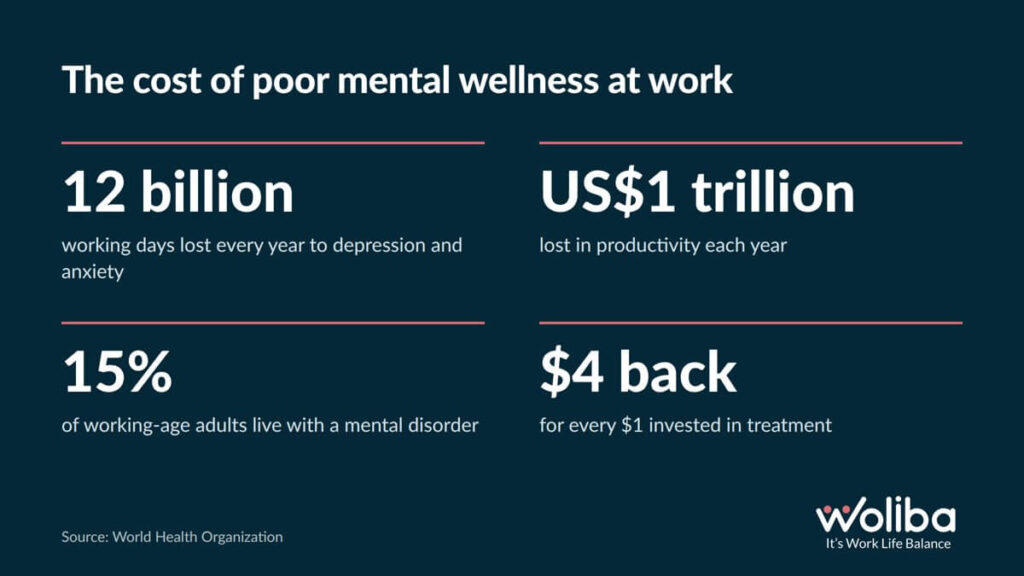
Every year, depression and anxiety cost the global economy an estimated 12 billion working days and US$1 trillion in lost productivity, according to the World Health Organization. That makes mental wellness in the workplace a business problem as much as a human one.
Most companies already know this. What they often get wrong is the fix. They add a meditation app, run a webinar during Mental Health Awareness Month, and wonder why burnout numbers don’t move.
This guide takes a different approach. It explains what mental wellness at work really means, why many employee wellness programs fall short, and what HR and People leaders can do to build a workplace where people can do good work without wearing themselves down.
Key takeaways
- Mental wellness in the workplace is shaped more by how work is designed (workload, control, support) than by perks.
- Individual tools like apps and webinars help most when they sit on top of healthy work practices, not in place of them.
- Managers are the biggest lever. Train them to notice, ask and refer.
- Mental wellness connects to every other dimension of wellness: physical, social, financial and more.
- Measure outcomes (absenteeism, turnover, eNPS), not just participation.
What is mental wellness in the workplace?
Mental wellness at workplace is the state in which employees can manage normal stress, stay focused, feel psychologically safe, and do meaningful work without long-term harm to their health. It is shared by individuals, managers and the organization, and it is shaped by culture, workload and support.
Notice what this definition doesn’t say. It doesn’t mean everyone is happy all the time. Stress is a normal part of work. The goal is a workplace where stress is manageable, recovery is possible, and people who struggle can ask for help without fear.
It’s also worth separating two terms that often get mixed up. Mental health includes diagnosable conditions like depression and anxiety, which need professional care. Mental wellness is broader and more everyday: how people feel, cope and function. HR can’t treat mental illness, but it can shape the conditions that protect mental wellness for everyone.
Build a mentally healthier workplace
Give your team the support, recognition and daily habits that protect mental wellbeing.
Why mental health awareness in the workplace matters now
Mental health awareness in the workplace matters because poor mental wellness shows up directly in absenteeism, turnover, errors and healthcare costs. Awareness helps employees spot problems early and seek support, and helps leaders see that the cost of doing nothing is already on the books.
The numbers make the case clearly:
- 12 billion working days are lost every year to depression and anxiety (WHO).
- US$1 trillion a year is lost in productivity as a result (WHO).
- About 15% of working-age adults live with a mental disorder at any given time (WHO).
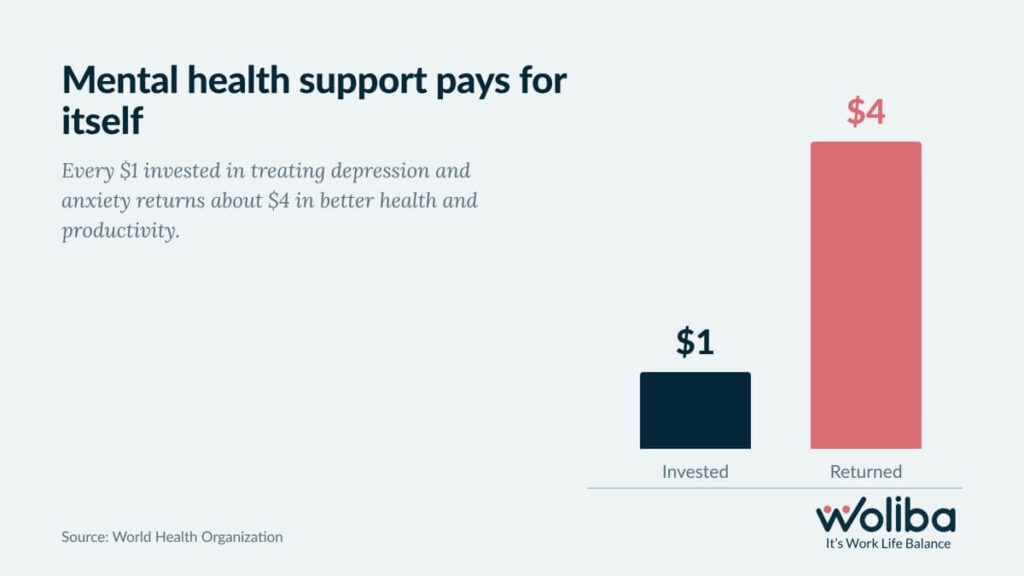
- Every $1 invested in treating common mental disorders returns about $4 in improved health and productivity (WHO).
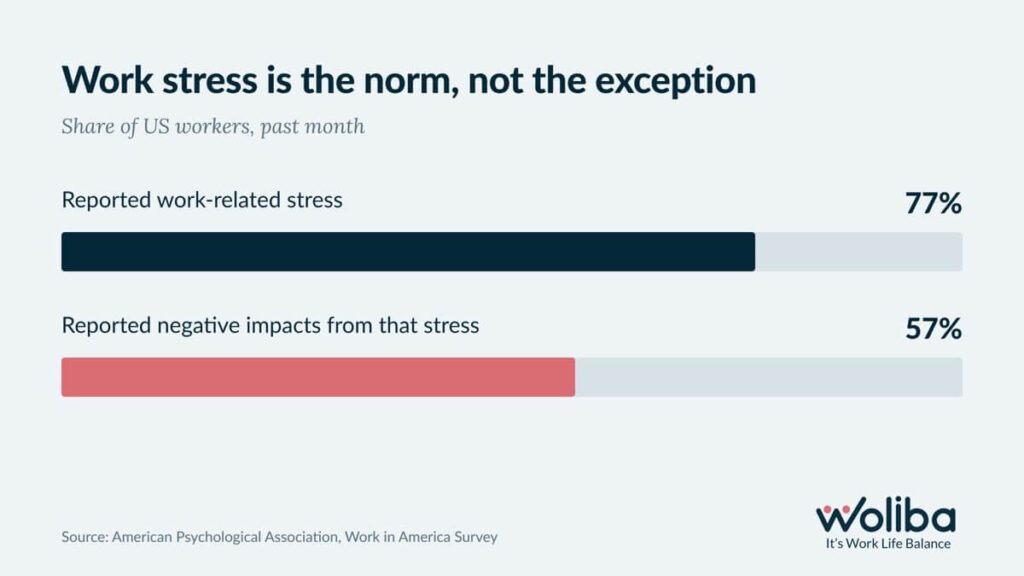
- 77% of US workers reported work-related stress in the past month, and 57% reported negative impacts from it (APA, Work in America Survey 2023).
For HR teams at mid-sized companies, this isn’t abstract. A single burned-out team lead who resigns can cost months of hiring, onboarding and lost momentum. Multiply that across a year and mental wellness becomes one of the largest hidden line items in your people budget.
There’s a talent angle too. Employees, especially younger ones, increasingly choose employers based on how they treat wellbeing. In the same APA survey, most workers said it was important to work for an organization that supports their psychological wellbeing.
Put your mental wellbeing program into action
Run pulse surveys, share wellness resources and nudge healthier habits from one platform.
Common mental health challenges at work
The most common mental health challenges at work are stress, burnout, anxiety and depression. They often overlap and build on each other. Understanding the difference helps HR teams choose the right kind of support, from workload changes to professional care.
Stress
Short bursts of stress are normal and can even help people focus before a deadline. The problem is chronic stress: pressure that never lets up. Over time, it affects sleep, mood, concentration and physical health.
Burnout
The WHO describes burnout as an occupational phenomenon caused by chronic workplace stress that hasn’t been successfully managed. It shows up in three ways: exhaustion, growing mental distance or cynicism about work, and reduced effectiveness. Burnout is a signal about the job, not a personal weakness.
Anxiety
Anxiety at work can look like constant worry about performance, avoiding meetings or presentations, or trouble switching off after hours. Uncertainty, such as unclear expectations or fear of layoffs, often makes it worse.
Depression
Depression can show up as low energy, loss of interest, difficulty concentrating and withdrawal from colleagues. It’s a health condition that needs professional support. HR’s role is to make that support easy to reach and to make sure the workplace doesn’t add to the load.
Workplace risk factors to know
Workplace risk factors for poor mental wellness are conditions in how work is designed and managed. The WHO calls these psychosocial risks. They include excessive workloads, low control over work, job insecurity, bullying or harassment, poor support from managers, and long or inflexible hours.
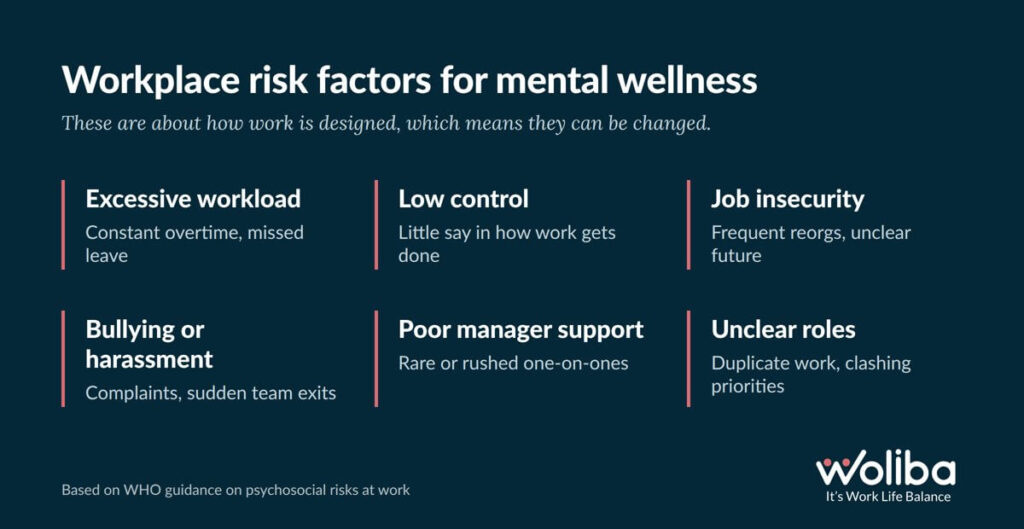
Here’s a quick way to spot them in your organization:
| Risk factor | What it looks like | Where to check |
|---|---|---|
| Excessive workload | Constant overtime, missed leave | Timesheets, leave balances |
| Low control | Micromanagement, no say in how work gets done | Engagement survey comments |
| Job insecurity | Frequent reorgs, unclear future | Exit interviews |
| Bullying or harassment | Complaints, sudden team turnover | HR case logs |
| Poor manager support | Low one-on-one frequency | Pulse surveys |
| Unclear roles | Duplicate work, conflicting priorities | Team retros |
The good news is that these risks are within your control. Unlike personal life stressors, they can be changed through better planning, clearer roles and stronger management.
The uncomfortable truth: why many wellness programs don’t work
Many workplace mental wellness programs fall short because they ask individuals to cope better with conditions that the organization itself creates. Mental wellness apps and resilience workshops can help, but they can’t fix unmanageable workloads, poor management or a culture where asking for help feels risky.
A 2024 study from the University of Oxford, led by researcher William Fleming, looked at more than 46,000 UK workers. It found that people who took part in individual-level wellbeing programs (resilience training, mindfulness sessions, wellbeing apps) reported no better mental wellbeing than those who didn’t.
That doesn’t mean these tools are useless. It means they can’t carry the load alone.
Here’s the shift we’d encourage every HR leader to make: stop treating mental wellness as a perk and start treating it as part of how work is designed. A meditation app won’t help someone who has three people’s workload and a manager who replies to messages at midnight. Fix the work first, then layer support on top.
In practice, that means asking harder questions:
- Are workloads realistic, or are we running on permanent overtime?
- Do people have control over how and when they do their work?
- Do managers know how to have a supportive conversation?
- Is recognition regular, or does good work go unnoticed?
These questions are less comfortable than launching a new benefit. They also tend to move the numbers.
Warning signs HR and managers should watch for
Common warning signs include changes in behavior, performance or engagement: withdrawal from the team, missed deadlines, frequent absences, irritability, loss of interest in work, or working unusually long hours. One sign alone may mean little. A pattern over several weeks is worth a gentle check-in.
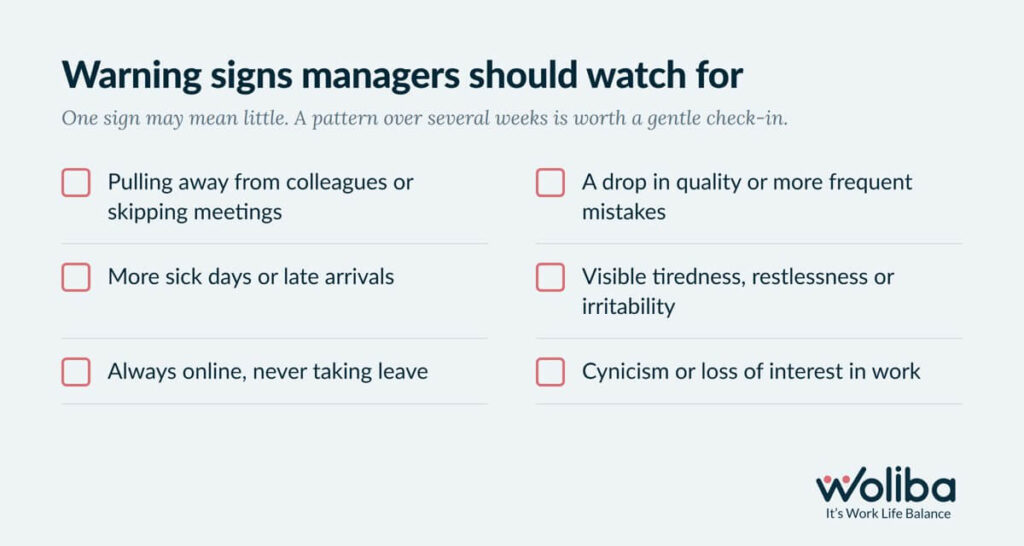
Watch for:
- Pulling away from colleagues or skipping meetings
- A drop in quality or more frequent mistakes
- More sick days or late arrivals
- Visible tiredness, restlessness or irritability
- Always online, never taking leave
- Cynicism or loss of interest in work they used to enjoy
The goal isn’t to diagnose anyone. Managers aren’t clinicians. The goal is to notice, ask “How are you really doing?”, and point people to the right support.
How to improve mental health in the workplace: 10 practical strategies
To improve mental health in the workplace, combine changes to how work is organized (workload, flexibility, clear roles) with visible support (manager training, EAP access, mental health days, recognition). The most effective programs address both the work environment and individual needs at the same time.
1. Make mental health resources easy to find
Many employees don’t know their Employee Assistance Program (EAP) exists. Put support options in one place: your intranet, onboarding materials and your wellness platform.
Action step: Add a “Get support” link to every internal newsletter and HR email signature.
2. Train managers to have supportive conversations
Managers shape the daily experience of work more than any policy. Give them simple training on spotting warning signs, asking open questions and referring people to help.
Action step: Run a 60-minute mental health conversation workshop for every people manager this quarter.
3. Build psychological safety
People need to feel they can admit mistakes, raise concerns or say “I’m struggling” without being judged. This starts with leaders modeling it.
Action step: Ask senior leaders to share one personal story about managing stress in a town hall.
4. Offer real flexibility
Control over when and where work happens is one of the strongest protectors of mental wellness. Flexibility only works if it’s real, not just written in a policy.
Action step: Let teams agree on “core collaboration hours” and protect the rest for focused work.
5. Normalize mental health days
A mental health day lets employees rest before they reach burnout. Make it clear these days are valid and don’t need a detailed explanation.
Action step: Add mental health days to your leave policy by name.
6. Recognize good work regularly
Feeling unseen is a quiet drain on morale. Regular, specific recognition from managers and peers builds belonging and motivation.
Action step: Set up a peer-recognition program where anyone can thank a colleague.
7. Run team wellness challenges
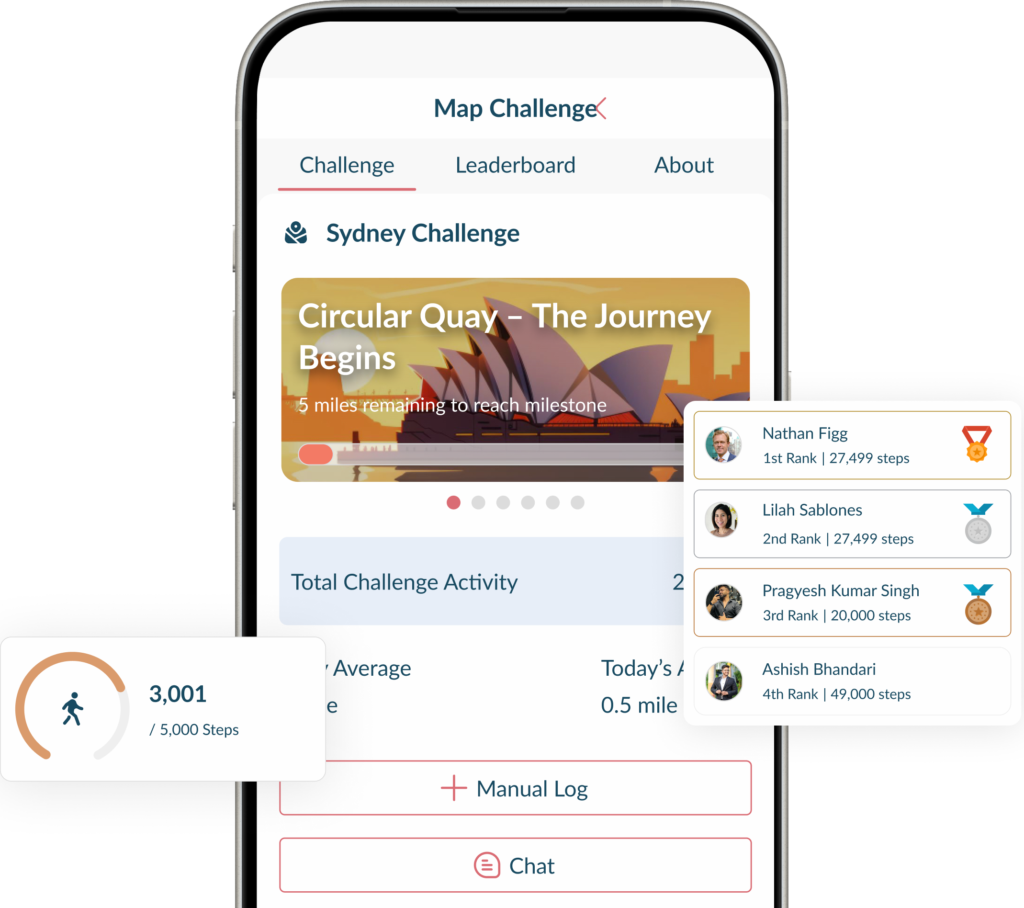
Movement, sleep and hydration challenges support mental wellness because body and mind are closely linked. They also create shared moments across teams. Our guide to physical wellness covers why this link matters.
Action step: Launch a four-week team step challenge with small rewards.
8. Teach practical stress and resilience skills
Short, practical sessions on managing stress, setting boundaries and handling difficult emotions help, especially when paired with the work-design changes above.
Action step: Offer a monthly 30-minute skills session instead of a one-off annual webinar.
9. Write a clear mental health policy
A written policy tells employees what support exists, how to ask for accommodations and how their privacy will be protected.
Action step: Publish a one-page mental health policy and walk managers through it.
10. Support peer networks and ERGs
Employee resource groups and peer support circles give people a safe space to talk with colleagues who understand. Connection is one of the strongest buffers against stress, which is the core idea behind social wellness.
Action step: Fund and support at least one wellbeing-focused ERG.
Put your mental wellbeing program into action
Run pulse surveys, share wellness resources and nudge healthier habits from one platform.
How to build an employee mental health program
To build an corporate program, start by understanding what your people need, set a few clear goals, choose tools that fit, launch with manager support, and measure results. A small, focused program that runs all year beats a big launch that fades after a month.
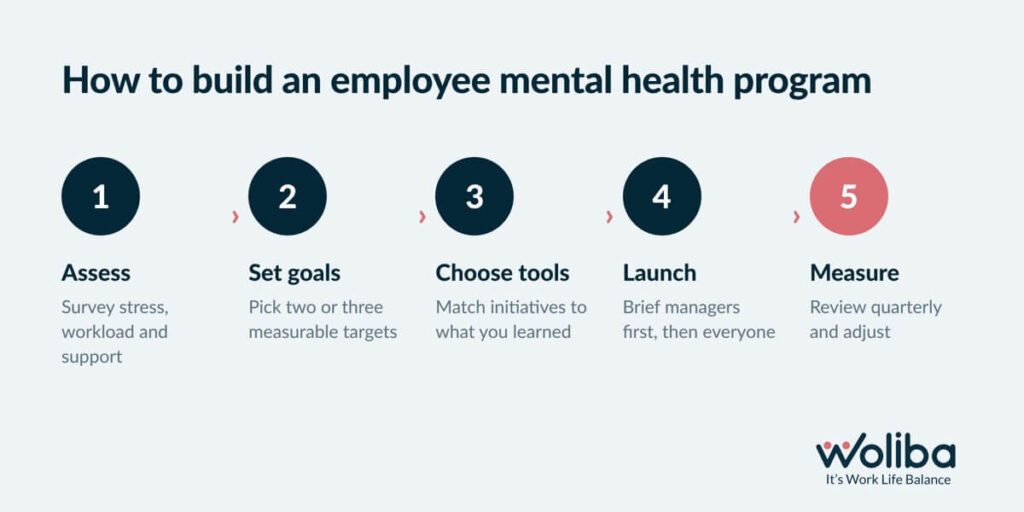
Step 1: Assess. Run a short anonymous survey on stress, workload and support. Look at absenteeism, turnover and EAP data alongside it. This shows you where the real pressure points are.
Step 2: Set goals. Pick two or three measurable goals, such as “raise EAP awareness to 80% of employees” or “reduce voluntary turnover in customer support by 10%.” Clear goals make it easier to get leadership buy-in.
Step 3: Choose tools and initiatives. Match your plan to what the survey showed. If workload is the main issue, start with work design. If people feel isolated, focus on connection and recognition. Add digital tools where they fill a real gap.
Step 4: Launch with managers first. Brief managers before employees hear about the program. They’ll get the questions, so they need to understand it and believe in it.
Step 5: Measure and adjust. Review results every quarter. Keep what works, drop what doesn’t, and share progress with employees so they see their feedback led to change.
Supporting mental health in the workplace: the role of leaders and managers
Supporting mental health in the workplace depends heavily on leaders and managers, because they set workloads, priorities and tone every day. Leaders who talk openly about wellbeing, respect boundaries and model rest give employees permission to do the same.
Three behaviors make the biggest difference:
- Model it. If leaders send emails at 11 p.m. and never take leave, no policy will convince employees that rest is okay.
- Ask regularly. Add a simple wellbeing question to one-on-ones: “What’s one thing making work harder right now?”
- Act on what you hear. If three people say workload is unmanageable, reprioritize. Listening without action erodes trust fast.
The US Surgeon General’s Framework for Workplace Mental Health & Well-Being is a useful reference here. It groups workplace wellbeing into five essentials: protection from harm, connection and community, work-life harmony, mattering at work, and opportunity for growth. That last one ties closely to occupational wellness, meaning how satisfied and fulfilled people feel in their work.
Mental wellness activities and initiative ideas
Good mental wellness activities are simple, voluntary and repeated regularly. They work best when they fit your culture and give people a reason to connect, move or pause during the workday.
Ideas to try:
- Walking one-on-ones instead of desk meetings
- A gratitude wall (physical or digital) where people post thank-yous
- Quiet rooms or “no-meeting” blocks for focus and recovery
- Monthly learning sessions on topics people choose, which supports intellectual wellness
- Team lunches or healthy snack days that make nutritional wellness part of the routine
- Financial planning workshops, since money stress is one of the biggest drivers of anxiety at work.
- Improving desks, lighting, noise and plants in the office to support environmental wellness
- Build wellness room or corner in the office.
- Optional reflection or purpose sessions that touch on what spiritual wellness means in a non-religious, values-based way
- Access to vetted wellness apps as an add-on, not the whole program
Common mistakes to avoid
The most common mistakes are treating mental wellness as a one-time campaign, relying only on apps, ignoring workload, and measuring sign-ups instead of outcomes. Avoiding these makes your program more credible and far more likely to deliver results.
- One-and-done campaigns. A single awareness week without follow-through can feel like box-ticking. Keep the conversation going all year.
- Buying a tool instead of fixing the work. If the survey says workload is the problem, an app won’t solve it.
- Leaving managers out. Programs designed by HR but ignored by managers rarely stick.
- Forgetting privacy. Employees won’t use support if they worry their manager will find out. Say clearly what stays confidential.
- Measuring activity, not impact. High sign-ups look good, but lower turnover and better survey scores are what matter.
Legal basics: ADA and reasonable accommodations
In the US, the Americans with Disabilities Act (ADA) can protect employees with mental health conditions and requires employers to provide reasonable accommodations where they don’t cause undue hardship. HR should know the basics, keep conversations confidential, and involve legal counsel for specific cases.
A few practical points for HR teams:
- Employees don’t have to share a diagnosis to ask for support, though some documentation may be needed for formal accommodations.
- Accommodation requests should be handled through an interactive, good-faith conversation with the employee.
- Medical information must be kept confidential and stored separately from personnel files.
- Laws differ by country and state, so treat this as general information, not legal advice.
Mental wellness is one part of a bigger picture
Mental wellness doesn’t exist in isolation. It’s closely linked to physical health, relationships, finances, environment and sense of purpose. That’s why many HR teams use the 12 dimensions of wellness as a framework for planning holistic wellbeing programs.
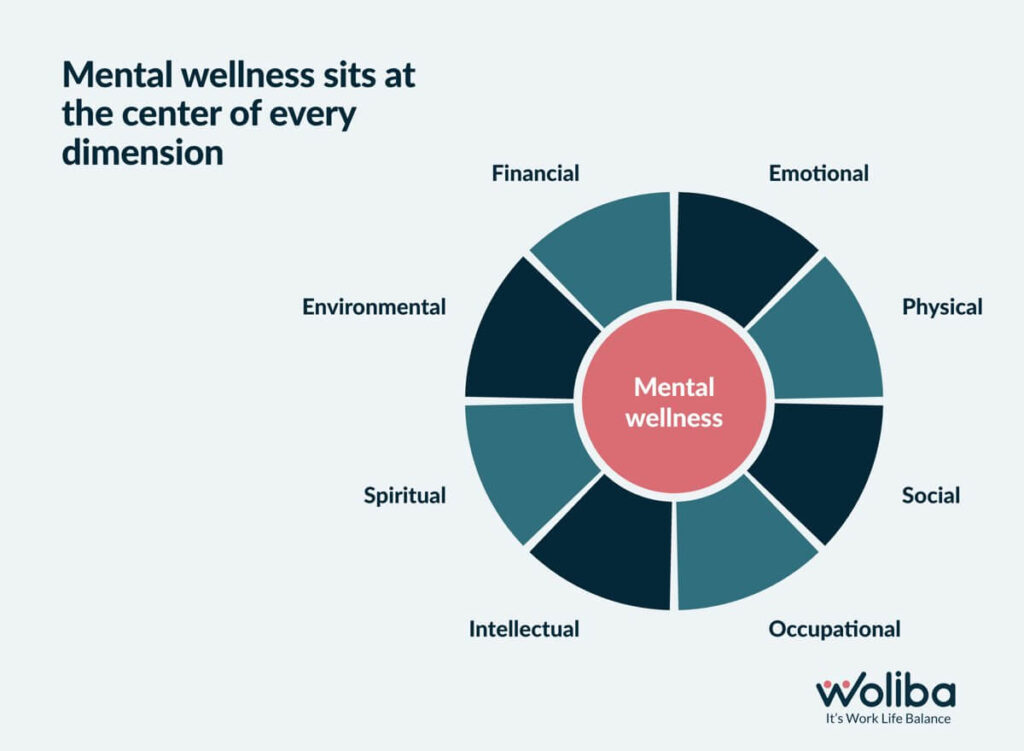
Think of it like this: an employee who sleeps poorly, worries about rent and feels isolated from their team will struggle with mental wellness no matter how many mindfulness sessions you offer. Supporting the other dimensions takes pressure off the mental one.
Emotional wellness sits closest to mental wellness. It’s about recognizing, expressing and managing feelings, and it’s often the first thing to slip under stress.
There’s also a long-term payoff. Research on wellness and longevity consistently links lower chronic stress and strong social connection to healthier, longer lives.
For employers, that translates into a healthier, more experienced workforce that stays longer.
How to measure improving mental health in the workplace
To measure progress, track a mix of outcome metrics (absenteeism, turnover, eNPS) and program metrics (participation, EAP use, survey scores). Review them quarterly. Improving mental health in the workplace is a long-term effort, so look for trends over months, not overnight changes.
| Metric | What it tells you | How often |
|---|---|---|
| Absenteeism rate | Whether people are taking more unplanned time off | Monthly |
| Voluntary turnover | Whether people are leaving, especially high performers | Quarterly |
| eNPS | How likely employees are to recommend you as an employer | Quarterly |
| Wellbeing pulse score | How people rate stress, workload and support | Monthly or quarterly |
| EAP utilization | Whether people know about and use support | Quarterly |
| Program participation | Whether initiatives are reaching people | Monthly |
One caution: don’t treat low EAP use as a win. It usually means people don’t know about it or don’t trust it. Rising use after an awareness campaign is a good sign.
How Woliba Supports Mental Wellbeing at Work
Woliba is built to make mental wellbeing practical, proactive, and personalized. With tools that span recognition, coaching, wellness content, and real-time engagement insights, we empower HR teams to:
- Monitor employee sentiment with pulse surveys
- Deliver relevant support with curated wellness resources
- Nudge healthier habits with daily tips and reminders
- Celebrate behaviors that promote emotional resilience
- Build a culture where mental wellbeing is just part of how you do business
Whether you’re supporting remote workers, navigating change, or trying to reduce burnout, Woliba helps your organization stay mentally strong—before problems take root.
Spot burnout before it spreads
Track employee sentiment with pulse surveys and see which wellbeing initiatives are working.
Final thoughts
Mental wellness in the workplace isn’t built with a single app, workshop or awareness week. It’s built in everyday decisions: how much work people carry, how managers respond when someone struggles, and whether good work gets noticed.
Start small. Fix one broken process, train one group of managers, launch one recognition habit. Then measure, listen and keep going. The companies that get this right won’t just have healthier employees. They’ll have stronger, more loyal teams that do their best work.