


Most employee rewards fail for one reason: they are generic. A $25 gift card sent to everyone after a busy quarter gets a polite “thanks” and is forgotten by Friday. The same $25, spent on something that person actually cares about and given right after the work happened, gets remembered for months.
This guide is written for HR managers, People Ops leads and founders who need rewards that work on a real budget. You’ll find 75 employee reward ideas sorted by cost, ideas for remote and hybrid teams, a table to match each reward to the right person, and the mistakes that quietly waste reward budgets.
TL;DR: 5 reward ideas to start with this week
- A specific thank-you from a senior leader. Free, and it carries more weight than most gift cards.
- A “take Friday afternoon off” pass. Low cost, and time is the reward most employees say they want.
- A learning budget they control. $50 to $150 for a course or book of their choice signals you’re investing in their future.
- Choice-based gift cards. Let people pick from a catalog instead of guessing what they’d like.
- Public recognition tied to a company value. It rewards the person and shows everyone else what good work looks like.
Why Rewarding Employees Matters
Rewards are a retention tool, not a perk. Gallup and Workhuman tracked nearly 3,500 employees from 2022 to 2024 and found that people who received high-quality recognition were 45% less likely to have left their jobs and 65% less likely to be actively looking for a new one.
Leaders are catching on. In the same research, 42% of senior leaders strongly agreed their organization values recognition in 2024, up from 28% in 2022. The catch is the word “high-quality.” A reward only works when it feels personal, timely and earned, which is what every idea below is built around.
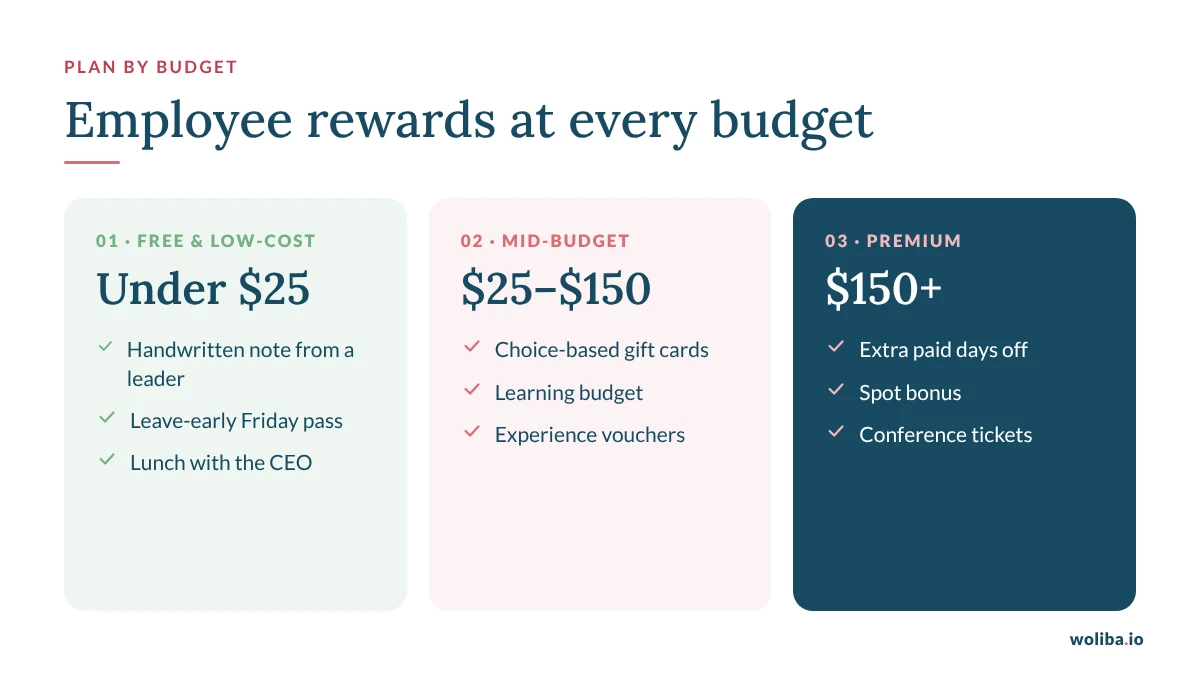
Free and Low-Cost Employee Reward Ideas (Under $25)
The most effective rewards often cost nothing. What makes them work is specificity: naming exactly what the person did and why it mattered.
Recognition rewards
1. A handwritten note from a senior leader. Three sentences on what they did and the impact it had. Employees keep these for years.
2. A specific shout-out in an all-hands meeting. Skip “great job, team.” Say “Maria rebuilt the onboarding checklist and cut new-hire questions in half.”
3. A message to their manager’s manager. Copy the employee. It shows the praise is traveling upward, not staying in the team.
4. A LinkedIn recommendation. It’s public, permanent and helps their career, which makes it unusually meaningful.
5. A spotlight in the company newsletter or Slack channel. Include a photo and a short Q&A so colleagues get to know them.
6. A peer-nominated “kudos” post. Let colleagues nominate each other. Peer recognition often lands harder than manager praise because it’s unexpected.
7. A thank-you note to their family. For someone who worked long hours on a big launch, a note home acknowledging the sacrifice goes a long way.
Time and flexibility rewards
8. A “leave early Friday” pass. Time is the reward most people value and the one HR teams most often overlook.
9. A late-start morning. Let them start at 11 a.m. after a week of late nights.
10. A “skip one meeting” pass. Small, a bit playful, and genuinely appreciated in meeting-heavy cultures.
11. A no-meeting day of their choice. A full day of focus time for deep work.
12. Flexible schedule for a week. Let them set their own hours for five days.
13. A birthday or work-anniversary day off. Simple to set up as a policy, and it rewards loyalty automatically.
Growth and status rewards
14. Choice of their next project. For high performers, autonomy is often worth more than a gift card.
15. Lunch with the CEO or a senior leader. Access and visibility are powerful rewards for career-focused employees.
16. Leading a meeting or presenting to leadership. A stretch opportunity that doubles as recognition.
17. A mentorship pairing. Connect them with a leader they want to learn from.
18. Ownership of a new initiative. Trust is a reward. Handing someone a project to run signals you believe in them.
Small treats
19. Their favorite coffee or snack, delivered to their desk. Knowing their exact order is the point; it proves you pay attention.
20. A prime parking spot for a month. A classic for a reason, especially at offices where parking is tight.
Mid-Budget Employee Reward Ideas ($25–$150)
This is the sweet spot for most companies with 50 to 1,000 employees: meaningful enough to feel like a real reward, affordable enough to give often.
21. Choice-based gift cards. Let employees pick from a catalog of brands instead of guessing. Choice removes the risk of a reward nobody uses.
22. Experience vouchers. A cooking class, rock-climbing session or spa visit. Experiences create memories that a product rarely does.
23. Dinner for two at a local restaurant. It rewards the employee and acknowledges the people who support them at home.
24. Team lunch, their pick. Let the person being rewarded choose the restaurant for the whole team.
25. A learning budget. $50 to $150 toward a course, certification prep or books of their choice.
26. A subscription box. Coffee, snacks, books or hobby kits, matched to their interests, for three months.
27. Streaming or app subscriptions. A year of a meditation app, audiobook service or language-learning app.
28. Tickets to a game, concert or show. Two tickets, so they can bring someone.
29. Wellness rewards. A fitness class pack, massage, quality water bottle or running shoes.
30. A charitable donation in their name. Let them pick the cause. This works especially well for purpose-driven employees.
31. Branded swag they’d actually use. A good backpack or jacket, not another stress ball.
32. Desk upgrades. A plant, a better desk lamp, a monitor stand or noise-cancelling earbuds.
33. A home-cooked meal delivery kit. A week of meal kits during a crunch period takes one chore off their plate.
34. A professional headshot session. Useful, a little flattering and career-focused.
35. Points-based rewards. Give points they can save up and redeem for something bigger. This turns small, frequent recognition into a reward people can plan around.
Premium Employee Reward Ideas ($150+)
Save these for major milestones: a big launch, a work anniversary, a year of standout results. Used too often, they lose their impact.
36. Extra paid days off. Two or three bonus PTO days are among the most valued rewards at any budget level.
37. A spot bonus. A one-time cash bonus given soon after exceptional work. Speed matters as much as the amount.
38. Conference tickets. Pay for registration and travel to an industry event they’ve been wanting to attend.
39. A weekend getaway or staycation. A hotel voucher for two nights, ideally paired with a day off.
40. A tech upgrade. New headphones, a tablet or a better laptop for their role.
41. A certification or course fully paid. Bigger professional credentials like project management or HR certifications.
42. Profit-sharing or a performance pool. Ties rewards directly to company results, so everyone shares in the wins.
43. A sabbatical for long-tenured employees. Two to four weeks of paid leave after five or more years of service.
44. A personal coach. Several sessions with a career, leadership or wellness coach.
45. An all-expenses-paid experience. A cooking retreat, a sporting event trip or a bucket-list experience of their choice.
A quick note on taxes (US). Cash and cash equivalents, including gift cards of any amount, count as taxable wages under IRS rules, so they need to run through payroll. Small, occasional non-cash items, like a holiday turkey or event tickets now and then, can often qualify as tax-free “de minimis” benefits. Check with your payroll provider or accountant before launching a program.
Reward Ideas for Remote and Hybrid Employees
Remote employees are easy to forget because their work happens out of sight. The fix is rewards that travel well and recognition that happens where they already work, like Slack or Teams.
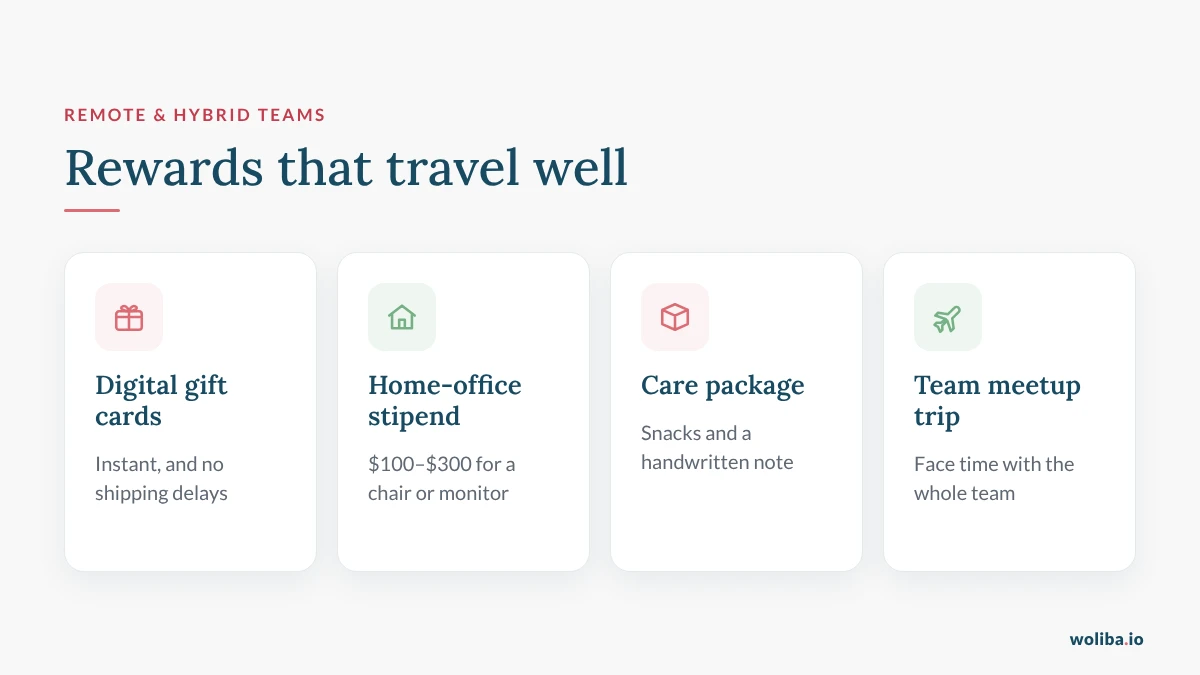
46. Digital gift cards. Instant, easy to send across states or countries, and no shipping delays.
47. A home-office stipend. $100 to $300 toward a chair, monitor or better lighting.
48. Food delivery credit. Lunch on the company during a busy week, delivered to their door.
49. A care package. Snacks, a handwritten note and a small item tied to their interests, shipped home.
50. A virtual celebration. A 15-minute video call where teammates share what the person did well. Keep it short and genuine.
51. A coworking space day pass. A change of scenery for people who are tired of the kitchen table.
52. A paid trip to headquarters or a team meetup. For fully remote employees, face time with the team is itself a reward.
53. Flexible hours across time zones. Let them protect their mornings or evenings for a month. For remote workers, control over their schedule is often the top reward.
Team Reward Ideas
When a result came from the whole team, reward the whole team. Singling out one person for group work can quietly damage morale.
54. A team outing. Bowling, an escape room or a cooking class during work hours.
55. A team volunteer day. Paid time off to volunteer together at a cause the team chooses.
56. A celebration lunch or happy hour. Simple, social and easy to organize the same week as the win.
57. A team budget they control. Give the team $50 per person and let them decide how to spend it together.
58. A milestone trophy. A fun, physical trophy that moves from team to team each quarter.
59. An early finish for the whole team. Everyone logs off at 2 p.m. on Friday after a big delivery.
60. A team wellness challenge with a prize. A friendly step or habit challenge, with a group reward when the team hits its goal.
Fun and Unique Employee Award Ideas
Award titles beat “Employee of the Month” because they reward specific behaviors. Pair each one with a small prize, a digital badge or a spot on a recognition wall.
61. The Problem Crusher. For the person who solved the issue everyone else had given up on.
62. Calm in the Chaos. For keeping the team steady during a stressful week.
63. The Customer Hero. For going beyond the script to help a customer.
64. The Unsung Hero. For essential behind-the-scenes work nobody usually sees.
65. The Bridge Builder. For connecting teams that don’t normally work together.
66. The Mentor Award. For helping a colleague grow or onboarding a new hire well.
67. The Idea Machine. For a suggestion that changed how the team works.
68. The Clutch Player. For delivering under a tight deadline.
69. The Culture Keeper. For making the workplace better through small, everyday kindness.
70. The Wellness Champion. For encouraging colleagues to take breaks, move more or protect their time off.
Good Prizes for Workplace Contests and Competitions
Match the prize to the effort. A one-week sales sprint deserves a smaller prize than a quarter-long challenge, and a mismatch in either direction feels off.
71. A bonus PTO day. The prize nearly everyone wants, regardless of role.
72. A gift card from a catalog of their choice. Easy to scale and works for every participant.
73. A “boss for a day” experience. The winner sets the agenda for a team meeting or picks the team lunch.
74. A charity donation in the winner’s name. Works well for wellness and volunteering challenges.
75. A traveling trophy plus bragging rights. Low cost, high fun, and it keeps the competition going into the next round.
How to Choose the Right Reward
The best reward depends on the person, not the budget. Use this table to match what motivates someone with rewards that fit, then ask them directly when you’re unsure.
| Employee type | What motivates them | Rewards that fit | Rewards to avoid |
|---|---|---|---|
| Private or introverted | Quiet appreciation | Handwritten note, extra PTO, gift card | Being called on stage at an all-hands |
| Career-focused | Growth and visibility | Learning budget, leadership lunch, stretch project | Generic swag |
| Social | Connection | Team lunch, outing, public shout-out | Solo rewards with no audience |
| Busy parent or caregiver | Time and flexibility | Leave-early pass, flexible week, meal kits | Evening or weekend events |
| Purpose-driven | Meaning and impact | Charity donation, volunteer day, culture award | Luxury items |
| Remote employee | Inclusion | Digital gift card, home-office stipend, team meetup trip | Office-only perks like parking |
| Competitive | Winning and status | Contests, leaderboards, trophies, points | Equal-for-everyone rewards only |
Tip: Add a simple “reward preferences” question to onboarding: “How do you like to be recognized?” It takes 30 seconds and removes the guesswork for years.
Real Examples: Reward Programs That Worked
Gilsbar: combining recognition, rewards and data. Insurance company Gilsbar (51–200 employees) used recognition and rewards alongside wellness challenges on Woliba. In its first program year, it saw a 406% engagement lift and a 90% challenge participation rate (read the Gilsbar story). The lesson: rewards drive participation most when they’re tied to clear, visible goals.
What a simple program can look like (example). Here’s how a 120-person company could set up a starter program on about $40 per employee per quarter:
- Managers get a small monthly budget for spot rewards, given within a week of the work.
- Peers can nominate each other for one of the fun awards above each month.
- Every work anniversary earns a day off.
- One quarterly team challenge ends with a team reward when the goal is hit.
The structure matters more than the spend. Frequent, specific, small rewards outperform one large annual award.
Mistakes to Avoid When Rewarding Employees
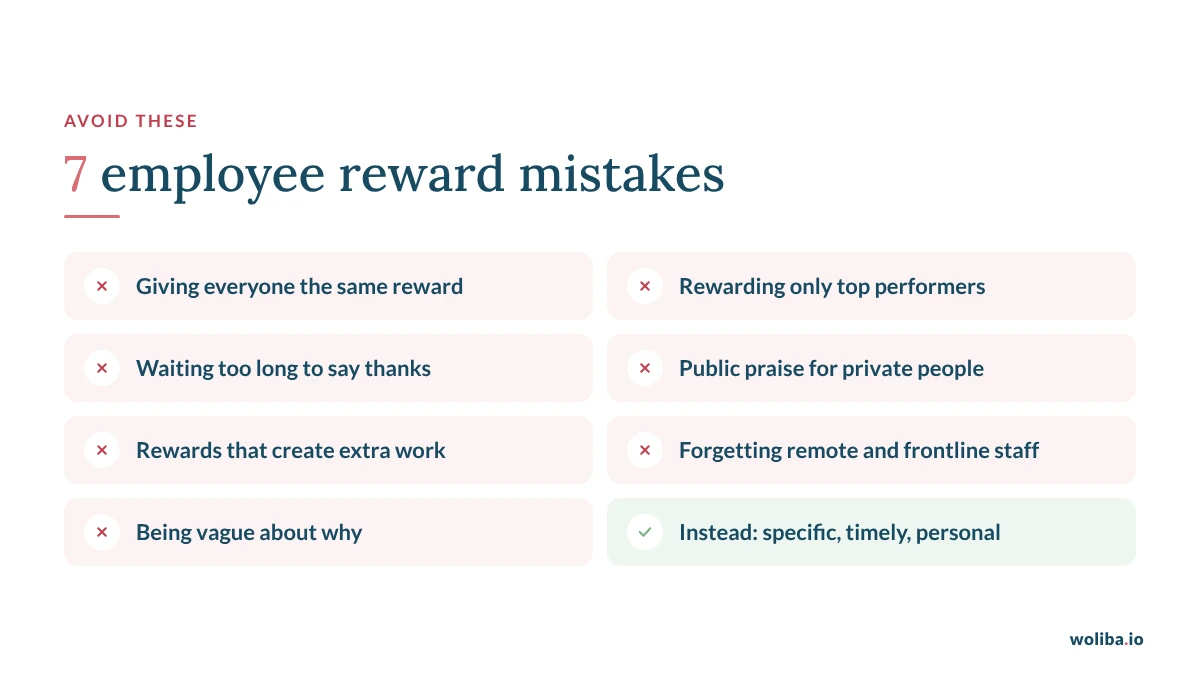
Giving everyone the same reward. A reward that fits everyone fits no one. Personal beats expensive.
Rewarding only top performers. If the same three people win every month, everyone else stops trying. Reward effort, improvement and behaviors, not just results.
Waiting too long. A reward three months after the work feels like an afterthought. Aim for within a week.
Public praise for private people. Some employees dread the spotlight. Ask how they prefer to be recognized.
Rewards that create extra work. A mandatory after-hours celebration is not a reward for a tired team.
Forgetting remote and frontline workers. If your rewards only work at headquarters, a big part of your workforce is left out.
Being vague about why. “Thanks for your hard work” teaches nothing. Name the action and its impact so others know what to repeat.
Recognition, rewards and well-being in one platform.
No credit card required
Team leaderboard
Example-
1. Operations 412,880
-
2. Finance 389,145
-
3. Customer Success 351,902
Steps this week
Conclusion
You don’t need a big budget to reward employees well. Start with the free ideas this week, add a few mid-budget rewards each quarter, and save premium rewards for the moments that matter most. Above all, make every reward specific, timely and personal.
If managing rewards across teams, locations, and time zones is getting hard to track, Woliba’s reward management lets you send gift cards, points, badges and charitable donations from one place. Start a free 21-day trial to see how it works with your team.