

Key Takeaways
- Workplace wellness in 2026 is shifting from a stand-alone perk to enterprise-wide integration — embedded into workflows, manager training, and risk management, not just a benefits line item.
- Prevention and personalization are replacing generic, one-size-fits-all programs — from early health screenings to a spectrum of mental health support options employees can actually choose from.
- GLP-1 medications are forcing a major rethink of benefits strategy, with companies needing a clear, documented approach rather than reacting once costs spike.
- AI is moving from buzzword to practical tool — helping HR teams spot burnout and disengagement patterns weeks before they’d show up in an exit interview.
- Wellbeing ROI is now non-negotiable — HR leaders are expected to show clear metrics linking wellness spend to real outcomes like retention, absenteeism, and healthcare costs.
- A new executive role is emerging — the Chief Wellbeing Officer — signaling that wellbeing decisions increasingly need real seniority and cross-functional authority.
- Managers are becoming the frontline of employee wellbeing, trained to spot early signs of burnout long before HR would ever see them.
- Integrated platforms are replacing scattered point solutions, giving both HR and employees one place for wellness, recognition, rewards, and surveys instead of five disconnected tools.
Workplace wellness has evolved far beyond step challenges and fruit bowls in the break room. In 2026, the most forward-thinking organizations are embedding wellness into the core of how they operate — backed by real data, supported by leadership, and tailored to individual needs.
The numbers back this up. PwC’s 2025 Employee Financial Wellness Survey found that financially stressed employees are significantly more likely to lose focus and productivity at work. Gallup’s 2025 State of the Global Workplace problem continues to show a direct link between employee physical team-building, engagement, and business performance. And according to the Global Wellness Institute, the defining shift for 2026 is integration — leading wellness companies are no longer treating wellbeing as a side project, but building it directly into how they manage risk, train managers, and run the business.
As burnout, rising healthcare costs, and retention struggles stay top of mind for HR leaders, wellness challenges has moved from “nice to have” to business-critical. Here are the trends shaping where it’s headed next — and how companies can get ahead of them.
1. Preventive Care Takes Center Stage
The U.S. spends more on healthcare than any other country, yet ranks poorly on health outcomes. A big reason why: a reactive approach to care. In 2026, companies are stepping in earlier with wellness strategies built around prevention, not just treatment after the fact.
What it looks like:
- Early screenings and health risk assessments
- Access to personalized health education
- Nutrition, movement, and sleep guidance
- Support for managing chronic conditions before they escalate
✅ Worth knowing: The CDC estimates that 90% of the nation’s $4.1 trillion in annual healthcare spending goes toward people managing chronic and mental health conditions. Prevention isn’t just healthier — it’s significantly cheaper.
Platforms like Woliba support this shift by offering wellness content and challenges built around long-term behavior change, not short-term wins.
Use case: A logistics company with a largely field-based workforce partners with a mobile health provider to run quarterly biometric screenings at depot locations. Employees flagged for early-stage risk factors get automatically enrolled in a 6-week nutrition and movement program — catching issues months before they’d show up in a claims report.
Why it matters:
- For HR/Employers: Catching health risks early is dramatically cheaper than treating chronic conditions later — directly reduces long-term healthcare claims and insurance premium growth.
- For Employees: Early screenings and guidance mean health issues get caught before they become serious, without employees having to seek it out or pay out of pocket to find out something’s wrong.
2. GLP-1 Medications Are Reshaping Benefits Strategy
This is one of the fastest-moving conversations in healthy workplace wellness right now. GLP-1 medications (used for weight management and diabetes) have become a major cost and strategy consideration for employers heading into 2026 — and most benefits teams are still figuring out how to respond.
What companies are weighing:
- Whether and how to cover GLP-1 medications in health plans
- Pairing medication coverage with nutrition and lifestyle support, not offering it in isolation
- Rising overall healthcare costs tied to specialty drug spending
- Employee demand for transparent, judgment-free conversations about weight and metabolic health
This isn’t a trend companies can sit out. Whatever your organization decides, having a clear, documented approach — rather than an ad hoc one — is quickly becoming table stakes for 2026 benefits planning.
Use case: A mid-size financial services firm adds GLP-1 coverage to its health plan but pairs it with mandatory access to a dietitian and a low-impact workplace challenge. HR frames it internally as “medical support plus lifestyle support,” avoiding the perception that the company is just paying a pharmacy bill and calling it wellness.
Why it matters:
- For HR/Employers: Getting ahead of this now — rather than reacting once costs spike — gives HR control over budget planning and avoids scrambling to explain a sudden benefits cost increase to leadership.
- For Employees: Access to effective medical support for weight and metabolic health, paired with real lifestyle support rather than judgment, removes a major source of stigma and out-of-pocket cost.
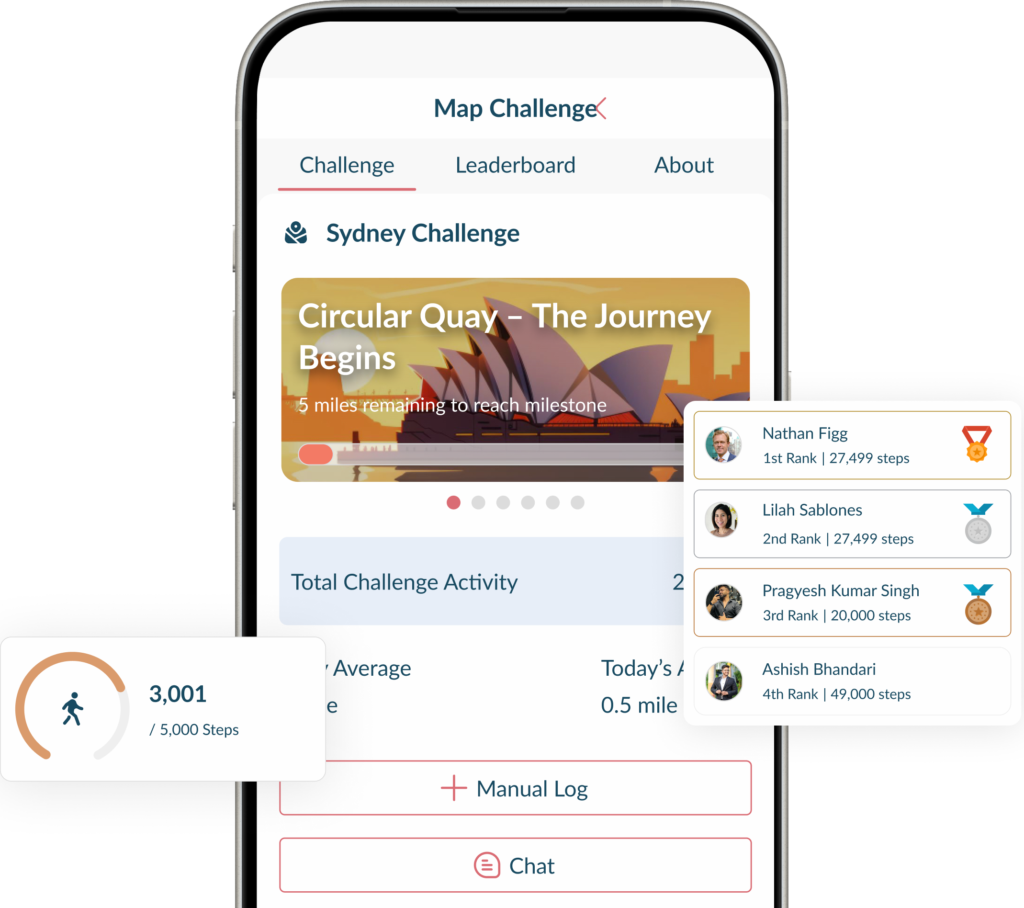
See how one platform turns these trends into results.
Woliba starts from just $2/mo/employee.
3. Mental Health Support Gets More Personalized
Mental health isn’t one-size-fits-all, and employers are finally catching up. In 2026, the strongest wellness programs offer a spectrum of support — so employees can choose what actually works for them, rather than being funneled into a single option.
What’s trending:
- On-demand access to mindfulness, therapy, and stress-reduction content
- Peer-to-peer support groups and community tools
- AI-powered check-ins that help surface early signs of burnout or disengagement
- Customizable paths for improving emotional wellbeing, not a single fixed program
Expect more companies to move beyond a standalone EAP line item and toward tools that meet people where they actually are — whether that’s a 3-minute breathing exercise or a deeper coaching conversation about wellness.
Use case: A tech startup replaces its single, generic EAP hotline with three tiers of support employees can choose from: a 3-minute guided breathing app for daily stress, a peer support Slack channel for connection, and confidential 1:1 therapy access for anyone who needs deeper support. Usage triples compared to the old one-size-fits-all EAP.
Why it matters:
- For HR/Employers: A single EAP hotline has notoriously low utilization; offering a spectrum of options increases actual usage, which is what protects against burnout-driven turnover and absenteeism.
- For Employees: People process stress differently — a menu of options (quick tools vs. deep support) means employees can get help in a way that actually fits their situation, instead of a one-size-fits-all program that doesn’t feel relevant to them.
4. Inclusivity and Accessibility Become the Standard
In 2026, DEI doesn’t stop at hiring — it extends fully into wellness. Inclusive programs recognize that employees have different backgrounds, abilities, and access levels, and the trend is toward equitable experiences where everyone can genuinely participate.
This includes:
- Culturally relevant wellness content
- Multilingual access
- Inclusive movement options for all bodies and abilities
- Time zone–friendly programming for global and distributed teams
- Support for caregiver stress, financial wellness, and neurodiversity
Companies embracing this see measurably higher participation and stronger connection across teams — inclusive wellness isn’t just the right thing to do, it’s the more effective thing to do.
Use case: A global consulting firm redesigns its wellness challenge calendar to run in three time zones instead of one, translates challenge instructions into five languages, and swaps a step-count challenge (which excluded employees with mobility limitations) for a flexible “minutes of movement, your way” format. Participation among international offices jumps from 20% to over 60%.
Why it matters:
- For HR/Employers: Programs that only work for a subset of employees show weak participation numbers company-wide — inclusive design is what actually drives the engagement metrics HR is measured on.
- For Employees: Every employee — regardless of ability, language, location, or background — gets a genuine chance to participate, rather than being quietly excluded by default program design.
5. AI Moves From Buzzword to Everyday Tool
Artificial intelligence is becoming a genuine ally in workplace wellness — not a replacement for human connection, but a way to make support more timely and relevant. In 2026, AI is helping employers spot patterns, flag concerns early, and personalize support at a scale that wasn’t possible before.
How it’s being used:
- Identifying trends in participation, stress signals, or recognition gaps
- Recommending tailored wellness or leadership coaching
- Automating gentle nudges that encourage healthy habits
- Turning survey and program data into clear, actionable strategy
This tech-enabled approach means wellness support can adjust in real time, rather than waiting for an annual survey to reveal a problem that’s already six months old.
Use case: An HR team at a 2,000-person manufacturing company uses AI-driven survey analysis to spot a burnout pattern isolated to one regional plant — weeks before it would have shown up in exit interviews. Leadership steps in early with targeted manager coaching, and turnover on that team drops the following quarter.
Why it matters:
- For HR/Employers: AI surfaces burnout and disengagement patterns weeks before they’d show up in an exit interview or annual survey, giving HR a real chance to intervene instead of finding out too late.
- For Employees: Support becomes more timely and relevant — a nudge or resource shows up when it’s actually needed, rather than employees having to search for help on their own during a hard week.
6. Wellbeing ROI Becomes Non-Negotiable
Gone are the days of guessing whether a wellness program “worked.” In 2026, HR leaders are expected to show clear metrics — and the vendors and platforms they use are expected to make that possible.
Top wellness metrics companies are tracking in 2026:
- Participation and engagement rates over time
- Survey insights tied to stress, satisfaction, and wellbeing
- ROI metrics like reduced turnover, absenteeism, and healthcare costs
- Connections between wellness, recognition, and overall productivity
With a wellness platform that unify engagement, coaching, and wellness data in one place, companies can finally see the full picture — and adjust their strategy with actual confidence instead of a hunch.
Use case: A CHRO walks into a board meeting with a single dashboard showing that wellness program participants have 18% lower absenteeism than non-participants, translating the program from a cost line into a documented retention strategy — turning what used to be a defensive budget conversation into a straightforward business case.
Why it matters:
- For HR/Employers: Clear ROI data turns wellness from a budget line HR has to defend every year into a business case leadership actively supports — protecting the program (and HR’s credibility) long-term.
- For Employees: Programs backed by real data are more likely to get renewed, improved, and properly funded, rather than being the first thing cut when budgets tighten.
7. The Rise of the Chief Wellbeing Officer
A newer but fast-growing trend: more organizations are formally elevating wellbeing to the leadership table by creating a dedicated Chief Wellbeing Officer (or similar executive) role, rather than leaving wellness as a sub-function buried inside HR.
Why this is happening now:
- Wellbeing has become tightly linked to measurable business outcomes (retention, healthcare cost, productivity), which means it increasingly needs executive-level ownership
- A dedicated leader can connect nutritional wellbeing strategy across HR, risk, real estate, and operations — areas that rarely talk to each other otherwise
- It signals to employees, investors, and boards that wellbeing is a genuine strategic priority, not a side initiative
Not every company needs a C-suite title for this, but the underlying shift — mental wellbeing decisions getting real seniority and cross-functional authority — is one worth watching closely in 2026.
Use case: A healthcare organization appoints its first Chief Wellbeing Officer, who sits in on real estate planning meetings to influence office design, joins risk management reviews to flag burnout as an operational risk, and reports wellbeing metrics directly to the board — something that used to be scattered across three separate departments with no single owner.
Why it matters:
- For HR/Employers: A dedicated owner means wellbeing decisions get made with real authority and cross-functional coordination — instead of HR trying to influence real estate, risk, and operations decisions with no formal seat at those tables.
- For Employees: Wellness initiatives feel more consistent and better resourced when there’s genuine executive ownership behind them, rather than fragmented efforts across departments that don’t talk to each other.
8. Small Shifts, Big Impact: Micro-Moments
Not everyone has time for a 21-day yoga challenge. One of the clearest 2026 trends is micro-moments — quick, accessible actions employees can take throughout the day to support their well-being without needing to carve out a big block of time.
Examples include:
- A 60-second breathing exercise before a big meeting
- “Stand up and stretch” nudges every hour
- A quick gratitude message during lunch
- 3-minute workouts or meditation sessions between tasks
Habit stacking — pairing these small moments with routines people already have — makes wellness feel like a natural part of the workday instead of one more thing to schedule.
Use case: A customer support team, where 30-minute wellness sessions were nearly impossible to schedule around call volume, instead rolls out a “60 seconds before you pick up” breathing prompt built into their headset software between calls. Stress survey scores improve within a month — with zero calendar disruption.
Why it matters:
- For HR/Employers: Micro-moments require almost no budget or scheduling disruption, making them one of the easiest wellness wins to roll out across teams that can’t step away for longer sessions (like shift workers or customer-facing roles).
- For Employees: Support fits into the workday that actually exists, rather than requiring employees to carve out time they don’t have — which is often the real reason wellness programs go unused.
9. Activity Challenges Get More Purposeful
Activity challenges aren’t new, but their purpose has evolved. In 2026, the strongest movement initiatives tie back to company values, charitable giving, or a broader shared mission — not just a leaderboard for its own sake.
Companies are now:
- Hosting global step challenges tied to causes, like mental health awareness
- Offering movement incentives connected to team milestones
- Encouraging friendly interdepartmental competition to build community
- Using movement challenges as part of onboarding, DEI, or recognition strategy
Wellness challenges work best when they feel personal and purposeful — not just another company-wide competition with a gift card at the end.
(Looking for specific challenge formats to run? See our full guide to wellness challenge ideas for employees.)
Use case: Instead of a generic step challenge, a retail chain runs a “Steps for Scholarships” challenge where cumulative team mileage unlocks company-funded scholarship donations to employees’ children. Participation more than doubles compared to the previous year’s plain leaderboard challenge.
Why it matters:
- For HR/Employers: Purpose-driven challenges consistently outperform plain leaderboard competitions on participation, giving HR better engagement numbers without needing a bigger prize budget.
- For Employees: Employees are far more motivated by a challenge that ties to something bigger than themselves — a cause, a milestone, a shared goal — than by chasing a leaderboard rank alone.
10. Managers Become Wellbeing Allies
Managers shape how employees experience work more than almost anyone else. A supportive manager improves engagement, reduces burnout, and builds team resilience — which is why, in 2026, smart companies are training managers directly, not just offering perks and hoping they trickle down.
Trending approaches:
- Manager toolkits for mental health check-ins
- Training on spotting burnout early and offering real accommodations
- Coaching that builds emotional intelligence and communication skills
- Equipping managers to model balance and healthy boundaries themselves
Wellbeing coaching isn’t just for executives anymore — it’s becoming a core skill expected at every level of leadership.
Use case: A construction company trains all site supervisors — not just office managers — on a simple 3-question daily check-in script for crew wellbeing. Supervisors flag two early burnout cases in the first month that would previously have gone unnoticed until a resignation letter showed up.
Why it matters:
- For HR/Employers: Managers see burnout signals first, long before HR does — training them to notice and respond turns every manager into an early-warning system instead of relying on HR to catch problems company-wide.
- For Employees: A manager who checks in genuinely and knows how to respond to stress builds far more day-to-day trust than any company-wide wellness perk ever could.
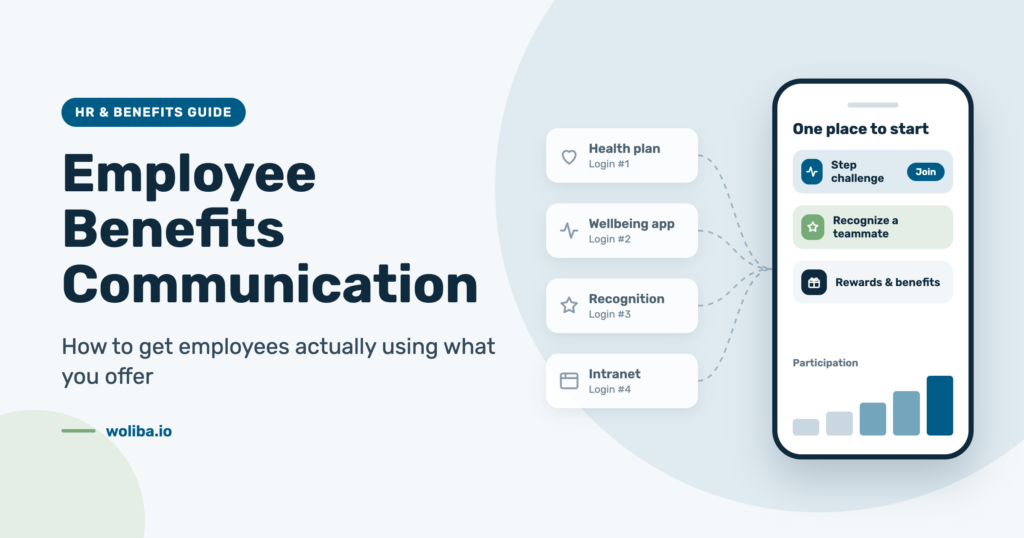
11. Integrated Platforms Replace the Tool Pile-Up
Employees are tired of juggling five different apps and logins just to access their benefits. In 2026, integration is the priority. The most effective companies bring wellness, recognition, surveys, rewards, and coaching together into one seamless experience.
Benefits of integration:
- Easier access and meaningfully higher participation
- Unified data for HR leaders, instead of a dozen disconnected reports
- More personalized experiences for employees
- Less admin burden and vendor fatigue for the teams running these programs
Platforms like Woliba bring all of this together in one place, so companies aren’t stitching wellness together from a dozen different vendors and hoping the pieces line up.
Use case: An insurance company consolidates five separate vendors — a survey tool, a recognition app, a wellness challenge platform, a rewards catalog, and an events calendar — into one platform. HR cuts weekly admin time by several hours, and for the first time can see how recognition activity and wellness participation actually correlate.
Why it matters:
- For HR/Employers: Fewer vendors means less admin time, unified data instead of disconnected reports, and lower total cost — freeing HR to focus on strategy instead of logins and vendor management.
- For Employees: One place to access everything — personal challenges, recognition, rewards, resources — removes the friction that usually kills participation when wellness is scattered across five different corporate wellness apps.
12. Purpose-Driven Wellness Reinforces Culture
Wellness isn’t just a program — it’s a signal of what a company actually values. In 2026, organizations are using wellness initiatives to reinforce culture, build trust, and connect people to a shared mission, rather than running generic, one-size-fits-all campaigns.
Companies are focusing on:
- Aligning wellness with core values like integrity, growth, or empathy
- Celebrating milestones and small wins to reinforce real progress
- Highlighting genuine employee stories instead of stock-photo campaigns
- Making sure leadership visibly models the behavior, not just the messaging
When employees can tell wellness is authentic rather than performative, it changes how they show up — and how long they stay.
Use case: A nonprofit ties its wellness program directly to its mission by letting employees earn “impact points” through healthy habits, which the company converts into real donations to causes employees choose. Wellness participation and employee-reported sense of purpose both rise in the same engagement survey cycle.
Why it matters:
- For HR/Employers: Wellness tied authentically to company values becomes a genuine culture and retention lever, not just a perk line on a benefits sheet — it’s something HR can point to as proof of what the company actually stands for.
- For Employees: When wellness clearly reflects real company values instead of feeling like a checkbox exercise, it builds authentic trust — and trust is consistently one of the strongest predictors of whether someone stays.
The Future of Workplace Wellness
The future of workplace wellness is data-driven, deeply personal, and strategically integrated. It’s no longer about checking a box — it’s about building a workplace where people can genuinely thrive, physically, mentally, and financially.
HR leaders who get ahead of these trends won’t just improve retention, engagement, and productivity. They’ll help build organizations where wellbeing isn’t the exception — it’s the standard.