

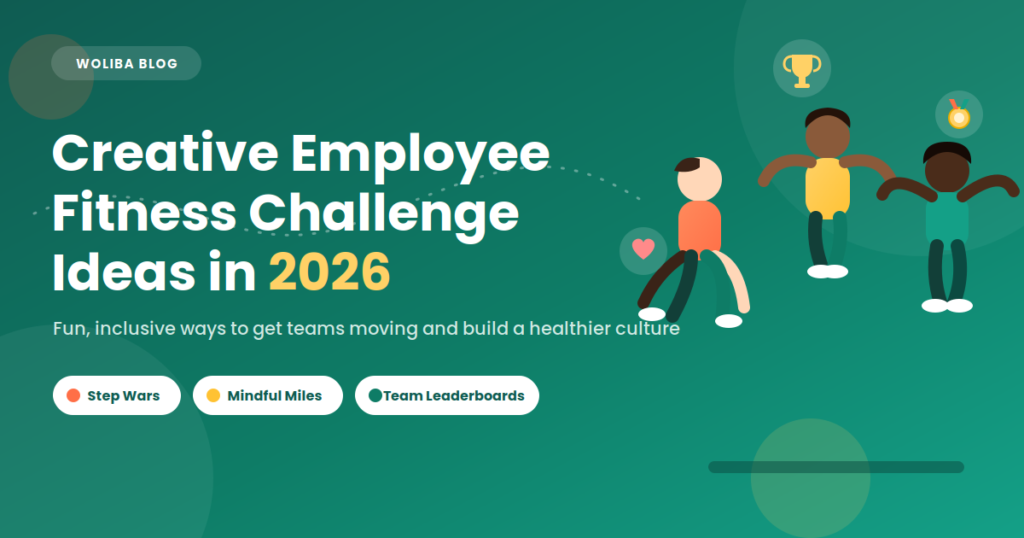

How can HR leaders consistently keep remote, hybrid, and on-site teams active without adding administrative burnout? Leveraging a modern employee wellness platform to launch creative employee fitness challenge ideas bridges the engagement gap, transforming routine workplace wellness into high-participation, data-driven team habits. Employers and global HR leaders are spending more on employee health than ever—and the shift is far from cosmetic. Rising stress levels, sedentary routines, and escalating healthcare costs are forcing People Operations to move beyond one-off gym discounts and annual health screening camps.
To build an active workforce, wellness companies are turning to gamified physical fitness competitions. Research shows that over 91% of business leaders link corporate wellness initiatives directly to improved productivity, while a Wellhub study of HR and benefits of employee wellness revealed that 95% see a positive financial ROI, with 87% reporting a noticeable drop in healthcare costs.
However, execution is where most initiatives falter. Manual tracking through spreadsheets, endless email threads, and untrusted step counts quickly drain momentum.
This comprehensive guide covers 25 creative employee fitness challenge ideas designed for modern hybrid, remote, and on-site teams, along with a practical launch playbook to drive over 70% participation.
The Strategic Business Impact of Workplace Fitness Challenges
Workplace physical activity challenges & competitions do much more than encourage daily movement; they deliver measurable operational advantages across the business:
- Silos Break Down Naturally: Fitness challenges pair colleagues across different departments, seniority levels, and geographic locations who rarely interact in day-to-day work.
- Burnout Decreases: Short, structured movement breaks disrupt sedentary desk routines, reduce workplace stress and improving afternoon cognitive focus.
- Morale and Culture Improve: Public leaderboards, peer high-fives, and friendly competition foster a shared sense of accomplishment that spills into daily collaboration.
- Health Costs Drop: Regular low-impact exercise reduces chronic disease risks, lowers ergonomic strain complaints, and cuts unplanned sick leave.
25 Engaging Employee Fitness Challenge Ideas (Categorized)
To keep engagement high, offer diverse challenge formats that appeal to different fitness levels—from total beginners to seasoned athletes.
A. Beginner & Low-Friction Challenges (Low Pressure, High Inclusion)
1. The Daily 7,000 Step Reset
Instead of intimidating beginners with a 10,000-step goal, set an attainable baseline of 7,000 steps daily. This achievable target encourages sedentary desk workers to build momentum without feeling overwhelmed.
2. Deskercise & Micro-Mobility Breaks
Challenge employees to complete three 2-minute “active breaks” throughout the workday, such as neck rolls, seated leg lifts, doorframe stretches, or chair squats, to combat postural fatigue.
3. “Take the Stairs” Streak
Encourage office-based employees to skip elevators entirely for two weeks. Track flights of stairs climbed, using simple benchmarks like “Climb the height of the Taj Mahal or Empire State Building.”
4. The Hydration & Movement Combo
Pair physical activity with the benefits of corporate nutrition. Participants earn points by meeting daily step targets and logging 8 glasses of water daily.
5. Post-Lunch “Walk & Talk” Meetings
Encourage managers and peers to hold 15-minute 1-on-1 audio calls while walking outdoors or around the office floor, substituting sedentary video calls for active movement.
6. Ergonomic Posture & Stretch Bingo
Distribute a 5×5 digital Bingo card filled with simple wellness tasks (e.g., “Held a 30-second plank,” “Walked during lunch,” “Did 10 wrist stretches”). The first participants to complete a line win immediate raffle points.
7. Green commute Challenge
Reward employees who walk, bicycle, or use public transport (which adds walking distance) to commute to the office instead of driving alone.
B. Remote & Hybrid Team Challenges (Inclusive & Socially Connected)
8. Virtual “Walk Across the Map”
Combine individual steps into a collective team total. Set a virtual route, such as walking from Mumbai to Delhi, or San Francisco to New York, where the entire company unlocks virtual milestones as steps accumulate.
9. “Audiobook & Podcast” Step Bundling
Leverage “temptation bundling”: challenge employees to hit a daily 30-minute walk where they are only allowed to listen to their favorite podcast, audiobook, or music playlist while moving.
10. Morning Movement Photo Feed
Boost social connection across distributed teams by creating an interactive social feed where remote employees upload photos of their morning walks, sunrise runs, or yoga setups.
11. “Scientific 7-Minute” Circuit
Challenge time-poor remote teams to complete a guided 7-minute bodyweight routine (jumping jacks, wall sits, push-ups, chair step-ups) right before starting their workday.
12. Weekend Outdoor Exploration
Encourage employees to share photos and step totals from weekend hikes, park walks, or outdoor family outings, extending healthy habits beyond work hours.
13. Pet-Walking Leaderboard
Capitalize on pet owners’ routines by hosting a “Walk with Your Dog” photo and step challenge, awarding bonus points for the best canine workout selfies.
14. Mindful Movement & Breathing Sessions
Acknowledge that movement isn’t just about intense cardio. Reward employees for joining 10-minute guided breathwork or restorative yoga sessions to reduce mid-week anxiety.
C. Team-Based & Departmental Competitions (High Camaraderie)
15. Department vs. Department Step Wars
Pit Sales against Engineering or Marketing against Operations in a 3-week step contest. Rank teams by average steps per participant so smaller departments compete on equal footing with larger ones.
16. The 100-Rep Team Ladder
Teams collectively complete 100 reps of a basic bodyweight exercise (squats, lunges, or wall push-ups) throughout the day, dividing reps among members based on individual fitness levels.
17. The Cumulative Distance Marathon
Form teams of 4–5 colleagues with a shared target: collectively complete 26.2 miles (42 km) of walking, jogging, or wheelchair movement within a single calendar week.
18. Relay Step Races
A time-bound challenge where each team member is assigned a specific day of the week to “hold the baton” and maximize their step output for the team score.
19. Movement Alphabet Challenge
Assign bodyweight exercises to letters of the alphabet (e.g., A = 10 squats, B = 15-second plank). Teams “spell out” company core values daily by performing the corresponding exercise sequence.
20. Charity Movement Match
Tie employee exercise directly to corporate social responsibility (CSR). For every 100,000 steps completed company-wide, the organization donates a set dollar amount to a designated non-profit charity.
D. Advanced & High-Energy Challenges (For Fitness Enthusiasts)
21. Progressive Plank & Core Challenge
A month-long challenge where participants start with a 20-second plank on Day 1 and gradually increase time daily, aiming for a 3-minute hold by Day 30.
22. The “Active Minutes” Burn
Rather than measuring steps alone, track high-heart-rate “active workout minutes” logged via smartwatches—including cycling, swimming, rowing, or strength training.
23. Daily 30-for-30 Cardio Sprint
Challenge employees to complete at least 30 minutes of continuous moderate-to-vigorous aerobic activity every day for 30 consecutive days.
24. Weekend Warrior Elevation Challenge
Encourage participants to track elevation gain (stairs, hill walks, trail runs) over the weekend, celebrating those who tackle incline movement.
25. The Century Squat Challenge
A high-volume endurance challenge where participants aim to complete 100 bodyweight squats spaced throughout the workday for 10 straight days.
How to Structure & Run a Successful Fitness Challenge (Step-by-Step)
Launching a successful challenge requires strategic planning to ensure participation remains strong long after week one.
1. Set Duration Between 2 to 4 Weeks
Personal challenges under 14 days rarely give employees enough time to establish new habits, while challenges lasting longer than 30 days suffer from participant fatigue. A 21-to-30-day window is the sweet spot for habit building.
2. Establish Multi-Tiered Scoring
Never score challenges solely on total steps or maximum reps; doing so allows the top 5% of marathon runners to dominate the leaderboard, discouraging everyone else.
Instead, use tiered leagues (e.g., Beginner, Intermediate, Advanced) or award points based on personal consistency and percentage improvement over baseline averages.
3. Appoint Department Champions
Enlist passionate managers and team leads as “Challenge Captains.” When executives and managers actively post their workout photos and log steps, employee adoption increases significantly.
Incentives & Prize Ideas That Drive 70%+ Participation
Prizes don’t need to break your budget, but they must feel tangible and worthwhile. A combination of recognition, digital flexibility, and experiential perks delivers the highest engagement:
- High-Value Experience Prizes: Extra paid time off (a “Wellness Friday” floating day off), executive lunch passes, or covered entry fees for local fun-runs.
- Flexible Digital Gift Vouchers: E-gift cards for sporting goods stores, healthy meal subscription services, or Amazon catalog rewards.
- Custom Company Swag: Branded high-end water bottles, gym bags, athletic hoodies, or posture-correcting desk accessories.
- Charitable Donations: Allowing contest winners to direct a corporate charity grant to a cause of their choice.
Key Rule: Offer raffle tickets for consistency (e.g., “Log activity 4 out of 5 days a week”) rather than just giving prizes to top leaderboard finishers. This keeps everyday participants motivated.
Manual Tracking vs. Automated Platforms: Why Spreadsheets Fail
Many HR teams start by workplace wellness challenges manually, collecting step screenshots over Slack, tracking daily miles in Excel, and manually calculating team averages.
The Pitfalls of Manual Admin
- Administrative Nightmare: HR spends 5–10 hours a week chasing down late step submissions, fixing spreadsheet formulas, and updating PDF leaderboards.
- Data Integrity & Honor System Friction: Unverified manual data entry leads to distrust when employees feel colleagues are inflating numbers.
- Zero Real-Time Momentum: Delayed weekly updates eliminate daily friendly competition and social interaction.
How Woliba.io Automates Corporate Fitness Challenges
To scale health challenges without adding administrative burden, modern HR teams rely on a consolidated employee wellness platform.
Woliba replaces fragmented tools and spreadsheets by bringing fitness challenges, peer recognition, global rewards, and pulse feedback into one seamless health hub.
Why HR Teams Choose Woliba for Fitness Challenges:
- 1-Click Smartwatch Integration: Native syncing across Apple Watch, Garmin, Fitbit, Samsung Health, and Google Fit eliminates manual data entry.
- Automated Real-Time Leaderboards: Public team walls update dynamically, allowing employees to high-five teammates, comment on workout photos, and track department rankings live.
- Multi-Tiered Challenge Builders: Easily create step contests, active minute challenges, hydration streaks, or custom habit goals with pre-built templates.
- Automated Point & Reward Fulfillment: Challenge points automatically credit to employee digital wallets, where they can be redeemed for global gift cards and custom company perks.
- Integrated Pulse Surveys & Analytics: Track corporate wellness trends alongside real-time workforce sentiment, helping HR demonstrate clear program ROI to executive leadership.
Conclusion & Next Steps
Workplace fitness challenges should not feel like an administrative chore or a stressful obligation. When executed with diverse challenge formats, fair incentive structures, and automated technology, they turn daily movement into an engaging experience that strengthens company culture.
By moving away from manual spreadsheets and adopting an all-in-one platform like Woliba, People Operations teams can launch scalable challenges, drive 70%+ workforce adoption, and build a healthier, more connected organization.