

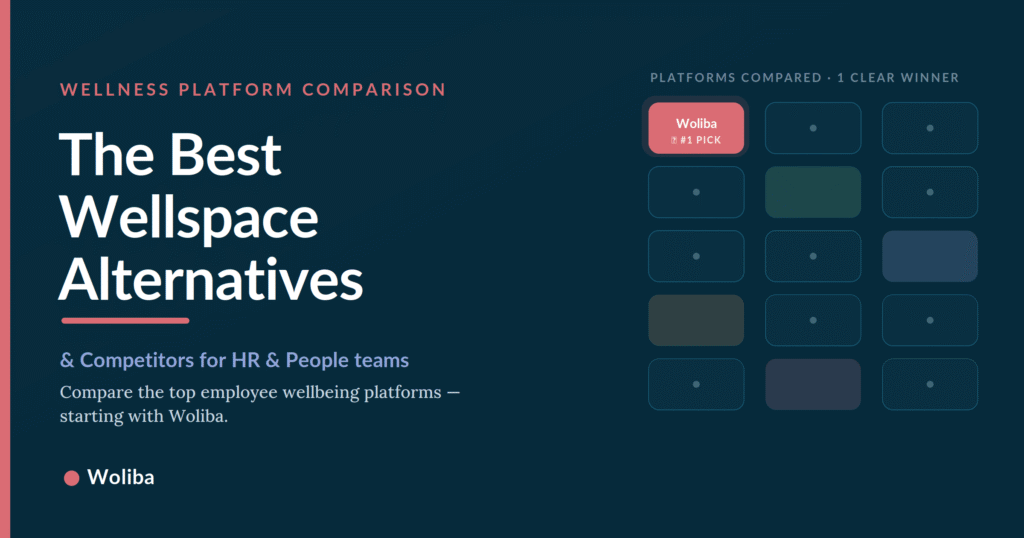

As modern organizations evaluate top employee wellness platforms in 2026, many HR leaders are actively searching for Wellspace alternatives that provide greater global scalability, broader tool consolidation, and direct health insurance navigation. Wellspace has earned a solid reputation—particularly among UK-based companies—for its holistic focus on mental health tracking, sleep monitoring, and intuitive employee well-being dashboards.
However, as international workforces expand and People Operations teams seek to streamline their software subscriptions, key operational limitations often lead companies to evaluate other options:
- Limited Tool & SaaS Consolidation: Wellspace focuses primarily on well-being metrics and mental health tracking. It lacks built-in capabilities for peer-to-peer social recognition, pulse feedback surveys, and automated global reward fulfillment within a single dashboard.
- Geographic & Integration Footprint: While Wellspace performs well across European markets, North American enterprises often require deeper native integrations with US health insurance providers, regional biometric screeners, and broader US retail gift card catalogs.
- Desire for All-in-One Culture Hubs: Modern distributed teams want more than periodic sleep or mood check-ins—they demand an all-in-one platform where daily activity challenges, peer high-fives, reward points, and sentiment surveys live together under one login.
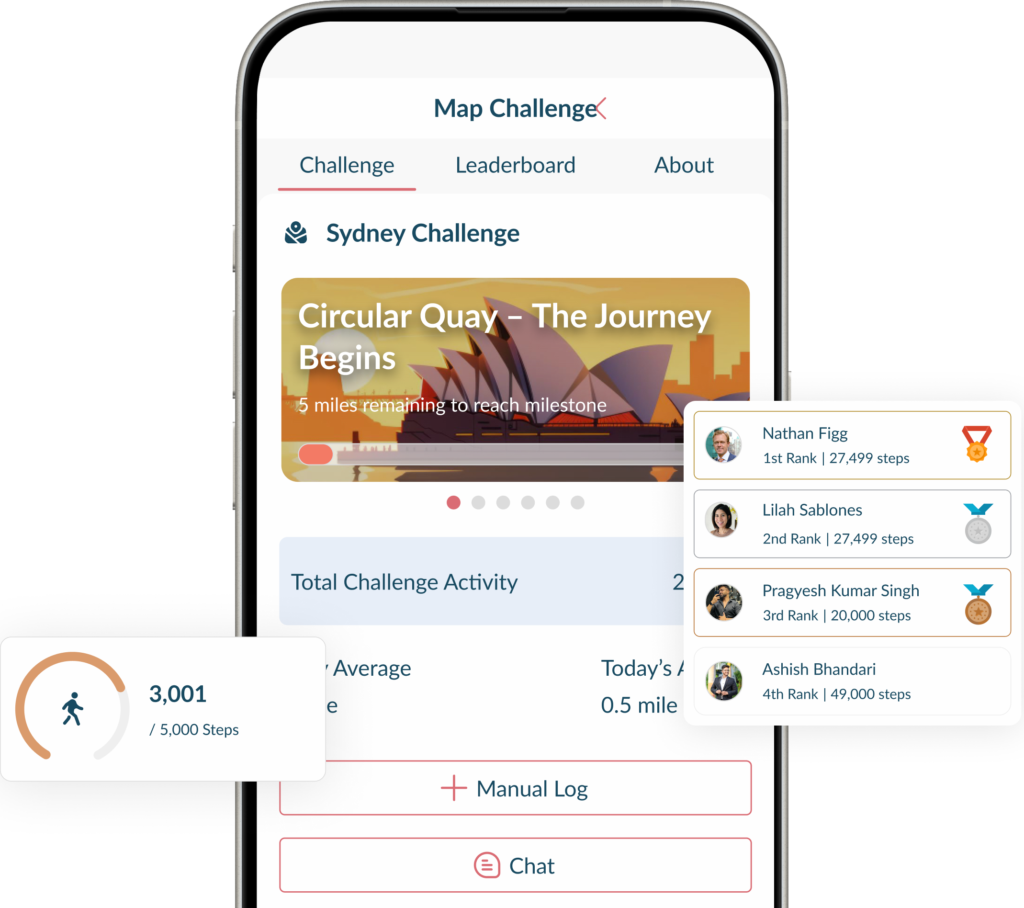
Best Wellspace Alternative – Woliba
Woliba starts from just $2/mo/employee.
Why look for a Wellspace alternative?
To be fair to Wellspace: it does mental-health-led wellbeing well, and the expert-led workshops are a genuine strength for teams that want guided learning. It’s a credible choice. Teams usually start comparing not because Wellspace is bad, but because their priorities have shifted. The most common reasons we hear:
They want more engagement, not just tracking. Content and habit-tracking are great, but many HR teams want daily steps challenges, leaderboards and a social feed to actually drive daily participation — the stuff that keeps a program alive past month one. If engagement is your goal, it’s worth reading up on how to improve employee engagement before you choose.
They want everything in one place. Wellbeing, recognition, rewards, surveys, coaching and events under one login — so HR isn’t stitching three tools together.
Pricing and scale. Some teams want pay-for-active-use pricing rather than a flat fee, or need support and deployment that scales globally beyond a single region.
What to look for in a wellbeing platform
Before you sit through demos, get clear on a few things — it makes the shortlist obvious:
Fit for your team. A 60-person startup and a 4,000-person enterprise need very different things. Match the tool to your size, your industry, and whether your people are desk-based, deskless or fully remote.
Engagement features. Personal challenges, recognition, a social feed and rewards are what turn a login into a habit. This is where a good step challenge at work earns its keep.
Integrations. Check it connects to your HRIS, supports SSO, and syncs the wearables your people already own (Fitbit, Garmin, Apple Health, Google Fit).
Breadth of wellbeing. The best platforms cover physical, mental, financial and social health — not just steps or just meditation.
Adoption, support and price. An intuitive mobile app, responsive support, transparent pricing, and solid (anonymised) reporting so you can prove ROI to leadership.
List of 15 Wellspace Alternatives:
1. Woliba
Woliba is all-in-one employee wellness and engagement platform built around six dimensions of health — physical, mental, emotional, social, financial and purpose. Where Wellspace leans into wellbeing content and training, Woliba brings wellness statistics, recognition, rewards, surveys, coaching and a social feed into one app your whole team actually opens.
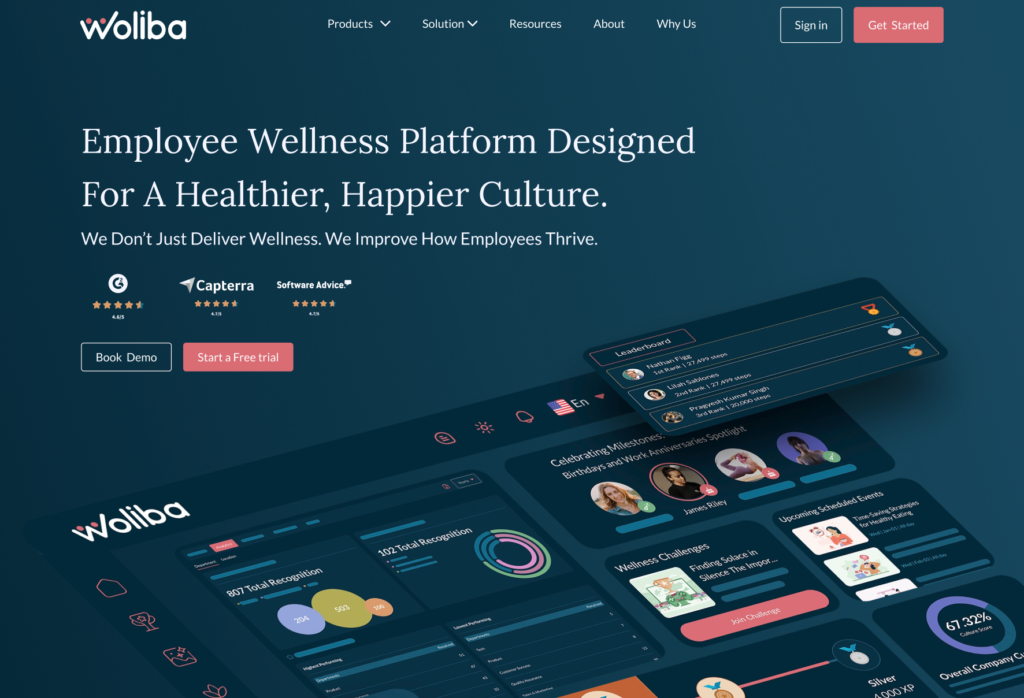
Wellness challenges: Step, distance, team, company, charity & nutrition challenges that keep movement fun year-round.
Recognition & rewards: Peer shout-outs, points and a rewards marketplace that works across borders.
Wellbeing resources: Recipes, fitness videos, articles and habits — refreshed often (a top-praised feature in reviews).
Health data & HRAs: AI-powered health risk assessments and anonymised insights to reduce claims.
Coaching & events: Live and on-demand sessions, expert coaching and master classes.
Surveys & analytics: Pulse checks and engagement surveys that turn feedback into action.
It also syncs with the wearables your people already wear (Fitbit, Garmin, Apple Health, Google Fit and more) and connects to your HRIS and SSO — so steps track automatically and rollout is painless.
Reviewers repeatedly call out two things: genuinely responsive support and account managers, and content variety that keeps people engaged between challenges.
The pricing angle worth noting: Woliba bills on monthly active users, not per head. So your cost tracks how much the platform is actually used — a real differentiator for budget-conscious HR teams. And you can try the whole thing before committing.
Where it shines
- Truly all-in-one — wellness, recognition, rewards, surveys, coaching and social in one place.
- Pay-for-active-use pricing; standout support and onboarding.
- Great for lean HR teams managing a big population.
Keep in mind
- Very active users can hit the annual points cap early — more of a “wants more” than a real flaw.
- A few users mention occasional app sync hiccups (usually fixed with a refresh or via support).
Best Wellspace Alternative – Woliba
Woliba starts from just $2/mo/employee.
Wellable
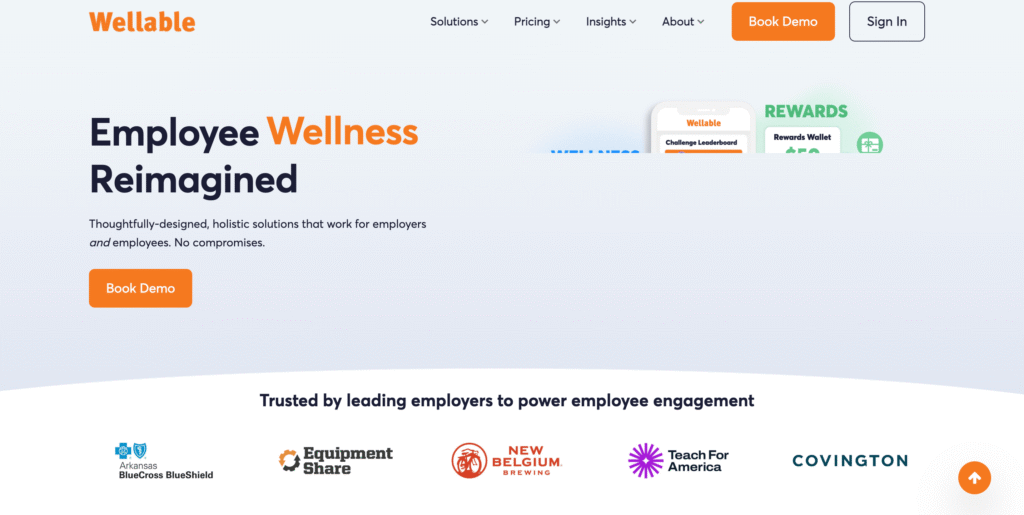
Wellable is a holistic, modular wellness platform — challenges, wellbeing content, live and virtual fitness classes, mindfulness, health assessments and coaching. Its flexibility makes it a strong fit for mid-size companies with diverse teams who want to build a program piece by piece.
If Wellable itself is on your list, it’s worth also skimming a few Wellable alternatives to compare breadth vs. cost.
Strengths
- Rich content library plus live/virtual classes and events.
- Highly modular — mix and match what you need.
Keep in mind
- Modular pricing can add up as you bolt on more.
Vantage Fit
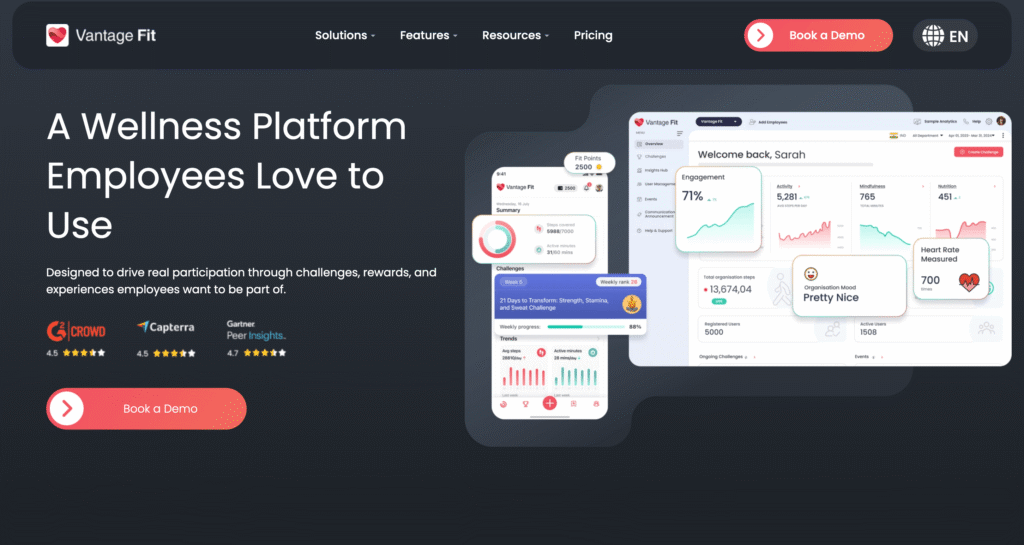
Part of the Vantage Circle suite, Vantage Fit is an AI-powered, heavily gamified wellness app with challenges, activity tracking, a health score, rewards and analytics — and global reach across 190+ countries. Vantage reports pricing from around $1/user/month, making it one of the better-value options. Teams that outgrow it can expand into Vantage’s recognition and perks tools. Comparing options here? See these Vantage Fit alternatives.
Strengths
- Strong value and mobile-first, gamified experience.
- Global coverage and multi-language support.
Keep in mind
- Deepest value comes when you adopt the wider Vantage suite.
YuMuuv
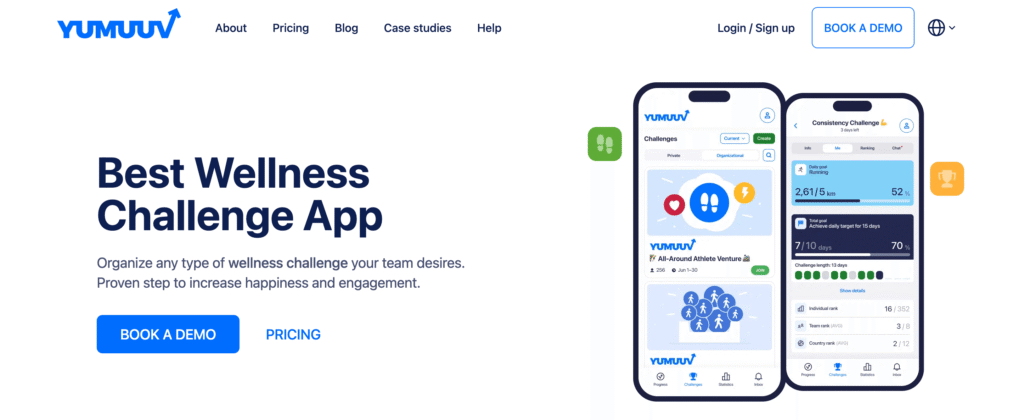
Estonia-based YuMuuv keeps things focused: launching and running team wellness challenges as simply as possible, with unlimited challenge types (steps, hydration, sleep, mindfulness, custom), 32 languages, and use across 40+ countries.
Strengths
- Extremely fast setup; excellent for global, remote teams.
- Wide variety of challenge types.
Keep in mind
- Challenges only — no HRAs, coaching, recognition or mental-health content.
- A few device integrations (e.g. Samsung Health, Coros) are missing.
Read more about Vantage Fit Alternatives
WellRight
WellRight feels less like a challenge app and more like a wellness program builder: hundreds of customizable challenges, health risk assessments, biometrics, surveys and built-in coaching. It’s especially appealing to organizations that want to align wellbeing tightly with culture, benefits and incentives.
Strengths
- Highly customizable modules and program structure.
- Strong on HRAs, biometrics and coaching.
Keep in mind
- More configuration up front; can feel heavy for small teams.
Read more about Wellright Alternatives
Best Wellspace Alternative – Woliba
Woliba starts from just $2/mo/employee.
Wellhub (formerly Gympass)
Best for: gym & fitness marketplace access
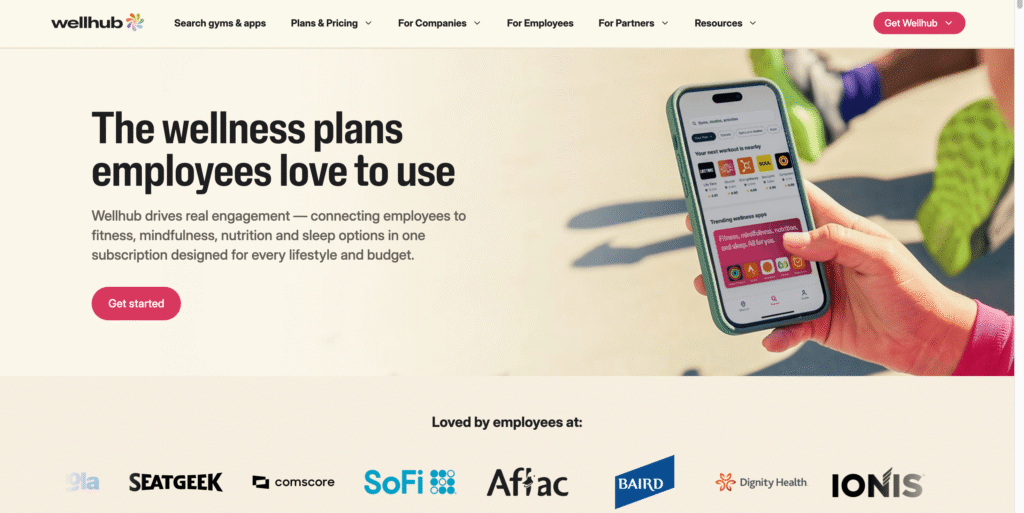
Wellhub is a global fitness marketplace — one subscription unlocks gyms, studios and wellbeing apps (including Headspace and Calm). It’s the pick when your main goal is physical activity and gym access rather than an engagement or recognition platform. If gym access is the priority but you want more program tooling, weigh a Wellhub alternative too.
Strengths
- Huge network of gyms, studios and partner apps.
- Great for a fitness-first, global benefit of employee wellness programs.
Keep in mind
- Reviewers report app crashes, slow loading and tracking issues.
- Pricing combines per-user access + a subsidy, so you can pay whether or not people use it; challenge scoring is limited.
Personify Health
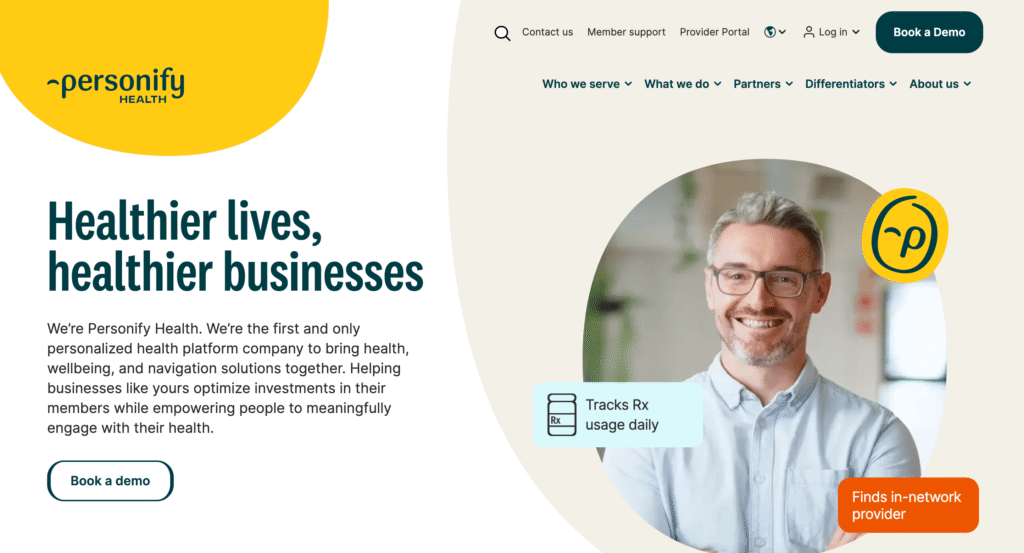
Formed from Virgin Pulse and HealthComp, Personify Health is an enterprise-grade health and wellbeing platform that connects engagement with health navigation and benefits. It’s built for large, complex organizations that want wellbeing tied into their broader health strategy.
Strengths
- Deep enterprise features and health-plan integration.
- Robust reporting and scale.
Keep in mind
- Enterprise complexity and cost — often overkill for SMBs.
Best Wellspace Alternative – Woliba
Woliba starts from just $2/mo/employee.
Vitality
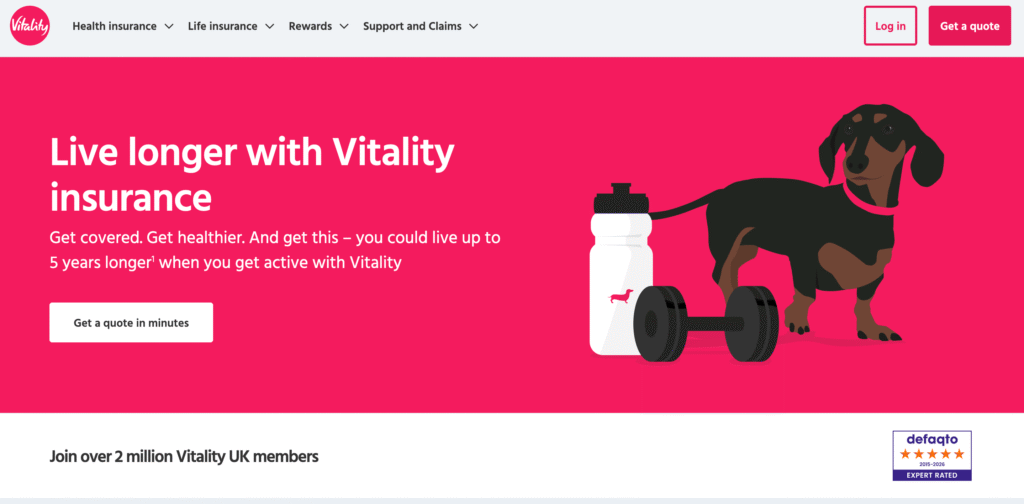
Vitality ties wellbeing directly to your insurance policy, rewarding healthy behavior through a well-known incentive engine. It’s a good fit if you want a wellness program integrated with your insurer’s ecosystem.
Strengths
- Strong, established rewards/incentive model.
- Insurance integration for eligible policies.
Keep in mind
- Tied to your insurer — not a standalone platform your team fully owns regardless of policy.
Headspace (for Work)
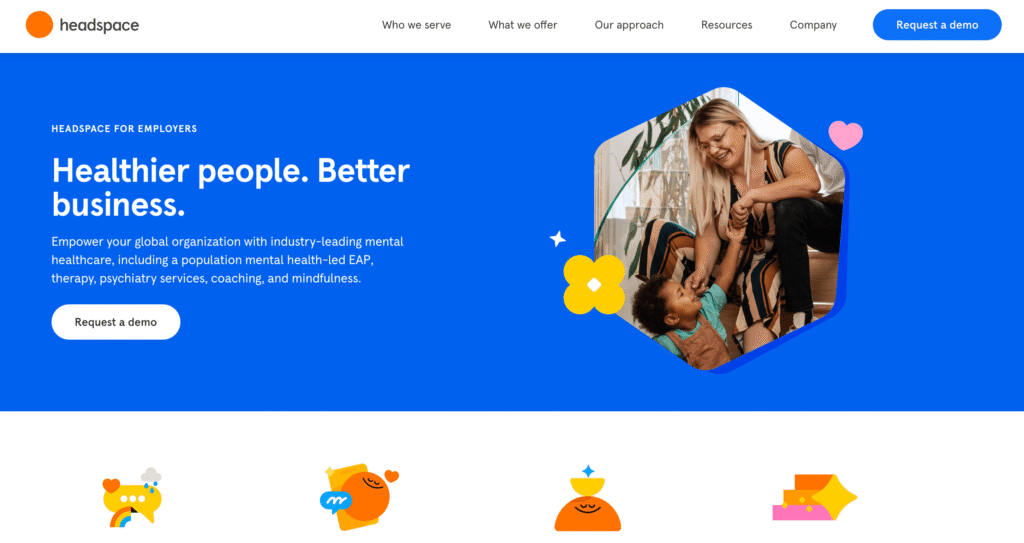
Headspace is a best-in-class mindfulness and meditation app, now with text-based mental-health coaching for employee management. It’s excellent for the mental-health slice of wellbeing — but it’s content, not a full program.
Strengths
- Trusted, high-quality mindfulness content and coaching.
Keep in mind
- No challenges, rewards, leaderboards or HR analytics — most teams use it alongside a full platform.
Calm for Business
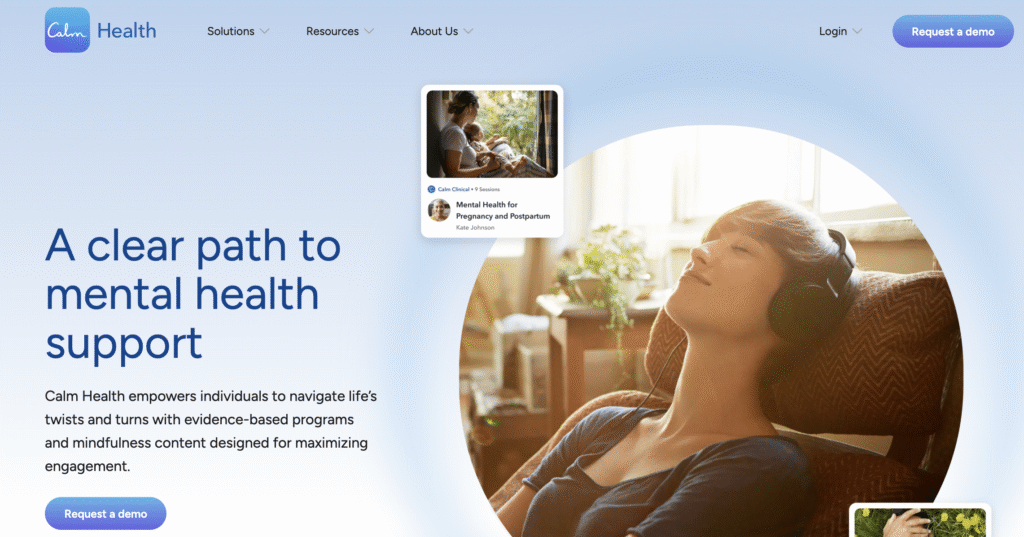
Calm’s workplace offering brings its well-loved meditation, sleep stories and relaxation content to employees. Like Headspace, it’s a strong mental-health add-on rather than an all-in-one wellbeing platform.
Strengths
- Popular, polished content for stress and sleep.
Keep in mind
- Narrow scope — pair it with a broader platform for challenges and engagement.
MoveSpring (by Reward Gateway)
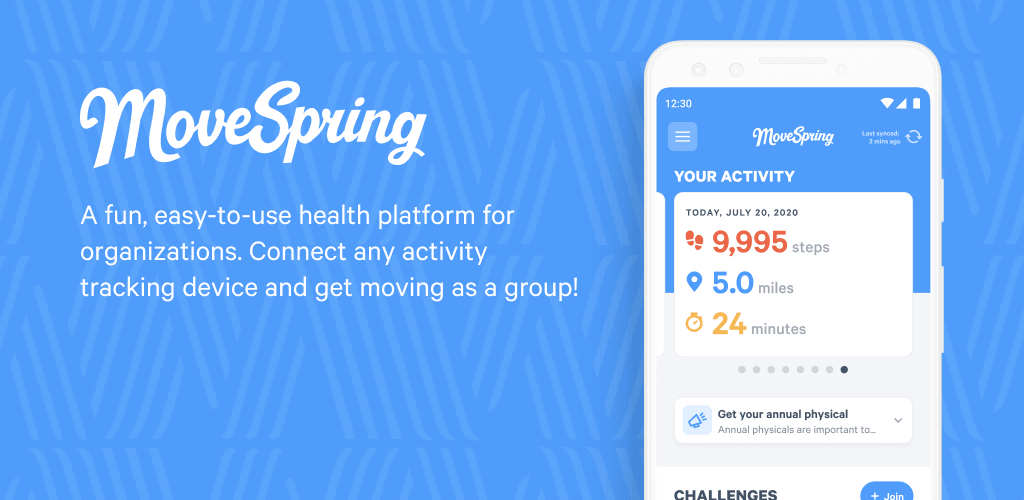
MoveSpring built its name on polished, motivating step and activity challenges and is now part of Reward Gateway’s employee-experience suite. A good option if step challenges are the heart of your program.
Strengths
- Clean, engaging challenge experience.
Keep in mind
- Now bundled within Reward Gateway; narrower as a standalone wellness tool.
Wellness360
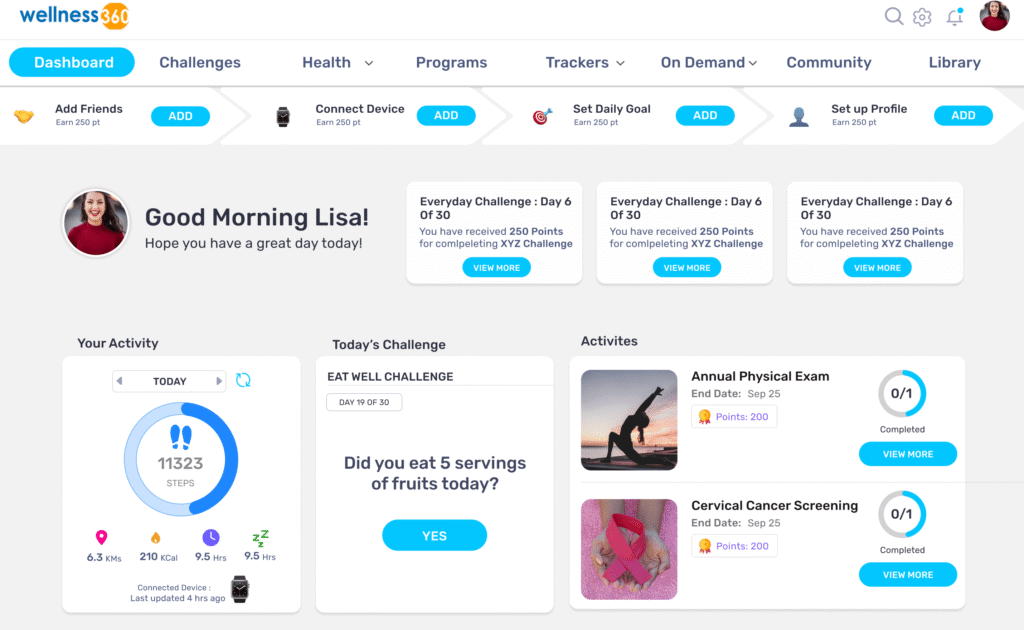
Wellness360 covers all nine dimensions of wellness with challenges, rewards, HRAs and biometrics — and leans hard into enterprise privacy, with HIPAA, SOC 2, HITRUST and NCQA credentials. A solid pick where data security and breadth both matter.
Strengths
- Broad, holistic feature set.
- Strong security and compliance posture.
Keep in mind
- Less brand recognition than some larger competitors.
Champion Health (UK)
Sometimes called the “Netflix of Wellbeing,” Champion Health is a UK preventative whole-person platform. Every workforce starts with a benchmark health assessment mapping mental, physical and financial risk, then gets personalised content plus anonymised analytics for leaders — with reported absenteeism reductions around 8%. A natural like-for-like if you like Wellspace’s data-led, UK approach but want deeper screening.
Strengths
- Strong preventative screening and workforce risk analytics.
- Self-serve rollout; UK-built and GDPR-focused.
Keep in mind
- Lighter on gamified challenges/recognition than engagement-first tools.
YuLife (UK)
Best for: UK insurance + gamified rewards
YuLife bundles group life insurance with a gamified wellbeing app: employees earn “YuCoins” for everyday healthy habits like walking and meditating, redeemable for vouchers or charity donations. Engagement can be remarkable — one large UK employer saw a quarter of its 30,000 staff download the app.
Strengths
- Genuinely fun, rewards-driven engagement.
- Insurance + wellbeing in one package.
Keep in mind
- Wellbeing features are lighter than dedicated platforms; tied to the insurance bundle.
Best Wellspace Alternative – Woliba
Woliba starts from just $2/mo/employee.
Burnalong
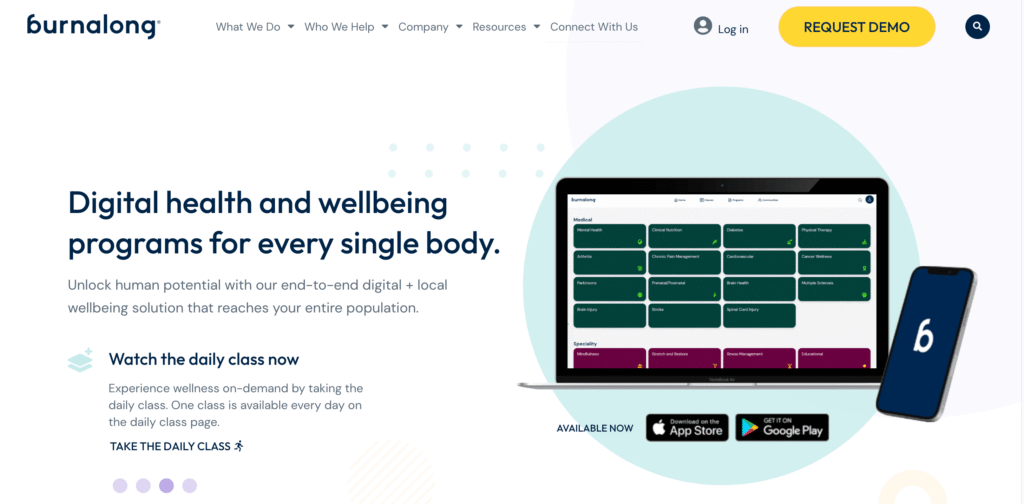
Burnalong specialises in on-demand fitness and wellbeing classes led by a diverse roster of instructors, including content tailored to specific health conditions and demographics — plus social features you can use with family. A great fit for employers prioritising inclusive, accessible movement.
Strengths
- Inclusive, adaptive class library for varied needs.
- Personalised recommendations and social/family options.
Keep in mind
- Class-focused — lighter on HRAs, recognition and analytics.
Which Wellspace alternative should you choose?
There’s no single “best” platform — only the best fit for your team. If you want mindfulness alone, Headspace or Calm are excellent add-ons. If you want gym access, look at Wellhub. If you want the simplest global challenge tool, YuMuuv is hard to beat. And if you’re UK-based and data-led, Champion Health is a natural next step from Wellspace.
But if you want one platform that does wellness, recognition, rewards, surveys, coaching and community — with pay-for-active-use pricing and support HR teams rave about — Woliba is the strongest all-rounder on this list. The easiest way to be sure is to try it, and building the program itself is simpler than it sounds; here’s how to start a corporate wellness program when you’re ready.
Best Wellspace Alternative – Woliba
Woliba starts from just $2/mo/employee.
Conclusion
Choosing the right employee wellness platform is essential for creating a healthier, more engaged workforce while maximizing your HR software budget. While Wellspace offers a solid, holistic approach to mental health and sleep tracking for regional teams, its limited tool consolidation and regional focus lead many growing organizations to seek more comprehensive alternatives.
In 2026, the most effective platforms go beyond isolated well-being metrics by bringing physical fitness challenges, peer-to-peer recognition, automated global rewards, and workforce pulse surveys into a single, intuitive hub. Platforms like Woliba solve SaaS fragmentation, eliminate administrative overhead, and deliver reliable wearable syncing across Apple Watch, Fitbit, and Garmin devices.
Whether you are looking to replace Wellspace immediately to expand your global reward options or are planning your next benefit renewal cycle, prioritizing platform consolidation, native app integration, and automated rewards will drive higher daily adoption and a stronger ROI for your organization.