


When running a workplace wellness program, your software either builds healthy habits or gets overlooked. CoreHealth has long been a traditional option for enterprise health programs, but today’s organizations are looking for more engaging and transparent software.
This shift in workforce expectations has driven decision-makers to evaluate modern CoreHealth alternatives that offer intuitive interfaces, transparent pricing structures, and built-in peer recognition. By switching to agile, engagement-first platforms, organizations can boost employee participation and simplify employee management without high administrative overhead.
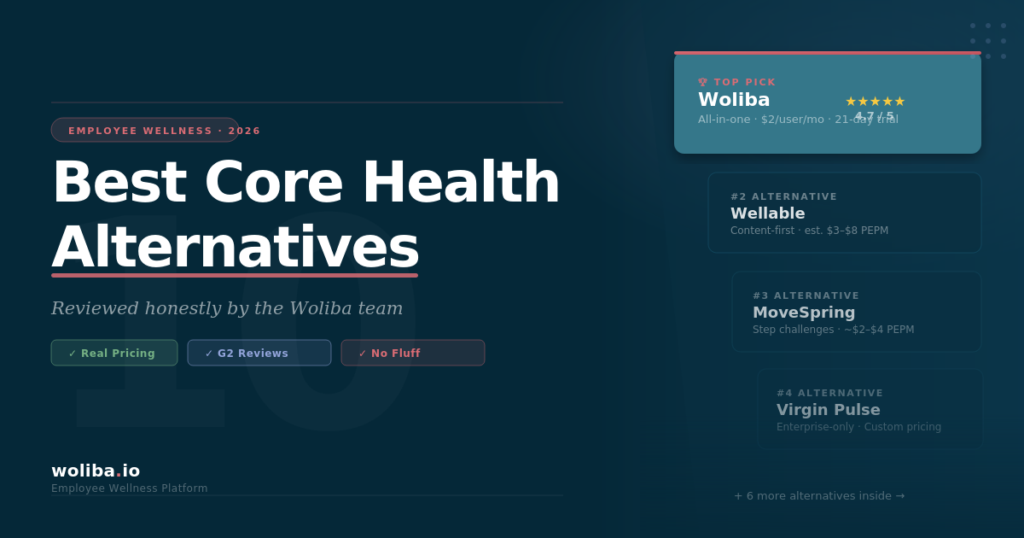
If you look at public review aggregators like G2, CoreHealth has a tiny total of just 3 user reviews. That sits in stark contrast to modern, high-adoption platforms like Woliba (164+ reviews, 4.6/5 rating), Wellable (1,281+ reviews), or Reward Gateway (2,883+ reviews). This massive gap points to low public engagement and a lack of active user feedback.
Why Teams & Organizations are Looking Beyond CoreHealth
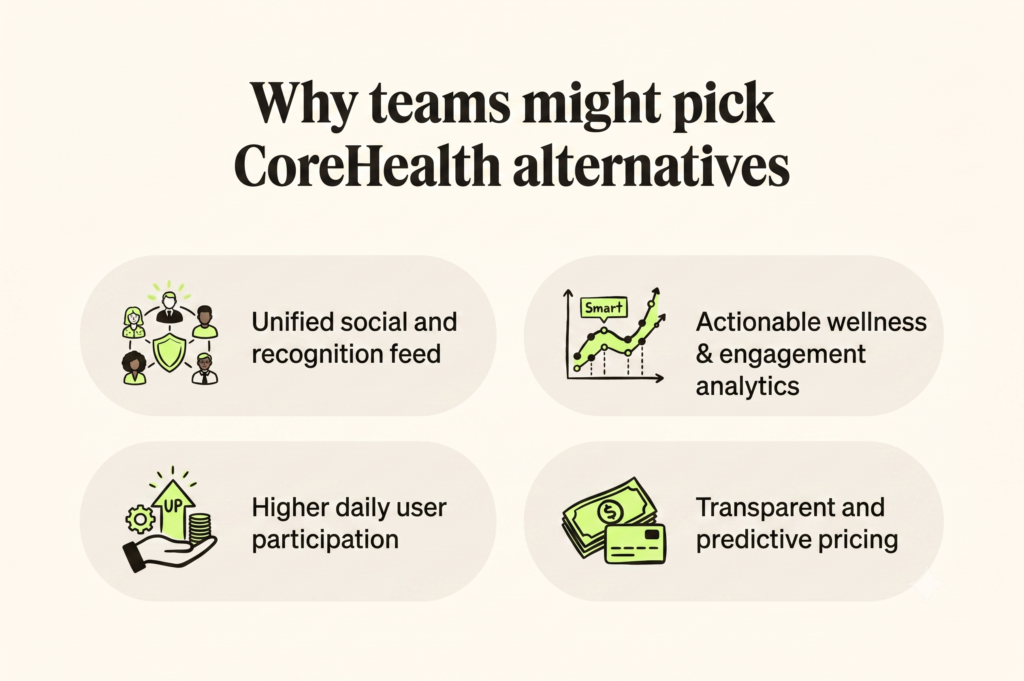
While CoreHealth offers custom program structures for health providers, decision-makers across People Ops, employee benefits, and HR face recurring hurdles when using the platform:
- Opaque, Quote-Only Pricing: CoreHealth’s official pricing model requires contacting sales reps directly for custom quotes across all tiers (NOW, Pro, Checkpoint). Without transparent Per Employee Per Month (PEPM) rates, budgeting becomes unpredictable.
- Complex Portal Administration: Setting up simple step challenges or customizing employer portals can feel clunky and technical, often requiring support tickets or extra developer assistance.
- Lack of Built-In Peer Recognition: The platform treats wellness purely as physical tracking, leaving out social feeds, peer-to-peer appreciation, and immediate spot rewards.
- Syncing Friction: Employees frequently report smartwatch and wearable syncing delays during company challenges, leading to drop-offs in participation.
CoreHealth Alternatives at a Glance
| Platform | Main Focus Area | Built-In Recognition & Rewards? | Ideal Company Size |
| Woliba | Unified Wellness, Social Feeds & Peer Recognition | Yes (Fully Built-In) | Mid-Market to Large Enterprise |
| Wellable | Modular Fitness Challenges & Coaching | Partial (Requires Add-Ons) | Mid-Market |
| Personify Health | Deep Clinical Health & Insurance Navigation | No | Large Enterprise |
| WellRight | Custom Holistic Health Programs | Partial | Mid-Market to Enterprise |
| Vantage Fit | Mobile Step Tracking & Fitness | Yes | Small to Mid-Market |
| YuMuuv | Simple Activity Challenges | No | Small Businesses |
| MoveSpring | Fun Social Step Competitions | No | Small to Mid-Market |
| YuLife | Employee Discounts & Company News | Yes | Mid-Market to Enterprise |
| MediKeeper | Enterprise Health Assessments | No | TPAs & Health Plans |
| Wellness360 | Health Coaching & Biometric Screening | Partial | Mid-Market |
Detailed Breakdown of the Top 10 CoreHealth Competitors
1. Woliba
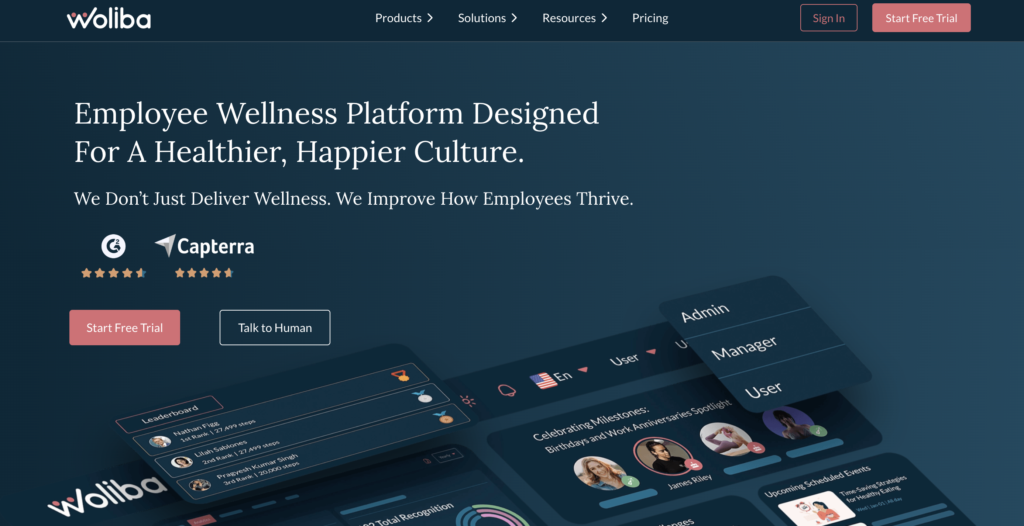
Woliba is an all-in-one employee wellness platform that combines workplace wellness challenges, peer-to-peer appreciation, pulse surveys, and an automated rewards catalogue into a single app. Designed for daily active employee engagement, Woliba removes technical friction for administrators while giving employees an interactive social feed to stay connected and healthy.
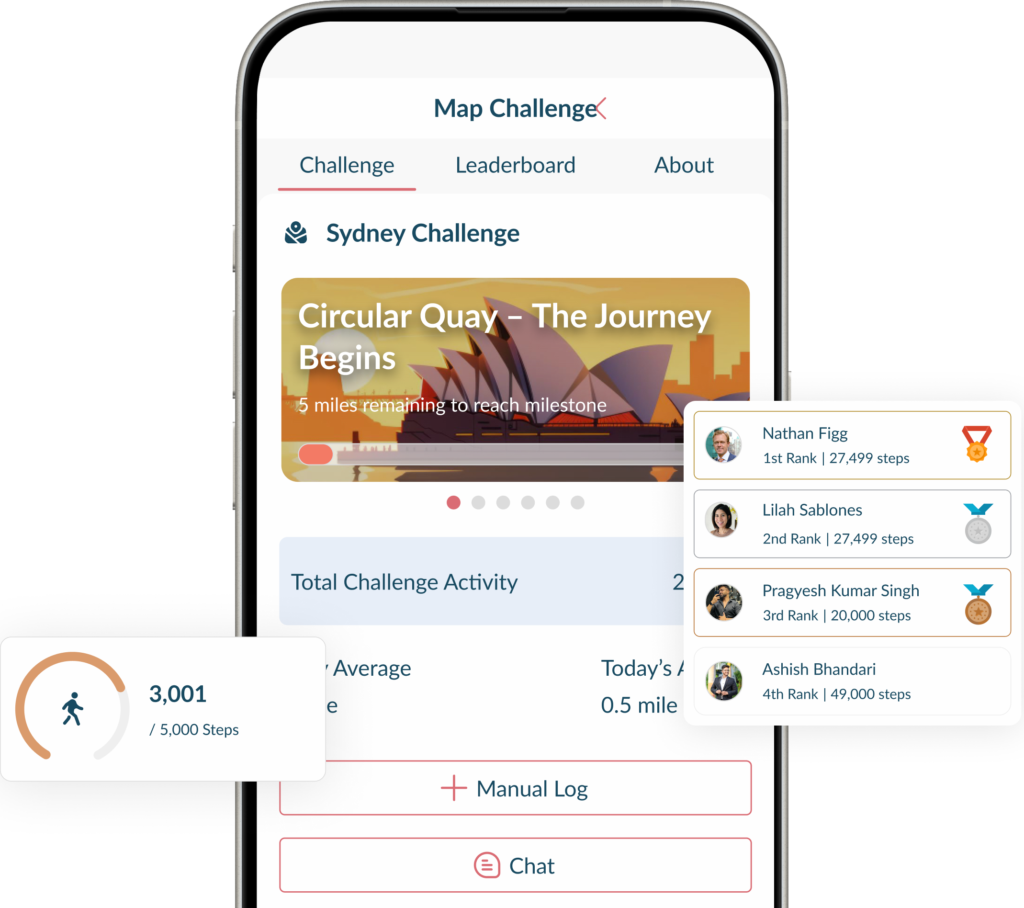
Reading the list is the easy part. We built Woliba for the part that comes after.
Woliba starts from just $2/mo/employee.
- Pros:
- Native integration of corporate wellness challenges with real-time peer recognition.
- Transparent pricing tiers (Starter, Growth, Performance) with automated rewards.
- Easy-to-use mobile app with 4.6/5 stars across 164+ G2 user reviews.
- Cons:
- Less focused on deep, complex clinical medical claims data.
- May offer more features than needed for teams seeking bare-bones step logging only.
- Feature You Don’t Get in CoreHealth: Native Employee Recognition Feed with Instant Gift Card Redemption. Coworkers can publicly give shoutouts, earn points, and redeem them directly for digital gift cards inside the same app.
2. Wellable
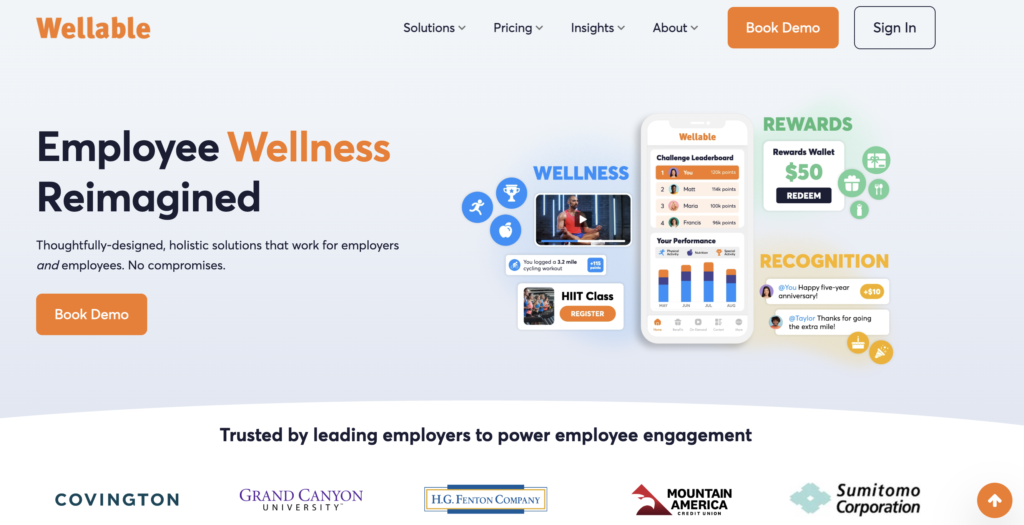
Wellable is a flexible wellness platform that focuses on modular workplace fitness challenges, health content, and digital coaching. It gives program leads building blocks to launch step competitions, nutrition tracking, and live video workout sessions. With broad wearable device syncing, Wellable helps organisations run themed wellness initiatives without technical strain.
- Pros:
- Highly flexible challenge templates that are easy to configure.
- Broad smartwatch and wearable device compatibility.
- Cons:
- Lacks native peer-to-peer recognition tools.
- Managing reward catalogs requires third-party add-ons or manual oversight.
- Feature You Don’t Get in CoreHealth: On-Demand & Live Virtual Fitness Classes. Built-in access to certified instructors for live yoga, fitness, and mindfulness sessions.
Read more about Wellable Alternatives.
3. Personify Health (formerly Virgin Pulse)
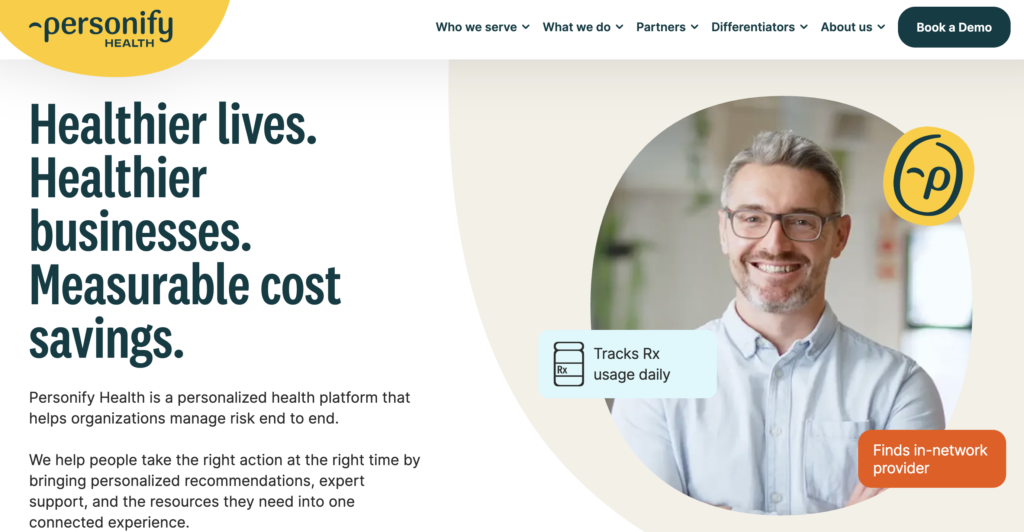
Personify Health is an enterprise health navigation platform built for large corporations. Formed by merging Virgin Pulse and HealthComp, it helps employees navigate insurance benefits, track daily health habits, and access health coaching. It serves as a unified digital doorway for enterprise health programs.
- Pros:
- Built to process complex medical claims data and insurance benefits.
- Deep global reach with multi-language and enterprise compliance support.
- Cons:
- High platform costs and long onboarding times.
- Too complex for mid-sized organizations looking for simple engagement.
- Feature You Don’t Get in CoreHealth: Direct Health Insurance & Claims Navigation. Connects directly with insurance providers to help workers find doctors and lower medical expenses.
Read more about Personify Health Alternatives.
4. WellRight

WellRight is a customizable wellness platform built to support physical, mental, financial, and emotional health. It offers a broad library of pre-made challenges, health risk assessments, and biometric tracking. Administrators can build detailed point systems to reward healthy habits, giving teams control over their overall program design.
- Pros:
- Covers financial, mental, and physical health tracks out of the box.
- Highly configurable incentive and point structures.
- Cons:
- Admin interface feels outdated compared to modern social apps.
- Requires high administrative effort to set up and manage custom programs.
- Feature You Don’t Get in CoreHealth: Built-in Financial Wellness Modules. Includes dedicated challenges to help employees budget, save money, and manage debt.
You can check WellRight Alternatives.
5. Vantage Fit
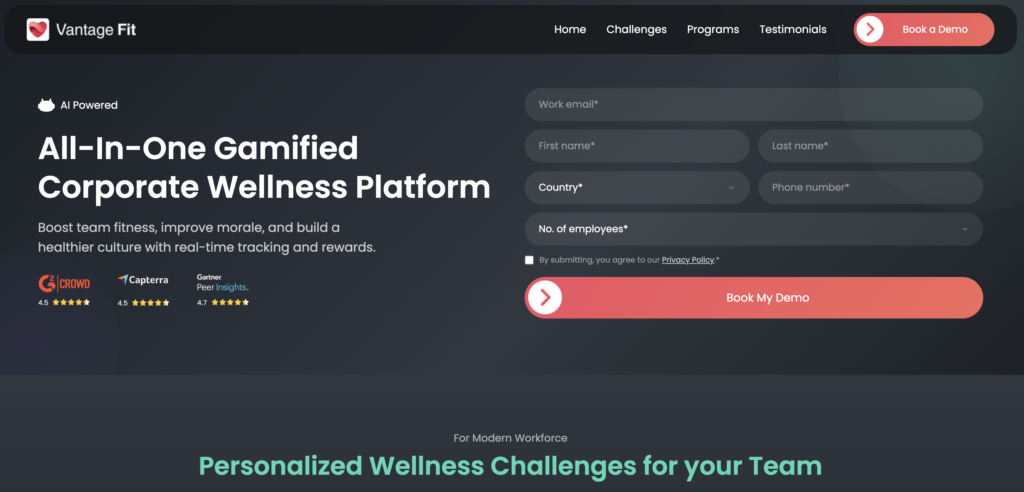
Vantage Fit is a gamified step challenge app built to get deskbound employees moving. It focuses on basic mobile tracking, step counting, heart rate monitoring, and meal logging. Using digital gift card rewards and team leaderboards, Vantage Fit creates friendly competition without requiring complex setup.
- Pros:
- Lightweight mobile app with automatic step tracking.
- Instant digital gift card rewards for completing challenges.
- Cons:
- Lacks broader culture tools like employee surveys or newsfeeds.
- Limited health assessment and clinical reporting tools.
- Feature You Don’t Get in CoreHealth: Built-In Mobile Meal & Calorie Tracking. Employees can log meals and track calories directly through the app using their phone’s camera.
Read in more detail about the alternatives to Vantage Fit.
6. YuMuuv
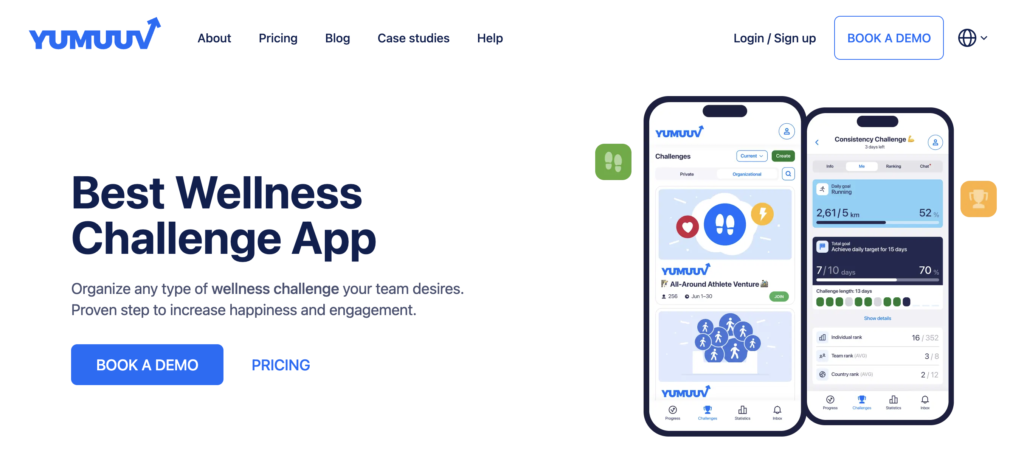
YuMuuv is an activity platform focused on simple, personal challenges. Built to keep administration effort low, YuMuuv lets teams launch step, distance, or active-minute competitions in a few clicks. Its clean design and easy device sync make it a fit for small businesses wanting quick wins.
- Pros:
- Quick setup taking under 10 minutes to launch a new challenge.
- Transparent, budget-friendly pricing tailored for small businesses.
- Cons:
- Basic feature set limited mostly to physical movement tracking.
- No built-in employee recognition or reward fulfillment options.
- Feature You Don’t Get in CoreHealth: One-Click Challenge Templates. Allows managers to launch pre-set activity challenges instantly without custom coding or portal design.
Check out the Yumuuv Alternatives.
7. YuLife
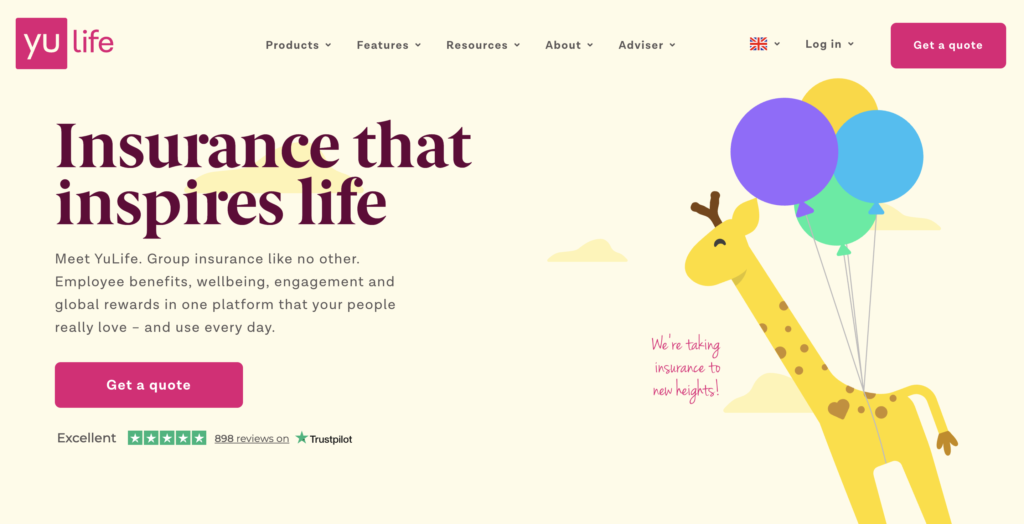
YuLife is a modern employee benefit and wellness platform that turns healthy daily living into a gamified, rewarding experience. Built to transform traditional group life insurance and workplace well-being, YuLife uses an engaging mobile app where employees complete daily movement, step, and mindfulness challenges. As users build healthy habits, they earn “YuCoin,” an in-app currency redeemable for vouchers, eco-charity donations, or company perks. It brings a fresh, interactive approach to risk prevention and ideas of employee health engagement.
- Pros:
- Native integration of corporate wellness challenges with real-time peer recognition.
- Transparent pricing tiers (Starter, Growth, Performance) with automated rewards.
- Easy-to-use mobile app with high daily participation.
- Cons:
- Less focused on deep, complex clinical medical claims data.
- May offer more features than needed for teams seeking bare-bones step logging only.
- Feature You Don’t Get in CoreHealth: Gamified Daily “YuCoin” Rewards & Protection. Employees earn an in-app currency for walking or meditating every day, which they can spend on everyday e-vouchers or plant trees to combat climate change.
8. Reward Gateway
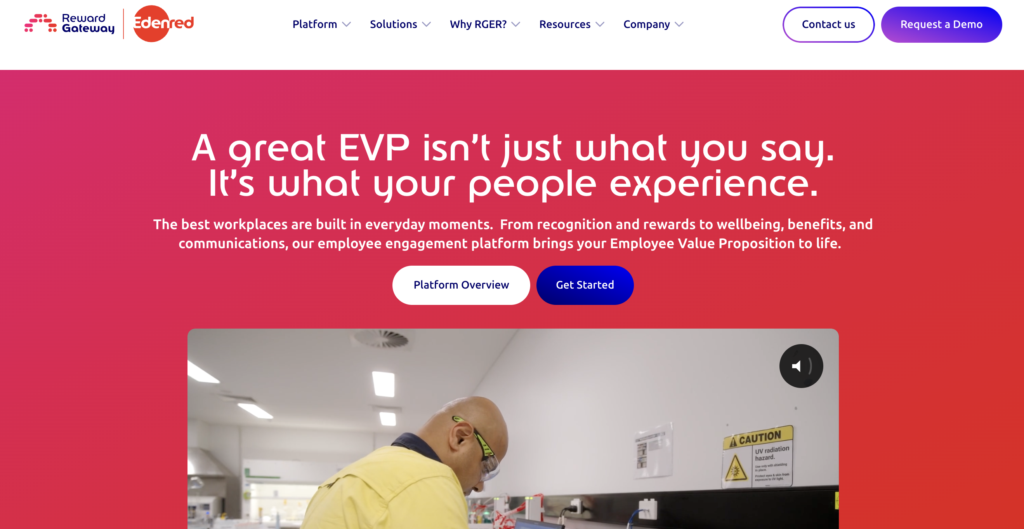
Reward Gateway is an employee engagement platform combining staff discounts, peer recognition, company communications, and well-being hubs. While wellness is one module within the platform, it excels at helping employees save money on daily purchases while making manager appreciation easy.
- Pros:
- Retail discount portal that helps stretch employee paychecks.
- Strong company newsfeed and internal communication tools.
- Cons:
- Fitness and step tracking features are basic compared to dedicated health apps.
- Higher overall platform cost due to the extensive discount network.
- Feature You Don’t Get in CoreHealth: Integrated Employee Retail Discount Engine. Gives employees direct access to instant discounts and cashback at thousands of major retailers.
9. MediKeeper
MediKeeper provides white-label wellness portal technology designed for health plan providers, third-party administrators (TPAs), and enterprise wellness companies. Its software focuses on Health Risk Assessments (HRAs), biometric data tracking, and medical reporting across large employee groups.
- Pros:
- Advanced Health Risk Assessment (HRA) and medical data reporting tools.
- Built specifically for TPAs needing multi-tenant white-label portals.
- Cons:
- Plain, non-interactive user experience for daily employee engagement.
- Lacks modern social feeds, gamification, and peer appreciation tools.
- Feature You Don’t Get in CoreHealth: Multi-Tenant TPA Portal Architecture. Engineered specifically for health plan admins to run hundreds of separate employer accounts under different security permissions.
10. Wellness360
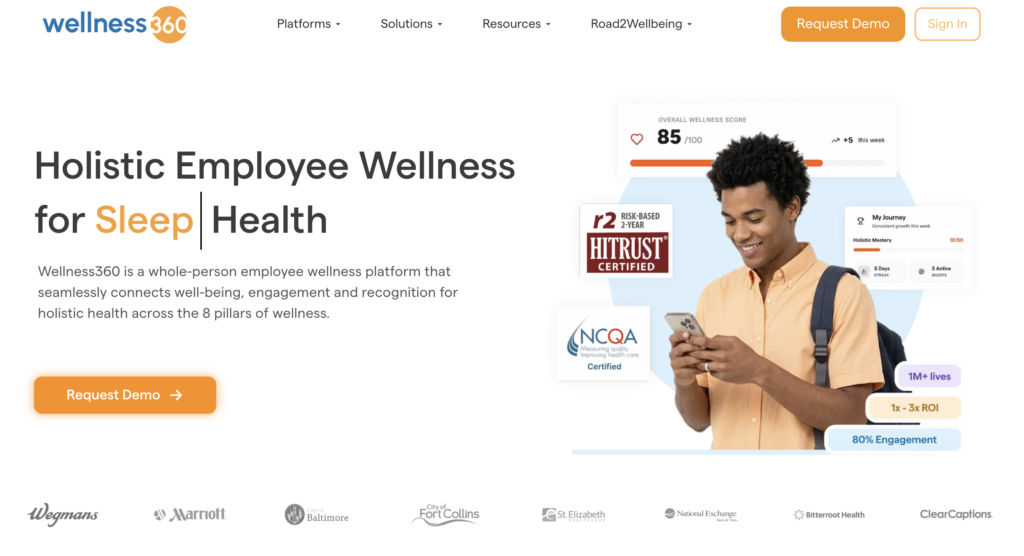
Wellness360 is a health platform combining digital corporate wellness tools with 1-on-1 human health coaching. It helps organizations create habit-building plans, schedule biometric screenings, and track incentive points. Wellness360 is ideal for teams working to reduce chronic health risks through structured programs.
- Pros:
- Strong support for biometric health screenings and health risk assessments.
- Includes personalized goal-setting and health coaching tools.
- Cons:
- Portal customization can feel rigid without technical support help.
- Lower daily active participation compared to modern social platforms.
- Feature You Don’t Get in CoreHealth: Native Telehealth & Health Coaching Workflows. Employees can schedule, attend, and track 1-on-1 video sessions with certified health coaches directly inside the platform.
Which CoreHealth Alternative Fits Best?
Selecting the ideal software depends heavily on your team size, administrative resources, and organizational goals. Here is how the top alternatives stack up across key industries, Ideal Customer Profiles (ICPs), and pricing structures:
1. Mid-Market & Growing Enterprises (Best Overall Value)
Top Pick: Woliba
- Ideal Industries: Technology, Professional Services, Healthcare, Finance, and Distributed Workforces.
- Target ICP: People Ops Leaders, HR Directors, and Employee Experience Managers seeking high daily engagement by bundling wellness with peer recognition.
- Pricing Model: Transparent Flat-Rate Tiers. Predictable Per Employee Per Month (PEPM) pricing with tiered plans and automated reward catalog options—no hidden implementation fees or forced sales quotes.
2. Large Enterprises & Complex Organizations
Top Pick: Woliba, Personify Health (formerly Virgin Pulse)
- Ideal Industries: Manufacturing, Healthcare Systems, Government, and Fortune 500 Enterprise Corporations.
- Target ICP: Chief Human Resources Officers (CHROs), VP of Benefits, and Corporate Risk Managers managing large-scale healthcare claims navigation.
- Pricing Model: High-End Custom Enterprise Quotes. Custom PEPM pricing structured for complex enterprise contracts with additional add-on fees for clinical health assessments and claims integrations.
3. Small-to-Midsize Businesses & HR Teams on a Budget
Top Pick: Wellable or YuMuuv
- Ideal Industries: Agencies, Startups, Regional Retail, and Small Business Services.
- Target ICP: Solo HR Managers, Office Administrators, and Wellness Champions looking for fast setup without long contract commitments.
- Pricing Model: Modular / Pay-As-You-Go. Flexible, low-barrier monthly or challenge-based subscriptions where companies pay only for specific modules or active challenge participants.
4. Health Plans, TPAs & Provider Networks
- Pricing Model: White-Label Licensing. Custom enterprise platform licensing tailored for multi-employer account management and Health Risk Assessment (HRA) compliance.
- Top Pick: MediKeeper
- Ideal Industries: Third-Party Administrators (TPAs), Insurance Brokers, and Healthcare Networks.
- Target ICP: Health Plan Executives and TPA Administrators needing multi-tenant white-label portals.
Conclusion:
Evaluating the right wellness platform ultimately comes down to your organization’s core priorities. If your goal is strictly enterprise-level clinical risk management or white-label portal administration for third-party administrators, traditional platforms like CoreHealth, Personify Health, or MediKeeper remain viable options.
However, if your priority is driving daily employee adoption, eliminating administrative overhead, and addressing nutrition challenges with real-time peer recognition, switching to a modern alternative is the clear move. Platforms like Woliba eliminate the multi-vendor chaos and opaque pricing models of legacy systems—delivering a streamlined, mobile-first experience that transforms workplace wellness from a forced corporate requirement into a daily habit employees genuinely enjoy.